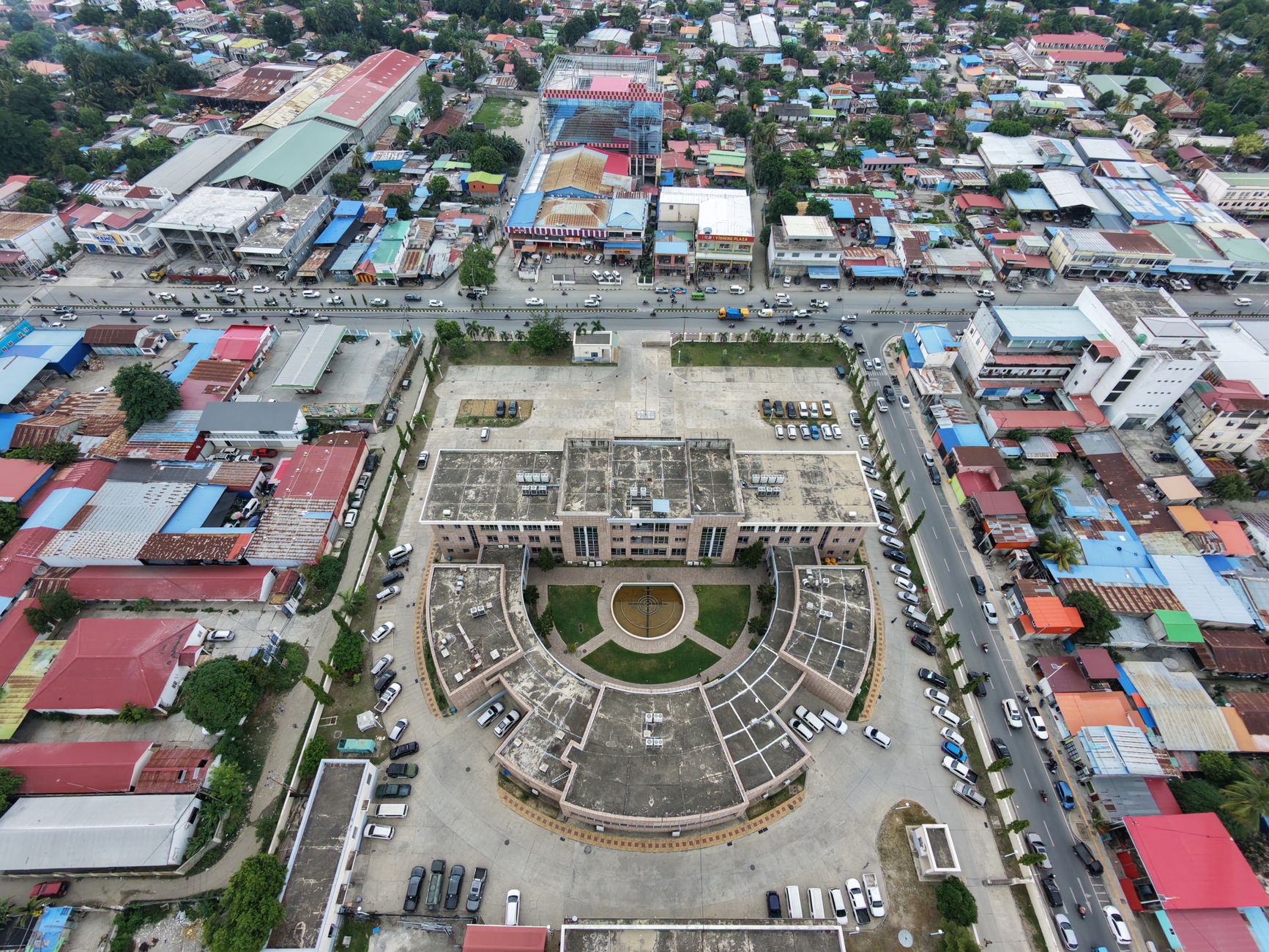
Dili

East Timor

Dili

Dili hides a whale-watching Christ statue, world-class coffee, and an Independence Day street party that turns the harbour into an open-air bar.

location_on 12 attractions
calendar_month May–November (dry season)
schedule 3-4 days

Introduction

The first thing you notice about Dili is the scent: charcoal smoke from beachside grills mixing with salt air and the faint green bite of coffee roasting in bicycle-powered mills. It rises from the waterfront where Catholic processions still follow the same route Portuguese missionaries walked 400 years ago, while just behind them, kids in Barcelona shirts play futsal under murals of freedom fighters. East Timor's capital doesn't announce itself; it seeps into your clothes and memory through these small contradictions.

Independence came late here — 2002, making this the world's second-newest nation — and the city still feels like it's deciding what to keep. Indonesian karaoke bars operate next to Portuguese cafés serving pastéis de nata that would pass muster in Lisbon. The morning fish market erupts at 6 a.m. with tuna heads the size of toddlers while UN vehicles idle outside, their drivers arguing over the price of reef crabs in three languages.

But Dili's real character reveals itself in the margins. The Cristo Rei statue faces away from Indonesia, a 27 meters of deliberate symbolism you climb via 570 steps slick with morning dew. Below it, Dolok Oan beach remains pristine precisely because guidebooks forget to mention it. Here, fishermen mend nets while discussing how the hybrid Arabica-Robusta coffee strain growing in Aileu's mountains now saves Brazilian plantations from leaf rust — a small revenge for centuries of colonial coffee extraction.

What Makes This City Special

Christ & Cathedral

Cristo Rei’s 27-meter bronze stands on a headland 570 steps above Dili—sun lights the face at 5 pm when whales cruise the bay below. The nearby Immaculate Conception Cathedral is Asia’s second-largest; Suharto funded it, JPII consecrated it, and 98 % of the country still fills it every Sunday.

Atauro’s Reefs

A one-hour ferry north drops you on an island ringed by 600-plus reef-fish species—snorkelers can tick off dugongs, mantas, and coral gardens that scientists rank among Earth’s most biodiverse.

Stories of Survival

The Resistance Museum packs 1975-1999 into $5 of blood-stained shirts, guerrilla diaries and a no-photos policy that feels like respect rather than censorship. Pair it with the Chega! exhibition in the old Balide prison for the full, unsoftened arc.

Hybrid Coffee Trail

East Timor’s Arabica-Robusta hybrid—bred for leaf-rust resistance and now shipped worldwide—tastes best at Heydey AR Café, where two world-rated sommeliers coax chocolate and nutmeg notes from beans grown an hour inland on the ‘noodle road’ to Aileu.

Historical Timeline

A Capital Forged by Fire and Resistance

From sandalwood outpost to symbol of survival

public
c. 1500 BCE

Papuan Fishers Name the Cliff

Bunak-speaking peoples anchor their outriggers where freshwater meets the bay. They call the place "Zili" — the cliff — after the limestone headland that still shadows downtown. The sandalwood forests behind them will later lure every empire in Asia.

castle
c. 1520

Portuguese Eyes Spot the Bay

A caravel under unknown command sights the perfect natural harbor protected by Atauro Island. The logbook notes "água doce e lenho de sandalo" — fresh water and sandalwood. Lisbon files the sketch away for forty years.

gavel
1702

Lisbon Raises Its Flag

Portugal finally proclaims Timor a colony, but runs the territory from distant Lifau. Dili is still a fishing village of palm thatch. The governor owns 688 African slaves and controls little beyond the cannon’s reach.

castle
10 Oct 1769

Dili Becomes Capital Overnight

Governor António Teles de Meneses flees a Topasses rebellion and lands with 42 soldiers. In three days he lays out a grid of six streets, requisitions the Motael plain from Liurai Dom Alexandre, and declares Dili the new seat of government. The town charter is signed beneath a mango tree still standing on Rua 30 de Agosto.

castle
22 Sep 1796

First Stone Walls Rise

Governor Verquaim breaks ground on a star-shaped fortress of coral blocks. The mortar is mixed with buffalo blood; locals swear the walls sweat during the full moon. Six iron cannons arrive from Goa, each barrel stamped with the royal cipher of Maria I.

swords
Jun–Sep 1861

Heads Roll on the Waterfront

Liurai of Laclo marches 1,200 warriors to the gates. Governor Castro arms Chinese shopkeepers and lifts the siege by September. Victory celebrations feature the Likurai dance—women twirling severed heads on bamboo poles down what is now Avenida de Portugal. The smell of blood linges for weeks.

person
Jan 1861

Wallace Calls It the 'Shabbiest Colony'

Naturalist Alfred Russel Wallace steps off a schooner and records mud churches, fever swamps, and 3,000 residents ‘half dead of malaria at any moment’. His diary entry is still quoted by guidebooks to warn tourists about dengue season.

gavel
1913

Island Split by Dutch and Portuguese

The Hague treaty draws a straight frontier across Timor. Overnight, western relatives become Indonesian, eastern cousins remain Portuguese. Families with fields on both sides wake up smugglers.

swords
1942

Japanese Troops March In

Imperial soldiers land at dawn, bayonets fixed. They requisition the governor’s palace, ban Portuguese, and force 60,000 Timorese to grow rice for the war machine. By 1945, one in eight islanders is dead—most from starvation, not bombs.

person
1946

Xanana Gusmão, the Guerrilla Poet

Born in the mountain village of Laleia, he grows up hearing stories of the 1942 resistance. By 1978 he is commander of Fretilin, writing love letters to his wife on cigarette papers and evading 30,000 Indonesian troops. Captured in 1992, he will still become the nation’s first president.

gavel
28 Nov 1975

Fretilin Declares Independence in Dili

Microphones crackle in the old customs house as Nicolau Lobato reads the proclamation. Outside, barefoot children wave homemade flags of red, black, and yellow. The ceremony lasts 23 minutes—Indonesian paratroops will land nine days later.

swords
7 Dec 1975

Operation Seroja Storms the Bay

Indonesian warships darken the horizon at 4:15 a.m. By nightfall, bodies line the waterfront and the sweet stench of burning archives drifts over the bay. A radio operator’s final message: ‘Dili has fallen. We are going to the hills.’

local_fire_department
12 Nov 1991

Santa Cruz Cemetery Massacre

Indonesian soldiers open fire on 3,000 mourners carrying carnations. British cameraman Max Stahl keeps filming while lying beneath a tombstone; his cassette, smuggled out in a diplomatic pouch, makes the massacre global front-page news. 271 bodies are counted; the Indonesian report lists 19.

church
1996

Cristo Rei Rises Above the Ruins

Jakarta and Lisbon jointly unveil a 27-meter Christ statue on the eastern headland—part propaganda, part apology. Workers bolt the arms on during a thunderstorm; lightning illuminates the figure like a flashbulb. Today teenagers pose for selfies beneath the same concrete toes.

local_fire_department
4 Sep 1999

Militias Torch 80 % of the City

After the independence vote, truckloads of armed men methodically burn every government building, school, and clinic. Flames reflect orange in the bay; the heat warps corrugated iron into frozen waves. Only the 1627 Portuguese garrison and a handful of churches survive.

public
20 May 2002

Birth of Asia’s Newest Nation

At midnight the UN flag lowers and the Timor-Leste flag rises before 100,000 cheering residents. Fireworks crackle over the harbor; fishermen sound conch shells. Dili, population 192,000, becomes capital of the world’s second-youngest country—its buildings still scorched, its future unwritten.

swords
2006

Ethnic Riots Shake the Capital

Easterners clash with westerners over army recruitment. Australian APCs again patrol Avenida de Portugal; refugees shelter inside the same 1796 fortress that once held Timorese rebels. The violence reminds everyone how fragile flags can be.

factory
2023

Oil Fund Reaches $16.9 Billion

Petroleum dollars pour in faster than Dili can pave roads. Glass banks rise beside bullet-scarred walls; kids sell coconut water beneath fiber-optic cables. The city that survived empires now debates how not to drown in its own windfall.

schedule
Present Day

Notable Figures

Xanana Gusmão

born 1946 · First President of Timor-Leste
Led resistance from Dili's outskirts; house still overlooks the fruit market

Gusmão ran guerrilla operations from the jungle, then returned to negotiate independence in the same colonial palace his fighters once targeted. Locals point out his unmarked white-walled house across from Basar Ai-Fuan—he buys bananas there like any neighbor.

Pope John Paul II

1920–2005 · Pope
Visited 1989; Tasitolu altar site consecrated during his mass

His 1989 mass drew 100,000 Timorese—one-fifth of the population—who risked Indonesian reprisal just to see him. The improvised altar became East Timor’s independence stage in 2002, exactly where JPII had stood thirteen years earlier.

Practical Information

flight

Getting There

Presidente Nicolau Lobato International Airport (DIL) sits 6 km west of downtown—expect a $10 USD taxi or free hotel pickup. Daily flights run to Denpasar (Bali), Darwin, Kuala Lumpur and Xiamen; Singapore and Fuzhou routes remain suspended in 2026.

directions_transit

Getting Around

There’s no metro or tram—Dili moves on light-blue microlets (#12 reaches Cristo Rei for coins) and negotiated taxis ($3–$10 in town). No Oyster-style card exists; fares are cash-only and taxis thin out after dark.

thermostat

Climate & Best Time

Dry season runs May–November with 25–30 °C days and offshore breezes—perfect for diving and ferry crossings. Wet season (Dec–Apr) turns roads slick and skies dramatic at 28–35 °C; aim for May–October if you want dependable sun.

translate

Language & Currency

Tetum and Portuguese share official status; Indonesian works everywhere, English only in expat pockets. The currency is US dollars—bring small bills, as ATMs spit out $50s that no warung can break.

shield

Safety

Daylight Dili is relaxed, but gunfire still cracks after midnight; stick to lit streets and pre-arrange rides home. The US Embassy on Avenida de Portugal doubles as a landmark—if you can see it, you’re in the safest stretch.

Tips for Visitors

nightlight
After-Dark Rule

Taxis vanish after sunset. Arrange pickup before you head to Cristo Rei or any beach bar, or you'll be walking 6 km in the dark.

payments
Cash Only

ATMs charge US$7 for foreign cards. Withdraw at BNU or bring USD to avoid the fee—every price, from ferry tickets to grilled fish, is quoted in dollars.

restaurant
Market Dinner

Skip hotel restaurants. From 6 p.m. the Lecidere Night Market turns tarpaulin tunnels into the best kitchen in town—try buffalo satay for US$1.50.

photo_camera
Sunset Swap

Everyone photographs Cristo Rei at dawn. Go at 5 p.m. instead—golden light hits the statue’s face and baleen whales breach in the bay below September-December.

sim_card
SIM Hack

Hotel WiFi barely loads maps. Buy a US$6 Timor Telecom SIM at Hotel Timor’s desk—3 GB works city-wide and saves you from café WiFi roulette.

Explore the city with a personal guide in your pocket

Your Personal Curator, in Your Pocket.

Audio guides for 1,100+ cities across 96 countries. History, stories, and local insight — offline ready.

smartphone

Audiala App

Available on iOS & Android

download Download Now

Join 50k+ Curators

Frequently Asked

Is Dili worth visiting? add

Yes—few capitals show you independence being built in real time. In a single afternoon you can snorkel untouched reefs, drink world-class coffee, and stand where 2002 independence was declared.

How many days do you need in Dili? add

Three full days covers the core: one for museums and street art, one for Cristo Rei plus Atauro Island, and one for coffee country up to Aileu. Add a day if you want to trek Mount Ramelau.

Is Dili safe for tourists? add

Daylight is fine—solo female travelers report feeling secure in the center. After dark, gunshots have been heard; move by taxi and avoid empty waterfront stretches.

Do I need a visa for East Timor? add

Most visitors pay US$30 cash on arrival for a 30-day visa. Land arrivals from West Timor need advance Visa Authorization from migracao.gov.tl—allow 10 working days.

What language should I use in Dili? add

Tetun greetings win smiles and better prices. Portuguese works with older locals; English is patchy. Learn 'Bondia' (good morning) and 'Obrigadu' before landing.

How do I get to Atauro Island? add

The government ferry leaves Dili port at 8 a.m.; arrive by 7 to queue. One-way costs US$4 and takes an hour. Weekends sell out—locals commute, so weekday trips are calmer.

Sources

  • verified Things to Do in Dili — Street food deep-dives, seasonal produce calendar, and language phrases for vegan travelers.
  • verified The RTW Guys — On-the-ground details: 570 steps at Cristo Rei, whale-watching months, and the 6 m Pope John Paul II statue most maps miss.
  • verified Young Pioneer Tours — Bar prices, cocktail culture, and Independence Day street-party atmosphere.

Last reviewed: