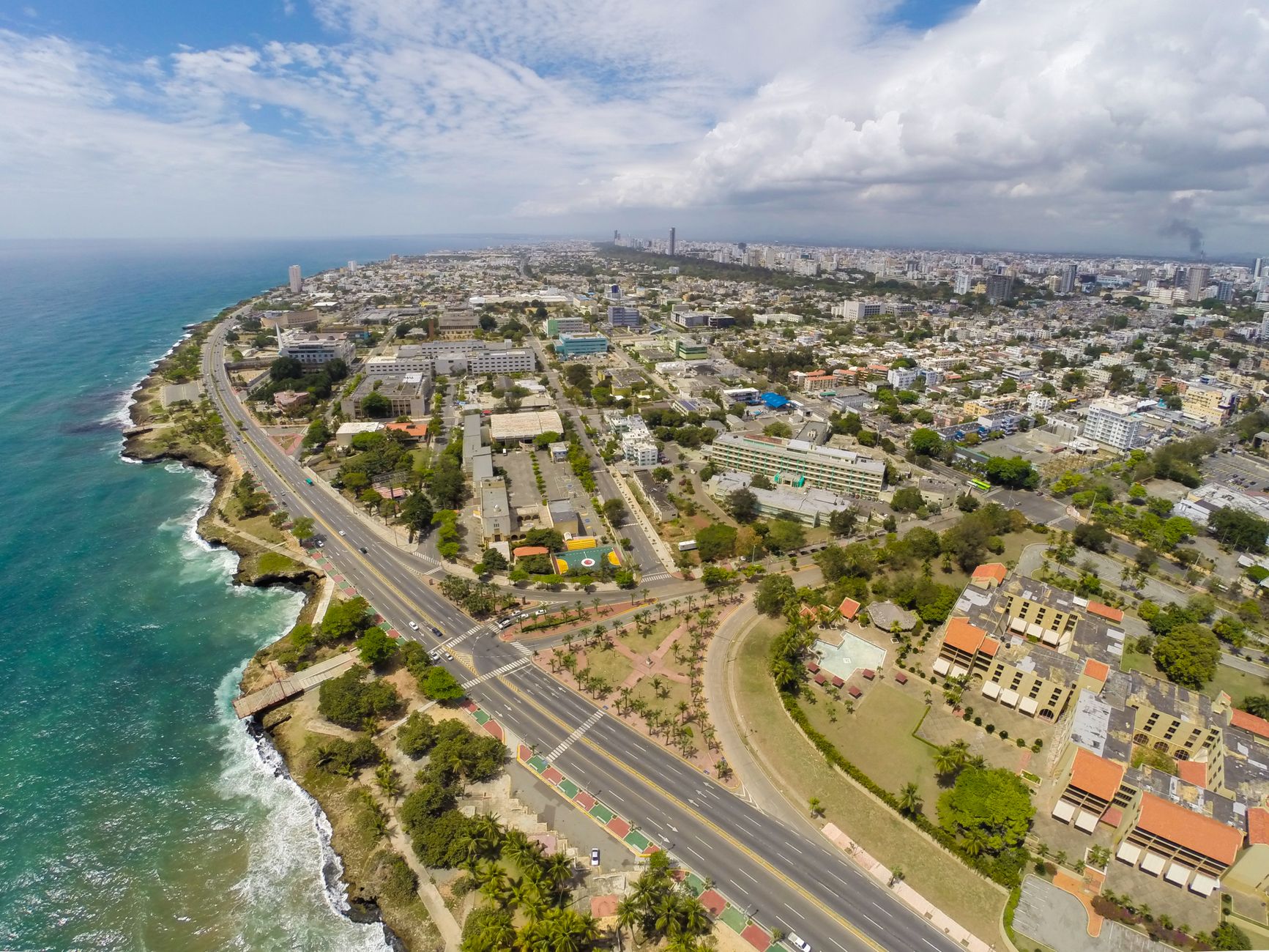
America's First City
Walk Calle Las Damas—laid in 1502, still loud with carriage wheels in your head. The coral-stone cathedral has been consecrating weddings for five centuries; the stones are warm even at dusk.
The first cathedral in the Americas smells like candle wax and sea salt, because the Caribbean is only three blocks away. Santo Domingo, Dominican Republic, keeps its 16th-century bones polished by salt spray and merengue bass lines that start at midnight and run straight through the workweek.
Researched from Wikidata, Wikipedia & official sources · fact-checked · How we make our guides →
SThe first cathedral in the Americas smells like candle wax and sea salt, because the Caribbean is only three blocks away. Santo Domingo, Dominican Republic, keeps its 16th-century bones polished by salt spray and merengue bass lines that start at midnight and run straight through the workweek.
This is a capital that forgets it’s a capital. Walk Calle Las Damas at dawn and you’ll pass lawyers in linen suits stepping around 500-year-old cobbles, while a man wheels a barrow of yucca bigger than your torso, humming bachata under his breath. The city’s pride isn’t in monuments—it’s in the fact that people still live inside them, hang laundry from wrought-iron balconies, and fry tostones in ground-floor kitchens that once stored Spanish gold.
Order sancocho from a comedor at noon: the seven-meat stew arrives with a mound of rice, avocado fan, and a shot of sour-orange sauce that makes the broth sing. It costs less than a metro ride in Madrid and tastes like someone’s grandmother is trying to cure your jet lag, heartbreak, and circulatory system in one bowl. That’s the trick of Santo Domingo: history is edible, music is medicinal, and every block functions as both museum and living room.
What makes this place worth slowing down for.
Walk Calle Las Damas—laid in 1502, still loud with carriage wheels in your head. The coral-stone cathedral has been consecrating weddings for five centuries; the stones are warm even at dusk.
The Columbus Lighthouse throws a 200-meter cruciform beam across the night sky every evening at 19:00. Up close, it feels like standing inside a stadium-sized geometry lesson.
Los Tres Ojos drops you 15 meters below street level into limestone chambers filled with turquoise, emerald, and ink-blue lakes. A two-minute ferryman ride adds a fourth lake open to the sky.
Kahkow Experience starts with raw cacao in a 16th-century warehouse and ends with a cup thick enough to stand a spoon in. The aroma alone rewinds Santo Domingo to 1509.
Where to wander, by quarter — each with its own rhythm.
A UNESCO grid where the stones are soft enough to dent your shoes. Cathedral bells mark the quarter hour, cafés spill onto Parque Colón, and Calle El Conde turns into an open-air sofa after 8 p.m.—vendors sell jewelry, couples dance merengue between tables, the air tastes of diesel and roasting coffee.
Glass towers, valet parking, and the city’s only third-wave espresso bars. Bankers negotiate over toro sashimi at lunch; after midnight the same restaurants become cocktail labs where bartenders smoke cane syrup under glass domes. If you need an ATM that dispenses US dollars and a mezcal negroni within four minutes, this is the block.
Victorian houses painted the colors of dried spice—achiote, oregano, coffee—now hold art galleries where the owner is usually the artist. Evenings smell of bread from panaderías that still close for siesta; the sidewalks are wide enough for domino tables that glow under streetlamps like small green moons.
A six-lane seafront runway where joggers share the breeze with carnival dragons in February and open-air discos every Saturday. Salt rusts the railings; vendors sell coconut water hacked open with machetes the length of your forearm. At 3 a.m. the clubs pump dembow so loud the bass rattles car mirrors three intersections inland.
The quieter cousin of Piantini: tree-lined, embassy-adjacent, full of restaurants that don’t need neon signs. Come for churrasco served on wooden boards and sports bars where the commentary switches from Spanish to English depending on who’s batting. Parking attendants know your car by the second visit.
A working-class wedge where Barra Payan has been slicing roast-pork sandwiches since 1956 and the colmado on every corner doubles as a parliament. Merengue classics leak from tin roofs; the dress code is flip-flops and confidence. Taxi drivers eat here at 4 a.m. before heading home—follow their lead.
Five centuries of conquest, catastrophe and reinvention on the Ozama River
Christopher's brother burns the failed settlement of La Isabela and marches east with 300 survivors. On the east bank of the Ozama he lays out a grid that still determines traffic patterns today. The first permanent European city in the Americas rises in hurricane season, built from coral blocks and Taíno labor.
Nicolás de Ovando arrives with 2,500 settlers and transforms the frontier outpost into the capital of Spain's American empire. Calle Las Damas becomes the first paved street in the New World. Hernán Cortés, Francisco Pizarro and every major conquistador walk these stones before launching their campaigns.
The viceroy's son constructs a 55-room limestone fortress overlooking the river. Alcázar de Colón becomes the first viceroyal residence in the Americas, its balconies designed so María de Toledo could watch ships unload gold without leaving her chambers. The palace hosts planning sessions for the conquest of Mexico and Peru.
Construction begins on what will become the oldest cathedral in the Americas. Master builder Luis de Moya uses coral limestone that still bleeds salt in humid weather. The Gothic vaults take 28 years to complete, by which time the city's golden age is already fading.
Pope Paul III authorizes Universidad de Santo Tomás de Aquino. Classes meet in a former hospital ward; professors teach Latin grammar to sons of conquistadors who will never see Spain. The university's medical school performs the first documented autopsy in the Americas in 1540.
Sir Francis Drake's 700-man fleet appears at dawn on New Year's Day. English cannonballs demolish Fortaleza Ozama's river wall. After a month-long occupation and 25,000-ducat ransom, Drake departs with church bells, cannon, even the cathedral's brass doors. Santo Domingo smolders for weeks; some neighborhoods never rebuild.
Admiral William Penn and General Robert Venables land 8,000 troops east of the city. Criollo militia and freed slaves fight house-to-house through the Colonial Zone. The English retreat after three weeks, leaving 1,200 dead. The victory becomes foundation myth for Dominican identity.
The Treaty of Basel cedes Santo Domingo to France. Spanish families pack church records and sail for Cuba and Venezuela overnight. The city that launched Spain's American empire becomes an afterthought, its population dropping below 6,000. French administrators never fully arrive; the colony drifts leaderless.
Born on Isabel la Católica street, the watchmaker's son grows up speaking Spanish under Haitian rule. In European cafés he plots revolution, founding La Trinitaria in 1838. His vision of a Dominican republic—neither Spanish nor Haitian—still shapes the country's identity. He dies in exile; the city honors him as Padre de la Patria.
President Jean-Pierre Boyer's 12,000-man army marches unopposed through Puerta del Conde. For 22 years, French-speaking administrators rule from the Alcázar, imposing Haitian law and abolishing slavery. Dominican merchants learn Creole; Spanish becomes the language of whispered resistance.
At dawn, Juan Pablo Duarte's followers storm Puerta del Conde and raise the tricolor flag. Francisco del Rosario Sánchez proclaims the Dominican Republic from the same stone archway where Spanish governors once entered. Haitian soldiers retreat east within weeks; the city becomes capital of a nation smaller than Virginia.
President Pedro Santana kneels before Queen Isabella II's portrait in the cathedral. The Dominican Republic votes to rejoin Spain, hoping for protection from Haiti. Spanish troops parade down Calle El Conde; merchants cheer, then watch in horror as Santana suspends the constitution. The annexation lasts four bitter years.
8,000 American troops land to protect customs revenue from European creditors. Machine-gun nests guard the Colonial Zone; naval officers sleep in Diego Columbus's bedroom. The occupation lasts eight years, imposing English street names and baseball that never quite leave.
200-kph winds slam the city at dawn. The Ozama River rises six meters, drowning barrios that never appeared on maps. Between 2,000 and 8,000 die; the cathedral loses its roof for the third time in history. Rafael Trujillo uses reconstruction to seize power three months later.
A seven-year-old boy watches his mother's dressmaker fit society ladies in a colonial courtyard. Young Óscar sketches designs on cathedral bulletins. By 18 he'll be studying in Madrid; by 30 he'll dress Jacqueline Kennedy. Santo Domingo's couture tradition starts with a child measuring hems while hurricanes howl outside.
Sign painters work through the night changing every 'Santo Domingo' to 'Ciudad Trujillo.' The dictator's face replaces Columbus on currency. Street vendors sell portraits of the Generalissimo while secret police patrol in Ford Model Ts. The name sticks for 25 years; locals still call it 'la capital' to avoid saying either.
The future King of Merengue enters the world in Villa Juana, where drums echo from colmados every night. By 15 he's singing on Radio Caribe; by 25 he's revolutionizing merengue with saxophones and electric bass. He'll serve as mayor in 1998, but first he'll teach the world to dance Dominican.
Gunmen ambush the dictator's Chevrolet Bel Air outside the city. Bullets shatter the windows on Avenida Lope de Vega; Trujillo dies in a drainage ditch. Within weeks, 'Ciudad Trujillo' disappears from maps. Santo Domingo reclaims its name and begins the messy business of remembering.
Constitutionalists seize the Ozama fortress; tanks roll down Calle Las Damas where conquistadors once walked. U.S. Marines return—42,000 this time—to prevent 'another Cuba.' Machine-gun fire chips 400-year-old coral stone. The fighting ends after four months, leaving 3,000 dead and independence dreams deferred.
In the Manoguayabo neighborhood, an 11-year-old discovers he can make a baseball dance. He throws rocks at mangoes first, then tennis balls wrapped in tape. The scrawny kid who walks six kilometers to practice will become baseball's most dominant pitcher, proving that Santo Domingo doesn't just grow sugar—it grows legends.
A 200-meter concrete cross blazes light across the city for the 500th anniversary. The $70 million monument displaces 7,000 residents; its beam visible from Puerto Rico consumes more electricity than some provinces. Pope John Paul II blesses what may or may not contain Columbus's bones. The city gains its most debated landmark.
The census counts 965,040 in the city proper, 3.3 million in the metro—larger than San Juan or Port-au-Prince. Metro trains glide above traffic jams; colonial buildings house tech startups. The first city Europeans built in the Americas has become the Caribbean's undisputed economic engine, still growing faster than its infrastructure can follow.
The people who shaped the city — and were shaped by it.
He plotted independence from Haiti in a back room on Calle El Conde; today the house is a modest museum where schoolkids leave hand-written thank-you notes on his desk. Duarte would still recognize the street grid—and the stubborn pride.
The boy who sketched gowns in a modest Colonial home grew up to dress Jackie Kennedy. Return in gala season and you’ll see his silhouettes floating across Plaza España—he insisted Dominican lace never looked better than under these lanterns.
Big Papi learned to swing on makeshift Santo Domingo sandlots; the Estadio Quisqueya still sells out when he throws the first pitch. He claims the roar here is louder than Fenway—because everyone in the crowd is family.
He turned street-corner merengue into international vinyl, then ran the capital like a brass section—loud, tight, impossible to ignore. Dance clubs still spin his 1960 singles; locals swear the tempo matches the city heartbeat.
She wrote verses about island light while running the first university for women—right under the noses of 19th-century generals. Her tiny courtyard classroom now hosts slam poets who claim her ghost edits their lines.
Christopher’s brother laid the first stones in 1496 and still lies beneath the floor of the ruined San Francisco monastery. He’d be stunned the street pattern he drew is followed by Uber drivers five centuries later.
Where locals actually book dinner — not the tourist menus.
Mashed green plantains topped with pickled red onions—breakfast for half the city. The texture flips from gluey to silky when the cook folds in a spoon of butter at the end.
A seven-meat stew that simmers all afternoon; the broth tastes like the history of the island reduced to a bowl. Ask for it with a side of aguacate to cut the richness.
Snapper or grouper bathed in coconut milk, tomatoes, and bell pepper. The sauce thickens just enough to cling to the rice like a second skin.
Garlic-pressed plantain ball stuffed with chicharrón or shrimp. Order the small unless you plan to nap immediately afterward.
Twice-fried plantain cups filled with cheese, shrimp, or beef. Crunch gives way to molten filling; eat them while the oil still steams.
The local lager served so cold the bottle frosts. Pair it with greasy frituras at a colmado counter for the most honest meal in town.
Small things that change how the city treats you.
Public buses don’t reach Las Américas airport—use the official taxi stand outside arrivals or book Uber. A fixed-rate cab to the Colonial Zone runs about USD 40.
Be on Calle Las Damas 30 min before sunset; the coral-stone façades glow amber and the Ozama River mirrors the sky—tripod optional, awe guaranteed.
Menus quote both USD and DOP, but card machines often bill in pesos at a sneaky 5 % markup. Withdraw DOP at any airport ATM and skip the forex counter.
Reach the cave park at 9 a.m. when the underground lakes are still mirror-still and tour buses haven’t arrived; the fourth lake is reached by a free ferry raft inside the cavern.
Convento de los Dominicos keeps irregular hours—go mid-morning on a weekday or you’ll find padlocks instead of 1510-vintage vaults.
The city, as it actually looks.
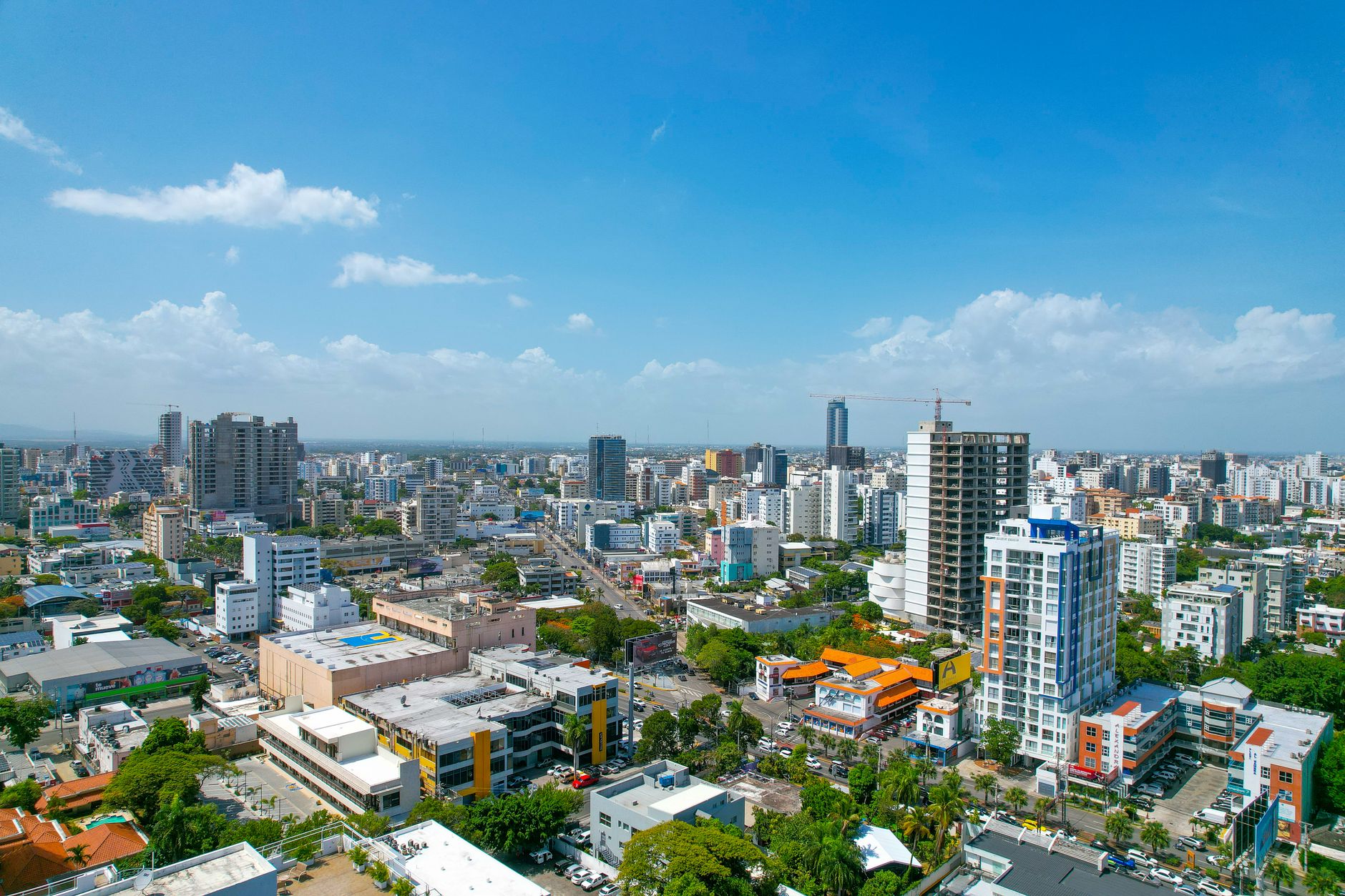
A stunning aerial perspective of the bustling urban landscape and modern architecture of Santo Domingo, Dominican Republic.
AnthonyC @AnayTonyporelmundo on Pexels

An elevated view of the historic Iglesia de las Mercedes, a beautiful example of colonial architecture in the heart of Santo Domingo, Dominican Republic.
Daniel Cortorreal on Pexels

A charming colonial-style building in the historic streets of Santo Domingo, Dominican Republic, adorned with blooming bougainvillea.
Ian Ramírez on Pexels

The beautiful, historic interior of a church in Santo Domingo, Dominican Republic, showcasing traditional vaulted architecture and a grand golden altar.
Julia Volk on Pexels
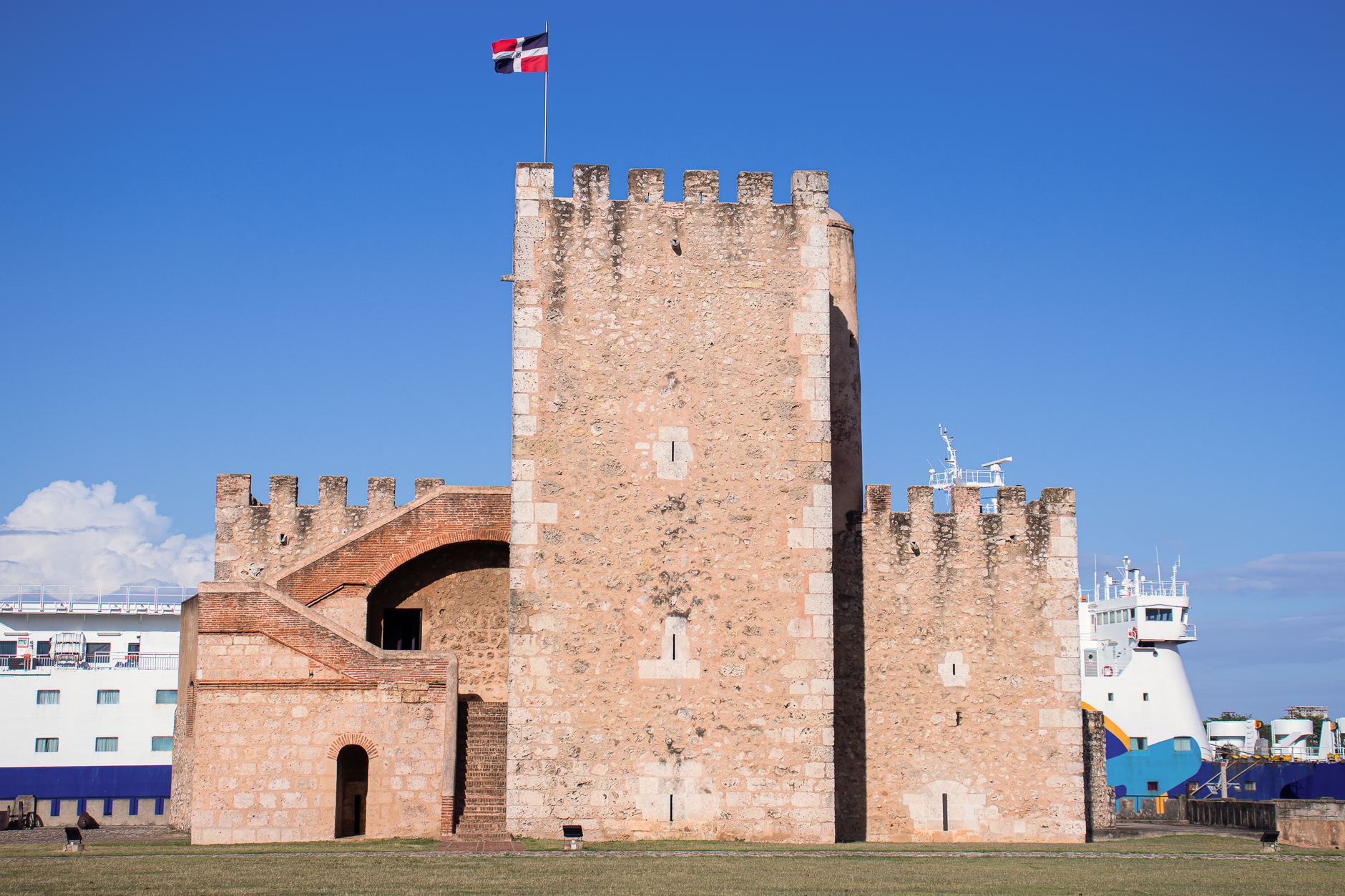
The iconic Torre del Homenaje stands tall at Fortaleza Ozama, a historic 16th-century fortress located in the Colonial Zone of Santo Domingo.
Julio Loaiza Miranda on Pexels

The historic streets of Santo Domingo, Dominican Republic, glow under a warm sunset sky, showcasing a blend of colonial architecture and urban charm.
Julia Volk on Pexels
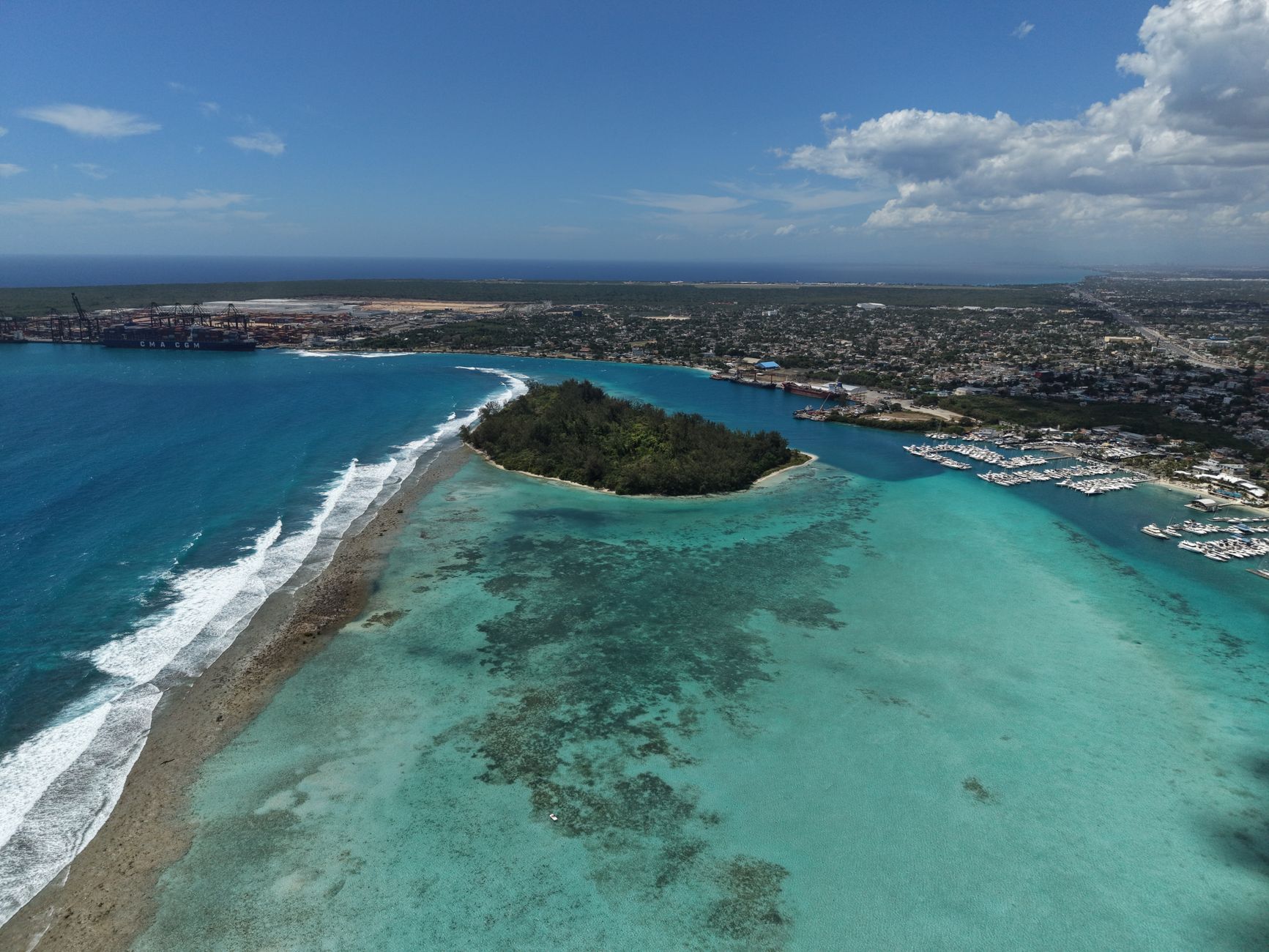
A stunning aerial perspective of the Santo Domingo coastline, showcasing the contrast between the vibrant coral reefs, the bustling port, and the city's urban landscape.
Arlin Raf on Pexels

Golden hour sunlight illuminates the vibrant, historic architecture along a street in Santo Domingo, Dominican Republic.
Julia Volk on Pexels

The weathered stone facade of this historic building in Santo Domingo, Dominican Republic, stands proudly adorned with national flags.
Julia Volk on Pexels
Yes—one day here shows you the Americas’ oldest street, cathedral, and fortress, all within ten walkable blocks. You can still reach Boca Chica beach in 45 min afterwards if you crave sand.
Two full days cover the Colonial core, Los Tres Ojos, and a night of merengue on the Malecón. Add a third day if you want the zoo, botanical garden, and a baseball game.
Hotels and souvenir stalls on Calle El Conde accept USD, but supermarkets, guaguas, and local cafés price only in Dominican pesos. Carry small DOP notes for street snacks.
Stick to the well-lit Colonial grid after dark; side streets south of Plaza España empty out. Official taxis or Uber are safer than hailing random motoconchos.
Uber Pool averages USD 25–30; an official taxi is USD 40 flat. There is no public bus—any website claiming otherwise is outdated.
Ready to book?
Las Américas International Airport (SDQ) sits 32 km east of downtown. No public buses run to the terminals—use the official taxi rank or Uber. Domestic flights land at La Herrera (HEX) west of the city.
Metro lines L1 (north-south) and L2 (east-west) cover most ground for RD$35 a ride. Guaguas—colorful private buses—fill gaps but operate without posted routes. The Colonial Zone is best on foot; bikes are rare outside Mirador Sur.
Expect 27–32 °C year-round. January–March is driest and breeziest; May brings steam and sudden cloudbursts. Hurricane risk peaks August–October. Arrive mid-January for the lowest hotel rates and clearest skies.
Spanish is the default, but English works in Zona Colonial and major hotels. Dominican peso (DOP) rules—carry small bills for street snacks and guagua fares. ATMs at every corner; airport exchange rates are poor.
Daylight in the Colonial Zone is relaxed; after 22:00 stick to Calle El Conde and Parque Colón. Take only radio-dispatched taxis elsewhere, and leave flashy jewelry at the hotel.
0 places, one continuous walking route. Free with your first city.