
Lowest Point in Africa
Lake Assal sits 155 meters below sea level, ten times saltier than the ocean. The emerald water ringed by snow-white salt flats feels like driving onto another planet, only 90 minutes from downtown.
The first thing you notice in Djibouti City is the smell of cardamom and salt, drifting from the port at dawn when fishermen unload hamour still flapping from the Red Sea. By 8 AM the same air carries diesel from Ethiopia-bound trucks and incense from the Hamoudi Mosque, creating a perfume that belongs solely to this capital perched between desert and ocean. Djibouti City does not whisper its contradictions—it shouts them across the Gulf of Tadjoura with megaphones made of coral and volcanic stone.
Researched from Wikidata, Wikipedia & official sources · fact-checked · How we make our guides →
DThe first thing you notice in Djibouti City is the smell of cardamom and salt, drifting from the port at dawn when fishermen unload hamour still flapping from the Red Sea. By 8 AM the same air carries diesel from Ethiopia-bound trucks and incense from the Hamoudi Mosque, creating a perfume that belongs solely to this capital perched between desert and ocean. Djibouti City does not whisper its contradictions—it shouts them across the Gulf of Tadjoura with megaphones made of coral and volcanic stone.
Three cultures occupy the same square kilometer without blending. Afar nomads in red-and-black shawls drink Ethiopian coffee beside Yemeni traders eating sambusa from paper cones, while French Legionnaires—stationed here since 1888—argue over football scores at Café de la Gare. The city runs on khat leaves that arrive daily from Ethiopia at noon; when the horns sound announcing fresh bundles, banks close and conversations pause mid-sentence until the afternoon heat breaks.
This is a place where salt flats stretch 150 meters below sea level one hour west, and whale sharks glide through translucent water twenty minutes east. Where the national dish, skoudehkaris, tastes like Persian rice met Somali spice and decided to stay for French colonial rule. Where you can walk from a 1906 mosque to a Chinese-built independence monument in twelve minutes, then watch the sun dissolve into the Gulf while eating blackened fish cooked against a wall of fire.
What makes this place worth slowing down for.
Lake Assal sits 155 meters below sea level, ten times saltier than the ocean. The emerald water ringed by snow-white salt flats feels like driving onto another planet, only 90 minutes from downtown.
The city's visual anchor rises above the African Quarter in candy-striped stone. Step inside at prayer time to hear the imam's voice ricochet off the coffered ceiling while shafts of light drop through the clerestory.
Djibouti's port is land-locked Ethiopia's lifeline; watch long-horned cattle, Toyota trucks and containers swap ships at the free observation deck. The diesel-and-seawater smell is half the show.
Where to wander, by quarter — each with its own rhythm.
Place Ménélik anchors this grid of whitewashed arcades built when Djibouti served as France's gateway to Ethiopia. Banks and pharmacies still operate beneath Moorish arches painted the color of bone, while Pizzaiolo serves blue-cheese pizza at plastic tables facing the 27 June 1977 independence monument. The rhythm here: shutters open at 7 AM, lunch from 12–3 PM, then absolute silence while the city sleeps off khat.
A maze of corrugated stalls where Les Caisses Market spills cardamom pyramids into alleyways barely wide enough for two goats. Here you'll find camel-meat sambusas sold from oil-drum grills, tailors sewing djellabas beneath tarps, and the Hamoudi Mosque's green dome rising above everything like a beacon. Friday afternoons smell of frankincense and grilled meat smoke.
From 5 AM the fishing port becomes a theater: boats painted turquoise and orange unload hamour and kingfish while auctioneers slap salt-water hands to bid. The corniche stretches 3 kilometers of cracked sidewalk where Havana Café serves grilled lobster as container ships slide past carrying Ethiopia's entire coffee crop. At sunset, the Presidential Palace glows pink across water that reflects both mosque minarets and cargo cranes.
After 7 PM this working-class quarter transforms into the city's most honest kitchen. Acacia-wood fires roast camel marinated in yogurt while men in plastic chairs argue over football using the same gestures their grandfathers used for camel races. Grilled goat costs 1,000 DJF with bread and salad; the smoke drifts across corrugated roofs until 2 AM.
Embassy row climbs a hill where bougainvillea spills over villa walls and the call to prayer carries faintly from below. Here diplomats' children play in compounds that cost more per month than most Djiboutians earn in a year, creating a hushed counterpoint to the African Quarter's chaos three blocks away.
The French-built Djibouti–Addis Ababa railway terminus now hosts Sings Indian Restaurant in what was once the first-class waiting room. Rusted tracks disappear into acacia scrub where baboons wait for garbage trucks. The architecture still reads 'colonial ambition' in every iron strut.
From prehistoric elephant hunters to modern military superpowers, all on a coral promontory
Someone smashed elephant bones with basalt flakes on the Gobaad Plain. The cuts are still visible. These are the earliest known tool-users in the region, long before the Red Sea had its current shoreline.
Long-horned, hump-less cattle bones appear beside new lakes that would later become the salt-crusted basins of Assal and Abbe. People still painted antelope on rocks, but herds now outnumbered game.
Egyptian scribes record voyages to the Land of Punt, most likely these very shores. Gold, ivory, and myrrh left here on reed boats bound for the Nile. The first tax receipts in Africa may have been signed on this beach.
Coins of King Endybis circulate in the market at Zeila, just up the coast. The Aksumite Empire’s customs agents collect duty on frankincense bound for Rome. Greek is spoken in counting houses.
Mosques of coral-rag rise under the Sultanate of Ifat. Caravans from Harar rest here before the final march to the coast. The adhan echoes across a town still built mostly of salt blocks and mangrove poles.
A treaty signed in Paris gives France a coaling station across the bay. The price is 10,000 thalers and a promise of protection. No one yet imagines a city on the naked coral reef called Ras Djibouti.
Engineers drive iron piles into living reef and lay out streets at right angles. Djibouti City is declared capital of French Somaliland. Within a year the customs house clears more cargo than Obock managed in a decade.
The Governor’s residence dismantles overnight—doors, shutters, even the flagpole—loaded onto dhows and re-erected here. Civil servants wake in Obock, lunch in Djibouti. The town’s population triples before the year ends.
Governor Lagarde renames the dusty parade ground after the Ethiopian emperor who just granted France the railway concession. Somali, Afar, and Arab traders gather here to gossip beneath new acacia saplings.
Born in the Afar quarter of Arhiba, he will herd goats as a boy and rule the republic as a man. Independence negotiations in 1977 hinge on his ability to translate French legal jargon into Somali poetry.
The first through train whistles into the station, 784 km of track climbing to 2,400 m. Ethiopian coffee, hides, and gold now flow to the Red Sea. Djibouti’s harbor dredged deeper to swallow the traffic.
He grows up speaking Afar, Somali, Arabic, and French—sometimes in the same sentence. His novel ‘Passage of Tears’ will make the world taste the salt of Lake Assal and the diesel of the port.
Paris renames the colony ‘French Territory of the Afars and Issas’ to calm ethnic tensions. Overnight, postage stamps become collectors’ items. The airport’s IATA code stays—JIB—already hinting at the future country.
The tricolor is lowered, the new light-blue flag raised to drums and ululation. Hassan Gouled Aptidon becomes president. French officers leave their villas; Somali and Afar families move in before the paint dries.
A shanty of tin and cardboard triples in size beyond the colonial barbed-wire boundary. Water trucks sell by the jerrycan. The government promises pipes, delivers election posters. Balbala will soon hold half the city.
Gunfire echoes from the Arhiba quarter as FRUD rebels battle loyalists. Tanks patrol Boulevard de la République. By dusk, the market smells of gunpowder instead of cardamom. The civil war will last nine years.
He trains on the cracked concrete of Stade du Ville, lapping footballers and goats. By 2014 he owns the world indoor 1500 m record and a national holiday. Kids in Balbila now run barefoot pretending to be him.
Ismaïl Omar Guelleh, nephew of Aptidon, wins 74% of the vote. The old president retires to a villa overlooking the Gulf. New portraits go up before the paint dries—same framing, different tie.
US Marines move into the old French Foreign Legion base. Satellite dishes bloom like white mushrooms. The runway lengthens to accept B-52s. Djibouti becomes the only place where American, Chinese, and Japanese bases coexist within taxi distance.
A Chinese-built train slices the journey to Addis to twelve cool hours. The old 1917 locomotive is parked beside the station like a retired racehorse. Freight containers now move at 120 km/h instead of 35.
The people who shaped the city — and were shaped by it.
He grew up in the African Quarter’s alleyways, turning the scent of spices and sound of port sirens into French prose that now sits on Paris bookstore shelves. Walk Rue de Venice at dusk and you’ll see the same pink light that colours his pages.
From a railway clerk to 22 years in the palace he could never photograph, Aptidon shepherded Djibouti out of French Somaliland and into the UN. Today his portrait still hangs in the arrivals hall, watching every visitor negotiate their first taxi fare.
He trained on the cracked track beside the old colonial stadium, chasing lap times while goats wandered across lane four. When he won world indoor gold in 2014, the city fired truck horns in convoy along the corniche—Balbala to the port never sounded prouder.
Where locals actually book dinner — not the tourist menus.
Triangular fried shells stuffed with cumin-laced beef or goat, dipped in fiery harissa. Vendors sell them still sizzling outside Les Caisses Market for 100 DJF apiece—three make lunch.
Looks like a crumpet, tastes mildly sour. Tear-and-scoop vehicle for every stew; best eaten warm at 06:00 when neighbourhood women stack it on wicker trays.
Weekend lamb-and-rice pilaf cooked in ghee with okra and cardamom. Restaurants serve it communal-style on a tin platter; spoons optional, right hand polite.
Rue de Venice waterfront joint grills half-kilo lobsters while you watch tanker lights blink across the Gulf. No menu—point at the crustacean, agree price (≈ 3,500 DJF), wait ten minutes.
Hole-in-the-wall juice bar listing 45 flavours from guava to tamarind. Order the avocado-honey-milk blend; they blitz it so thick you need a spoon.
Near the old station, open all afternoon when the city shuts down. Try the goat biryani—spice level punches through the afternoon heat better than air-conditioning.
Small things that change how the city treats you.
Plan any walking for sunrise or after 5 p.m.; between noon and 15:00 the city empties and pavement hits 45 °C. Even the taxi drivers nap in the shade.
Green-and-white taxis never have meters—settle the fare before you sit. Airport to centre is fixed at 2,000 DJF ($11); add 200 DJF for each extra stop.
Soldiers will wave you off from the Presidential Palace, port gates, and any government building; photographing the market is fine if you ask the vendor first.
Grilled lobster on the corniche costs half after 20:00 when boats unload; pair it with green chili sauce and a 40-cent glass of tamarind juice.
Only upmarket hotels take cards—carry small-denomination DJF or crisp $1/$5 notes for taxis, juice stalls, and the spice market. ATMs sometimes run dry on weekends.
November–February boats leave the marina at 06:30; you’ll be back for lunch and the water is flat. February sees the highest strike rate but also the most boats—book a day ahead.
The city, as it actually looks.
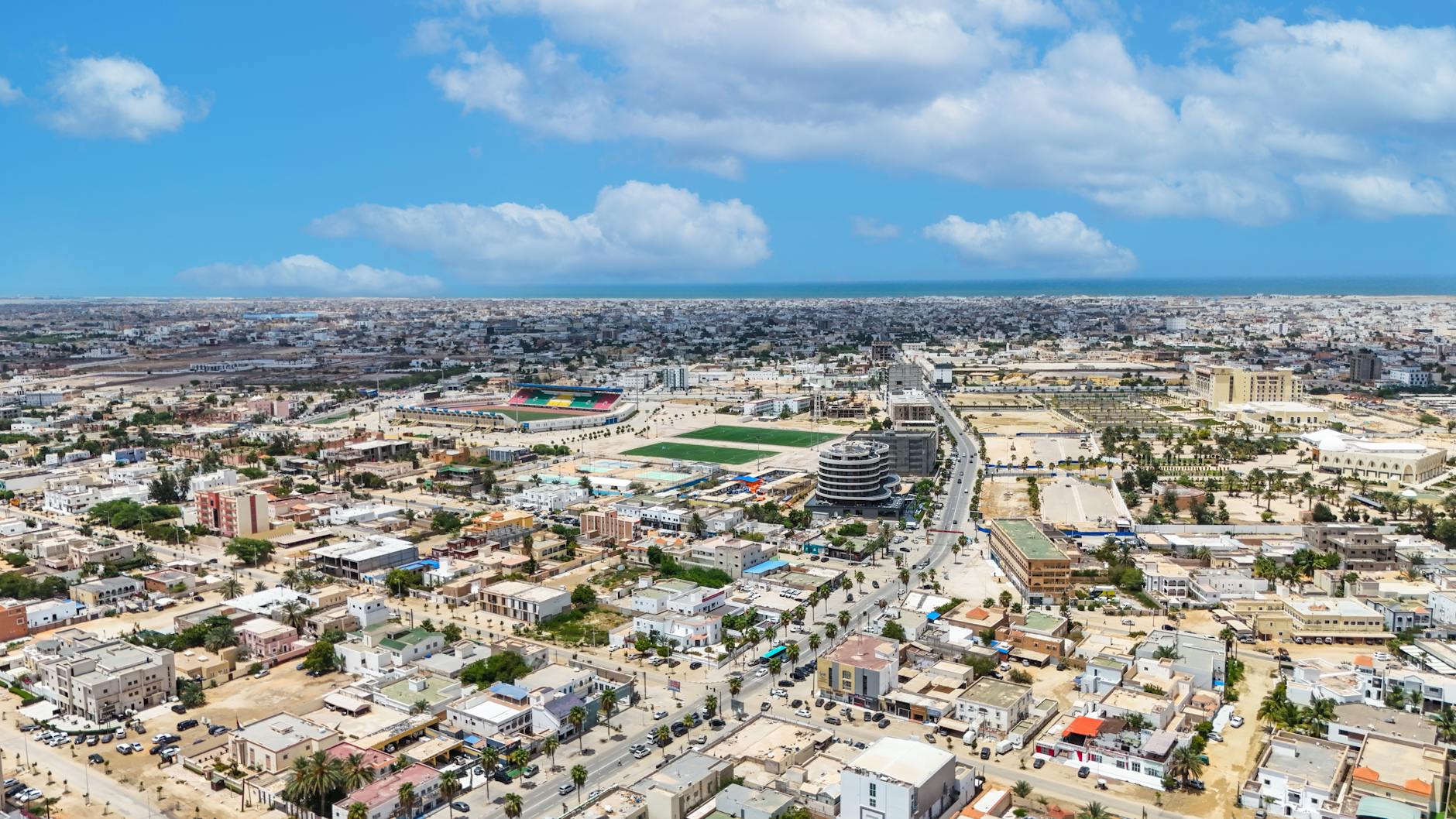
An expansive aerial perspective of Djibouti City, showcasing the unique urban layout, local architecture, and the surrounding arid landscape of Djibouti.
laye Photographe on Pexels

An expansive aerial perspective of the dense urban layout of Djibouti City, Djibouti, captured during the soft light of sunset.
SINAL Multimédia on Pexels
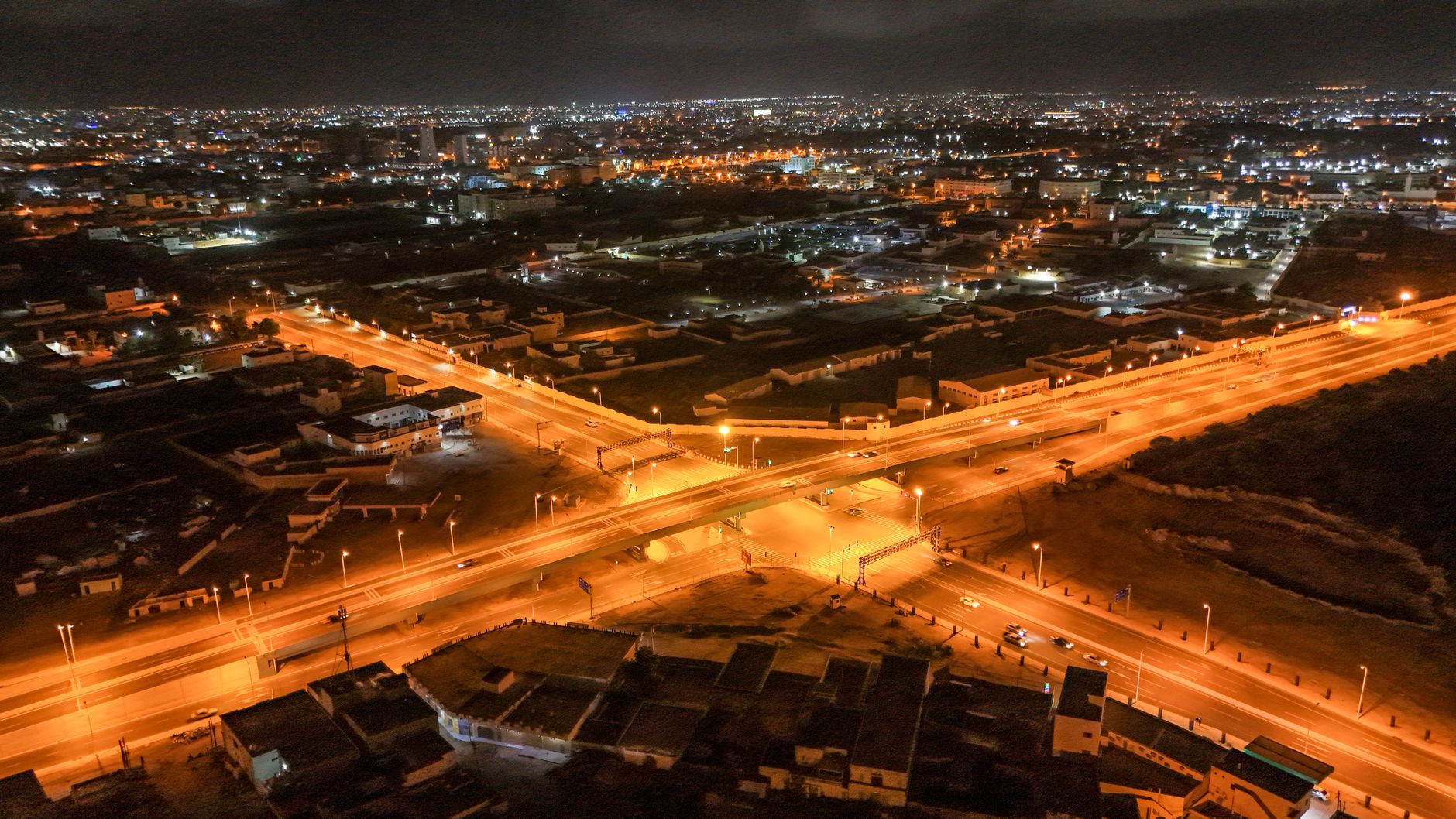
A stunning aerial view of Djibouti City at night, showcasing the vibrant glow of the highway intersection and the sprawling urban landscape.
laye Photographe on Pexels
Yes, if you want Africa’s saltiest swim in emerald Lake Assal and breakfast beside 100-year-old Yemeni mosques before the heat arrives. The capital itself is small, but it’s the launch pad for day trips that feel like visiting another planet—chimney rocks steaming at dawn, whale sharks gliding under your snorkel, and lava fields that crunch like brittle glass.
Three full days is the sweet spot: one for the city loop (Place Menelik, Hamoudi Mosque, sunset corniche), one for Lake Assal and Goubet Bay, one for Lake Abbe’s sunrise chimneys. Add an extra day if you’re set on whale sharks or a cross-border dip into Somaliland.
Street crime is low and the centre is heavily patrolled, but the U.S. still flags a terrorism risk from nearby Somalia. Stick to the European Quarter after dark, avoid the Eritrean border zone, and keep copies of your passport separate from the original.
Most passports can buy a 31-day visa on arrival for $23 paid in cash. Have six months’ validity and a yellow-fever certificate if you’re coming from an endemic country; the eVisa site works but crashes often, so don’t rely on it last-minute.
Taxi is the only option—7 km, 20 minutes, fixed 2,000 DJF. There’s no public bus and ride-hailing apps don’t operate; if you hate haggling, pre-book a private transfer online for about €20.
Budget travellers can survive on $60–70 sharing taxis and eating street sambusas; mid-range runs $120–180 once you add guided day trips and grilled lobster dinners. Diesel, bottled water, and imported beer are pricey because everything arrives by ship.
November–February brings 28 °C days, calm seas, and whale sharks just offshore. June–September tops 41 °C with furnace-like humidity; even locals flee to the Ethiopian highlands.
Ready to book?
Flights land at Djibouti-Ambouli International Airport (JIB), 7 km south. Ethiopian, Turkish, Air France and FlyDubai connect via their hubs. Overland, the Djibouti–Addis Ababa railway ends at the downtown terminus near Place Menelik.
No metro, tram or ride-hailing apps exist. Green-and-white taxis cruise without meters—agree on 1,800 DJF (≈ €9) for airport to centre. Shared taxi collectifs cost 50–100 DJF per hop; wave one down and shout your destination.
Nov–Feb: 23–31 °C, whale-shark season, cool enough to walk. Mar–May climbs to 33 °C. Jun–Sep hits 41 °C with furnace humidity; most visitors avoid. Rain is negligible year-round, so any month is dry—only the heat varies.
Heavy military presence keeps street crime low, but the US still flags Level-2 terrorism risk. Don't photograph government buildings or the Presidential Palace. The Eritrean border (10 km north-west) is off-limits due to landmines.
0 places, one continuous walking route. Free with your first city.