Odense
Denmark Updated Apr 2026
Bicycles whisper past half-timbered houses, then the street drops you into a museum by Kengo Kuma where two-thirds of the building disappears underground. That contrast is Odense, Denmark in a sentence: fairy-tale timber above, sleek design below. Hans Christian Andersen still shapes the city's self-image, but the place feels less like a shrine than a city quietly rewriting itself.
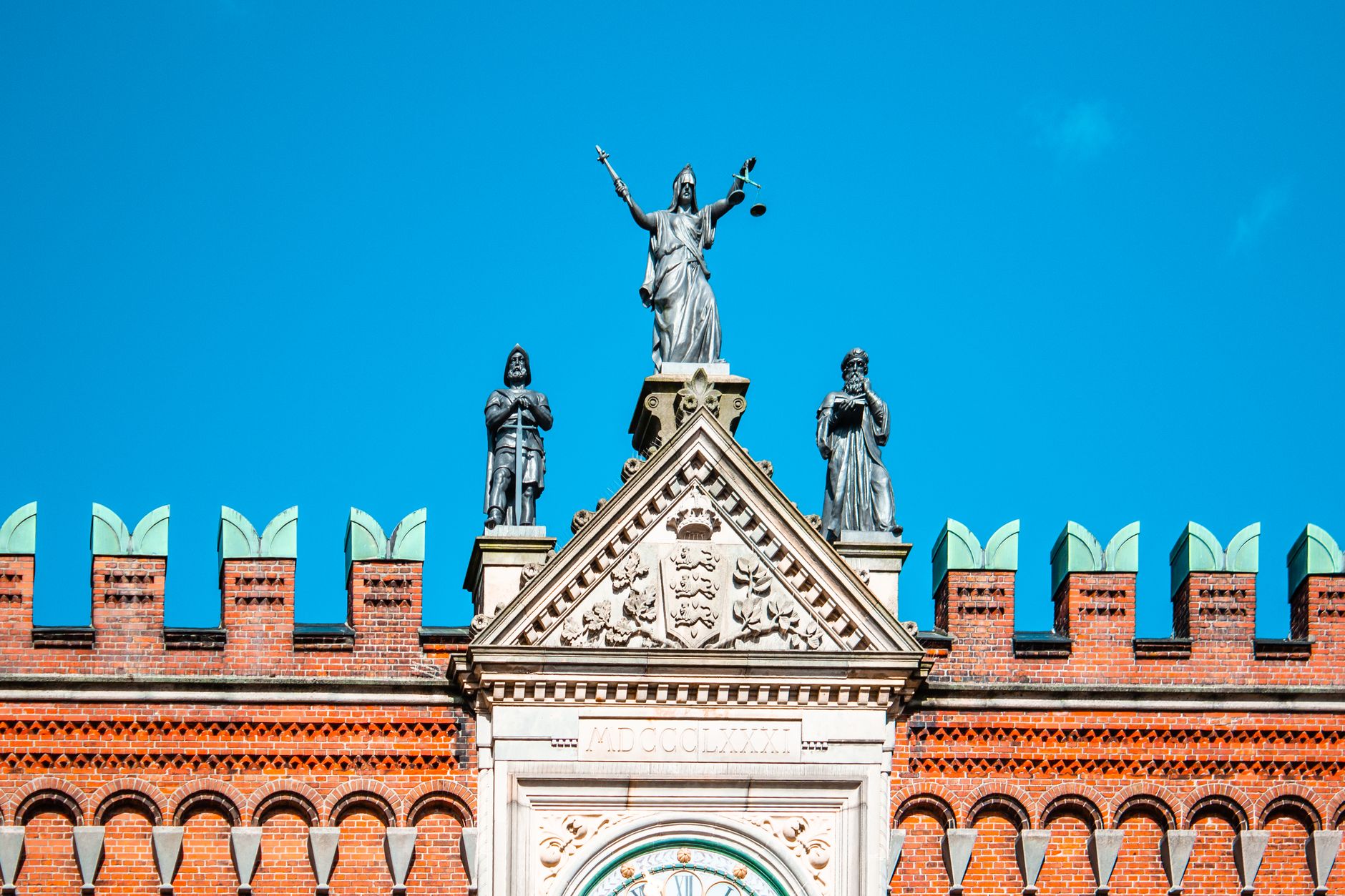 Photo: Jasmin Börsig / Pexels
- Attractions
- 12
- Trip length
- 2-3 days
- Best season
- Late spring to early autumn (May-September)
Why Odense
Built from cited sources · see the method · How we make our guides →
Odense works because it stays human in scale. Fast trains from Copenhagen take a little over an hour, yet the center never feels hurried; you can walk from St. Canute's Cathedral to Brandts or the harbor in the time it takes a coffee to cool, with cobbles underfoot, brick facades catching the flat Danish light, and church bells carrying farther than you expect.
The old story here is deeper than Andersen. Nonnebakken, built around 970-980, sits inside the modern city as one of Denmark's UNESCO-listed Viking ring fortresses, while St. Canute's Cathedral ties Odense to the violent shift from Viking rule to Christian kingship; that means the city is not just about fairy tales, but about power, faith, and the long Danish habit of rebuilding without making a fuss about it.
Modern Odense shows up in repurposed warehouses, street art on harbor silos, and evenings that drift from smorrebrod to short films, jazz, or circus performance. Skip the idea of a grand capital in miniature. Odense is better than that: a compact city where old lanes, market squares, and post-industrial edges keep colliding in useful ways.
Andersen, Rewritten
Odense built its flagship H.C. Andersen museum as a piece of storytelling architecture, with about two-thirds of the experience tucked underground beneath a garden. The point is not relics behind glass; it is the strange, dreamlike logic of Andersen’s stories made physical.Vikings Under the Streets
Nonnebakken, one of Denmark’s five Viking ring fortresses, sits inside the modern city instead of out in a field. That changes how you read Odense: the medieval lanes and church towers are standing on top of a 10th-century power center.A City Built for Bikes
Odense moves at bicycle speed, which suits it. More than 540 km of cycle paths, a compact center, and quick links between old town, harbor, and parks make the city feel less like a checklist and more like a place you can actually inhabit.Harbor, After Industry
The harbor has traded freight for culture without scrubbing away its rough edges. Storms Pakhus, the ROA silo mural, DYNAMO, and the walk over Byens Bro show a city that reused its warehouses instead of pretending they never existed.
Neighborhoods
Where to wander, by quarter — each with its own rhythm.
Old Town and Andersen Quarter
This is the Odense most visitors imagine, and for once the postcard version is not lying. Around H.C. Andersen's House, his Childhood Home, and the leaning pastel houses on small lanes, the city feels intimate rather than staged; cobbles mute your steps, bakery windows steam up in winter, and streets like Vintapperstraede give the quarter its real texture.Brandts and the Latin Quarter
Brandts turns a former textile factory into the city's sharpest cultural district. You'll find the art museum, cafes, cinema, bars, and smaller venues folded into brick industrial buildings, with Vestergade nearby for dinner or a late drink; this is where Odense feels least trapped by its fairy-tale reputation.Walking Street Quarter
Around Jernbanegade, Graabroedre Plads, and the central pedestrian streets, Odense becomes practical, social, and a little louder. Restaurants, wine bars, pubs, and chain shops mix with older facades, so this is the useful district for an easy first evening when you want dinner, people-watching, and no tactical planning.Odense Harbor
The harbor shows what the city has been doing with its old industrial skin. Storms Pakhus fills a warehouse with food stalls and bars, DYNAMO brings circus and performance into the area, the harbor bath gives the water a local purpose again, and the big ROA mural on the silo makes sure nobody mistakes this quarter for a museum piece.Mointergaarden and Sortebrodre Torv
This pocket east of the cathedral is where Odense's city history becomes easier to read. TID and the preserved streets around Moentestraede add Viking, mercantile, and everyday layers to the story, while Sortebrodre Torv still works as an actual market square on Wednesdays and Saturdays, with flowers, fish, cheese, and the useful noise of ordinary life.ODEON and the New City Center
The district around ODEON and the rebuilt Thomas B. Thriges area explains modern Odense better than any slogan could. What used to be a car-heavy barrier now links the station, the center, and the harbor more cleanly, and the architecture is contemporary without trying too hard to impress you; Byens Bro nearby makes the point in steel and pavement.
Plan your trip
Before you go
- Getting There
- For most visitors in 2026, the practical gateways are Copenhagen Airport (CPH) and Billund Airport (BLL); Hans Christian Andersen Airport (HCA) north of town is mainly charter and business traffic. Trains run from CPH Terminal 3 to Odense Banegård Center in about 1.5 hours, while Billund usually means Ekspresbus 43 to Vejle Trafikcenter and then a train to Odense. By rail, Odense Banegård Center is the main intercity station and Hjallese Station is the key southern interchange; by road, the city sits directly on the E20 across Funen.
- Getting Around
- Odense has no metro; its urban spine is Odense Letbane, a one-line light rail with 24 stops running roughly 14 km from Tarup Center to Hjallese Station. City buses fill the gaps, and free route 10 loops through the center near the station, H.C. Andersen’s House, the cathedral, and Brandts. In 2026, local tickets include Odense NOW at DKK 15 for adults for 75 minutes and a Funen/Langeland day ticket at DKK 75; the old physical Rejsekort is being phased out on 29 May 2026, so use Rejsebillet or app-based tickets instead.
- Climate & Best Time
- Expect a cool maritime rhythm: spring around 8-12C, summer around 15-22C, autumn around 6-14C, and winter often 0-4C with wind and damp cold that feels sharper than the thermometer suggests. April is usually one of the drier months, while late summer into autumn tends to be wetter. June through August is the easiest first visit, but May and September are the smarter choice if you want long walks and bike rides without the thicker summer crowds.
- Language & Currency
- Danish is the local language, but in 2026 you can get through Odense very comfortably in English; hotel staff, museum teams, and most restaurant workers switch without fuss. Denmark uses the Danish krone (DKK), and this is a card-first country to the point that some places are effectively cashless, so keep a payment card or mobile wallet ready.
- Safety
- Odense is an easy city to handle, with no widely cited tourist no-go district, but normal urban caution still applies around Odense Banegård, late-night bar streets, and crowded festival events. Bike theft is a more realistic nuisance than violent crime, so lock rentals properly, and remember the Danish emergency numbers: 112 for urgent help and 114 for non-emergency police.
Where Odin's Shrine Became Andersen's City
From pagan sanctuary and royal shrine to rail hub, university city, and museum town with a restless imagination
- c. 2000 BCE
First Farms on the High Ground
Archaeology points to settled life around the Odense basin more than 4,000 years ago, on dry ground between the river and the wetlands. Those first farmers picked the same advantage later towns would prize: water for trade, fertile soil, and a defensible rise above the marsh.
- 8th-9th century
Odin Gives the Place Its Name
Odense comes from Old Norse "Odins vé" or "Odin's sanctuary," which suggests a cult site before church bells took over the soundscape. The name matters because it preserves the city's first identity in plain sight: this was a sacred place before it was a Christian one.
- c. 980
Nonnebakken Guards the River
A Viking ring fortress rose at Nonnebakken south of the river, part of the disciplined military architecture associated with Harald Bluetooth's Denmark. Earth and timber did the work. From here, control meant watching movement inland and holding a key crossing on Funen.
- 988
Odense Enters the Record
On 18 March 988, a charter from Emperor Otto III mentioned Odense and fixed the city in written history. Records can feel dry until you remember what they mean: taxes, trade, law, and a place important enough that rulers wanted it named on parchment.
- 1086
Canute Falls at the Altar
King Canute IV, later Saint Canute, was killed on 10 July 1086 in St. Alban's Church during a rebellion. The scene would have been all noise and stone echoes. His death turned Odense from a royal town into a pilgrimage city, because martyrdom drew people, money, and memory.
- 1101
A Royal Corpse Becomes a Saint
Canute's canonization transformed Odense into one of medieval Denmark's great devotional centers. Pilgrims came to pray at his shrine, and pilgrimage traffic reshaped the city in practical ways: inns, gifts, clergy, processions, and the steady rustle of coin.
Show the full timeline (23 moments)
- 1247
Fire Tears Through the Town
A destructive fire burned Odense during a period of dynastic conflict in 1247. Medieval towns were built to burn: timber frames, thatch, workshops, storehouses. After a blaze like that, rebuilding was never just repair; it changed street lines, property, and power.
- 1279
Franciscans Settle In
A Franciscan friary was founded in Odense in 1279, adding another layer to the city's religious life. Mendicant orders changed the mood of towns. They preached in urban settings, lived close to laypeople, and made faith feel less distant than a bishop's throne ever could.
- c. 1300
St. Canute's Cathedral Rises
Construction of the Brick Gothic cathedral gathered pace around 1300 on the site tied to Saint Canute's cult. Danish brick has its own severity. In damp weather the walls darken, and the church still feels like a place built for kings, relics, and cold northern light.
- 1335
Town Rights Are Confirmed
A city charter in 1335 strengthened Odense's legal standing as a market town. Charters sound bureaucratic, which they were, but they changed daily life: who could trade, who could judge disputes, and who had the right to profit from the streets.
- 1349-1350
The Plague Reaches Funen
The Black Death hit Denmark in 1349-1350 and would have thinned Odense's households, workshops, and religious houses with brutal speed. No bell rang enough. A medieval city never looks quite the same after plague, because empty plots and missing names alter the map as surely as new walls do.
- 1720
Frederik IV Refashions the Palace
King Frederik IV rebuilt Odense Palace in 1720, using ground once occupied by the old St. Hans monastery. That choice says plenty about early modern Denmark: royal administration moving into spaces once ruled by monastic time.
- 1804
The Canal Opens the City
The Odense Canal linked the city more directly to the fjord and sea trade, pulling inland Odense toward a larger commercial world. Grain, timber, and goods could move with less friction. Water still decided the city's fortunes, only now with engineered help.
- 1805
Hans Christian Andersen Is Born
Andersen was born on 2 April 1805 in a small house on Hans Jensens Stræde, in surroundings far humbler than the myth built later around him. Odense shaped his eye before Copenhagen shaped his career. Narrow lanes, market noise, and the sting of social rank never quite left his stories.
- 1859
Albani Starts Brewing
Albani Brewery began in 1859, a clear sign that Odense was becoming an industrial town rather than only an old ecclesiastical one. Breweries leave a mark you can smell. Malt, steam, carts, labor shifts, and steady urban growth tend to arrive together.
- 1865
Carl Nielsen Hears Funen First
Carl Nielsen, born in 1865 near Odense and closely bound to the city, belongs to the musical imagination of Funen as much as to any concert hall. Odense keeps him as one of its own for good reason. The rural sound world around the city fed the composer who would later become Denmark's national musician.
- 1865
Railways Pull Odense Forward
The railway age tied Odense more tightly to Copenhagen and Jutland, and the station turned the city into a hinge point on the Danish map. Distance shrank. Traders, students, soldiers, and theater companies could arrive on schedule instead of at the mercy of road mud and wind.
- 1935
Odinstårnet Pierces the Sky
Odinstårnet opened in 1935 as a striking observation tower, a proud modern landmark with a name that reached back to Odin. Cities build towers when they want to be seen. This one said Odense was no museum piece, even if history sat in every street behind it.
- 1944
Saboteurs Lose the Tower
During the German occupation, Odinstårnet was blown up in 1944 in an act of sabotage tied to wartime fears about its use as a landmark. One minute a symbol of civic ambition, the next a broken silhouette. War has a blunt way of editing skylines.
- 1966
A University Changes the City's Pulse
The University of Odense was founded in 1966 and gave the city a new rhythm of lectures, laboratories, rented rooms, and argument. Cathedral towns often lean on memory. University towns add friction, youth, and the habit of asking what comes next.
- 1998
Odense Joins a Larger University
In 1998 the university became part of the University of Southern Denmark, linking Odense to a broader academic network. The shift was administrative on paper, but practical in effect: more scale, more research muscle, and a stronger claim to being a city that makes things as well as remembers them.
- 2021
Kengo Kuma Rewrites Andersen
Kengo Kuma's new Hans Christian Andersen House opened in 2021, with much of the museum tucked below ground and threaded through gardens. Smart move. A writer who spent his life slipping between reality and fable did not need a stiff shrine with labels on walls.
- 2022
The Light Rail Starts Running
Odense Letbane began service in 2022, stitching together the station, hospital, university, and newer districts with steel regularity. The city people imagine as half-timbered and literary is also a place of timetables, redevelopment, and everyday movement. That's the real Odense: older than it looks, and less nostalgic than outsiders expect.
Who lived here
-
Writer · 1805–1875
Hans Christian Andersen
Born here
Hans Christian Andersen was born in Odense on 2 April 1805, and the city still carries his presence in a strangely physical way: crooked houses, narrow lanes, and that mix of poverty and invention his stories never quite forgot. He left for Copenhagen at 14, hungry for a bigger stage. He would probably recognize the old quarter at once, then blink at Kengo Kuma's dreamlike museum built to house a mind rather than a furniture set.
-
Composer · 1865–1931
Carl Nielsen
Grew up in the greater Odense area
Carl Nielsen, Denmark's national composer, was born just outside Odense and spent his childhood in the area's musical and rural world. That matters here: Odense claims him not as borrowed prestige but as part of Funen's own grain, weather, and work. He might find the city sleeker now, but he would still hear the island underneath it.
Where to Eat
Where locals actually book dinner — not the tourist menus.
-
Brunsviger
Funen treats this butter-and-brown-sugar yeast cake almost like a civic obligation. Buy a fresh slice in the morning, when the sticky topping is still soft and your fingers come away slightly lacquered.
-
Rygeost
This smoked cheese is one of Funen’s defining flavors: light, tangy, faintly smoky, and much better than it sounds on paper. Try it on rye bread or whipped with herbs if you spot it at a lunch place or market stall.
-
Smorrebrod at Restaurant Søtten
When you want the Danish lunch canon done properly, this is the move. Open-faced sandwiches, classic comfort dishes, and a room that understands lingering over lunch fit Odense better than a rushed cafe stop.
-
Storms Pakhus
Odense’s harbor food hall works because it still feels a bit warehouse-raw, not polished into sameness. With around 24 stalls and 6 bars, it is the easiest place to sample the city’s younger, more mixed food scene without committing to one cuisine.
-
Sortebrodre Torv Market
The Wednesday and Saturday market is where local produce feels like part of city life rather than a staged attraction. Go for seasonal fruit, bread, and smoked-cheese tastings, and stay for the small pleasure of hearing stallholders argue gently over quality.
-
The Pie Project
On Vintapperstraede, this place folds Greek and Italian flavors into savory pies that make sense for a city built on walking. It is a good lunch when you want something quick that still tastes like somebody cared.
-
Local Funen Beer
Funen brews with more pride than modesty, and Odense pours plenty of it. If the weather turns gray, which it sometimes will, a local beer in an old brick venue suddenly feels less like a drink and more like climate strategy.
-
Street Food by the Harbor
Odense’s modern food story leans casual, mixed, and social rather than white-tablecloth formal. The best version of that is to eat near the harbor, where old industrial buildings now smell of grilled meat, broth, yeast, and sea air.
Insider tips
Small things that change how the city treats you.
Ride the City
Odense has more than 500 km of cycle paths, so renting a bike makes more sense than chasing buses for short hops. Bring lights if you're riding after dark; Danish cyclists move fast and expect you to keep your line.Use the Light Rail
The light rail is the cleanest way to move between the station, the center, and newer districts without dealing with parking. Pair it with walking: the old core is compact, and cobbled lanes are better on foot than from behind a windshield.Go Early Midweek
H.C. Andersen sites are calmer early in the day, especially outside Saturday traffic. If you want the old quarter without selfie bottlenecks, aim for a weekday morning when the streets still sound like shoes on stone.Order Brunsviger
Funen's local cake is brunsviger, a soft yeasted slab with a dark brown-sugar topping that sticks to your fingers. Buy it from a bakery when you see it rather than hunting for a single 'famous' version; locals treat it as everyday food, not a trophy.Lunch Like Danes
Smorrebrod is the meal to prioritize here, and lunch is when it shines. Places around Sortebrodre Torv and the old center work well because you can eat, then walk straight back into the city's medieval street grid.Market Days Matter
Sortebrodre Torv hosts market days on Wednesdays and Saturdays, which gives the old town actual local rhythm instead of postcard quiet. Go then for produce stalls, flowers, and a better read on how Odense lives between museums.Mix Paid and Free
Don't stack museums all day. Split ticketed sights with free stops like Eventyrhaven, Byens Bro, the harbor murals, or Odense Havnebad, and your budget lasts longer without making the day feel thin.
Frequently asked
Is Odense worth visiting?
Yes, especially if you want a Danish city with more texture than hype. Odense gives you Hans Christian Andersen, a UNESCO-linked Viking fortress at Nonnebakken, a strong museum scene, and a center you can cross mostly on foot or by bike.
How many days in Odense?
Two to three days is the sweet spot. That gives you time for the Andersen museums, St. Canute's Cathedral, the old quarter, one or two modern cultural stops like Brandts or Storms Pakhus, and a slow walk out toward the harbor.
How do you get from Copenhagen to Odense?
Fast trains from Copenhagen reach Odense in a little over one hour. The city is about 167 km west of Copenhagen, so rail is usually faster and less annoying than driving unless you're planning day trips across Funen.
Can you get around Odense without a car?
Yes, easily. Odense is one of Denmark's best cycling cities, the historic center is compact, and the light rail helps with longer urban stretches.
Is Odense expensive to visit?
Less than Copenhagen, but not cheap by southern European standards. You can keep costs down by cycling, using the train for arrival, eating bakery breakfasts or lunch smorrebrod, and balancing big-ticket museums with free parks, harbor walks, and street art.
Is Odense safe for tourists?
Yes, Odense is generally a safe city for visitors. Usual city caution is enough: keep an eye on your bike, watch for fast-moving cyclists in shared areas, and stay alert around the station late at night rather than assuming the whole city runs on fairy-tale manners.
What is Odense known for?
Odense is known first for Hans Christian Andersen, who was born here in 1805. But the city has a second identity many visitors miss: Viking Odense, anchored by Nonnebakken, one of Denmark's ring fortresses and part of the UNESCO-listed Viking-Age Ring Fortresses.
When is the best time to visit Odense?
Late spring through early autumn works best, especially May to September. Parks, harbor areas, market squares, and bike routes all make more sense when the light lasts into the evening and you can sit outside without negotiating Danish wind.
Pick up where you left off
Saved and recently read places — kept on this device only.
Photo credits (1)
- Jasmin Börsig — Pexels License (https://www.pexels.com/license/) — Source: https://www.pexels.com/photo/33487094/
Photos may have been resized or cropped.