Introduction
Sankt Annæ Plads, situated in the historic Frederiksstaden district of Copenhagen, is an urban landmark that seamlessly weaves together centuries of Danish history, culture, architecture, and modern innovation. What began as a defensive canal around the Royal Palace has evolved into a vibrant public square renowned for its green spaces, cultural venues, and sustainable urban design. This guide provides all the essential details for visiting Sankt Annæ Plads, including historical context, practical travel information, accessibility tips, and recommendations for making the most of your visit to this Copenhagen gem (Hotel Skt. Annæ; Danish Architecture Center; Visit Copenhagen).
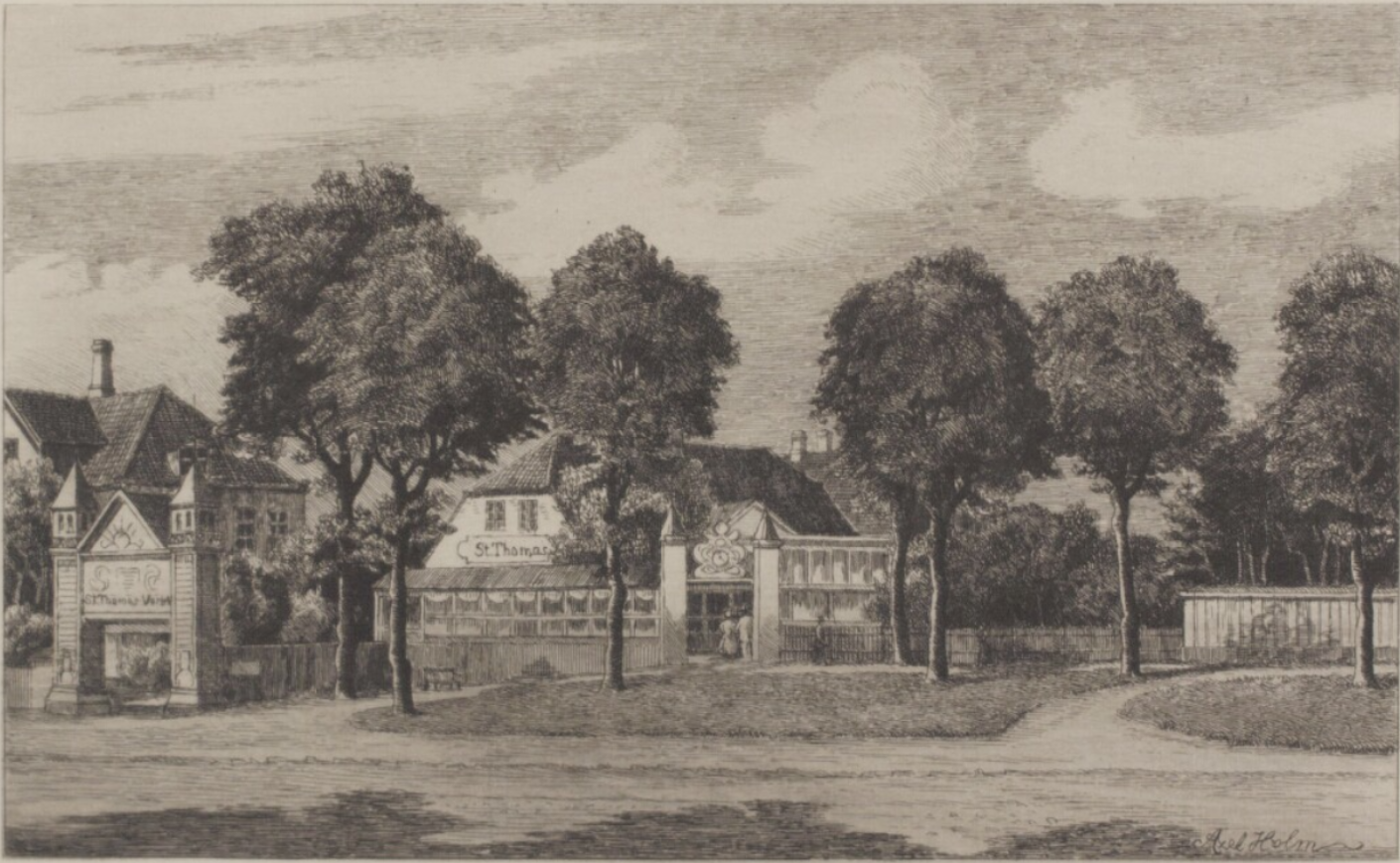
Sankt Annæ Plads is a signature example of Copenhagen’s ability to blend historical preservation with contemporary urban needs. Originally constructed as a canal (Sankt Annæ Grav) for defensive and logistical purposes, the area was transformed in the 18th century during the ambitious development of Frederiksstaden. This district was planned to showcase royal power and Enlightenment ideals, with the canal being filled in to create a stately, tree-lined avenue (Haagen & Møller).
Etymology and Religious Heritage
The square’s name traces back to a medieval chapel dedicated to Saint Anne, mother of the Virgin Mary. This religious connection underscores the area’s spiritual significance in early Copenhagen, and the name endures as a link to its origins (Hotel Skt. Annæ; Asperger Abroad).
Urban Evolution and Architecture
As Frederiksstaden grew, Sankt Annæ Plads became a fashionable address for Danish aristocracy and prominent figures. The square’s unique form—an elongated, green avenue rather than a traditional plaza—reflects the city’s adaptation of European urban planning.
Key architectural highlights include:
- The Garrison Church (Garnisons Kirke): Built from 1703 to 1706 using bricks salvaged from the fire-destroyed Sophie Amalienborg, this church is a testament to resilience and resourcefulness (Haagen & Møller).
- Grand Mansions: Stately homes such as the mansion at No. 11 (built in 1801 by Professor J.H. Rawert) housed notable Danish figures and are now protected heritage sites (Haagen & Møller).
Notable Buildings and Residents
Sankt Annæ Plads’s historic addresses have housed many influential Danes:
- Erich Erichsen: Merchant and shipowner pivotal during the post-Napoleonic crisis.
- Count Carl von Moltke: Former Prime Minister and Rentekammeret director (1839–1844).
- Haagen Mathiesen: Norwegian businessman and shipowner.
- Ancker Wilhelm Frederik von Bornemann: Retired Supreme Court judge; the family owned No. 11 into the 20th century.
Hotel Skt. Annæ: Opened in 1851 (originally as Hotel Neptun), the hotel’s colorful past includes serving smugglers and lawless characters, with access granted by the password “neptun” (Hotel Skt. Annæ). Local legends recount hauntings and ghostly sightings near the intersection with Amaliegade (Asperger Abroad).
Social Life and Cultural Significance
Historically, the square juxtaposed opulent mansions with makeshift shelters for the poor, especially after the Copenhagen Fire of 1795. This mix shaped a unique urban culture, balancing elite aspirations with the realities of city life (Asperger Abroad).
Today, Sankt Annæ Plads is a lively gathering place, hosting open-air performances, markets, and community events. Monuments such as the equestrian statue of King Christian X and busts of Franklin D. Roosevelt and author Herman Bang reinforce its role as a site of collective memory and civic pride.
Urban Renewal and Sustainability
The 2016 renovation of Sankt Annæ Plads marked a turning point in Copenhagen’s approach to urban resilience and liveability (Danish Design Review; Danish Architecture Center; Realdania Byg):
- Green Central Median: Expanded lawns, mature trees, and flowerbeds create an inviting green belt.
- Stormwater Management: The square’s gently sunken “bowl” design and underground pipes allow it to absorb and redirect up to 9 million liters of rainwater during cloudbursts, protecting nearby buildings.
- Pedestrian Priority: Reduction of car lanes, widened pavements, and outdoor seating encourage walking, cycling, and socializing.
- Playground and Recreation: Safe, traffic-buffered playgrounds and petanque courts serve families and all ages.
Visitor Information
Opening Hours
- Sankt Annæ Plads: Open 24 hours a day, year-round; there are no restricted hours for visiting the square.
- Nearby Venues: The Royal Danish Playhouse (No. 36) typically opens from 10:00 AM to 6:00 PM, but check official schedules for details.
Tickets
- Public Access: Free; no ticket required for entry to the square.
- Cultural Venues: Tickets may be needed for performances or guided tours at institutions like the Royal Danish Playhouse.
Getting There
- Metro: Kongens Nytorv is the nearest station, about a 10-minute walk.
- Bus: Multiple lines service the area.
- Bicycle: Extensive cycle lanes connect the square to the rest of the city.
- Walking: Easily reachable from Nyhavn, Amalienborg Palace, and other central attractions.
- Car: Underground parking available at Kvæsthus Pier (Realdania Byg).
Accessibility
- Step-free access, smooth pavements, and ramps make the square wheelchair and stroller friendly.
- Clear signage supports visually impaired visitors.
- Family- and pet-friendly policies are in place.
Guided Tours
- Numerous walking tours of Frederiksstaden, including Sankt Annæ Plads, are available through local operators and Copenhagen Visitor Service.
Amenities
- Benches, hammocks, playgrounds, and petanque field.
- Outdoor seating at nearby cafes and restaurants.
- Seasonal events and pop-up markets.
Nearby Attractions
- Amalienborg Palace: The residence of the Danish royal family.
- Nyhavn: Historic harbor with vibrant restaurants and bars.
- Royal Danish Playhouse: Renowned cultural venue.
- Swedish Ambassador’s Residence, Garrison Church, Danish Maritime Museum: All within walking distance.
Photographic Highlights
- Central green median and historic facades.
- Equestrian statue of King Christian X.
- Views toward Amalienborg Palace and the harbor.
Frequently Asked Questions (FAQ)
Q: Is there an entrance fee for Sankt Annæ Plads?
A: No, the square is a public space and free to enter.
Q: What are the best times to visit?
A: Late spring to early autumn offers pleasant weather and vibrant street life. Early mornings are quieter for photography.
Q: Are guided tours available?
A: Yes, bookable through local tour operators and the Copenhagen Visitor Service.
Q: Is the square accessible for people with disabilities?
A: Yes, featuring step-free access, smooth pavements, and accessible facilities.
Q: Are there food and accommodation options nearby?
A: Yes, including cafes, restaurants, and hotels like Hotel Skt. Annæ.
Q: Where can I park?
A: Underground parking is available at Kvæsthus Pier.
Travel Tips and Seasonal Advice
- Best Time to Visit: June offers long daylight hours and lively festivals; spring and summer are ideal for outdoor activities.
- Weather: Be prepared for occasional rain; bring a light jacket or umbrella.
- Safety: Copenhagen is very safe, but remain mindful of your belongings in busy areas.
- Local Customs: Embrace Danish hygge by enjoying communal spaces, keeping noise to a minimum, and respecting local cleanliness.
Listen to the full story in the app
Your Personal Curator, in Your Pocket.
Audio guides for 1,100+ cities across 96 countries. History, stories, and local insight — offline ready.
Audiala App
Available on iOS & Android
Join 50k+ Curators
Sources
- verified
- verified
- verified
- verified
- verified
- verified
- verified
- verified
Last reviewed: