Introduction
A Democratic Republic of the Congo travel guide starts with one fact: this country holds the Congo River, the world's deepest river, and Africa's oldest national park.
Democratic Republic of the Congo is not one trip so much as a map of different worlds stitched together by water, forest, and distance. Kinshasa moves on music, traffic, and Lingala wit; Lubumbashi sits higher and drier, shaped by copper, rail lines, and a slower southern rhythm. Farther inland, Kisangani still feels like a river city first and a road city second, which tells you a lot about how this country works. Come here for scale, yes, but also for texture: smoked fish in the market, red earth after rain, and the sudden fact of the Congo River appearing where you expected only jungle.
The east changes the story again. Around Goma and Bukavu, the air cools, volcanoes replace humidity, and the highland light turns sharper than anything in the central basin. This is where travelers look toward Virunga, Kahuzi-Biega, Lake Kivu, and some of the most biologically rare ground on the continent, from mountain gorillas to eastern lowland gorillas. Security conditions matter and routes can change fast, so a good plan is part of the journey here. But when the country opens, it does so with force: lava fields outside a city, rainforest broad as a nation, and histories that never stay politely in the past.
What makes Democratic Republic of the Congo worth serious attention is not a checklist of sights. It is the density of story packed into each region: the violence of Leopold's rubber regime, the brilliance of Congolese music, the stubborn everyday grace of street food, church choirs, river ports, and repair culture. Travelers who do best here are curious, patient, and comfortable with unpredictability. Use Kinshasa as your entry point, look at Lubumbashi for the south, and keep Kisangani, Mbandaka, Matadi, and Boma in mind if you want to understand how the river, the coast, and the colonial archive still shape the country now.
A History Told Through Its Eras
When shells were money and a king wrote to Europe in alarm
Kingdoms of River and Forest, c. 1390-1665
Morning mist hangs over the lower Congo, and dugout canoes slide past banks where traders once counted nzimbu shells into clay pots. Long before any European flag appeared, the river was already a court road, a customs post, and a stage on which power was performed. What became the Kingdom of Kongo grew from that watery geography: chiefs, lineages, and markets tied together by tribute, diplomacy, and an exact sense of rank.
Ce que l'on ignore souvent, c'est que this was not a vague "tribal world" waiting for history to begin. By the 15th century, Mbanza Kongo, today just across the border in Angola, was one of Central Africa's great capitals, and the kingdom's influence reached into what is now western Democratic Republic of the Congo, around Boma, Matadi, and the river corridor that still shapes the country. Power rested on ritual as much as force; the manikongo ruled through governors, alliances, and the control of shell currency from Luanda.
Then came the Portuguese in 1483, first as astonished visitors, then as partners, then as predators. King Mvemba a Nzinga, better known as Afonso I, converted to Christianity and tried to turn foreign contact into advantage: priests, literacy, court ceremony, diplomatic letters. He was no innocent. He understood perfectly well that a kingdom survives by adapting. But he also discovered, with terrible speed, that Europe had arrived with one hand extended and the other already reaching for captives.
His letters remain among the most moving documents in African history. In 1526 he warned the king of Portugal that traders were seizing "sons of our nobles and vassals" and even members of his own family. Picture the scene: an African monarch in embroidered cloth, dictating in a Christian court style, asking for teachers and doctors while ships carried away the young. From that contradiction came centuries of ruin.
The break was brutal. At the Battle of Mbwila in 1665, the manikongo António I was killed, his body dismembered, his head taken as a trophy. A kingdom that had dealt with Europe as a sovereign power splintered into civil wars, and the slave trade rushed into the cracks. The river remained. The order upon it did not.
Afonso I appears in the record as a baptized king, but behind the royal title stands a man watching diplomacy fail in real time while his own relatives vanished into the Atlantic trade.
The Kingdom of Kongo used nzimbu shells as state-controlled currency; the ruler's grip on those shells gave him something very close to a central bank.
Leopold's absent throne and the country turned into an extraction ledger
The Congo Free State and Belgian Rule, 1885-1960
A Belgian king never set foot here, yet he left scars from the Atlantic coast to the deep forest. In 1885 Leopold II secured international recognition for the Congo Free State by presenting himself as a philanthropist. The phrase was elegant. The reality was mud, rifles, quotas, and villages forced to bleed rubber from vines under the eye of armed sentries.
Start with one image, because history sometimes hides inside an object: a severed hand delivered as proof that a cartridge had not been wasted. Soldiers of the Force Publique were expected to account for ammunition. When quotas failed, punishment fell on bodies. Missionaries, horrified, photographed mutilated men and children. E.D. Morel, a shipping clerk far away in Antwerp and Liverpool, noticed that ships sailed to Congo with guns and returned with ivory and rubber. Trade, he understood, does not work like that. Plunder does.
Ce que l'on ignore souvent, c'est que the scandal became one of the first great international human-rights campaigns of the modern age. Roger Casement investigated. Morel published. Joseph Conrad, sailing the river that leads inland from Matadi, transformed what he had seen into fiction that still haunts the European imagination. Under pressure, Belgium took Congo from Leopold in 1908. The sovereign changed. The hierarchy remained.
Colonial rule then built roads, railways, ports, mines, and a rigid racial order that treated Congolese lives as labor before all else. Copper from Katanga enriched Lubumbashi. River steamers linked Kinshasa and Kisangani. Administrators classified, counted, taxed, and catechized. The paradox is hard to miss: the colonial state created the infrastructure of a modern territory while denying the vast majority of its people any share in political power. By 1960, it had trained remarkably few Congolese for senior administration and then acted surprised when the handover shook.
Independence was therefore born into a vacuum designed by empire. The railway station, the port office, the mine headframe, the mission school: each belonged to a system that extracted order from above and left little room for self-rule below. When the flag changed, the old machinery did not vanish. It lurched, and the whole country lurched with it.
Leopold II liked to pose as a civilizer, but the man behind the beard ran Congo as a private revenue machine from Brussels, without once seeing the land he claimed to improve.
The global outcry over atrocities in the Congo Free State helped create one of the earliest transnational activist movements built on eyewitness reports, photographs, and shipping records.
A nation is born in fury, then dressed in leopard skin
Independence and the Mobutu State, 1960-1997
On 30 June 1960, in Kinshasa, the ceremony was meant to flatter Belgium and choreograph a smooth farewell. King Baudouin praised the colonial mission. Then Patrice Lumumba rose and delivered the speech that still crackles across the decades. He spoke of insults, forced labor, and blows endured "morning, noon, and night." In that hall, the script shattered.
Nothing about the months that followed was orderly. The army mutinied. Katanga, with its copper wealth around Lubumbashi, tried to break away under Moise Tshombe. Belgian officers meddled. The Cold War arrived at once, as if the country had been placed on a chessboard before it had even found its footing. Lumumba, brilliant and impatient, was dismissed, arrested, and in January 1961 murdered in Katanga with Belgian complicity and Congolese enemies eager to be rid of him. One can scarcely imagine a darker christening for a new state.
Joseph-Desire Mobutu, later Mobutu Sese Seko, understood spectacle better than any rival. He seized power in 1965 and built a regime of uniforms, slogans, patronage, and fear. In 1971 he renamed the country Zaire, renamed the river, renamed cities, and demanded authenticity while presiding over a system that drained public wealth into private hands. The leopard-skin toque was not a costume accident. It was a crown in republican disguise.
Ce que l'on ignore souvent, c'est que the dictatorship rested not only on repression but on performance. Mobutu mastered television, protocol, and the theater of proximity to the West. During the Cold War he made himself useful, and usefulness brought indulgence. Meanwhile schools decayed, hospitals weakened, and civil servants survived on improvisation. Kinshasa became a capital of wit, music, and system D because ordinary people had to invent daily life against the state, not thanks to it.
By the 1990s, the facade was cracking. The treasury was thin, the army unreliable, and the long aftershock of the 1994 genocide in Rwanda spilled armed men and terrified civilians into the east, especially around Goma and Bukavu. The dictatorship that had promised order left behind a hollowed state, and hollow states are dangerous things. The next chapter would be written with refugees on the roads and foreign armies crossing the border.
Patrice Lumumba lasted only months in office, yet the living man behind the martyr's portrait was a restless, sharp-tongued politician who believed independence without dignity was a masquerade.
Mobutu's policy of "authenticity" reached into wardrobes and names; even Joseph-Desire Mobutu remade himself as Mobutu Sese Seko Kuku Ngbendu wa za Banga.
Refugee columns, foreign armies, and a war too large for one frontier
The Congo Wars and the fractured republic, 1996-2003
Dust rises on the road outside Goma. Women carry bundles, children carry cooking pots, and armed men move among them with the confidence of those who know the map has failed. That scene, repeated across the east, belongs to the beginning of the First Congo War in 1996, but its roots lie in the Rwandan genocide of 1994, when killers, survivors, soldiers, and refugees poured across the border into what was then Zaire.
Laurent-Desire Kabila advanced westward with support from Rwanda and Uganda, presenting himself as the man who would finally topple Mobutu. He succeeded in 1997. Mobutu fled. Zaire became the Democratic Republic of the Congo again. For a brief moment, one could imagine renewal. It did not last.
Kabila soon broke with his former backers, and in 1998 the Second Congo War began. This is the point where neat explanations collapse. Rwanda, Uganda, Angola, Zimbabwe, Namibia, and others became involved directly or through proxies. Rebels multiplied. Local conflicts over land, identity, and access to trade routes fused with regional security fears and the lure of gold, coltan, diamonds, and timber. The phrase often used is "Africa's World War." It is not exaggerated.
Ce que l'on ignore souvent, c'est que the war was fought not only in jungles and on front lines but in market towns, churches, schools, and family compounds. Civilians paid the highest price through massacres, displacement, hunger, and disease. In Kisangani, Ugandan and Rwandan forces even battled each other in a Congolese city they were both supposed to be helping stabilize. The absurdity would be comic if it were not soaked in blood.
Laurent Kabila was assassinated in 2001 by one of his own bodyguards. His son Joseph Kabila, only 29, inherited a republic in fragments and moved toward peace accords that formally ended the war in 2003. Formally. In much of the east, war had already learned how to survive without declarations. It could change name, commander, and flag, then continue.
Laurent-Desire Kabila liked to pose as the liberator who had ended Mobutu's reign, yet he ruled as a suspicious war leader and died at the center of the palace he had promised would belong to the people.
During the fighting in Kisangani in 1999 and 2000, Rwandan and Ugandan forces, nominally allies against Kinshasa, shelled each other inside the same Congolese city.
Minerals beneath the soil, music in the streets, and the state still being negotiated
A country of immense wealth and unfinished peace, 2003-present
In a workshop in Lubumbashi, copper dust settles on boots and trouser hems; in Kinshasa, a rumba guitar line slips out of a bar after dark; near Bukavu, hills fall toward Lake Kivu with an almost indecent calm. The contradiction is the country's daily atmosphere. The Democratic Republic of the Congo holds cobalt, copper, gold, forests, water, and human energy on a continental scale. Yet abundance has so often arrived as a curse wearing the clothes of opportunity.
Joseph Kabila remained in power long after his constitutional mandate expired, then finally yielded office after the disputed 2018 election that brought Felix Tshisekedi to the presidency. The transfer was hailed as historic because it was the first peaceful handover at the top since independence. That is how low the bar had been. Institutions improved in patches, but eastern violence did not politely wait for constitutional progress.
Around Goma and Bukavu, armed groups, army abuses, and foreign interference continued to shape ordinary life. In 2021 Nyiragongo erupted again, sending lava toward Goma and reminding everyone that eastern Congo lives under both political and geological threat. Virunga's gorillas, the lava lake, the mountain roads, the beauty of Kivu: none of it can be separated from the insecurity that shadows it. To write otherwise would be indecent.
Ce que l'on ignore souvent, c'est that Congolese identity has not been built only in cabinets and peace talks. It has been composed in Lingala songs, church choirs, football grounds, market stalls, and the stubborn elegance with which people dress for a difficult day. Kinshasa has turned survival into style more than once. Mbandaka, Matadi, Kananga, Mbuji-Mayi, Boma, Kolwezi, Bunia: each carries a piece of the national argument about who profits, who governs, and who endures.
The bridge to the future is therefore plain, if not simple. The same land that funded empire, dictatorship, and war now sits at the center of the global appetite for battery metals and climate politics. The old question returns in modern dress: who will control the wealth beneath Congolese soil, and on whose behalf?
Felix Tshisekedi inherited a country weary of war and electoral theater; the man beneath the office has had to govern while much of the republic still distrusts the very idea of the state.
The Democratic Republic of the Congo is the world's most populous Francophone country, yet much of its emotional and musical life runs through Lingala rather than the language of administration.
The Cultural Soul
A River Speaks in Several Mouths
French governs on paper. Lingala governs the pulse. In Kinshasa, a sentence can begin in the language of ministries, bend toward a joke in Lingala, then finish in a proverb that sounds older than the avenue where it was spoken. A country that large could have chosen confusion. It chose polyphony.
Listen to a greeting and you understand the moral system. Nobody throws a bare hello at you and runs. People ask about the night, the body, the children, the road, the fatigue. Time is spent before business begins, which is another way of saying that a person is not a corridor to pass through. The exchange takes longer. It also tells the truth.
In Kisangani, on the river routes, words travel the way smoked fish does: by patience, by repetition, by memory. Lingala carries music, Swahili carries the east, Tshiluba and Kikongo hold their own territories of intimacy. French remains useful, exact, often elegant, and slightly overdressed. The administrative tie. The others are bare feet on warm ground.
Palm Oil, Banana Leaf, Human Destiny
Congolese food has the decency to be serious. Saka-saka arrives dark and glossy, cassava leaves cooked so long they seem to have crossed from plant to silk. Fufu sits beside it, white, warm, obedient to the hand that tears and shapes it. Poulet a la moambe follows with its rust-colored sauce, palm nut rich enough to quiet a room. You do not nibble such things. You submit.
Banana leaf is not packaging here. It is a method, a perfume, a small theology of heat. Liboke de poisson opens at the table in a cloud of steam and river memory; tomato, onion, chili, fish, and charcoal have been arguing in the dark, and now the winner is your nose. In Mbandaka and along the water near Boma, that smell says more about the country than any flag ever could.
Then come the foods that outlast speeches: chikwanga wrapped tight for the road, smoked fish stacked in market heaps, plantains fried until the edges blacken into sweetness. A country is a table set for strangers. The Democratic Republic of the Congo knows this, and refuses the timid plate.
The City Dances Before It Decides
Kinshasa treats music the way other capitals treat electricity: as a condition of existence. Congolese rumba, born from river traffic, Cuban echoes, guitars, and impossible elegance, does not merely accompany life. It interprets it. A bar can sound like diplomacy. A living room can sound like seduction. Even grief acquires rhythm before it speaks.
The guitar lines are supple, exact, almost liquid. Then the seben arrives and the song stops pretending to be polite. Bodies answer. Shoes answer. The whole social order loosens by one button. Franco, Tabu Ley, Papa Wemba, Koffi Olomide: these are not names for a playlist but coordinates in a national nervous system, with Kinshasa as its impatient heart and Lubumbashi listening from the copper south with its own appetite for polish and style.
What fascinates me is the discipline under the pleasure. The suits pressed for a concert. The timing of the entrance. The coded praise names, the flirtation, the rivalry, the debt, the boast. Music here is not escape. It is evidence that elegance can survive anything, which is a far more subversive achievement.
The Ceremony of Not Rushing
A Congolese greeting is a form of intelligence. You do not arrive and pounce on your question like a badly raised bureaucrat. You ask after health. You ask after family. You ask after the night. The ritual may look leisurely to an outsider with a watch to worship; in fact it is exacting. It measures whether you understand that people precede transactions.
Meals obey the same logic. A shared plate gathers hands, conversation, teasing, insistence. The right hand does the work. The left stays away from the common food with the quiet rigor of a law nobody needs to announce. Refuse a second helping too quickly and you risk insulting affection. Accept too greedily and you expose your lack of training. Civilization lives in these margins.
What I admire is the tenderness of the code and its merciless clarity. Kinshasa can be noisy, feverish, improvised, magnificently excessive. Yet one forgotten courtesy can make you look smaller than your shoes. Bukavu and Lubumbashi know the same rule. Respect is not ornamental. It is the first language, even when nobody writes it down.
Books Written Against Erasure
Congolese literature has a habit I trust: it remembers what power asks everyone else to forget. Sony Labou Tansi, on the other bank of the river but inseparable from the larger Congo imagination, wrote like a man setting fire to official language. Tchicaya U Tam'si gave poetry a blade. In the Democratic Republic of the Congo itself, voices such as Zamenga Batukezanga and Valentin-Yves Mudimbe refused the colonial library's smug classifications and wrote back with wit, fury, and unnerving precision.
This is not literature of polite distance. It smells of classroom chalk, wet earth, cheap paper, prison air, beer, church benches, and the Congo River carrying rumor past the embankment. Mudimbe dissects the way Europe invented Africa as an object to study. Batukezanga notices ordinary urban life with the patience of someone who knows that history hides inside the smallest domestic scene. The page becomes a courtroom. Then a kitchen. Then a trap.
In Kinshasa, books often circulate by recommendation before they circulate by market. A title is passed like a confidence. A line is repeated at a table. That seems fitting. In a country so often described by outsiders in the vocabulary of extraction, Congolese writers keep repossessing the sentence.
Where Incense Meets Amplifier
Religion in the Democratic Republic of the Congo is neither background decoration nor Sunday compartment. Catholicism left stone, schools, choirs, saints' names, and a formidable taste for ritual. Protestant churches multiplied with equal vigor. Then came revival movements with microphones, keyboards, healing nights, all-night prayer, and enough amplified conviction to shake corrugated roofs. One hears bells and loudspeakers. Sometimes on the same block.
The result is not contradiction but accumulation. A white veil at Mass. A pastor in a sharp suit under neon light. A roadside prayer before a long journey. A Bible placed beside market money. In Kinshasa, faith can sound orchestral at dawn and electrically urgent after dark. In Kisangani and Kananga, church calendars still organize the week with more authority than any tourist schedule ever will.
What moves me is the practical intimacy of belief. Religion here does not hover in abstraction. It blesses food, names children, frames mourning, marks danger, and gives language to survival when politics has failed yet again. The sacred, in Congo, knows how to carry groceries.
What Makes Democratic Republic of the Congo Unmissable
Congo Basin Rainforest
The world's second-largest tropical rainforest covers most of the country and changes everything from climate to transport. In places near Mbandaka and deeper inland, the forest is not background scenery but the main fact of life.
Volcano Country
Near Goma, Nyiragongo and Nyamulagira turn the eastern highlands into one of Africa's most dramatic volcanic zones. Few places put active lava landscapes so close to an urban edge.
Rare Wildlife
Virunga, Kahuzi-Biega, Salonga, Garamba, and the Okapi Wildlife Reserve hold species travelers cannot see anywhere else with the same meaning: bonobo, okapi, Congo peacock, and two different gorilla worlds.
A Serious Food Culture
Start with poulet a la moambe, saka-saka, liboke de poisson, chikwanga, and goat brochettes after dark in Kinshasa. Congolese cooking is smoky, starchy, communal, and far more precise than outsiders expect.
History With Teeth
This is a country where precolonial kingdoms, Leopold's extraction state, independence, dictatorship, and mineral geopolitics all remain visible in the present. Boma, Matadi, and Kinshasa carry that history in their streets.
Kinshasa's Cultural Force
Kinshasa is one of Africa's great music capitals, the city that helped turn Congolese rumba and soukous into continental soundtracks. The energy is not polished for visitors, which is exactly why it lands.
Cities
Cities in Democratic Republic of the Congo
Kinshasa
"The largest Francophone city on Earth sprawls along the Congo River's south bank, where rumba was born in the 1950s and the streets still vibrate with it every night."
Lubumbashi
"The copper capital of the Katanga plateau, where colonial Belgian architecture sits a short drive from open-pit mines so vast they are visible from space."
Goma
"A frontier city built partly on hardened lava, perched between the world's most active volcano and the turquoise surface of Lake Kivu."
Kisangani
"Stanley Falls once powered Conrad's imagination here, where the Congo River narrows and the equatorial forest presses so close it darkens the streets by midday."
Bukavu
"Terraced down steep hills above the southern end of Lake Kivu, this former Belgian resort town retains crumbling colonial villas and a view that stops conversation cold."
Kananga
"The Tshiluba-speaking heart of the Kasai region, where some of the DRC's most distinctive textile traditions — including the geometric Kuba cloth — survive in daily market life."
Mbandaka
"Sitting precisely on the equator in the deepest green of the Congo Basin, this river port is the last major stop before the forest swallows everything heading east."
Matadi
"The DRC's principal Atlantic port clings to dramatic cliffs above the Congo River's final gorge, where the water is too violent to navigate and the colonial-era railway begins."
Boma
"The first colonial capital of the Belgian Congo, where King Leopold's administrative machine was assembled in 1886 and where the river finally exhales into the Atlantic."
Kolwezi
"The cobalt-mining epicenter whose red laterite soil underpins the global electric-vehicle industry, a raw industrial city that makes visible the cost of the clean-energy transition."
Bunia
"Gateway to the Ituri Forest — home of the Mbuti people, whose relationship with the equatorial canopy is among the most studied and least understood in anthropology."
Mbuji-Mayi
"One of the world's largest alluvial diamond fields sits beneath this Kasai city, and the informal artisanal mining that surrounds it has shaped every street, market, and social code in town."
Regions
Kinshasa
Kinshasa and the Lower Congo
Kinshasa is the country's loudest introduction: music, traffic, state power, and the Congo River all competing for the same air. Follow the river southwest to Matadi and Boma and the mood changes; the capital's improvisation gives way to port history, colonial traces, and the narrow corridor that connects this inland giant to the Atlantic.
Lubumbashi
Katanga Plateau
The southeast sits higher, drier, and closer to southern Africa in feel than to the equatorial basin. Lubumbashi and Kolwezi are shaped by copper and cobalt, with broad roads, mining traffic, and a hard-edged economy that explains a great deal about modern Congo without romanticizing any of it.
Mbandaka
Central Congo Basin
Mbandaka is a river town first and a road town second, which makes it a useful key to the basin. This is the Congo of wide brown water, forest humidity, and distances that look manageable on a map until you try to cover them; Kisangani belongs to the same watery logic, even if it feels much farther from the coast and much closer to the interior's edge.
Mbuji-Mayi
Kasai Heartland
Kasai is often described through diamonds, but that misses the point. Mbuji-Mayi and Kananga tell a more difficult story about provincial capitals, trading networks, and the uneven afterlife of mineral wealth, with cities that matter nationally even when they sit far from most foreign itineraries.
Bukavu
Great Lakes and Kivu Highlands
The east has the country's most dramatic scenery and the least predictable security picture. Bukavu and Goma sit near volcanic landscapes and great lakes that would anchor any other country's flagship route, but travel here only works when the political and military situation allows it, and sometimes it simply does not.
Bunia
Ituri and the Northeastern Frontier
Bunia belongs to the northeastern frontier where road conditions, trade routes, and conflict lines all shape movement. It is a region associated with the Okapi Wildlife Reserve and wider Ituri history, but for travelers the first question is not what is beautiful here; it is whether the route is currently viable at all.
Suggested Itineraries
3 days
3 Days: Kinshasa and the Lower Congo
This short route keeps the logistics realistic and shows two different Congos in one sweep: the political weight of Kinshasa, then the river-and-port history of Matadi. It suits travelers who want a first look without gambling on domestic complexity across half the country.
Best for: first-timers with limited time
7 days
7 Days: Katanga Copperbelt Circuit
Start in Lubumbashi for the country's sharpest dose of mining-era urban life, then move through Kolwezi and Mbuji-Mayi to see how mineral wealth and daily reality rarely line up neatly. This is a practical route for travelers interested in business, infrastructure, and the south's drier climate.
Best for: industry-minded travelers and repeat Africa visitors
10 days
10 Days: Congo River Arc
This itinerary follows the logic that shaped the country long before paved roads did: the river first, everything else second. Kinshasa opens the story, Mbandaka brings you into the basin, and Kisangani shows what a river city looks like when the waterway is still the real highway.
Best for: slow travelers and river-history obsessives
14 days
14 Days: Kasai to Great Lakes Edge
This longer route links the diamond cities of the south-central interior with the eastern escarpment, where geography turns cooler, greener, and more politically fragile. It is the most ambitious option here, and only makes sense if security conditions are checked right before departure, especially around Bunia and Bukavu.
Best for: experienced travelers tracking regional contrasts
Notable Figures
Afonso I
c. 1456-1542/43 · King of KongoAfonso I tried to use Christianity and diplomacy as tools of sovereignty, not submission. His surviving letters to Portugal read like the correspondence of a man discovering, line by line, that European alliance and slave raiding had arrived in the same ship.
Simon Kimbangu
1887-1951 · Religious leaderSimon Kimbangu began preaching in 1921 in what is now Kongo Central, and the colonial state reacted as if one preacher could shake an empire. In a sense he did: his movement gave spiritual language to dignity, discipline, and African self-worth under Belgian rule.
Patrice Lumumba
1925-1961 · Independence leader and first Prime MinisterLumumba remains the country's unfinished sentence. He spoke at independence with a force that stripped the varnish off Belgian colonial rhetoric, then was killed before he could learn whether eloquence could survive the army, the mines, and the Cold War.
Joseph Kasavubu
1910-1969 · First President of independent CongoKasavubu had the grave manner of a cautious elder, which made him easy to underestimate beside Lumumba's fire. Yet he stood at the center of the republic's first constitutional crisis, trying to hold together a state that had been delivered independence without stable foundations.
Moise Tshombe
1919-1969 · Katangan secessionist leaderTshombe understood that copper could buy soldiers, diplomats, and time. From Lubumbashi he made Katanga's secession look, for a moment, like a viable state project, though it rested on foreign backing and deepened the country's first great post-independence wound.
Mobutu Sese Seko
1930-1997 · President and dictatorMobutu turned rule into ceremony: leopard-skin cap, choreographed arrivals, televised authority. Behind the pageantry stood a system that taught millions of Congolese to survive through wit, informal networks, and distrust of official promises.
Laurent-Desire Kabila
1939-2001 · Rebel leader and PresidentKabila marched in as the liberator who would end a decaying dictatorship. Once in power, he ruled with the closed instincts of a guerrilla commander, then died by an assassin's bullet inside the presidential palace.
Joseph Kabila
born 1971 · PresidentJoseph Kabila inherited office at 29 in a country broken by regional war. He cultivated reserve almost to opacity, signed peace deals, won elections of disputed credibility, and then stayed so long that his eventual departure felt historic simply because it happened.
Papa Wemba
1949-2016 · MusicianPapa Wemba mattered because he proved that Kinshasa could export style as power. In a capital often described through crisis, he made elegance, rumba, and the sartorial code of the sapeurs part of the country's public face.
Denis Mukwege
born 1955 · Gynecologist and Nobel Peace Prize laureateMukwege's connection to eastern Congo is painfully concrete: operating theaters, survivors, testimony. In Bukavu he became the physician who insisted that wartime sexual violence was not collateral damage but a political crime committed against bodies and communities alike.
Photo Gallery
Explore Democratic Republic of the Congo in Pictures
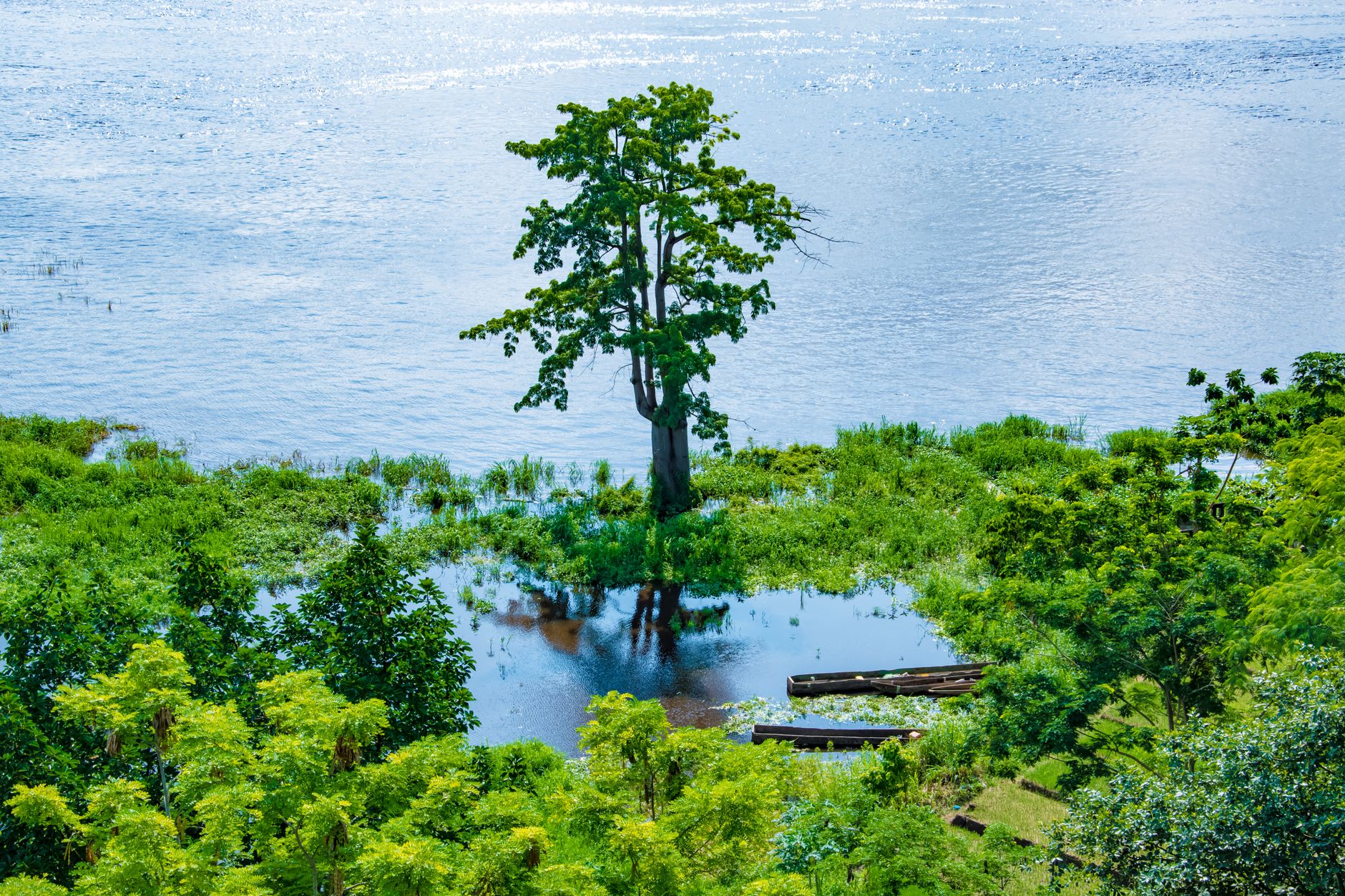
A lone tree standing by the riverbanks in Brazzaville, Congo.
Photo by Gis photography on Pexels · Pexels License
Scenic view of a rural village along a river in the lush Congo rainforest.
Photo by Hervé Kashama on Pexels · Pexels License
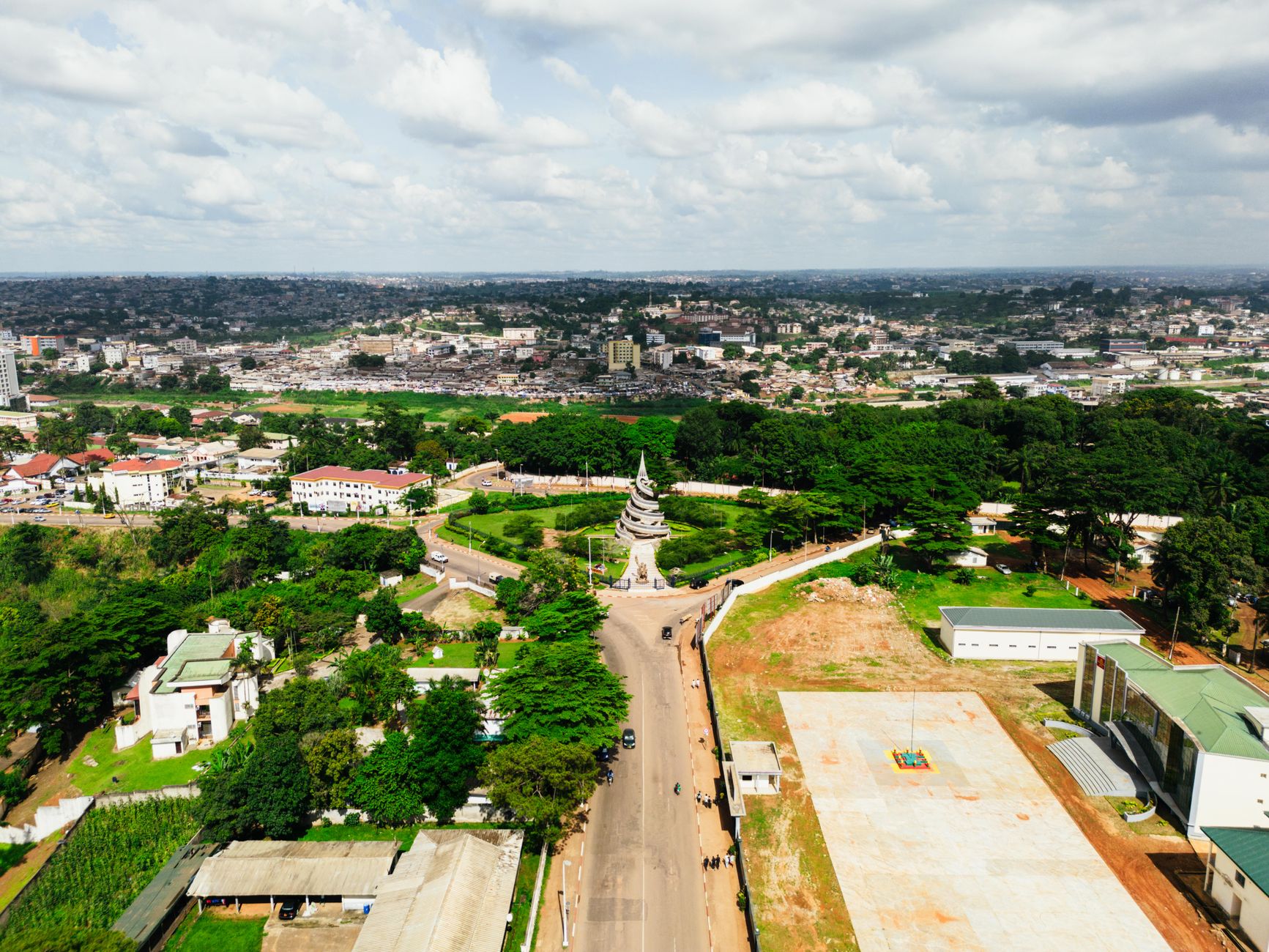
A stunning aerial shot of the Reunification Monument in Yaoundé, Cameroon showcasing urban beauty.
Photo by Kelly on Pexels · Pexels License
Stunning aerial view of Yaoundé cityscape with green landscapes and urban architecture.
Photo by Kelly on Pexels · Pexels License
Practical Information
Visa
Almost all visitors need a visa before arrival, and the DRC does not function like a visa-on-arrival destination for US or EU travelers. The current tourist option is usually an eVisa for air entry or an embassy-issued visa; carry printed copies of your passport, visa, and yellow fever certificate because domestic checkpoints and airline desks often ask for them.
Currency
The official currency is the Congolese franc, but clean US dollar notes are often easier to use in Kinshasa, Lubumbashi, and larger hotels. Bring small denominations, expect patchy ATM access outside major cities, and treat cards as a hotel-only convenience rather than a national payment system.
Getting There
Most international arrivals come through Kinshasa, with Lubumbashi handling a smaller share of regional traffic from hubs such as Addis Ababa, Nairobi, Johannesburg, and Brussels. The short ferry link between Kinshasa and Brazzaville exists, but for most travelers the practical entry point is still an international flight into N'djili Airport.
Getting Around
Distances are continental, so domestic flights do the work that trains would do elsewhere. Roads outside the main urban corridors can be rough or impassable in the rains, which makes a hired car with driver more realistic than self-drive, while river travel from Kinshasa toward Mbandaka or Kisangani is slow, memorable, and measured in days rather than hours.
Climate
June to September is the safest all-round window for most routes, with drier weather in Kinshasa, the Congo Basin, and Katanga. Conditions shift by region: Lubumbashi has a clearer dry season than equatorial Mbandaka, while the eastern highlands around Goma and Bukavu are cooler but tied to a volatile security picture that matters more than the forecast.
Connectivity
Mobile data matters more than hotel Wi-Fi, which is often slow and unreliable even in business hotels. Vodacom, Airtel, and Orange are the names to look for; buy a local SIM with your passport, preload offline maps, and do not assume card payments or app-based transport will keep working when the network drops.
Safety
This is not a low-friction destination: several provinces carry the highest foreign travel warnings, and eastern cities including Goma and Bukavu have been affected by active conflict. Kinshasa is the most common base but still requires discipline after dark, while yellow fever proof, malaria prophylaxis, bottled water, and evacuation insurance belong in the non-negotiable category.
Taste the Country
restaurantPoulet a la moambe
Sunday table, family circle, fufu beside the sauce. Fingers tear, dip, lift, repeat. Palm nut, chicken, silence, approval.
restaurantLiboke de poisson
Charcoal fire, banana leaf, river fish, dusk. Knots loosen at the table. Steam rises, hands reach, bones pile.
restaurantSaka-saka with fufu
Lunch, communal plate, cassava leaves cooked down to velvet. Right hand shapes the fufu, scoops, turns, eats. Conversation slows.
restaurantNtaba brochettes
Night in Kinshasa, plastic chair, beer bottle, mustard, pili-pili. Goat fat hits charcoal. Smoke and laughter do the rest.
restaurantChikwanga on the road
Bus station, market stall, long journey. Banana leaf unwraps, slices appear, smoked fish follows. Cheap, sour, sustaining.
restaurantMakemba
Breakfast or street snack. Plantain meets hot oil until the edges darken. Tea, fingers, heat, sugar if wanted.
restaurantBeignets de haricots
Morning basin on a vendor's head, coins in the palm, fritters in paper. Eat walking. Crumbs fall, day starts.
Tips for Visitors
Bring clean dollars
Carry recent US dollar notes in small bills, because torn or older notes are often refused even when the amount is correct. Save francs for markets, motos, and everyday spending.
Book flights cautiously
Domestic flights save huge amounts of time, but schedules can shift with little warning. Build a buffer day before any international connection and avoid same-day onward tickets.
Health prep first
Yellow fever proof is required, malaria prevention is standard, and bottled water is the baseline everywhere. If you would hesitate to pay for evacuation insurance, this is the wrong country to improvise in.
Go offline early
Download maps, hotel confirmations, and visa papers before you land. A working screenshot often helps more than a live app when the signal collapses.
Sort cash by day
Keep hotel money, transport money, and daily pocket cash separate. That cuts down the awkward public wallet display that tends to attract the wrong kind of attention.
Respect greetings
Do not rush straight to the transaction. A proper greeting matters in Kinshasa, Mbandaka, and everywhere in between, and a minute of courtesy usually saves ten minutes of friction.
Reserve key nights
Prebook your first and last nights in each city, especially in Kinshasa and Lubumbashi where business travel can squeeze mid-range rooms. For smaller cities, confirm by phone or WhatsApp on the day of arrival rather than trusting an old listing.
Explore Democratic Republic of the Congo with a personal guide in your pocket
Your Personal Curator, in Your Pocket.
Audio guides for 1,100+ cities across 96 countries. History, stories, and local insight — offline ready.
Audiala App
Available on iOS & Android
Join 50k+ Curators
Frequently Asked
Do I need a visa for the Democratic Republic of the Congo? add
Yes, almost certainly. Most foreign travelers need a visa before arrival, usually through the DRC eVisa system for air entry or through an embassy, and you should travel with printed copies because airport and checkpoint procedures are still paper-heavy.
Is Kinshasa safe for tourists right now? add
Kinshasa is possible, but not relaxed. Most visits happen without major incident if you use a trusted driver, avoid night movement, and keep a low profile, yet robbery and corrupt checkpoint encounters are real enough that this is not a city for casual wandering after dark.
Can you use US dollars in Congo? add
Yes, and in many situations you should. Hotels, flights, and higher-end restaurants often price in dollars, but street purchases and local transport usually work better in Congolese francs, so carrying both currencies is the practical answer.
Is Goma worth visiting at the moment? add
Not unless current security advice clearly says it is viable. Goma has extraordinary access to volcano and lake landscapes, but active conflict in North Kivu has made travel conditions volatile enough that beauty alone is not a serious planning argument.
What is the best month to visit the Democratic Republic of the Congo? add
June, July, and August are the safest all-round bets for most routes. Those months usually mean drier conditions in Kinshasa and the south, while also reducing the mud and transport delays that make already slow journeys even slower.
How do you travel between cities in the DRC? add
Usually by plane, sometimes by river, and only selectively by road. The country is too large and the transport network too uneven to assume overland links will behave like they do in Kenya or South Africa.
Can I visit Virunga National Park from Goma? add
Only if the park is operating and security conditions allow it at that exact moment. Virunga has reopened and closed repeatedly around conflict spikes, so you need current confirmation from the park and current government advisories, not last season's blog post.
Do I need yellow fever vaccination for Congo? add
Yes. A yellow fever certificate is generally required for entry, and in practice it belongs with your passport and visa in the same easy-to-reach folder because airline staff may ask before you even board.
Is the Democratic Republic of the Congo expensive to travel? add
It is not cheap in the way many first-time visitors expect. Street food and local transport can be inexpensive, but flights, reliable hotels, security-minded logistics, and last-minute changes push the real travel budget much higher than the headline daily spend suggests.
Sources
- verified U.S. Department of State — Democratic Republic of the Congo Travel Advisory — Current security levels, restricted provinces, and practical safety guidance.
- verified UK Government Foreign Travel Advice — Democratic Republic of the Congo — Visa notes, entry formalities, and region-by-region safety updates.
- verified UNESCO World Heritage Centre — Democratic Republic of the Congo — Authoritative reference for the country's listed natural heritage sites.
- verified Encyclopaedia Britannica — Democratic Republic of the Congo — Core geography, population, and political reference facts.
- verified Democratic Republic of the Congo eVisa Portal — Official online visa channel used for current tourist eVisa procedures.
Last reviewed: