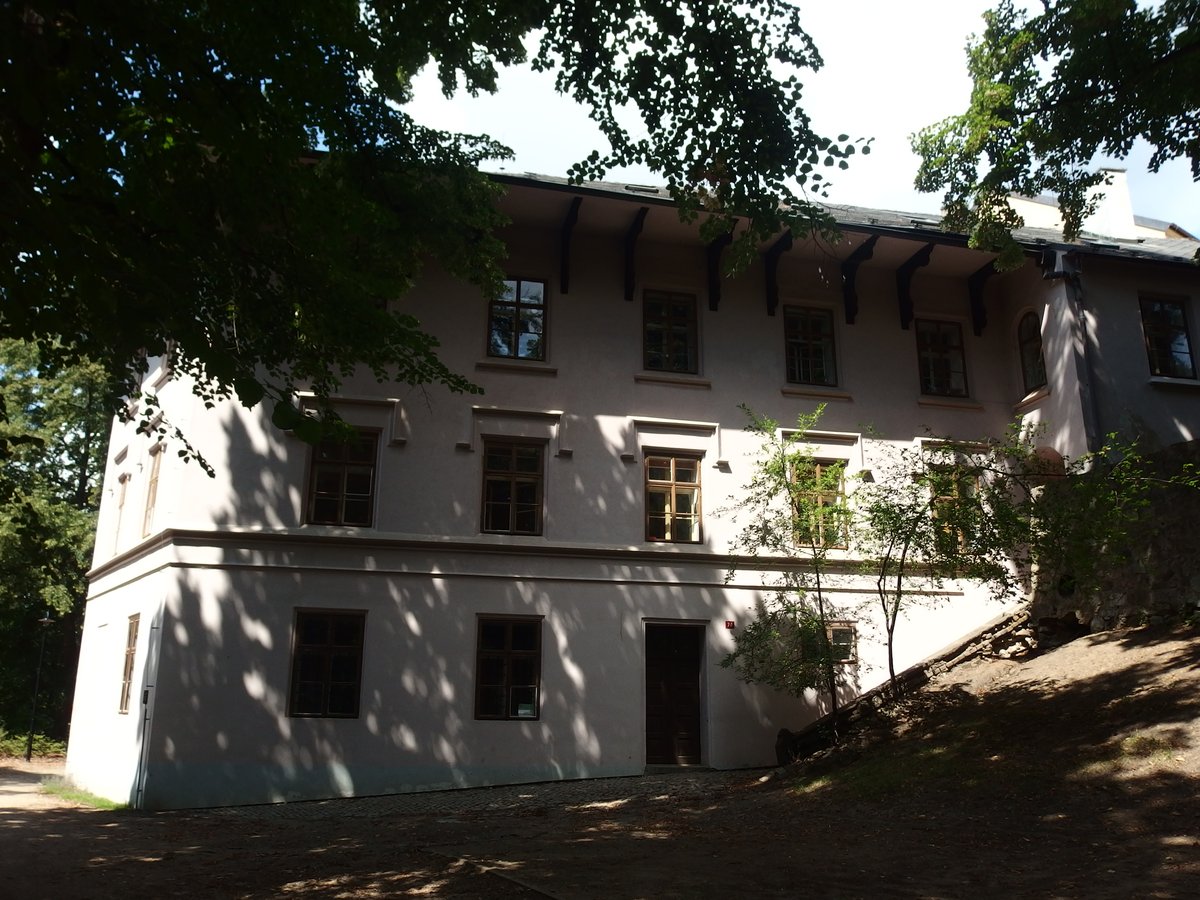
What the Burgher Houses are
The Burgher Houses are historic residences around Žižka Square (Žižkovo náměstí) and along Pražská Street in Tábor’s Old Town. Built by merchants and craftsmen, they reflect the town’s civic life and changing architectural styles, from Gothic foundations to Renaissance and Baroque details. Some are privately owned; visitors can see their exteriors or enter through museums and exhibitions.
Tábor was established as a fortified Hussite stronghold in 1420 by Jan Žižka and his followers.
History
Founded by Hussite reformers during a period of religious upheaval in Bohemia, Tábor was conceived as an egalitarian fortress town (expats.cz). Its burghers played important economic and civic roles in the town’s growth.
The houses have survived fires, wars and urban change. Fires in 1532 and 1559 led to significant rebuilding, while the Swedish siege of 1648 left a cannonball embedded in the facade of the House of Albrecht the Baker. The town was bombarded, captured and ultimately pillaged by Swedish troops in July 1648 during the Thirty Years’ War (alamy.com).
What to see
Architectural features
The earliest houses retain late Gothic features, including robust masonry, pointed arches, ribbed vaults and vaulted cellars. Meštanský dům No. 13 on Žižka Square began as two smaller Gothic houses that were later joined (waymarking.com).
Renaissance rebuilding introduced decorated gables, oriel windows and sgraffito: plasterwork that reveals contrasting layers. Baroque and Rococo additions from the 17th and 18th centuries include sculpted figures, saints and Latin inscriptions. Thick stone walls, small high-set windows, and underground tunnels and cellars built for defense and storage in the 15th century are also among the town’s historic features. Sections of the tunnels can be visited on guided tours (laidbacktrip.com).
Notable houses
- House of Albrecht the Baker (Dům Albrechta pekaře) Rebuilt in 1559, it is known for its Renaissance sgraffito facade and the cannonball embedded in it.
- House of Beltmaker Prokopius (Dům pasíře Prokopa / Kostnický dům) Noted for its Renaissance oriel window and sgraffito, and for commemorating the Tábor-Konstanz partnership (waymarking.com).
- Meštanský dům No. 13 Its Baroque gable is decorated with statues and Latin inscriptions.
- Škoch House, Lichvic House, Ctibor House and Stárek House Each has distinctive decorative features (visittabor.eu).
Other sights in the Old Town
- Žižka Square Tábor’s main square, surrounded by historic houses and a Renaissance fountain (mywanderlust.pl).
- Dean’s Church of the Transfiguration A Gothic church with a Renaissance tower and panoramic views (komoot.com).
- Old Town Hall and Hussite Museum A Late-Gothic building with exhibitions and access to underground tunnels.
- Kotnov Tower and Bechyně Gate Remnants of medieval fortifications, with exhibitions and city views.
Practical visiting information
Hours, tickets and tours
Most publicly accessible houses and museums are listed as open Tuesday to Sunday, 9:00 AM–5:00 PM, and closed on Mondays and public holidays. The Hussite Museum may have extended seasonal hours (visittabor.eu). The FAQ lists museum hours as 9:00–17:00, Tuesday–Sunday, and advises checking individual museum websites for seasonal changes.
Ticket information gives two price ranges: admission is listed as 50–150 CZK, while the FAQ gives 30–150 CZK. Combination tickets and guided-tour packages are available. Tickets can be purchased onsite or through the official tourism website.
Guided tours are offered daily in Czech and English and often include the underground tunnels. Tours are also available through the Tourist Information Centre. Medieval festivals, seasonal exhibitions and cultural events take place throughout the year; schedules are available through the official tourism calendar.
Accessibility
Accessibility varies. Some museums have been adapted for wheelchair users and visitors with limited mobility, while other historic buildings retain original layouts and may have limited access. Contact the Tábor Tourist Information Centre or individual venues ahead of a visit for specific details.
Location and access
Tábor can be reached by direct train from Prague in about 1 hour or from České Budějovice in approximately 40 minutes. The historic core is a 15–20 minute walk from the train station (mywanderlust.pl).
The Tourist Information Centre is on Žižka Square and provides maps, brochures and tour booking (visittabor.eu).
Tourist Information Centre Tábor
Žižka Square 2, 390 01 Tábor
Phone: +420 381 486 230
Email: [email protected]
Website: visittabor.eu
Tickets and event schedules are also available at visittabor.eu. The Audiala app offers audio guides and exclusive content.
Tips
May to September is listed as a good time to visit for mild weather and lively festivals (wildtrips.net); late spring through early autumn is also recommended for weather, festivals and open attractions.
Visit early or late in the day to avoid crowds and enjoy the light for photography. Wear comfortable shoes for cobblestone streets and uneven surfaces. The Old Town is largely pedestrianized, with gentle slopes; allow several hours for a leisurely exploration.
Cafés and restaurants in historic buildings serve local cuisine, and boutique hotels and hostels are available within the Old Town (packing-up-the-pieces.com). Tábor is described as a safe destination; standard travel precautions apply (wildtrips.net).
Frequently Asked Questions (FAQ)
What are the visiting hours for Burgher House museums in Tábor?
Most are listed as open 9:00–17:00, Tuesday–Sunday. Check individual museum websites for seasonal changes; public holidays may also affect opening.
Are tickets required to visit the Burgher Houses?
Most historic houses are private. Public access is to exteriors or through museums and exhibitions, with ticket prices listed as 30–150 CZK or 50–150 CZK.
Are the Burgher Houses accessible for wheelchair users?
Accessibility varies. Some museums are adapted; contact venues in advance for details.
Can I take a guided tour?
Yes. Tours are available through the Tourist Information Centre and often include the underground tunnels.
When is the best time to visit Tábor?
Late spring through early autumn is recommended for weather, festivals and open attractions.