Introduction
The Spanish Synagogue (Španělská synagoga) in Prague’s Jewish Quarter (Josefov) is an architectural masterpiece and a poignant symbol of Jewish history and resilience. Renowned for its exquisite Moorish Revival style inspired by the Alhambra, the synagogue stands on the site of the city’s oldest Jewish house of prayer, the Altschul. More than a visual marvel, the Spanish Synagogue is a vibrant cultural venue and museum, chronicling centuries of Jewish life in Prague—from the Enlightenment and emancipation through the Holocaust and into the present day. This guide offers a comprehensive overview of the Spanish Synagogue’s history, architecture, exhibitions, visiting hours, ticketing, accessibility, and practical visitor tips, making it an indispensable resource for anyone wishing to explore Prague’s Jewish heritage. For official information, visit the Jewish Museum Prague and Visit Prague.
- Historical Overview
- Architecture and Artistic Features
- Visiting Information: Hours, Tickets, and Accessibility
- Experiencing the Jewish Quarter
- FAQ
- Visitor Tips and Recommendations
- Conclusion and Further Resources
Photo Gallery
Explore Spanish Synagogue in Pictures
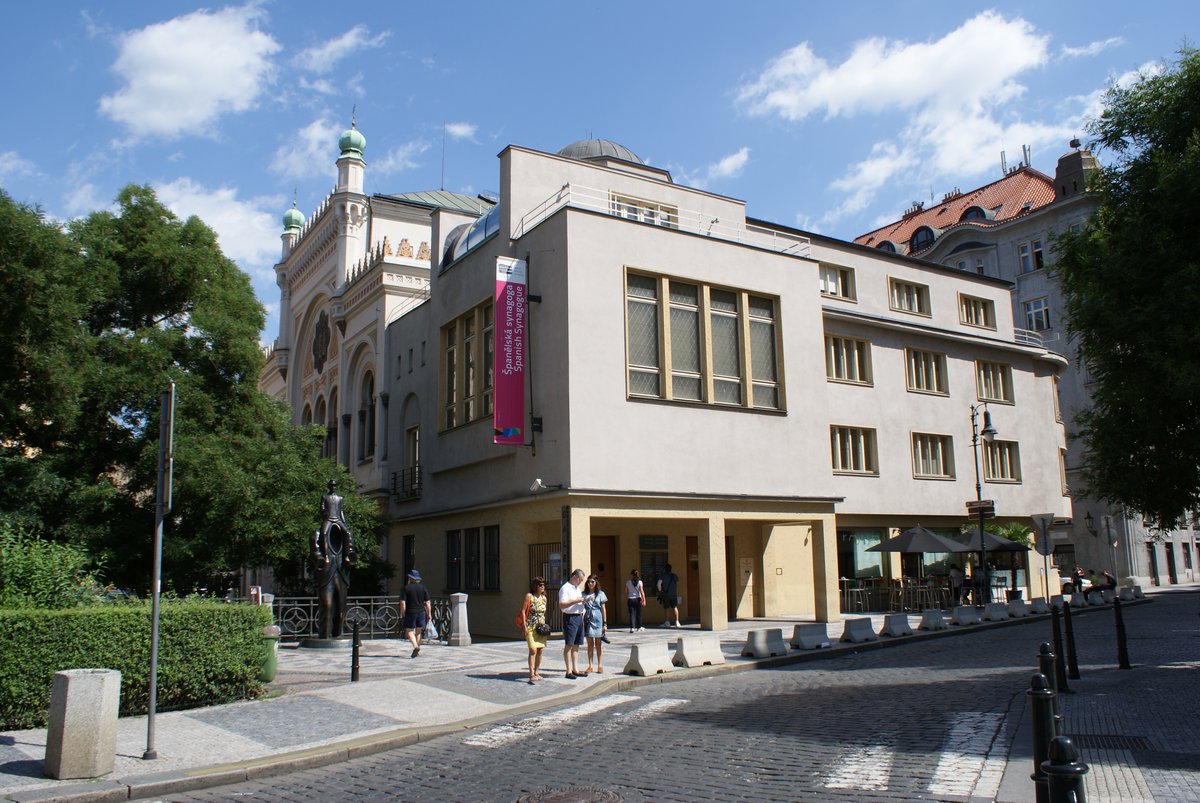
Exterior view of the Jewish Museum and the Spanish Synagogue located in Prague, Czech Republic, showcasing historic architecture
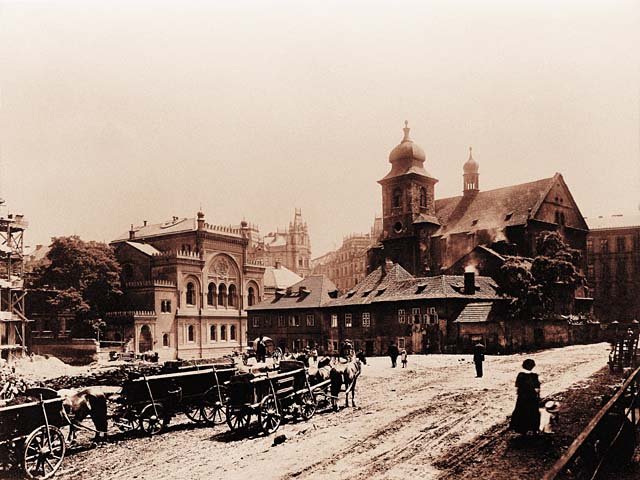
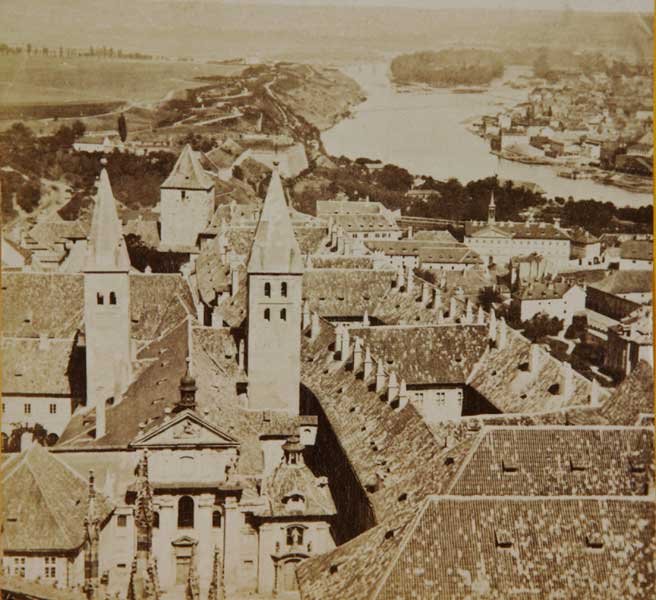
Photograph depicting the demolition of building blocks in the eastern part of the ghetto around the Church of the Holy Spirit and the Spanish Synagogue before World War I.
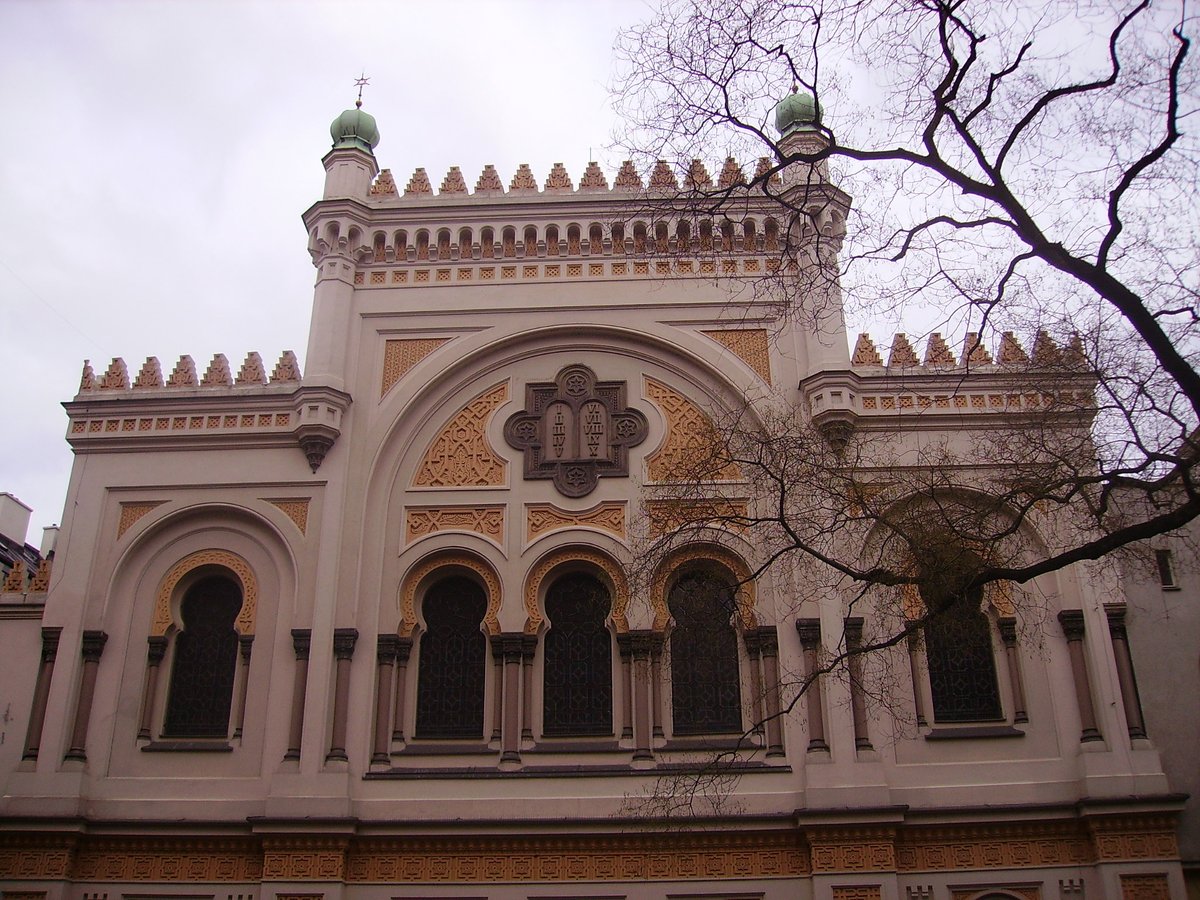
Detailed image showcasing the Moorish Revival architectural style of the Spanish Synagogue located in Prague, Czech Republic.
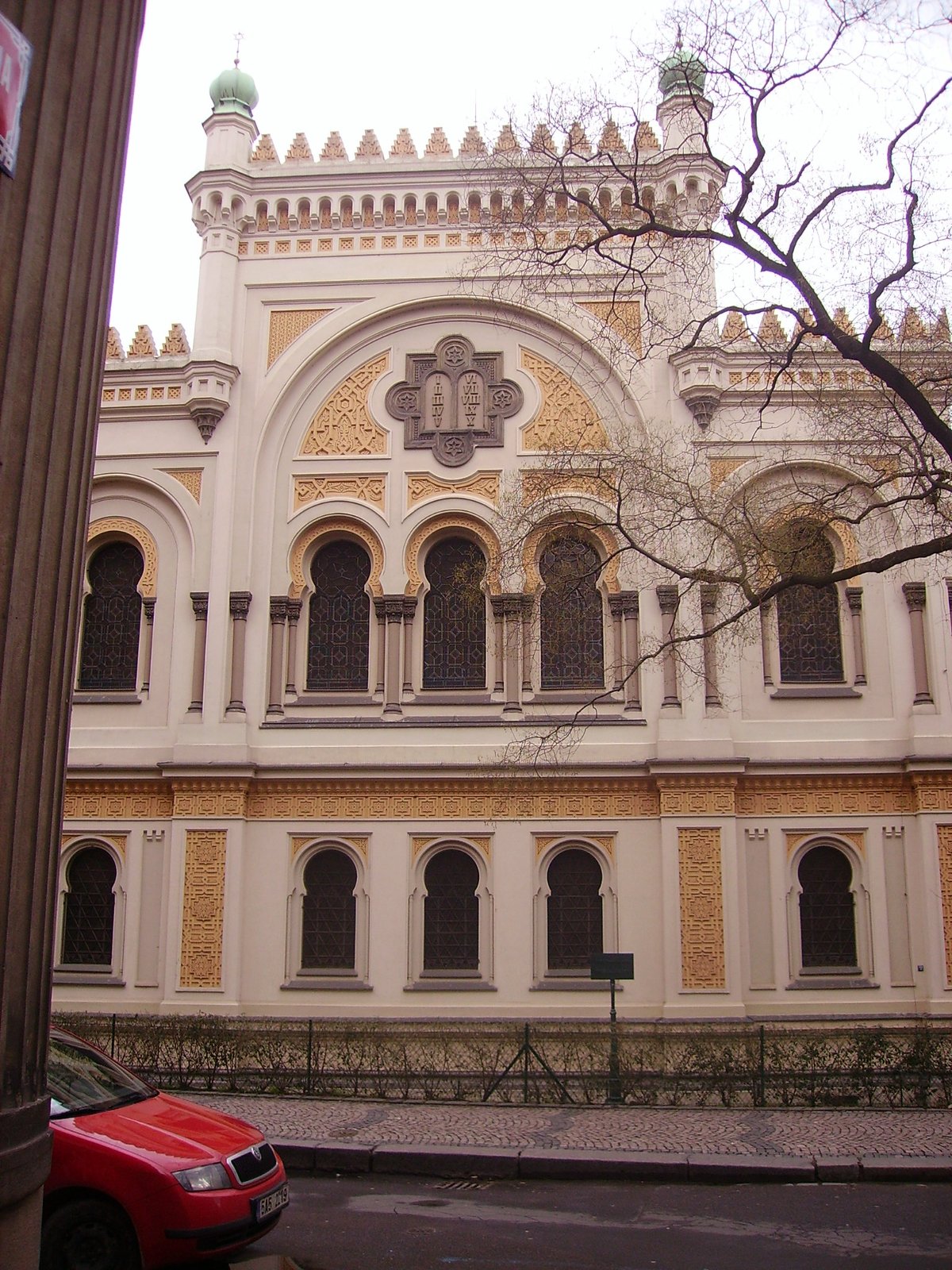
Detailed view of the Spanish Synagogue in Prague showcasing its intricate Moorish Revival architectural style and decorative motifs
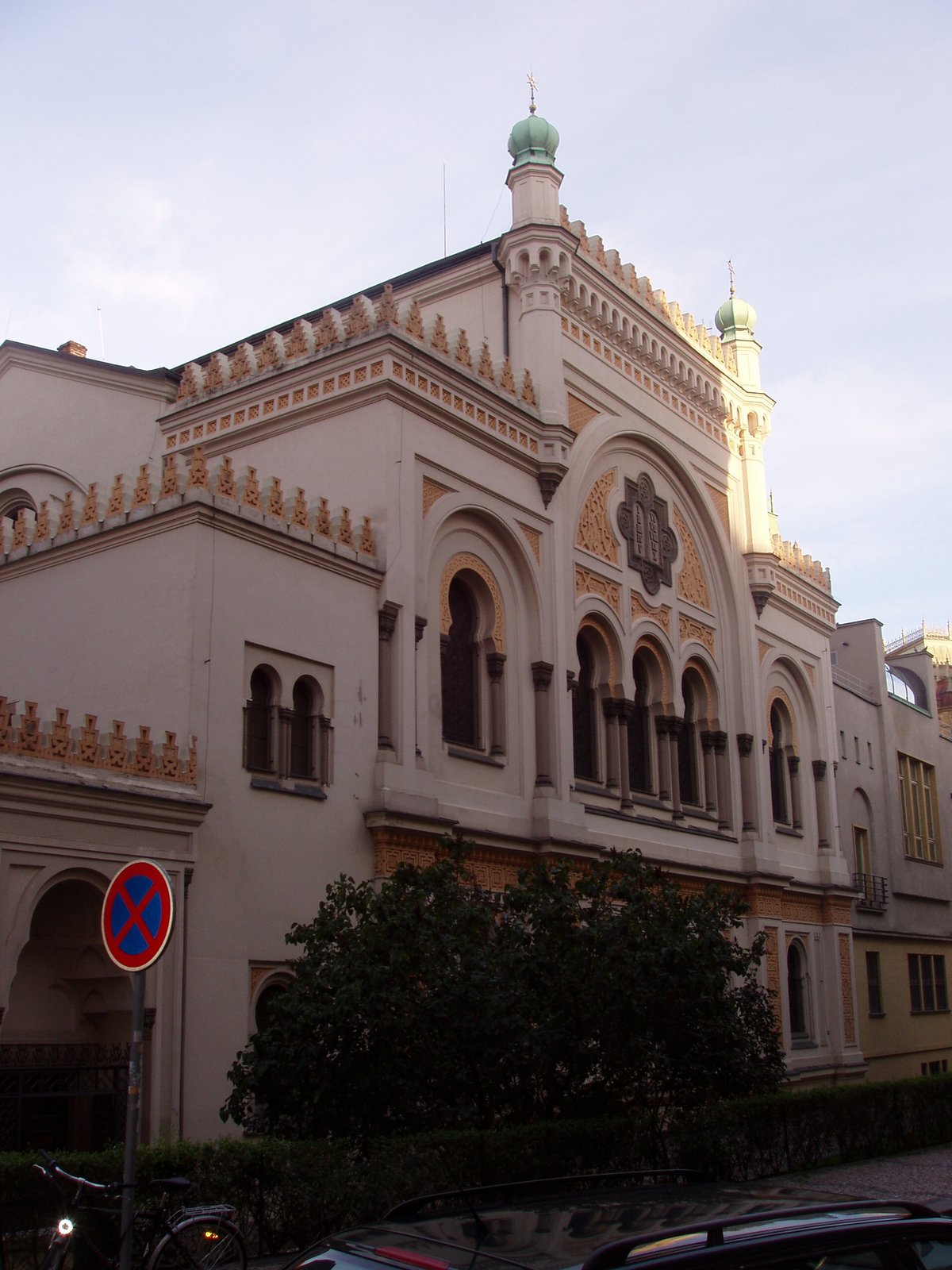
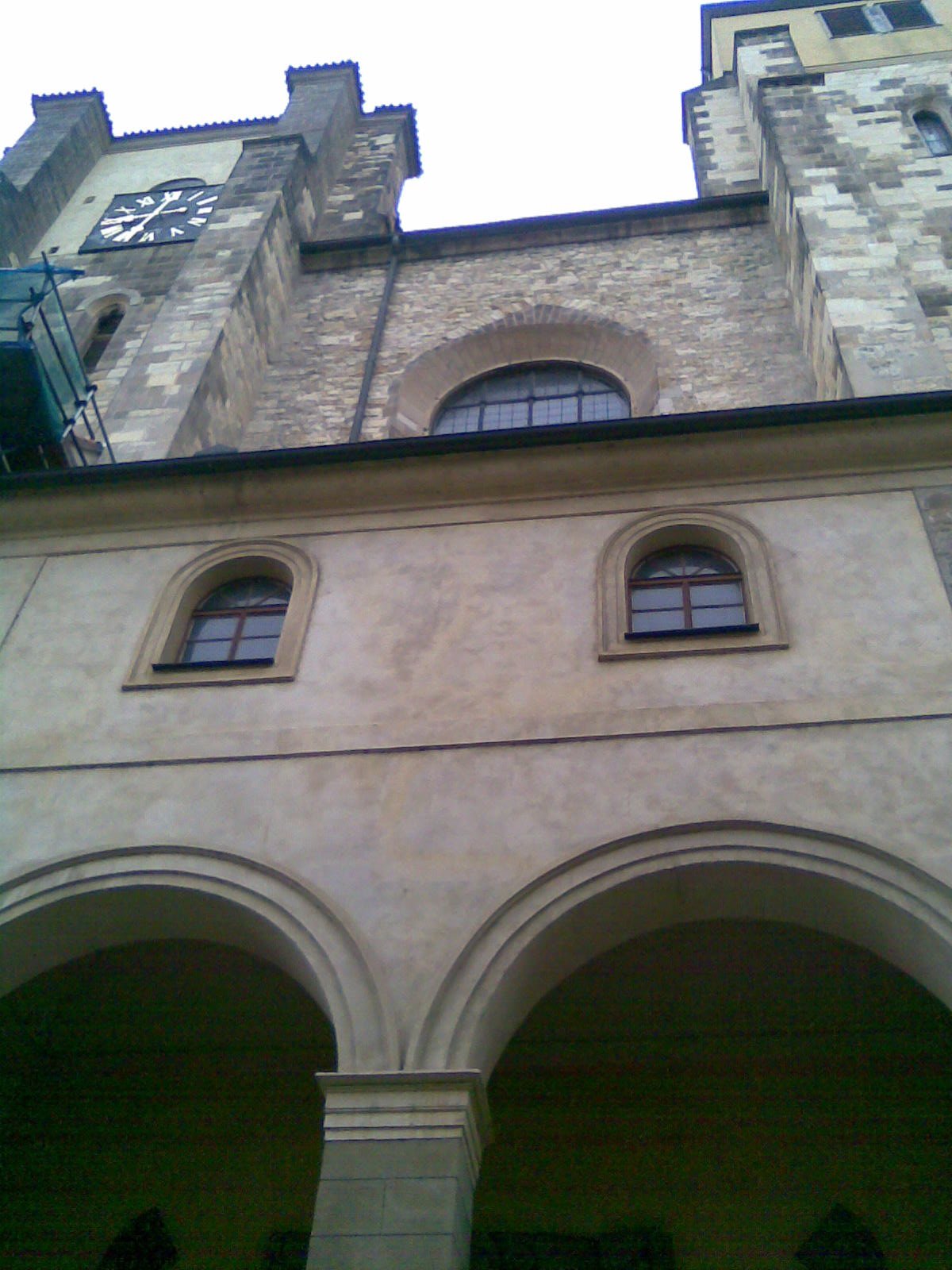
Exterior of the Spanish Synagogue in Prague showcasing its gothic and Moorish revival architectural styles and ornate design.
Foundations and Early Jewish Presence
The site of the Spanish Synagogue has been central to Prague’s Jewish community since the 12th century, originally housing the Altschul (Old School), the city’s oldest synagogue (Wikipedia). The Jewish Quarter, Josefov, emerged as a vibrant center of Jewish life and scholarship, surviving both periods of prosperity and tragic events, such as the 1389 Passover massacre (visitprague.info).
19th-Century Transformation and Emancipation
By the mid-1800s, the Jewish community sought greater integration and religious modernization, influenced by the Haskalah (Jewish Enlightenment) and the reforms of Emperor Joseph II (praguehere.com). The old Altschul was demolished and replaced with the Spanish Synagogue, completed in 1868. Designed by Ignác Ullmann and Josef Niklas, it expressed the community’s aspirations for openness, beauty, and inclusion—adopting Reform liturgy and Czech-language services (worldjewishtravel.org).
Wartime Fate and Museum Era
During World War II, the synagogue was closed by Nazi authorities and repurposed for storage of confiscated Jewish property (praguehere.com). Postwar, it became part of the Jewish Museum in Prague, which today oversees several historic sites in Josefov (jguideeurope.org). Collections originally assembled by the Nazis now serve as a testament to Jewish endurance and cultural survival.
Restoration and Contemporary Role
After extensive renovations, the Spanish Synagogue reopened to the public in 2022, celebrated with events honoring its legacy (worldjewishtravel.org). It now functions as both a museum and concert hall, hosting exhibitions and regular performances of classical and Jewish music (pragueticketoffice.com).
Architecture and Artistic Features
Moorish Revival Splendor
The Spanish Synagogue’s design is a prime example of Moorish Revival architecture, distinguished by horseshoe arches, ornate stucco arabesques, polychrome decoration, and a grand central dome (czechiatravelguide.com). The style was chosen to evoke the "Golden Age" of Jewish Spain, symbolizing both the Sephardic heritage and modern aspirations of Prague’s Jewish community.
Interior Highlights
Visitors are greeted by a richly decorated prayer hall, where intricate geometric and floral motifs, gilded stucco, and colorful stained glass windows create a luminous, welcoming atmosphere. The sanctuary’s bimah and Torah ark are centrally located and lavishly ornamented, embodying the synagogue’s spiritual and artistic heart (worldjewishtravel.org).
Musical Heritage
The synagogue’s excellent acoustics and historical organ—once played by František Škroup, composer of the Czech national anthem—make it a prime venue for concerts (pragueticketoffice.com). Evening performances offer visitors a unique cultural experience.
Exhibition Spaces
As part of the Jewish Museum, the Spanish Synagogue houses permanent exhibitions such as “Jews in the Bohemian Lands, 19th–20th Centuries” and “Synagogue Silver from Bohemia and Moravia.” These displays feature artifacts, documents, and Judaica that illustrate themes of emancipation, integration, the Holocaust, and renewal (praguehere.com).
Visiting Information: Hours, Tickets, and Accessibility
Location and Getting There
- Address: Vězeňská 1, Josefov, Prague.
- Directions: A short walk from Old Town Square; nearest metro station is Staroměstská (Line A). Several tram lines also serve the area (Salut Bye Bye).
Opening Hours
- 2 January – 31 March: 9:00 a.m. – 4:30 p.m.
- 1 April – 18 October: 9:00 a.m. – 6:00 p.m.
- 19 October – 31 December: 9:00 a.m. – 4:30 p.m.
- 24 December: 9:00 a.m. – 2:00 p.m.
- 1 January: 11:00 a.m. – 4:30 p.m.
- Closed: Saturdays (Shabbat) and major Jewish holidays. The synagogue closes one hour before Shabbat on Fridays (Jewish Museum Prague).
Tickets and Admission
- Standard Combined Ticket (2025): 350 CZK for adults; 250 CZK for students (up to 26 years) and children (under 15); free for under 6 (Prague Info).
- Old-New Synagogue: Requires a separate ticket (200 CZK) or is included in a 500 CZK combo ticket.
- Purchase: Tickets are available online, at the Pinkas Synagogue, or via authorized tour operators. City passes such as the Prague Card may offer discounts or free entry.
Accessibility and Visitor Facilities
- The Spanish Synagogue is wheelchair accessible, with ramps and staff assistance available. Facilities include restrooms and a gift shop.
- Photography: Non-flash photography is generally allowed; restrictions may apply during special exhibitions or concerts.
Guided Tours
- Guided Tours: Highly recommended for historical context; available in multiple languages and cover the synagogue and other Jewish Quarter sites.
- Audio Guides: Available for self-guided visits.
Experiencing the Jewish Quarter
Other Key Sites Included in the Combined Ticket
- Maisel Synagogue: Focuses on the early history of Jews in Bohemia and Moravia (Salut Bye Bye).
- Pinkas Synagogue: A Holocaust memorial inscribed with names of nearly 80,000 Czech and Moravian Jewish victims (Prague Info).
- Klausen Synagogue: Exhibits Jewish customs and religious life.
- Old Jewish Cemetery: One of Europe’s oldest Jewish burial grounds.
- Ceremonial Hall: Details Jewish burial traditions.
Suggested Itinerary
Begin at the Maisel Synagogue (early history), continue to the Pinkas and Klausen Synagogues, visit the Old Jewish Cemetery, and conclude at the Spanish Synagogue for the modern era (Salut Bye Bye). This route offers a chronological journey through Jewish history in Prague.
Additional Nearby Attractions
- Jewish Town Hall: Noted for its unique clock with Hebrew numerals.
- Statue of Franz Kafka: An homage to the renowned writer, located near the synagogue (Prague Info).
- Rudolfinum: A neoclassical concert hall nearby.
FAQ
Q: What are the Spanish Synagogue’s opening hours?
A: Open daily except Saturdays and Jewish holidays; generally 9:00 a.m.–6:00 p.m. in peak season and shorter hours in winter. Always confirm on the Jewish Museum website.
Q: Where can I buy tickets?
A: Online, at the Pinkas Synagogue, or via authorized tour operators. Combined tickets and city passes are available.
Q: Is the synagogue wheelchair accessible?
A: Yes, with ramps and staff assistance.
Q: Can I take photographs?
A: Non-flash photography is usually permitted; check for restrictions during events or special exhibitions.
Q: Are guided tours available?
A: Yes, in multiple languages; booking ahead is advised.
Q: How long should I plan for a visit?
A: Allocate 30–45 minutes for the Spanish Synagogue and 2–3 hours to explore the entire Jewish Quarter.
Visitor Tips and Recommendations
- Visit early to avoid crowds, especially in peak season.
- Dress modestly out of respect for the religious and memorial significance of the site.
- Combine your visit with other Jewish Quarter attractions for a comprehensive experience.
- Check the calendar for concerts and special exhibitions (pragueticketoffice.com).
- Download the Audiala app for self-guided audio tours and up-to-date visitor information.
Listen to the full story in the app
Your Personal Curator, in Your Pocket.
Audio guides for 1,100+ cities across 96 countries. History, stories, and local insight — offline ready.
Audiala App
Available on iOS & Android
Join 50k+ Curators
Sources
- verified
- verified
- verified
- verified
- verified
- verified
- verified
- verified
- verified
Last reviewed: