Introduction
Nestled in the heart of Malá Strana, Prague’s historic Lesser Town, Palác Smiřických stands as a vivid testament to the city’s Renaissance and Baroque heritage. Built between 1603 and 1613 for the esteemed Smiřický family, the palace not only showcases architectural evolution—from Renaissance symmetry and sgraffito to Baroque grandeur—but also occupies a significant place in Czech and European history. Most notably, it served as a strategic headquarters for the Protestant Estates during the events leading to the Second Defenestration of Prague in 1618, a pivotal act that sparked the Thirty Years’ War. Today, Palác Smiřických forms part of the Czech Republic’s parliamentary complex, bridging its storied past with the country’s modern democratic role. While regular interior access is limited due to its governmental function, special guided tours and cultural events occasionally offer the public a rare glimpse into its opulent interiors and rich heritage. This detailed guide explores Palác Smiřických’s history, architecture, visiting logistics, and nearby attractions—equipping you with everything you need to plan an informative and memorable visit (Pamětní desky v Praze, Vyletnik.cz, Neznámá Praha).
Origins and Early Renaissance Construction
Palác Smiřických was commissioned by the influential Smiřický family, among Bohemia’s wealthiest Protestant nobles. The site, acquired by Jaroslav I. Smiřický in 1572, saw the transformation of several medieval plots—ravaged by fire in the mid-16th century—into a grand Renaissance palace. The original design featured symmetry, arcaded courtyards, classical pilasters, and sgraffito-decorated facades, reflecting contemporary Italian influences (Pamětní desky v Praze).
Baroque Transformation
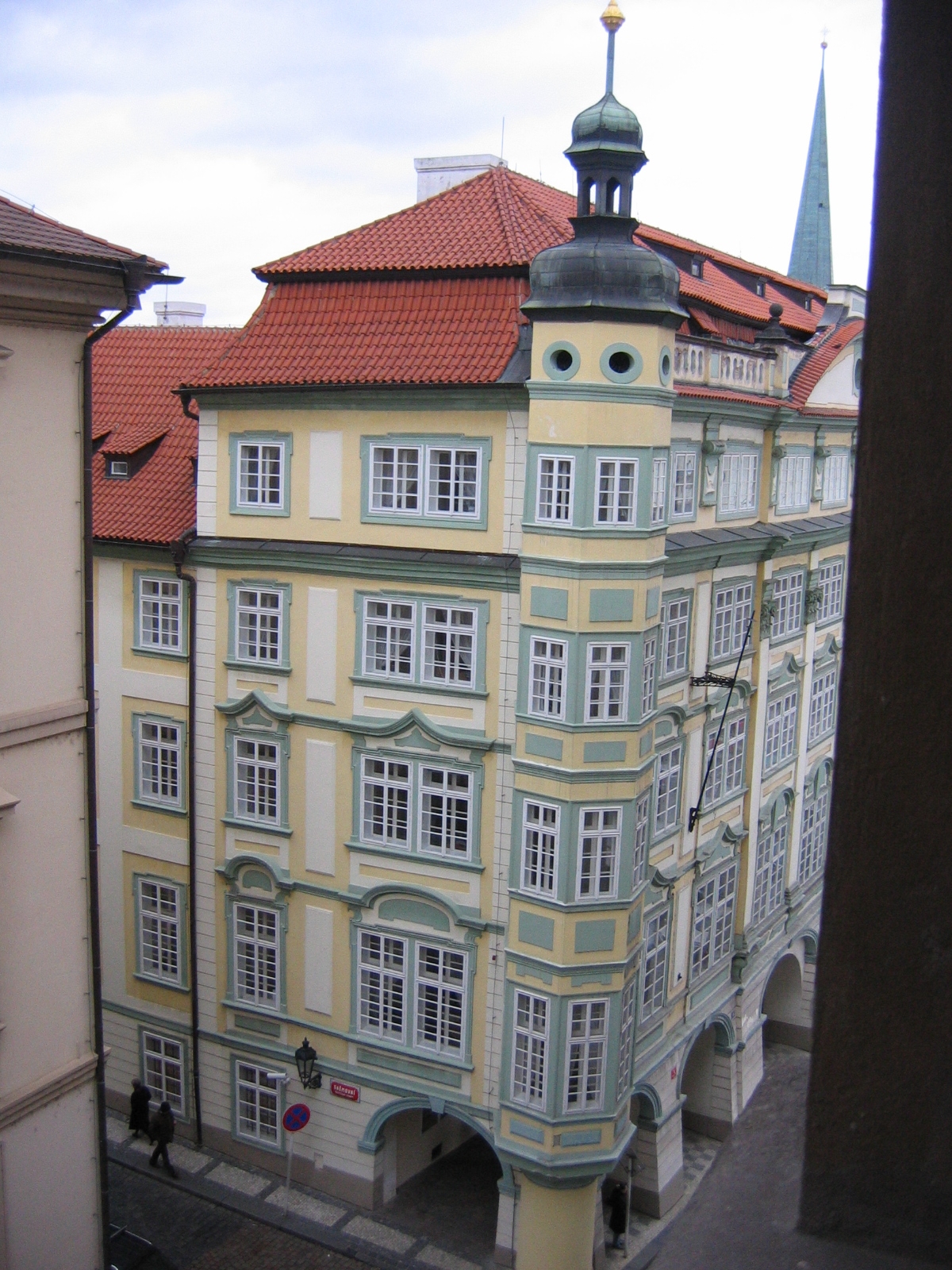
A devastating fire in 1763 prompted a major Baroque renovation under Jan Pavel z Montagu. Architect Josef Jagr oversaw the redesign, introducing grand staircases, ornate stucco ceilings, and an elegant off-white exterior with large glass windows. Corner towers, first added in the early 17th century, further emphasized the palace’s noble status (Prague City Line).
Political Significance and the Defenestration of Prague
Palác Smiřických played a crucial role in the events leading up to the Second Defenestration of Prague in 1618. The palace was the secret meeting place for Protestant Estates led by Albrecht Jan Smiřický, where plans were forged that would result in the defenestration of Habsburg governors from Prague Castle. This act ignited the Thirty Years’ War, dramatically altering the religious and political landscape of Europe (Neznámá Praha, World City History).
Later History and Modern Role
After the Protestant defeat at the Battle of White Mountain (1620), the Smiřický family lost the palace, which changed ownership multiple times through the centuries. By the 18th century, it had been remodeled into its current Baroque form. Today, Palác Smiřických serves as part of the seat of the Chamber of Deputies in the Czech Parliament, symbolizing the nation's journey from monarchical rule to democracy (Expats.cz).
Architectural Highlights
Palác Smiřických’s four-winged layout encloses a courtyard typical of noble residences. Its Renaissance roots are visible in the building's symmetry and sgraffito work, while the Baroque renovation introduced monumental staircases, stucco ceilings, and a sophisticated façade. The polygonal corner towers and arcades facing Malostranské náměstí enhance its stately profile. While interior access is rare, the palace’s exterior offers superb photographic opportunities, especially in early morning or late afternoon light (Vyletnik.cz).
Visiting Information
Visiting Hours
- Regular Hours: As a working government building, Palác Smiřických does not have standard public opening hours.
- Special Events: Occasional public access is offered during events such as Open House Prague, parliamentary open days, or pre-arranged guided tours.
- Recommendation: Always check the Czech Parliament website or local tourist information for the latest access details.
Tickets and Guided Tours
- Admission: Entry is typically free during public parliamentary sessions or special events; guided tours may require advance reservations.
- Booking: Guided walking tours of Malá Strana offered by local providers often include exterior commentary on Palác Smiřických.
- Interior Access: Interior tours are rare and usually only available during designated open days or cultural heritage events.
Accessibility
- Exterior: The palace’s façade and Malostranské náměstí are fully accessible for viewing and photography.
- Interior: Access for those with mobility impairments is limited due to the building’s historic structure; contact the administration for specific accommodations during special events.
How to Get There
- Address: Malostranské náměstí 18, Prague 1
- Public Transport:
- Metro: Malostranská (Line A)
- Trams: Malostranské náměstí stop is served by several lines
- On Foot: The palace is a short walk from Charles Bridge and Prague Castle.
Nearby Attractions
- St. Nicholas Church: An exquisite Baroque church directly across the square.
- Charles Bridge: Iconic 14th-century bridge connecting Malá Strana and Old Town.
- Sternberg Palace: Houses the National Gallery’s European art collection.
- Kampa Island: Scenic riverside park ideal for strolls and photography.
- Thun Palace: Another significant historical building nearby.
Visitor Tips
- Best Time to Visit: Early spring or late autumn for pleasant weather and fewer crowds.
- Photography: Early morning and late afternoon provide the best light for exterior shots.
- Events: Monitor local cultural calendars or the Open House Prague event for rare interior access.
- Accessibility: Malostranské náměstí is pedestrian-friendly, but cobblestone streets may be challenging for some visitors.
Frequently Asked Questions (FAQ)
Q: Can I visit the inside of Palác Smiřických?
A: Interior access is generally restricted, but special tours or open days occasionally permit entry. Check official sources for announcements.
Q: Are tickets required to visit?
A: No tickets are needed to view the exterior. Tickets or reservations may be required for special events or guided tours.
Q: Is the palace wheelchair accessible?
A: The exterior and surrounding square are accessible; interior accessibility depends on the event.
Q: What are the best nearby sites?
A: St. Nicholas Church, Charles Bridge, and Kampa Island are all within easy walking distance.
Q: How do I find out about upcoming tours or events?
A: Consult the Czech Parliament website, Prague tourism portal, or local event listings.
Listen to the full story in the app
Your Personal Curator, in Your Pocket.
Audio guides for 1,100+ cities across 96 countries. History, stories, and local insight — offline ready.
Audiala App
Available on iOS & Android
Join 50k+ Curators
Sources
- verified
- verified
- verified
- verified
- verified
- verified
Last reviewed: