Introduction
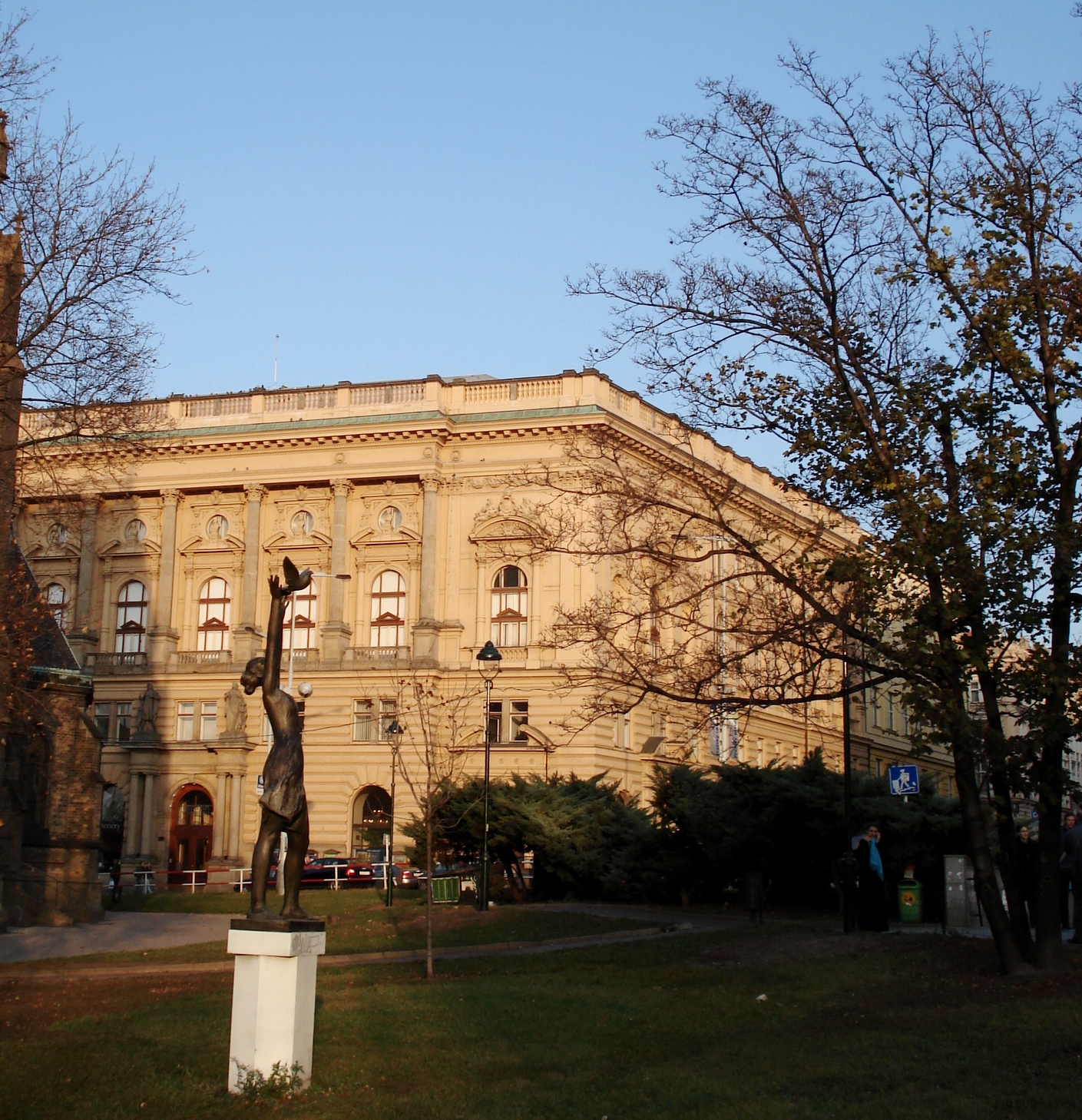
Museum Kampa, located on the scenic Kampa Island in Prague's historic Malá Strana district, is a leading destination for modern and contemporary Central European art. Housed in the historic Sovovy Mlýny (Sova’s Mills) complex, the museum seamlessly blends centuries-old architecture with vibrant artistic expression. Founded by Jan and Meda Mládek, whose collection was assembled in exile to preserve art marginalized during the Communist era, Museum Kampa opened its doors in 2003 and stands today as both a custodian of cultural memory and a hub for artistic innovation. Whether you are an art lover, history enthusiast, or traveler exploring Prague’s historical sites, this guide provides essential information on Museum Kampa’s visiting hours, tickets, exhibitions, accessibility, and nearby attractions (Museum Kampa – historie Sovových mlýnů, praguemorning.cz, prague-now.com).
History and Founding Vision
Museum Kampa’s foundation is deeply entwined with the personal histories of Jan and Meda Mládek. Fleeing Czechoslovakia after the 1948 Communist coup, the Mládeks settled in the United States and Paris, where they became passionate advocates for Czech and Central European artists oppressed by the regime. Their collection grew as an act of both preservation and quiet resistance, supporting artists whose works were at risk of censorship or destruction (Museum Kampa – příběh Medy Mládkové, christies.com).
With the Velvet Revolution’s success in 1989, Meda Mládek returned to Prague, determined to share her collection with the public. The Jan and Meda Mládek Foundation was established, and after extensive restoration of the Sovovy Mlýny complex, Museum Kampa opened in 2003 (museumportheimka.cz).
The Sovovy Mlýny Complex
Sovovy Mlýny is one of Prague’s oldest mill complexes, with origins dating to the 10th century. Throughout the Middle Ages and into the Renaissance and Baroque periods, the mills played an integral role in the city’s economy. The present building reflects layers of architectural history, restored and adapted to serve as a modern exhibition space while preserving its historical character. Its position on Kampa Island, adjacent to the Vltava River and Charles Bridge, provides visitors with beautiful views and a unique atmosphere (Museum Kampa – historie Sovových mlýnů, praguemorning.cz).
Museum Kampa’s Mission and Collections
The museum’s mission, as articulated by the Jan and Meda Mládek Foundation, is to foster appreciation for modern and contemporary art, preserve and expand a unique collection focused on Central and Eastern Europe, and renew traditions endangered by totalitarianism. This is achieved through:
- Permanent and temporary exhibitions that highlight both Czech and international artists, especially those whose work was suppressed during the Communist era.
- Educational programs that engage audiences of all ages and backgrounds.
- Cultural dialogue through collaborations with artists and institutions worldwide (museumportheimka.cz).
The Jan and Meda Mládek Collection
The heart of Museum Kampa is the Jan and Meda Mládek Collection, which emphasizes modern and contemporary art from Central and Eastern Europe. Notable highlights include:
- František Kupka: Recognized as a pioneer of abstract art, with the world’s largest public collection of his works on display, including both early figurative and later abstract paintings.
- Otto Gutfreund: A central figure in Czech Cubist sculpture, offering insight into the evolution of Czech modernism.
- Other Central European Artists: Including Karel Malich, Toyen, Kamil Lhoták, Stanislav Kolíbal, and others from the Czech Republic, Slovakia, Poland, Hungary, and the former Yugoslavia (museumkampa.cz, praguetouristinformation.com).
Permanent and Temporary Exhibitions
Museum Kampa regularly hosts thematic and retrospective exhibitions, showcasing both established and emerging artists. These exhibitions often address themes of identity, memory, and political resistance, reflecting the challenging historical context in which much of the art was created.
Current and Recent Exhibitions
As of June 2025, highlights include:
- Sophie Curtil and Miloš Cvach: Harmony of Opposites
- Stanislav Kolíbal 100: Celebrating the centenary of the influential Czech sculptor.
- František Kupka – Master of World Art: Featuring rare works and archival materials.
- Rotating displays of international artists such as Andy Warhol and Yoko Ono (museumkampa.cz).
Past Exhibition Highlights
- “Pablo Picasso. Passion and Guilt.”
- “Alfons Mucha and Pasta Oner: Elusive Fusion”
- “The Power of the Act. Jan Palach and Jan Zajíc in Art 1969–2009”
- “Manolo Blahnik: The Art of Shoes”
For the latest updates on exhibitions, always check the official Museum Kampa website.
Outdoor Art and Sculptures
Museum Kampa is as celebrated for its outdoor art as for its gallery collections:
- Magdalena Jetelová’s Giant Chair: A striking symbol of the museum, located in the park.
- David Černý’s “Miminka” (Babies): Crawling baby sculptures, also seen on Prague’s Žižkov Television Tower, offer whimsical and provocative commentary on contemporary society.
- Cracking Art Group’s Yellow Penguins: A row of 34 illuminated penguins along the Smíchov Locks, adding playful color to the riverside (viewfromprague.com).
Visiting Hours and Ticket Information
-
Opening Hours:
- Tuesday to Sunday: 10:00 AM – 6:00 PM
- Closed on Mondays
- Last admission is 45 minutes before closing
-
Ticket Prices:
- Adults: 250 CZK
- Students and Seniors: 150 CZK
- Children under 6: Free
- Family and group discounts are available
Tickets can be purchased online via the official Museum Kampa website or at the museum entrance. Booking in advance is advisable during peak tourist seasons (praguetouristinformation.com).
Getting There and Accessibility
- Location: Kampa Island, Malá Strana district, Prague, adjacent to Charles Bridge.
- Public Transport:
- Tram lines 12, 20, and 22 to Malostranské náměstí.
- Metro Line A to Malostranská station, then a short walk.
- Walking from Old Town across Charles Bridge is highly recommended.
- Accessibility: The museum is wheelchair accessible with ramps and elevators. Some areas of the historic building may have limited access, but staff are available to assist (museumkampa.cz).
Visitor Amenities and Facilities
- Café: Offers coffee, homemade lunches, and cakes with terrace views of the river and Charles Bridge (viewfromprague.com).
- Museum Shop: Features art books, souvenirs, and gifts.
- Restrooms: Accessible and well-maintained.
- Lockers: Available for large bags and backpacks.
- Service Animals: Welcome throughout the museum.
Guided Tours and Educational Programs
Museum Kampa provides guided tours in several languages, which can be booked in advance. Educational offerings include workshops for children and adults, school group activities, and lectures on modern art and history (museumkampa.cz).
Nearby Attractions
Museum Kampa's central location makes it ideal for combining with other sights:
- Charles Bridge: Iconic historic bridge just steps from the museum.
- John Lennon Wall: Famous for colorful graffiti and messages of peace, a 5-minute walk away.
- Kampa Park: A green oasis surrounding the museum, perfect for leisure and family outings.
- Malá Strana District: Baroque architecture, charming cafés, and shops.
- Dining: From casual cafés to Michelin-starred Kampa Park Restaurant, options abound nearby (prague.org).
Practical Tips
- Best Time to Visit: Weekday mornings for fewer crowds; spring and summer for outdoor enjoyment.
- Photography: Non-flash photography is generally allowed, but restrictions may apply for temporary exhibitions.
- Family-Friendly: Workshops and nearby playgrounds make it suitable for all ages.
- Advance Booking: Recommended for tickets and guided tours during busy periods.
Frequently Asked Questions (FAQ)
Q: What are Museum Kampa’s opening hours?
A: Tuesday–Sunday, 10:00 AM to 6:00 PM; closed Mondays.
Q: How much do tickets cost?
A: Adults: 250 CZK; students/seniors: 150 CZK; free for children under 6.
Q: Is Museum Kampa wheelchair accessible?
A: Yes. Most areas are accessible, though some historic sections may have limitations.
Q: Are guided tours available?
A: Yes, in multiple languages. Book ahead for availability.
Q: Can I take photos inside the museum?
A: Non-flash photography is generally permitted; check for restrictions in special exhibitions.
Q: How do I get to Museum Kampa?
A: By tram, metro, or on foot from Charles Bridge or other central locations.
Listen to the full story in the app
Your Personal Curator, in Your Pocket.
Audio guides for 1,100+ cities across 96 countries. History, stories, and local insight — offline ready.
Audiala App
Available on iOS & Android
Join 50k+ Curators
Sources
- verified
- verified
- verified
- verified
- verified
- verified
Last reviewed: