Make the visit yours
Plan and listen to Kolovratský Palác with Audiala
Audio guide in your pocket, itinerary in your browser. Built for the way you actually visit.
Introduction: The Legacy of Kolovratský Palác in Prague
Kolovratský Palác, situated in the historic Malá Strana district of Prague, is a distinguished symbol of Czech nobility, architectural innovation, and political history. Originally commissioned in the late 18th century by Marie Barbora Countess Černínová of Chudenice and her husband, the palace exemplifies the transition from the exuberance of late Baroque to the elegance of Classicism, later enhanced by neo-Baroque renovations (kudyznudy.cz). Designed by Ignác Jan Nepomuk Palliardi, its symmetrical façade, grand vestibule adorned with Matyáš Bernard Braun’s sculptures, and terraced gardens enrich Prague’s aristocratic landscape.
Throughout its existence, Kolovratský Palác has played a pivotal role in Czech history, witnessing significant events such as the 1938 Munich Agreement negotiations and the transformations of the 20th century. Since 1996, it has served as the seat of the Senate of the Czech Republic, blending historical importance with governmental function (Senát ČR).
While public access is limited due to its governmental function, opportunities to tour the palace and its gardens arise during special occasions, including state holidays and the annual Open House festival. The palace gardens, open during warmer months, provide serene vistas and a connection to Prague’s baroque garden heritage (viewprague.cz).
This guide covers Kolovratský Palác’s rich history, architectural highlights, visiting information, accessibility, and nearby attractions—making it an essential destination for history lovers, architecture enthusiasts, and cultural travelers. For up-to-date details, always refer to official resources (kudyznudy.cz; Senát ČR).
Origins and Early Development
Kolovratský Palác stands as a testament to late Baroque architecture in Prague. Commissioned after 1784 by Marie Barbora Countess Černínová and her husband, its establishment reflected the ambitions of the Czech aristocracy. Located on Valdštejnská Street near Prague Castle, the palace’s site was already prestigious, adjacent to other noble residences such as Malý Fürstenberský Palác (kudyznudy.cz).
Architect Ignác Jan Nepomuk Palliardi incorporated late Baroque and early Classicist elements, evident in the balanced façade and decorative Marian image (cs.wikipedia.org).
Architectural Evolution
The palace’s original Baroque design featured a grand entrance, a spacious vestibule with Braun’s sculptures, and a monumental staircase leading to state rooms (santini.cz). In 1886, Count Zdeněk Kolovrat-Krakovský acquired the palace, initiating extensive neo-Baroque renovations. These included a new art gallery, library, and numismatic collection. The gallery’s holdings were later partly transferred to the National Gallery, and the library is now managed by the National Museum (cs.wikipedia.org).
Despite interior updates, the palace retains its late Baroque character and remains a prime example of Prague’s noble residences.
Historic Events and Political Significance
Kolovratský Palác has been at the heart of Czech political history:
- Munich Agreement (1938): The palace hosted government negotiations during this pivotal event, leading to the ceding of the Sudetenland (Senát ČR).
- Protectorate Era: It served as a government building during the Nazi occupation.
- Postwar Period: Housed ministries such as Information and Culture through the communist era (cs.wikipedia.org).
- Democratic Renewal: After 1989, the palace was restored and integrated into the Senate complex, with major renovations completed by 2006.
Today, it functions as the seat of the Senate, hosting committee meetings and official events (Senát ČR).
Cultural and Artistic Importance
Designated a cultural monument in 1964, Kolovratský Palác exemplifies late Baroque architecture. Its preserved façade and vestibule are among Prague’s finest. The palace’s gardens, part of the terraced Palace Gardens beneath Prague Castle, offer a tranquil retreat and panoramic views, connecting visitors with centuries of aristocratic tradition (kudyznudy.cz; viewprague.cz).
Visiting Kolovratský Palác: Hours, Tickets, and Tours
Opening Hours:
Public access is limited. The palace opens for guided tours during special events, such as state holidays (e.g., Czech Statehood Day on September 28) and the Open House festival in May. The gardens are usually open from April to October, 10:00 AM to 6:00 PM (viewprague.cz).
Tickets and Entry:
Admission is generally free during public events, but advance registration or tickets may be required. Always check the Senate’s official website or major event portals for current details.
Guided Tours:
Available during open days, with a focus on history, architecture, and politics. Private or group tours must be arranged in advance.
Accessibility:
Due to the building’s age, full wheelchair accessibility is limited. The gardens and some public areas are accessible, but visitors with special needs should contact the administration beforehand.
Architectural Highlights
- Neo-Baroque Interiors: Ornate ceilings, grand staircases, opulent salons.
- Green and Pink Salons: Historical rooms significant for political events.
- Vestibule and Façade: Late Baroque design with Classicist restraint.
- Kolovrat Garden: Baroque-style terraced garden with city views.
Visitor Tips and Accessibility
- Plan Ahead: Visit during open days or festivals for interior access.
- Combine Nearby Attractions: The palace is near Wallenstein Garden, Prague Castle, and St. Nicholas Church.
- Public Transport: Metro (Malostranská, Line A) and trams (12, 15, 20, 22) serve the area.
- Comfortable Shoes: Malá Strana’s cobbled streets can be uneven (Lonely Planet).
- Photography: Allowed in exterior areas; restrictions apply inside.
Nearby Attractions
Visual Gallery
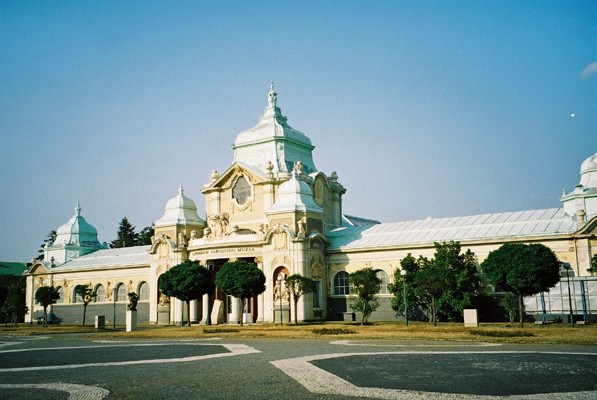
 The symmetrical late Baroque façade of Kolovratský Palác in Malá Strana.
 Baroque-style Kolovrat Garden with panoramic views of Prague.
Frequently Asked Questions (FAQ)
Q: When can I visit Kolovratský Palác?
A: The palace is open to the public only during select events (e.g., state holidays, Open House festival). The gardens are open seasonally, April–October.
Q: Is there an entrance fee?
A: Entry is usually free during public events, but registration may be required.
Q: Are tours in English available?
A: Yes, especially during international festivals and special events. Confirm language options when booking.
Q: Is the palace accessible for people with disabilities?
A: Accessibility is limited in the historic building, but the gardens are wheelchair accessible. Contact the administration for details.
Q: How do I get there?
A: Malostranská metro station (Line A) and trams 12, 15, 20, and 22 (Malostranské náměstí stop) are nearby.
Plan Your Visit
- Check Official Sources: Senate of the Czech Republic, kudyznudy.cz, and View Prague.
- Time Your Visit: Attend during public festivals or open days for interior access.
- Download the Audiala App: For interactive audio guides and up-to-date visitor information.
Listen to the full story in the app
Your Personal Curator, in Your Pocket.
Audio guides for 1,100+ cities across 96 countries. History, stories, and local insight — offline ready.
Audiala App
Available on iOS & Android
Join 50k+ Curators
Sources
- verified
- verified
- verified
- verified
- verified
- verified
- verified
Last reviewed: