Introduction
Nestled in Prague’s Old Town, the Church of St. Martin in the Wall (Kostel svatého Martina ve zdi) stands as one of the city’s oldest and most architecturally significant medieval monuments. Dating back to the Romanesque period of the late 12th century, this unique church is integrated into Prague’s ancient defensive wall, with its southern side forming part of the city’s historic fortifications after the 13th-century expansion. Over the centuries, the church has witnessed remarkable architectural evolution and played pivotal roles in Prague’s religious and cultural life—most notably during the Hussite movement, where it pioneered the practice of communion under both kinds. Today, the church is not only a preserved monument of Romanesque and Gothic architecture but also a vibrant venue for classical music concerts and community events. This guide provides comprehensive information for visitors, detailing its history, architecture, practical tips, visiting hours, admission, and nearby attractions, ensuring you make the most of your visit to one of Prague’s hidden gems. (Prague.eu, Prague Guide, Prague Classic Concerts)
Photo Gallery
Explore Church of St. Martin in the Wall in Pictures
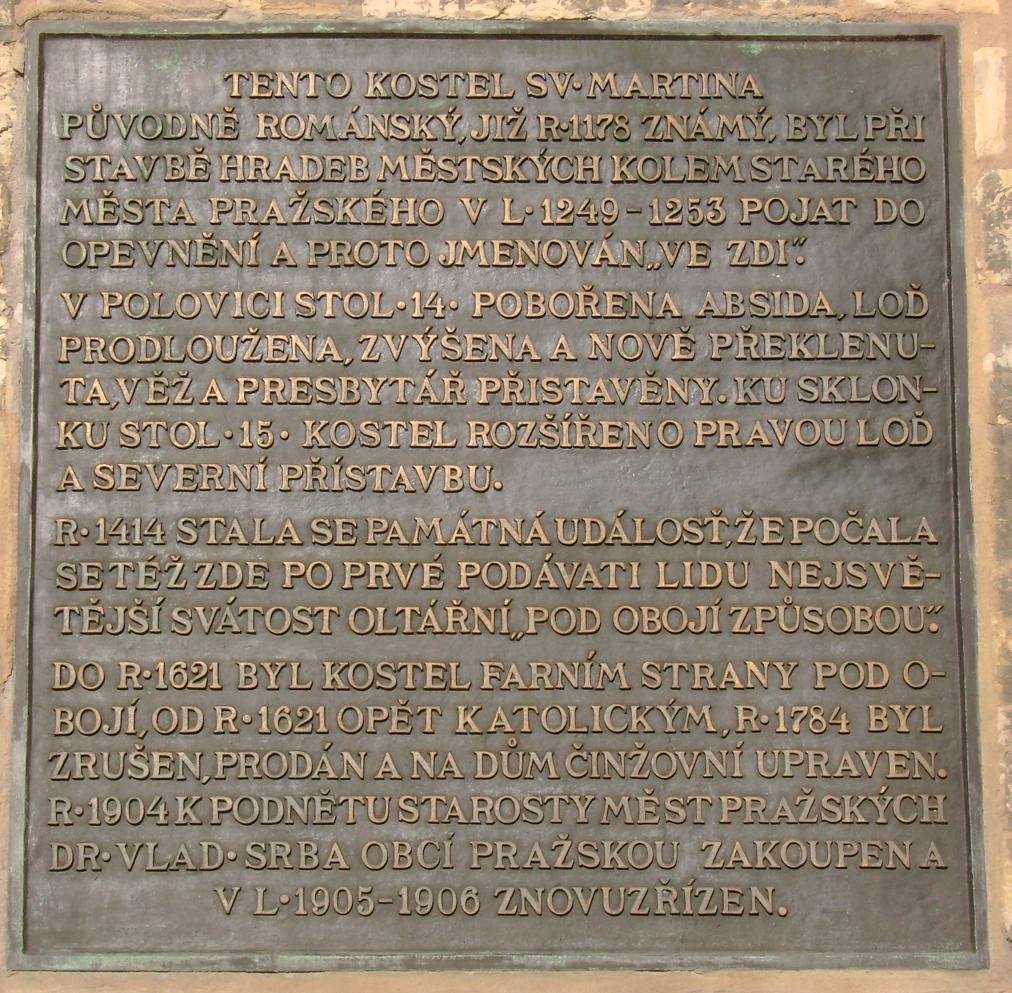
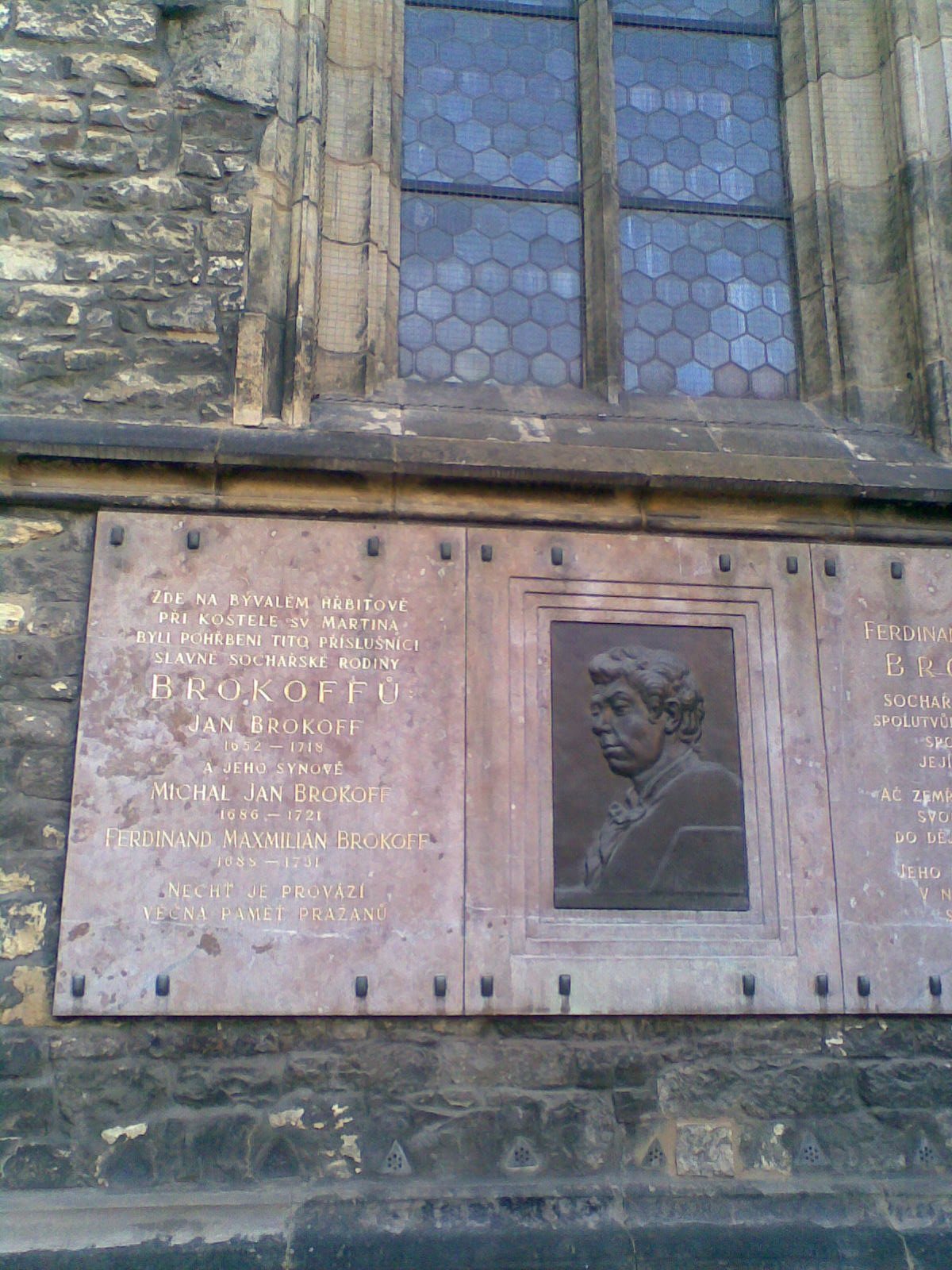
Close-up image of the historical plaque located at the Church of Saint Martin in the Wall in Prague, Czech Republic, detailing the church's history.
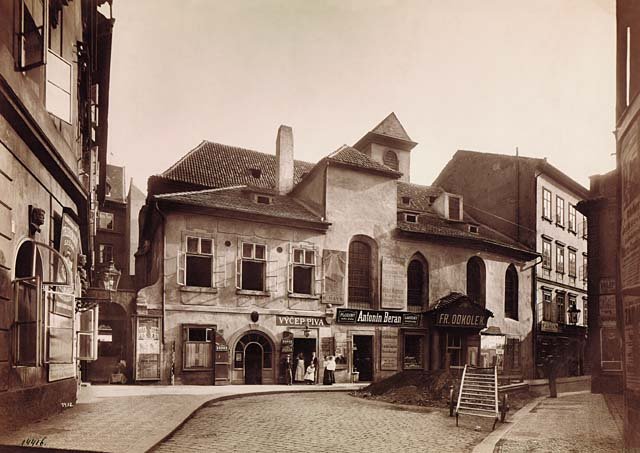
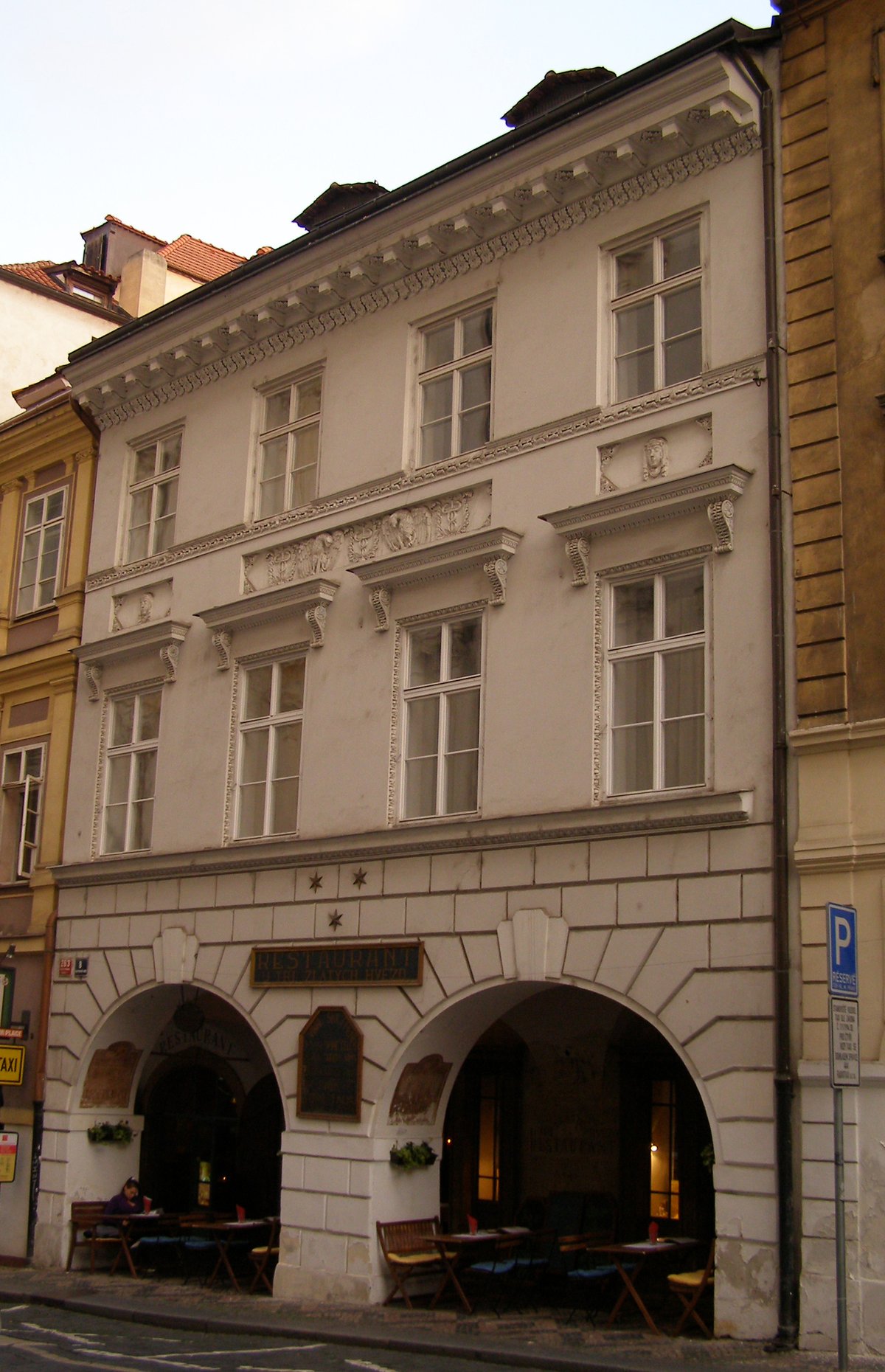
Historický kostel sv. Martina Ve Zdi, který byl zrušen a upraven na obytné a obchodní prostory. Budova byla regotizována kolem roku 1905, zachovávající gotické architektonické prvky.
Kostel svatého Martina Ve Zdi, historic church notable for being the first place where both kinds of communion were accepted.
Origins and Early History
The Church of St. Martin in the Wall is among Prague’s oldest surviving churches, with construction dating from 1178 to 1187 during the reign of King Vladislaus I. Initially, it served the settlement of Újezd, which lay just outside the city’s earliest walls. The church’s name, “in the Wall,” refers to its unique integration with the Old Town’s fortifications: after the 13th-century expansion, the city wall was built so close that the church’s southern wall became part of Prague’s defenses. The original Romanesque structure was a simple, single-nave building with a semicircular apse—remnants of which remain in the lower walls and foundations. (CzechTourism)
Architectural Evolution
Romanesque to Gothic Transformation
As Prague’s Old Town developed in the 13th and 14th centuries, the church’s architectural character evolved. A major reconstruction in the late 14th century expanded the nave, added a Gothic presbytery, and introduced ribbed vaulting—one of the earliest examples of this architectural element in Bohemia. Notable features from this period include pointed windows, a southern stone portal, and a modest bell tower, all contributing to the church’s distinctive medieval silhouette. (Prague City Tourism)
Preservation and Restoration
Throughout the centuries, the church was adapted for various religious communities. After the Hussite Wars, it served the Utraquist faction, and in the Baroque era, some interior modifications were made. The 19th and early 20th centuries saw a shift toward historic preservation, with architect Kamil Hilbert’s 1905–1906 restoration removing Baroque elements to reveal the original Romanesque and Gothic structure. Today, the church is protected as a national cultural monument, with ongoing conservation ensuring its legacy. (Encyclopedia Britannica, National Heritage Institute)
Visiting Information: Hours, Tickets & Accessibility
Location
- Address: Martinská 8, 110 00 Staré Město, Prague 1, Czech Republic
Getting There
- By Metro: Můstek (Lines A and B), a 5-minute walk away; Staroměstská (Line A) is also nearby.
- By Tram: Stops at Národní třída and Lazarská.
- By Bus: Stops at Národní třída and Myslíkova.
- On Foot: Easily accessible from major sites like Old Town Square and Wenceslas Square.
Visiting Hours
- Regular Hours: Monday to Saturday, 10:00 AM – 5:00 PM; Sunday evenings for services and special events.
- Note: Hours may vary during holidays or special events—check the official church website before visiting.
Admission
- General Entry: Free; donations are encouraged for maintenance.
- Concerts and Exhibitions: Tickets typically range from 250 to 500 CZK (€10–€20). Advance booking is recommended for concerts. (Prague Classic Concerts)
Accessibility
- Wheelchair Access: The main entrance and nave are wheelchair accessible via ramps. Some areas (e.g., crypt, side chapels) require stairs and may not be suitable for all visitors.
- Facilities: No restrooms inside; nearby cafes and shopping passages have facilities.
Guided Tours and Group Visits
- Tours: Guided tours can be arranged for groups of 10+ (advance booking recommended). Inquire at the church or via local agencies for availability.
- Photography: Permitted for personal use; flash and tripods may be restricted during services and concerts.
Nearby Attractions
The church is centrally located among Prague’s top historical sites. Combine your visit with:
- Old Town Square and the Astronomical Clock
- Wenceslas Square
- Charles Bridge
- Franciscan Garden
Religious and Cultural Significance
The Church of St. Martin in the Wall has served multiple Christian denominations, reflecting Prague’s dynamic religious history. In 1414, it became a center of the Hussite reform, being one of the first churches to administer communion under both kinds to laypeople—a key departure from Catholic traditions. The church’s adaptive use over time, from sacred space to workshops and back, mirrors the city’s evolving spiritual and cultural landscape. Today, it maintains an ecumenical spirit, hosting services and events for diverse Christian communities, and is known for its regular classical music concerts, which utilize the church’s superb acoustics and atmospheric architecture. (Radio Prague International, Martin ve zdi official site)
Notable Events and Restoration
- Post-Hussite Era: Adapted for Utraquist worship; interior modifications reflect shifting liturgical practices.
- Secularization: Closed as a parish in 1784, later used for workshops before restoration.
- 20th-Century Restoration: Kamil Hilbert’s work (1905–1906) preserved and revealed medieval features.
- Modern Use: Venue for classical concerts, community gatherings, and cultural exhibitions. (Prague Experience)
- Archaeology: Excavations have uncovered medieval artifacts and foundations, enhancing understanding of Prague’s urban development.
Artistic Heritage & Interior Features
- Romanesque Elements: Thick stone walls, small round-arched windows, and parts of the original apse.
- Gothic Enhancements: Ribbed vaults, pointed arches, and decorative consoles.
- Interior: Simple wooden furnishings, fragments of frescoes, and a 14th-century stone baptismal font.
- Decorative Details: Utraquist symbols and period coats of arms, reflecting the church’s Hussite associations.
Frequently Asked Questions (FAQ)
Q: What are the Church of St. Martin in the Wall visiting hours?
A: Monday to Saturday, 10:00 AM – 5:00 PM; Sunday evenings for services. Hours may vary—check the official website.
Q: Is there an admission fee?
A: General entry is free; concerts and exhibitions may require tickets.
Q: Is the church accessible for visitors with disabilities?
A: The main nave is accessible; crypt and some chapels require stairs.
Q: Can I attend concerts at the church?
A: Yes, regular classical music concerts are held—see Prague Classical Concerts for schedules and tickets.
Q: Is photography allowed?
A: Permitted for personal use, but restrictions apply during services and concerts.
Q: What other attractions are nearby?
A: Old Town Square, Astronomical Clock, Charles Bridge, Franciscan Garden.
Discover More
The Church of St. Martin in the Wall is a must-see for anyone interested in Prague’s medieval history, religious heritage, and architectural splendor. Its central location, free entry, and engaging cultural programming make it accessible for all visitors. For the latest updates, event schedules, and guided tour bookings, consult the official church website or download the Audiala app for immersive experiences and audio guides. Follow us on social media for news, events, and more tips on discovering Prague’s historical treasures.
Listen to the full story in the app
Your Personal Curator, in Your Pocket.
Audio guides for 1,100+ cities across 96 countries. History, stories, and local insight — offline ready.
Audiala App
Available on iOS & Android
Join 50k+ Curators
Sources
-
verified
Church of St
Martin in the Wall, 2025, Prague.eu
-
verified
Church of St
Martin in the Wall, 2025, Prague Guide
- verified
-
verified
Church of St
Martin in the Wall Official Site, 2025, Martinvezdi
- verified
- verified
Last reviewed: