Introduction
The Church of St. Gall (Kostel svatého Havla) is a remarkable testament to Prague’s layered history, blending Romanesque, Gothic, and Baroque architectural elements. Founded in the early 13th century to serve the merchant district of Havelské Město, the church’s dedication to St. Gall—a prominent Irish missionary—reflects Prague’s cosmopolitan roots and enduring religious significance (Czech Journal; CIBCA). This guide offers a comprehensive overview of the church’s history, architecture, visitor information, and travel tips, ensuring an enriching experience for travelers and history enthusiasts alike.
Origins and Foundation
Founded in 1232 by Havel of Lemberk and his wife Zdislava, the Church of St. Gall was built to serve the burgeoning merchant district known as Havelské Město. Its dedication to the Irish missionary St. Gall underscores the area’s commercial vitality and cultural connections to broader European Christian traditions, particularly the Irish monastic influence in Central Europe (CIBCA).
The church’s original structure exhibited Romanesque characteristics—thick stone walls and semicircular arches—typical of early 13th-century Bohemia, reflecting Prague’s rapid urban and cultural growth (Czech Journal).
Architectural Evolution
Romanesque Beginnings
The earliest phase of the church featured a sturdy Romanesque basilica layout. Remnants of this period, including the crypt and foundational masonry, provide visitors with a direct link to Prague’s medieval origins (Czech Journal).
Gothic Transformation
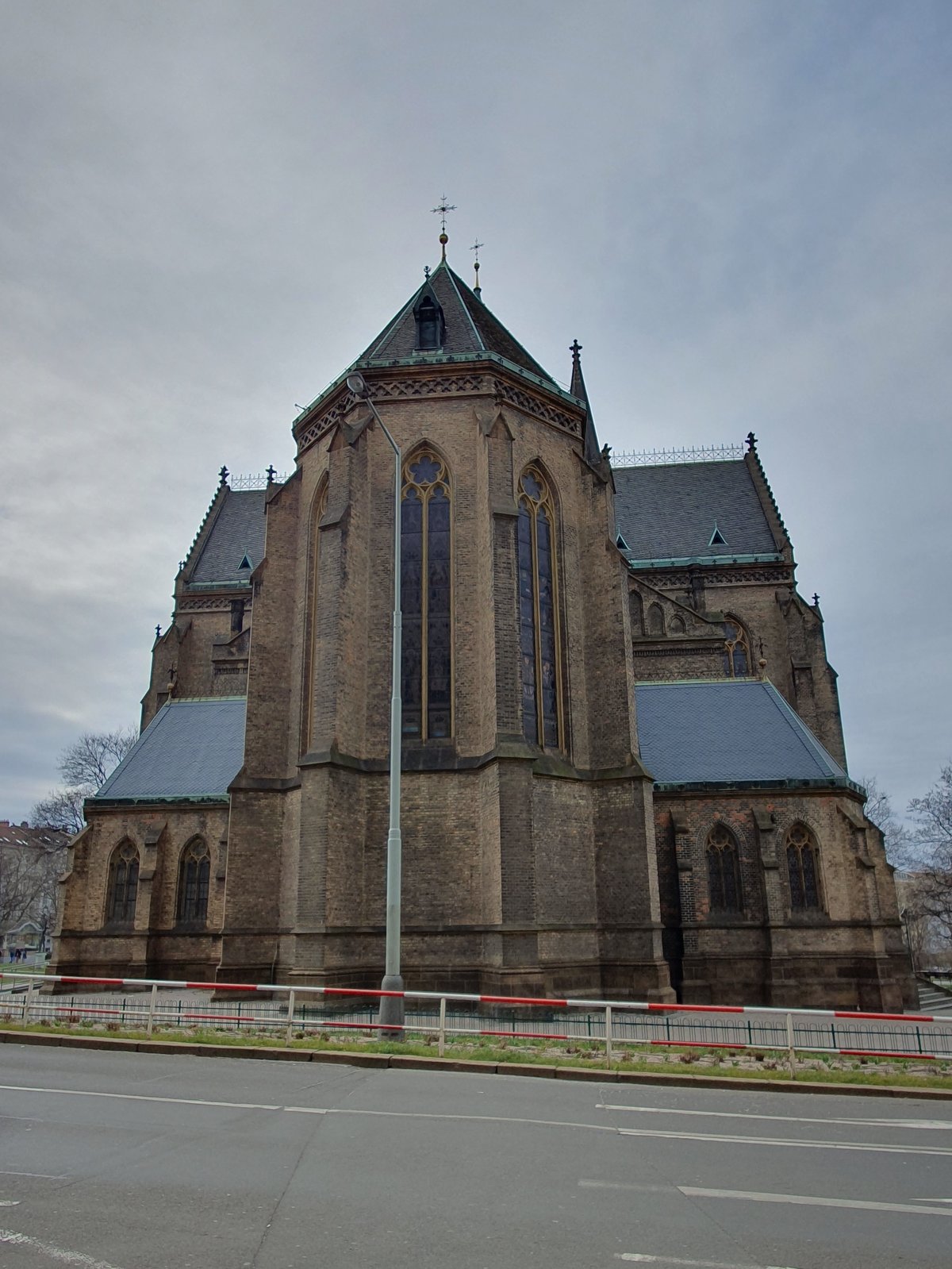
Under Charles IV in the 14th century, the church was transformed in the Gothic style: the nave was heightened, pointed arches and ribbed vaults were introduced, and stained glass windows were added. This renovation aligned the church with Prague’s most significant Gothic monuments, such as St. Vitus Cathedral (Czech Journal).
Baroque Renovations
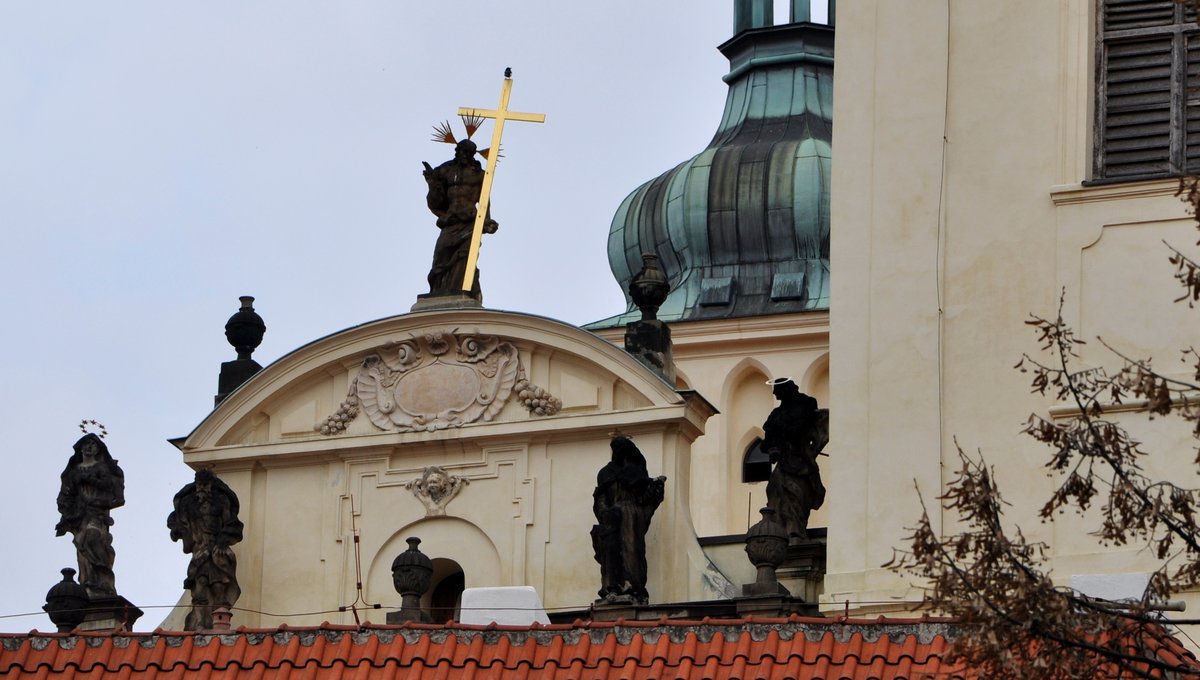
After suffering damage during the Thirty Years’ War, the church underwent major Baroque renovations in the late 17th and early 18th centuries, led by architects Jan Santini Aichl and Pavel Ignác Bayer. The eastern façade was reimagined with ornate stucco, dynamic curves, and an exuberant main altar, creating a dramatic and vibrant atmosphere (Waymarking).
Cultural and Religious Significance
The Church of St. Gall has played an influential role in Prague’s spiritual and civic life. It served as the parish church for the merchant district, hosted key ceremonies, and became a focal point for religious reform during the Hussite Wars. Notably, it was among the first in Prague to introduce communion under both kinds for the laity, symbolizing religious innovation (Czech Journal).
The church is also associated with the Irish Franciscan community, who established a monastery in Prague in the 17th century, deepening the Irish-Bohemian connection (CIBCA). Today, the church hosts regular masses, cultural events, and serves as a center for both worship and community gatherings.
Artistic and Architectural Highlights
- Baroque Main Altar: Flanked by statues of St. Gall and other saints, featuring rich gilded ornamentation.
- Gothic Vaults and Stained Glass: The soaring nave and original (and restored) stained glass windows exemplify medieval artistry.
- Tomb of Karel Škréta: The renowned Bohemian Baroque painter is interred here, adding cultural prestige (Prague Guide).
- Twin Steeples: Rising 51 meters above the city, the steeples offer panoramic views and house historic bells, including the manually rung Havel bell (Waymarking).
- Side Chapels and Frescoes: Each side chapel is dedicated to various saints or guilds, reflecting Prague’s vibrant merchant community.
Visiting Information: Hours, Tickets, and Accessibility
- Opening Hours:
- Monday to Saturday: 10:00 AM – 5:00 PM
- Sunday: 12:00 PM – 5:00 PM
- Hours may vary on holidays; check the official website or Prague Experience for up-to-date schedules.
- Tickets and Admission:
- Entry is generally free for worship services.
- General admission: ~100 CZK for tourists; climbing the steeples costs an additional 50 CZK.
- Tickets for concerts and special exhibitions are available on-site or online.
- Accessibility:
- The main entrance and nave are wheelchair accessible. Ramps and accessible restrooms are available.
- The climb to the bell towers involves steep, narrow stairs and is not suitable for visitors with mobility impairments.
- Guided Tours:
- Available by prior arrangement or during select periods. Tours cover history, architecture, and art, and often include access to rarely seen areas of the church.
Unique Experiences
- Climb the Steeples: Ascend the historic wooden stairs to enjoy sweeping views of Prague’s Old Town, including Prague Castle and Vitkov Hill (Waymarking).
- Attend a Classical Concert: The church’s outstanding acoustics make it a favored venue for chamber music and choral performances, especially during the Prague Spring International Music Festival (Insight Cities).
- Explore Havelské Tržiště Market: Adjacent to the church, this historic market offers fresh produce, crafts, and a lively local experience (Waymarking).
Practical Travel Tips
- Best Times to Visit: Weekday mornings or late afternoons are quieter. Concert evenings offer a special atmosphere.
- Photography: Permitted but avoid flash and be discreet during services.
- Attire and Etiquette: Modest clothing is recommended. Maintain a respectful demeanor, especially during religious ceremonies.
- Safety: The area is generally safe, but stay alert in the market for pickpockets (The Invisible Tourist).
- Nearby Amenities: Numerous cafés, shops, and public restrooms are available within a short walk.
Frequently Asked Questions
Q: What are the Church of St. Gall’s visiting hours?
A: Typically Monday to Saturday 10:00 AM–5:00 PM, Sunday 12:00 PM–5:00 PM. Confirm on the official church site or Prague Experience.
Q: Do I need to buy tickets?
A: General entry is free; small fees apply for steeple access and special concerts.
Q: Is the church accessible for people with disabilities?
A: The main areas are accessible, but the steeple climb is not suitable for those with mobility challenges.
Q: Can I attend services or concerts?
A: Yes, the church remains an active parish with regular masses and frequent classical concerts.
Q: Are guided tours offered?
A: Yes, by appointment or during set times. Contact the visitor center or check online.
Explore More & Stay Connected
- For up-to-date schedules and tickets, visit the official website.
- Discover other Prague landmarks: Prague Castle, St. Vitus Cathedral, Charles Bridge.
- Download the Audiala app for guided audio tours and exclusive content.
- Follow us on Facebook, Instagram, and Twitter for event updates and travel inspiration.
Listen to the full story in the app
Your Personal Curator, in Your Pocket.
Audio guides for 1,100+ cities across 96 countries. History, stories, and local insight — offline ready.
Audiala App
Available on iOS & Android
Join 50k+ Curators
Sources
- verified
- verified
-
verified
Church of St
Gall in Prague Old Town, 2025, Waymarking
-
verified
Prague Experience - Church of St
Gall Information, 2025
- verified
Last reviewed: