Introduction
Perched atop Větrov Hill in Prague’s New Town (Nové Město), the Church of St. Apollinaire (Kostel svatého Apolináře) is a testament to the city’s rich medieval heritage. Founded around 1362 under Emperor Charles IV, this High Gothic church not only showcases outstanding architecture but also embodies Prague’s religious, cultural, and educational evolution. With its soaring tower, medieval frescoes, and tranquil setting, the church offers visitors both spiritual sanctuary and a window into the past.
This comprehensive guide details the Church of St. Apollinaire’s historical significance, architectural highlights, visiting hours, ticket information, accessibility, and travel tips—ensuring you make the most of your visit to this hidden Prague gem (World History Journal; Czech Journal; Waymarking.com).
Photo Gallery
Explore Church of St. Apollinaire in Pictures

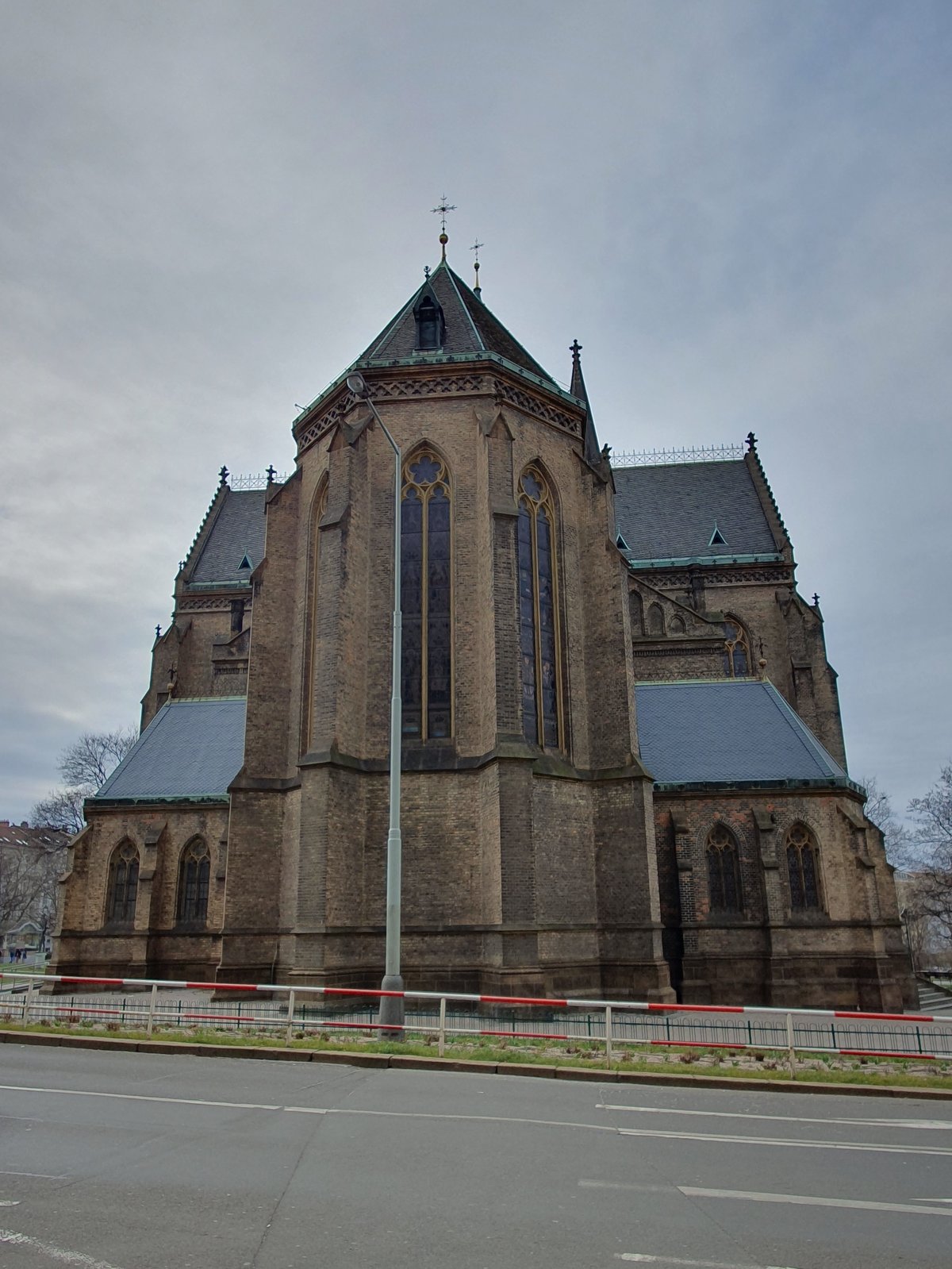
View of St. Apollinare Church located in Nové Město, Prague, featuring its distinctive historical architecture and cultural heritage in the Czech Republic

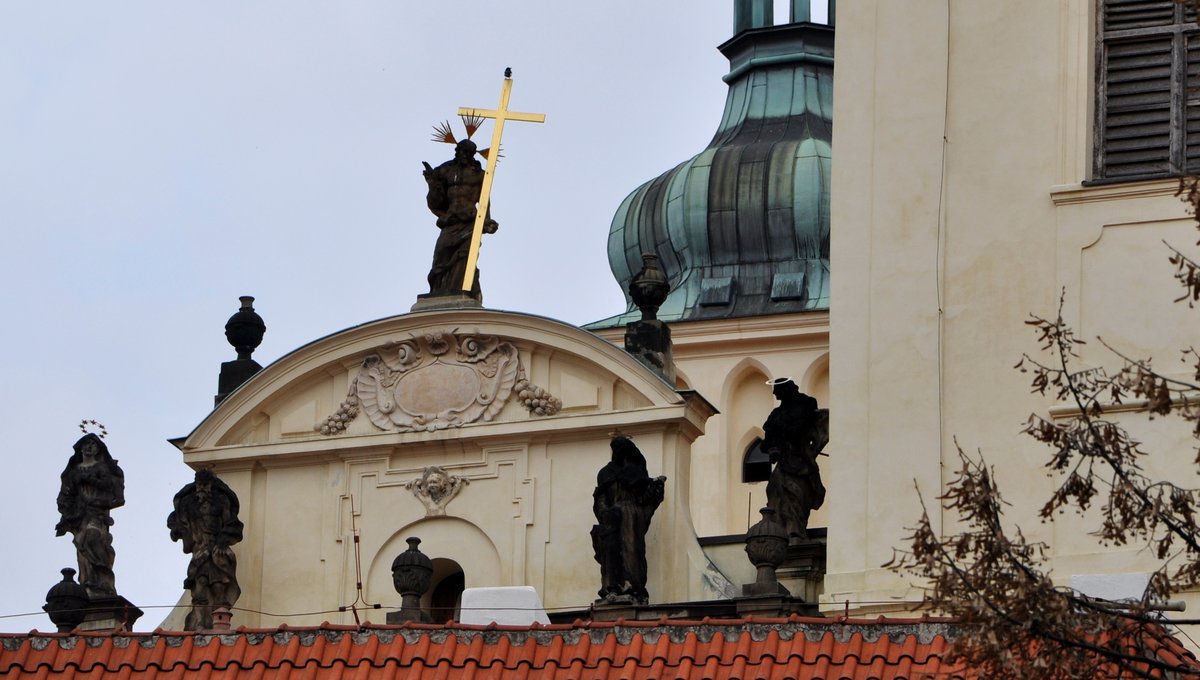
Apolinář Church showcasing classic Gothic architecture in Prague with intricate stone detailing and tall spires.

The Gifthütte, a historic tavern located behind the Apollinariskirche church in Prague, with the Adalbert von Prag memorial column dating back to 1677 prominently displayed in the foreground.
Historical Context and Foundation
Origins and Foundation
The Church of St. Apollinaire was established in the mid-14th century as part of Charles IV’s ambitious expansion of Prague. By relocating a collegiate chapter to Větrov Hill, Charles IV signaled the church’s importance in both spiritual and intellectual life. Construction began around 1360 and was completed by 1390, with phases including the nave, presbytery, and the distinctive southern tower. The church was originally dedicated to St. Apollinaris, a 2nd-century bishop and martyr, adding symbolic depth to its foundation (Wikipedia; Prague Guide).
Architectural Evolution
High Gothic Beginnings
The church is a prime example of High Gothic architecture in Prague. Characterized by a single-aisle hall with a polygonal apse, ribbed vaults, pointed arches, and flying buttresses, its design emphasizes verticality and light. The forty-two-meter tower, with its transition from square to octagonal forms, dominates the skyline and is visible across the city (World History Journal).
Baroque and Neo-Gothic Restorations
After the devastation of the Thirty Years’ War, the church received Baroque additions: ornate stucco, new altars, and expressive paintings, blending with its original Gothic structure. In the late 19th century, architect Josef Mocker led a Neo-Gothic restoration, reviving key medieval features and enhancing the tower and windows (Waymarking.com).
Artistic and Interior Highlights
- Frescoes: Medieval wall paintings from circa 1390 depicting biblical scenes and saints, among the finest examples in Prague.
- Stained Glass: Tall, narrow windows with vibrant glass, filling the chancel with colored light.
- Baroque Altar: An 18th-century addition featuring woodwork and a painting of St. Apollinaire.
- Historic Organ: A 19th-century instrument still used for concerts.
- Belfry: Houses the Apollinaris bell (cast 1867), a familiar sound in the area.
Religious and Cultural Significance
Originally a collegiate church, St. Apollinaire played a central role in New Town’s religious life, education, and charity. During the Hussite Wars, the church’s affiliation shifted—used by Utraquists and later restored to Catholic administration. Its chapter house supported both liturgical and scholarly activities, with a church school operating nearby in the early 15th century. The church’s resilience through religious reforms and wars underscores its enduring importance (Wikipedia).
Today, the church remains an active parish and hosts concerts, liturgies, and community events, contributing to Prague’s contemporary spiritual and cultural life.
Visiting Information
Location and Access
- Address: Apolinářská 12, 128 00 Praha 2, Czech Republic
- District: New Town (Nové Město), atop Větrov Hill, near the Albertov university campus
- Transport: Metro line C (I.P. Pavlova); trams 4, 6, 10, 16, 22; bus and tram stops at Albertov. A 15–20 minute walk from Wenceslas Square or the city center (Waymarking.com).
Visiting Hours
- Standard Hours: Tuesday–Sunday, 10:00 AM–5:00 PM (closed Mondays and public holidays)
- Note: Hours may change during services, events, or holidays. Check the official parish website for updates.
Tickets and Admission
- Entry: Free of charge; donations appreciated for conservation.
- Guided Tours: Available on weekends and by appointment. Small fees may apply for group tours or special events.
Accessibility
- Mobility: Partial accessibility—main entrance has a small ramp, but the tower and some interior sections have stairs.
- Assistance: Contact the parish in advance for special needs.
- Restrooms: No dedicated wheelchair-accessible restrooms, but nearby public buildings and cafes offer facilities.
Visitor Experience and Etiquette
- Atmosphere: Quiet, contemplative, and less crowded than major tourist attractions.
- Dress Code: Modest attire (shoulders and knees covered) is expected.
- Photography: Permitted for personal use; avoid flash, tripods, and disruption during services. Commercial photography requires permission.
- Behavior: Please remain quiet and respectful, especially during services or prayer.
Nearby Attractions
- Vyšehrad Fortress: Historic site with panoramic city views and the Basilica of St. Peter and Paul.
- Botanical Garden of Charles University: Adjacent to the church—ideal for a stroll.
- Charles Square (Karlovo náměstí): Home to New Town Hall and several cafes.
- Albertov University Campus: Lively student district with historical significance.
- Antonín Dvořák Museum: Celebrating the famous Czech composer.
For an enriching itinerary, combine a visit to St. Apollinaire with a walk through the botanical garden and a tour of Vyšehrad.
Special Events and Community Life
The church holds regular Catholic Mass, feast day celebrations, classical music concerts, and community outreach programs—often organized by the ecumenical Chemin Neuf community. Event schedules are posted on the official parish website and local listings.
Local Legends and Symbolism
Dedicated to St. Apollinaris, the church is steeped in legend—including stories of miraculous interventions and royal connections (such as King Wenceslas IV’s reputed association with the nearby church school). These traditions add to its spiritual atmosphere and cultural allure (Prague Guide).
Preservation and Cultural Heritage
Declared a protected cultural monument in 1958, the Church of St. Apollinaire is subject to ongoing conservation efforts preserving its blend of Gothic, Baroque, and Neo-Gothic elements (DBpedia).
Frequently Asked Questions (FAQ)
Q: What are the visiting hours?
A: Tuesday–Sunday, 10:00 AM–5:00 PM; closed Mondays and holidays. Check for changes during religious events.
Q: Is there an entrance fee?
A: No, admission is free. Donations are appreciated.
Q: Are guided tours available?
A: Yes, on weekends and by appointment. Contact the parish for details.
Q: Is the church wheelchair accessible?
A: The main entrance is partially accessible; some areas are not. Contact the parish for assistance.
Q: Can I attend Mass or concerts?
A: Yes, regular Mass and concerts are held. See the official parish website for schedules.
Q: What are the best nearby attractions?
A: Vyšehrad Fortress, Charles Square, Botanical Garden of Charles University.
Travel Tips
- Best Time to Visit: Late morning or early afternoon for optimal natural light.
- Combine Visits: Plan a route including Vyšehrad and the botanical garden.
- Guides: Arrange a guided tour for deeper understanding.
- Safety: The area is safe; standard precautions apply (The Invisible Tourist).
Visuals (Recommended)
- Exterior view of the church and Gothic tower (alt text: "Church of St. Apollinaire Gothic tower in Prague")
- Interior frescoes from 1390 (alt text: "Well-preserved Gothic frescoes inside Church of St. Apollinaire")
- Map showing the church’s location near Albertov and Vyšehrad
- Close-up of the Gothic stone portal
Summary and Recommendations
The Church of St. Apollinaire offers a unique blend of architectural beauty, historical depth, and spiritual serenity. Its free admission, accessible location, and cultural events make it an ideal addition to any Prague itinerary. To maximize your experience, check event schedules, respect the sacred atmosphere, and consider guided tours for added context.
For up-to-date visiting information, event listings, and recommended itineraries, consult the official parish website and download the Audiala app for self-guided tours and exclusive content.
Listen to the full story in the app
Your Personal Curator, in Your Pocket.
Audio guides for 1,100+ cities across 96 countries. History, stories, and local insight — offline ready.
Audiala App
Available on iOS & Android
Join 50k+ Curators
Sources
-
verified
Church of St
Apollinaire Prague: Visiting Hours, Tickets, History & Travel Guide, 2025, World History Journal
- verified
-
verified
Church of St
Apollinaire on Větrov, Prague, 2025, Waymarking.com
-
verified
Visiting the Church of St
Apollinaire in Prague: History, Cultural Significance, and Practical Guide, 2025, Prague Guide
- verified
Last reviewed: