Introduction
Nestled in Prague’s picturesque Malá Strana district, the Church of Our Lady Beneath the Chain (Kostel Panny Marie pod řetězem) stands as a testament to the city’s layered medieval heritage, architectural evolution, and enduring spiritual traditions. Established in the mid-12th century by the Knights Hospitaller—later known as the Knights of Malta—this church’s name derives from the formidable chain once stretched across the Vltava River to control access and symbolize the Order’s authority. Over centuries, it has survived war, religious upheaval, and architectural transformation, blending Romanesque, Gothic, and Baroque styles. Today, it remains both an active house of worship and a cultural venue, welcoming visitors eager to explore its rich history, remarkable artworks, and tranquil atmosphere (prague-guide.co.uk; prague.eu; prague.fm; en.maltezskyrad.cz).
This comprehensive guide offers everything you need to know for a memorable visit—including practical details on visiting hours, ticketing, accessibility, travel tips, and nearby attractions. Whether you are a history enthusiast, art lover, or spiritual seeker, the Church of Our Lady Beneath the Chain invites you to discover one of Prague’s most fascinating historical sites (Trip.com).
Photo Gallery
Explore Church of Our Lady Beneath the Chain in Pictures
Early Foundations and Medieval Origins
The Church of Our Lady Beneath the Chain is among the oldest religious sites in Prague, with origins dating to the early 12th century. The Knights Hospitaller—military monks who cared for pilgrims and defended the city—established their commandery on land granted by King Vladislav II, strategically positioned near the predecessor of the Charles Bridge. The church’s evocative name comes from the iron chain that once stretched across the Vltava River at this site, controlling access to the bridge and city, and symbolizing both protection and authority (prague-guide.co.uk).
Architectural Evolution: Romanesque to Baroque
Romanesque Origins
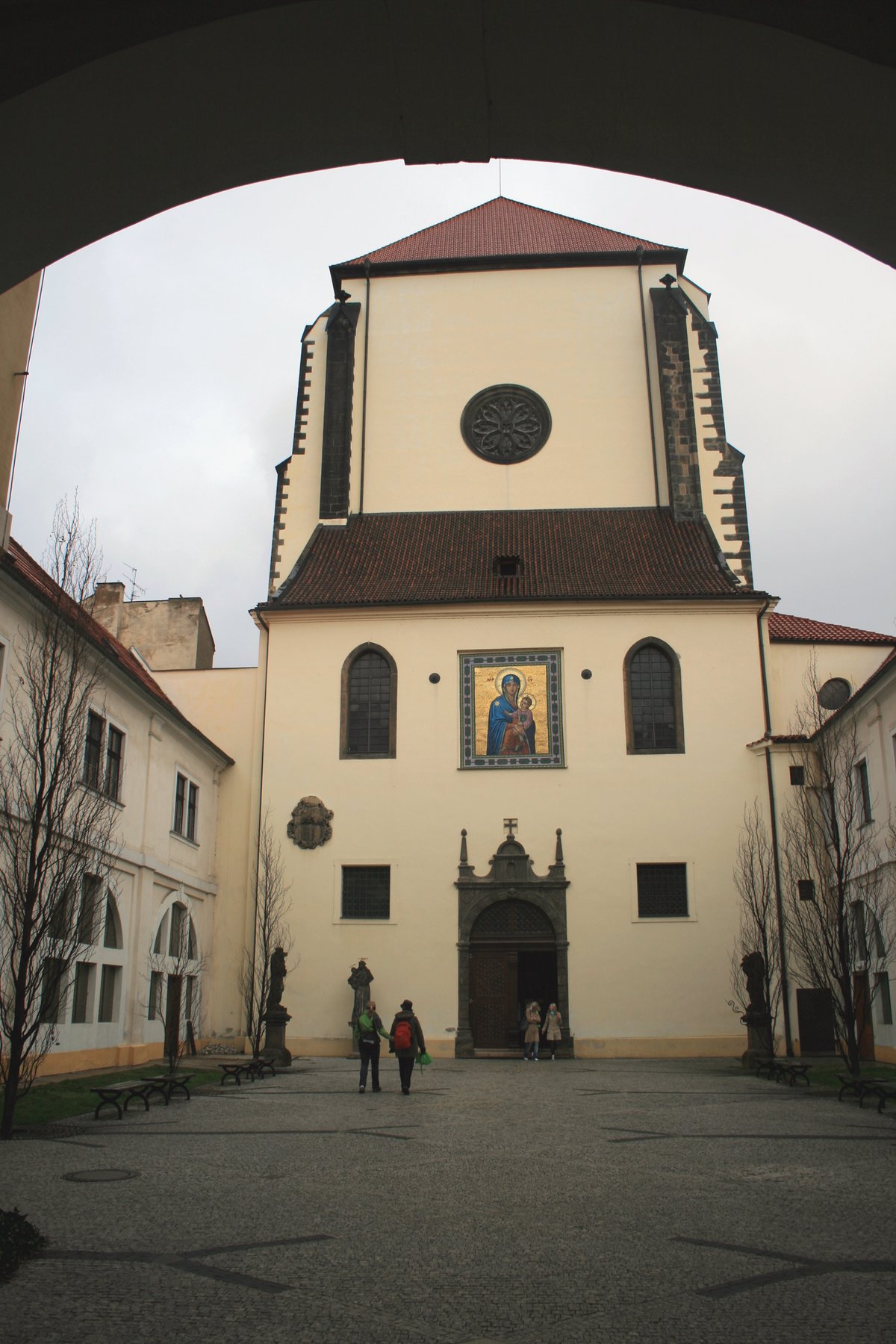
The original Romanesque church, completed in 1182, featured thick stone walls, rounded arches, and fortress-like qualities. Surviving fragments, such as the robust stonework and portals, can still be seen in the church’s courtyard and side entrances (praguebestplaces.com; prague.cz).
Gothic Expansion
In the early 14th century, the Knights Hospitaller began a Gothic transformation, aiming to build a grand three-aisled basilica. Although the Hussite Wars interrupted construction, the presbytery and distinctive twin towers were completed, introducing pointed arches, ribbed vaults, and larger windows for a more luminous interior (prague.fm).
Renaissance and Baroque Renewal
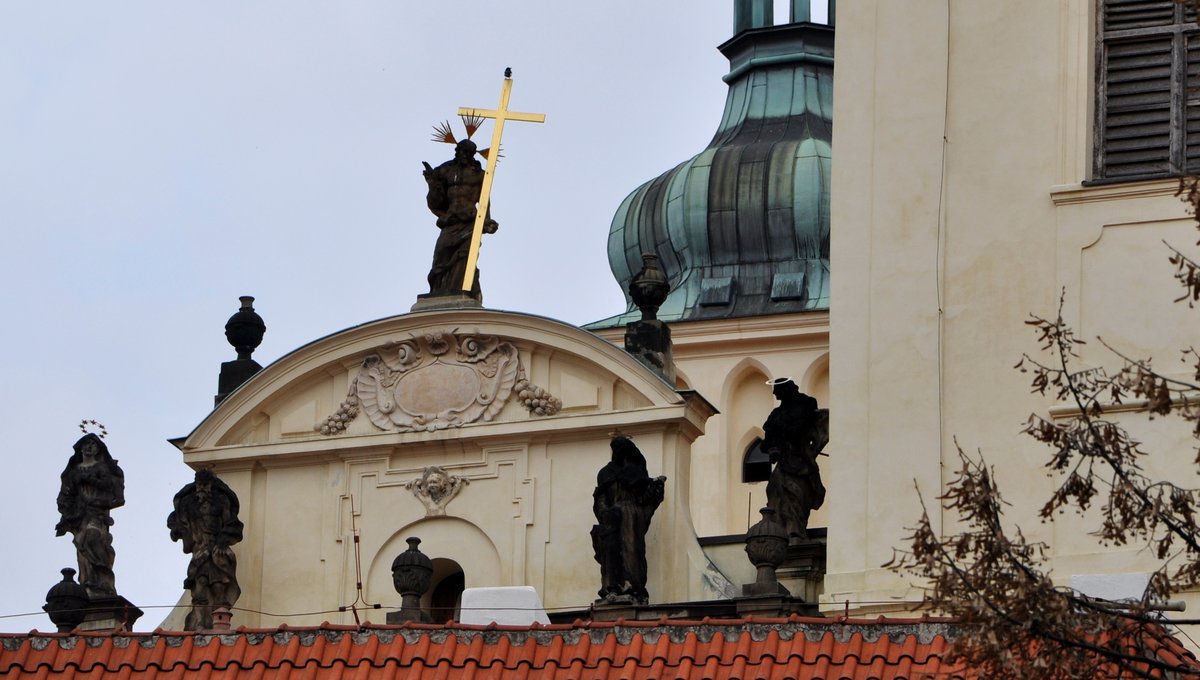
After suffering damage during conflicts and fires, the church underwent Renaissance renovations in the 16th century. The most significant transformation came in the 17th century, when Italian architect Carlo Lurago oversaw an ambitious Baroque restoration. He added ornate stucco decorations, a richly adorned façade, and dynamic spatial layouts, blending earlier Romanesque and Gothic elements into the exuberant Baroque style (prague.cz).
The Hospitallers and Their Legacy
As the headquarters of the Knights Hospitaller in Bohemia, the church played a central role in the religious and civic life of Prague. The Knights not only protected Christian pilgrims but also oversaw the river crossing, collected tolls, and contributed to the city’s defense. Their influence is still visible in the church’s military-inspired architecture and abundant Maltese crosses (rediscoveredpasts.blogspot.com).
Symbolism and Religious Significance
The church’s dedication to the Virgin Mary and its strategic positioning at the city’s threshold reflect centuries of Marian devotion and the Knights’ mission of spiritual guardianship. The iconic chain—once a practical defense—became a symbol of protection, faith, and the enduring presence of the Knights in Prague (Order of Malta; Czech Tourism).
During periods of religious turmoil, including the Hussite Wars and the Reformation, the church was seized and repurposed but ultimately restored to the Knights Hospitaller. The 17th-century Baroque renovations marked the triumph of Catholic authority and the church’s adaptability in Prague’s evolving religious landscape (Encyclopedia Britannica).
Notable Artworks and Interior Highlights
Paintings by Karel Škréta
- Madonna Blessing the Maltese Knights at the Battle of Lepanto (1651): This vivid Baroque masterpiece graces the high altar, commemorating the Virgin Mary’s blessing of the Knights before their victory over the Ottoman Empire (prague.cz).
- Beheading of St. Barbara (1674): Displayed at the southern altar, this dramatic work showcases Škréta’s skillful use of light and emotion (prague.fm).
Sculptures and Monuments
- Baroque Sculptures by Jan Petr Wenda: Expressive figures of saints and angels enrich the church’s artistic ambiance (prague.fm).
- Statue of Count Rudolf Colloredo-Wallsee: Erected in 1850, this rare statue honors a defender of Prague and uniquely includes a hat, an unusual feature for Catholic church art (prague.cz).
Architectural Features
- Romanesque Portals and Courtyard: The original portals lead to a serene courtyard, once central to the Knights’ commandery (en.maltezskyrad.cz).
- Gothic Towers and Vaults: The unfinished towers and ribbed vaulting provide a striking silhouette against the Prague skyline.
- Baroque High Altar: Adorned with Škréta’s paintings and Wenda’s sculptures, it forms the visual and spiritual heart of the church.
Visitor Information: Hours, Tickets & Accessibility
Location
- Address: Lázeňská 1, 118 00 Malá Strana, Prague 1
- Access: Near the western end of Charles Bridge; close to Malostranské náměstí tram stop (lines 12, 15, 20, 22, 23) and Malostranská metro station (Line A) (Trip.com).
Visiting Hours
- Tuesday to Saturday: 10:00 am – 5:00 pm (with a lunch break)
- Sunday: 10:00 am – 12:00 pm
- Closed on Mondays
- Hours may vary during holidays and special events; always check the official parish website or local tourist information before your visit.
Tickets and Admission
- Admission: Free for visitors, with a suggested donation of 25 CZK (approx. 1 EUR) to support preservation.
- Guided Tours: Available occasionally; group or private tours can sometimes be arranged via the parish office or local operators.
Accessibility
- The church’s medieval structure includes steps and uneven surfaces. Limited wheelchair access is available; contact the church in advance for assistance.
Travel Tips and Nearby Attractions
- Charles Bridge: Just steps away, perfect for panoramic city views.
- John Lennon Wall: A vibrant symbol of freedom and peace.
- Kampa Island: Scenic park ideal for leisurely walks.
- Lesser Town Square (Malostranské náměstí): Surrounded by historical architecture, cafes, and shops.
For quieter visits and unobstructed photography, plan to arrive early in the morning or late in the afternoon.
Special Events and Guided Tours
The church frequently hosts Catholic masses, weddings, and classical concerts—particularly organ recitals, which take advantage of its historic instrument and acoustics. Special events and guided tours are occasionally available; schedules are posted at the church and online.
Visitor Experience and Cultural Etiquette
- Dress Code: Modest attire required; cover shoulders and knees, remove hats.
- Behavior: Maintain silence, especially during services; no eating or loud conversation.
- Photography: Permitted outside of services; avoid flash and tripods to protect artworks.
- Donations: Support the church’s ongoing preservation.
Frequently Asked Questions (FAQ)
Q: What are the visiting hours?
A: Tuesday to Saturday 10:00 am – 5:00 pm (with a lunch break), Sunday 10:00 am – 12:00 pm, closed Mondays. Check for updates during holidays.
Q: Is there an admission fee?
A: Admission is free; donations are encouraged.
Q: Are guided tours available?
A: Occasionally, and by arrangement through the parish office or local tour companies.
Q: Is the church accessible for visitors with limited mobility?
A: There are steps and uneven floors; limited access is available with prior arrangement.
Q: Can I take photographs inside?
A: Yes, except during services and without flash or tripods.
Discover More
Enhance your Prague visit with the Audiala app for immersive audio guides and real-time travel tips. Explore related articles on Prague’s historical sites, and follow us on social media for the latest news, events, and insider recommendations.
Listen to the full story in the app
Your Personal Curator, in Your Pocket.
Audio guides for 1,100+ cities across 96 countries. History, stories, and local insight — offline ready.
Audiala App
Available on iOS & Android
Join 50k+ Curators
Sources
-
verified
Church of Our Lady beneath the Chain in Prague: History, Visiting Hours, Tickets & Travel Tips, 2025, prague-guide.co.uk [https://www.prague-guide.co.uk/church-of-our-lady-beneath-the-chain/]
-
verified
Discovering the Church of Our Lady Beneath the Chain: History, Culture, and Visitor Information in Prague, 2025, Prague.eu [https://www.prague.eu/en/object/places/158/kostel-panny-marie-pod-retezem-church-of-our-lady-beneath-the-chain]
-
verified
Visiting the Church of Our Lady Beneath the Chain in Prague: History, Hours & Tickets, 2025, prague.fm [https://www.prague.fm/13547/church-of-our-lady-below-the-chain/]
-
verified
Visitor Information for the Church of Our Lady Beneath the Chain: Visiting Hours, Tickets, and More, 2025, Trip.com [https://www.trip.com/travel-guide/attraction/prague/church-of-our-lady-beneath-the-chain-23031800/]
-
verified
The Hospitallers in Prague, rediscoveredpasts.blogspot.com, 2016 [https://rediscoveredpasts.blogspot.com/2016/04/the-hospitallers-in-prague.html]
-
verified
Order of Malta History, 2025 [https://www.orderofmalta.int/history/]
-
verified
National Heritage Institute: Church of Our Lady Beneath the Chain, 2025 [https://pamatkovykatalog.cz/kostel-panny-marie-pod-retezem-15636537]
-
verified
Czech Tourism: Church of Our Lady Beneath the Chain, 2025 [https://www.visitczechrepublic.com/en-US/Things-to-Do/Places/Landmarks/Churches/c-prague-church-of-our-lady-beneath-the-chain]
Last reviewed: