Plan and listen to St Thomas's Abbey with Audiala.
Audio guide in your pocket, itinerary in your browser. Built for the way you actually visit.
Introduction
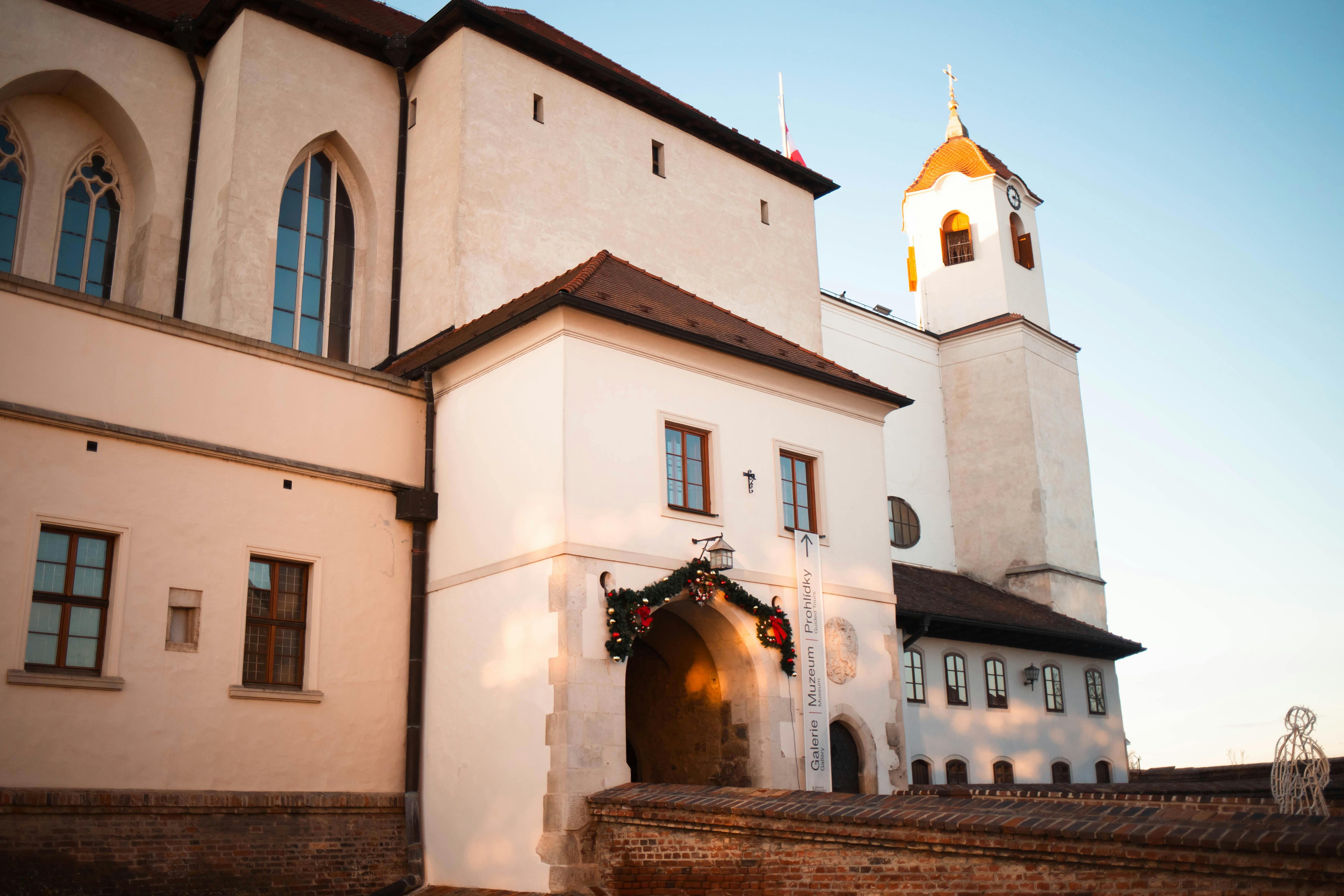
St Thomas’s Abbey in Brno, Czechia, is a landmark where medieval heritage, architectural beauty, and scientific innovation converge. Founded in the 14th century by the Augustinian order, the abbey is renowned for its pivotal role in the history of genetics—being the site where Gregor Mendel conducted his revolutionary experiments. This guide offers an in-depth look at St Thomas’s Abbey’s history, cultural impact, visitor information, and tips to ensure you make the most of your visit (St Thomas’s Abbey Brno: History, Visiting Hours, Tickets, and Visitor Guide).
Medieval Origins and Dynastic Significance
St Thomas’s Abbey was established in 1346, under the patronage of John Henry of Luxembourg, Margrave of Moravia, and later consecrated by King Charles IV in 1356. This foundation strengthened the Luxembourg dynasty’s influence in the region (en.wikipedia.org). The church soon became a burial site for the margraves, with the tombs of John Henry, his son Jobst of Moravia, and Margaret of Opava positioned before the main altar, highlighting its dynastic and spiritual significance (en.czech-unesco.org; gotobrno.cz).
Augustinian Monastic Tradition
What sets St Thomas’s Abbey apart within the Augustinian order is its status as an abbey led by an abbot, rather than the more common prior. This tradition, unique among Augustinian institutions, continues today. The abbey has historically fostered spiritual contemplation, education, and cultural life in Brno (en.wikipedia.org; mutualinspirations.org).
Architectural Evolution
The original structure, built in the Gothic style, features pointed arches, ribbed vaulting, and intricate stonework. Major damage during the Thirty Years’ War led to a Baroque transformation in the 17th century, introducing ornate stucco, frescoes, and an elaborate high altar. The abbey’s architectural layers—from the Gothic nave to the Baroque chapels—reflect centuries of artistic and cultural change (Go World Travel; gotobrno.cz).
Musical Heritage
Since the 17th century, the abbey has been a leading center for sacred music in Brno. Composer Pavel Křížkovský advanced its musical tradition in the 19th century, mentoring a young Leoš Janáček—who would become one of Czechia’s most acclaimed composers (gotobrno.cz; livetheworld.com). The abbey continues to host concerts and choral performances, leveraging its exceptional acoustics and historic ambiance.
The Mendel Legacy
St Thomas’s Abbey’s most enduring claim to fame is its association with Gregor Mendel, the “father of genetics.” Between 1856 and 1863, Mendel carried out his pea plant experiments in the monastery gardens, formulating the principles of heredity. Today, the Mendel Museum, located on the abbey grounds, honors his groundbreaking work and attracts visitors from around the world (Mendel Museum; en.wikipedia.org).
Visitor Information
Location and Getting There
- Address: 18 Mendlovo náměstí, Brno 60300, Czech Republic (Main abbey complex)
- Alternate Location: Moravské náměstí (Moravian Square) for the original church
- Public Transport: Easily reached by tram lines 1, 3, 4, 6, 9, and 11 to Moravské náměstí or Mendlovo náměstí (Brno Public Transport)
- Parking: Limited public parking available nearby
Visiting Hours
- Abbey Church:
- Monday–Sunday: 9:00 AM – 5:00 PM (hours may vary on religious holidays; check the official website for updates)
- Mendel Museum:
- Tuesday–Sunday: 10:00 AM – 6:00 PM (closed Mondays)
Tickets and Admission
- Abbey Church: Free entry for worship and general visits
- Mendel Museum:
- Adults: approx. 150 CZK
- Students/Seniors: discounted rates
- Children under 6: free
- Combination tickets available for special tours
- Guided Tours: Typically 100–150 CZK per person, available in Czech, English, and German
Accessibility
- The main nave and side aisles are wheelchair accessible; ramps and portable access available upon request
- Some historic areas (crypt, choir loft) may have restricted access due to steps
- Audio guides and printed materials are available in multiple languages; tailored tours for visitors with disabilities can be booked in advance
Dress Code and Etiquette
- Modest attire is required (shoulders and knees covered)
- Silence is expected during services and in sacred spaces
- Photography is permitted in the nave (no flash or tripods); special areas may require permission
Facilities and Amenities
- No on-site café, but Moravské náměstí and surrounding streets offer a variety of dining options
- Public restrooms are available nearby
- A parish shop or kiosk may sell souvenirs, literature, and postcards
Highlights and Suggested Itinerary
Key Sights
- Gothic and Baroque Interior: Explore the soaring nave, stained-glass windows, and ornate Baroque chapels
- Main Altar and Tombs: View the resting place of the Luxembourg margraves and impressive altar sculptures
- Cloisters and Gardens: Experience the tranquil monastic quadrangle and Mendel’s experimental garden
- Mendel Museum: Delve into the history of genetics with interactive exhibits and original artifacts
Events and Activities
- Classical music concerts, especially during festival seasons
- Special liturgical celebrations (Easter, Christmas, feast of St Thomas)
- Participation in city-wide events like Brno Museum Night and Church Night (Brno Museum Night)
Nearby Attractions
- Špilberk Castle: Historic fortress and museum
- Cathedral of St. Peter and Paul: Gothic cathedral on Petrov Hill
- Moravian Gallery: Art museum in the former monastery building
- Old Town Hall and Zelný trh: Medieval town center and market
- Starobrno Brewery: Guided tours and tastings
Practical Tips for Visitors
- Plan Ahead: Check for updated visiting hours, ticket prices, and special event schedules online
- Language: Staff and guides commonly speak Czech, English, and German
- Accessibility: Contact ahead for special requirements or assistance
- Weather: Brno’s climate is temperate; dress for changing weather if exploring the city
- Combine Visits: Create a full day’s itinerary by including nearby landmarks
Frequently Asked Questions (FAQs)
Q: What are St Thomas’s Abbey Brno’s opening hours?
A: The abbey is open daily from 9:00 AM to 5:00 PM; the Mendel Museum is open Tuesday to Sunday, 10:00 AM to 6:00 PM.
Q: Is there an admission fee?
A: Entry to the main church is free; Mendel Museum and guided tours have separate fees.
Q: Are guided tours available?
A: Yes, tours are available in multiple languages and can be booked online or at the site.
Q: Is the abbey accessible for visitors with disabilities?
A: The main areas are accessible, with ramps and assistance available. Some sections may have limited access due to historic architecture.
Q: Can I take photos inside?
A: Photography is allowed in most areas without flash or tripods; seek permission for special areas or events.
Listen to the full story in the app
The whole St Thomas's Abbey,
told well.
Audio guides for 1,100+ cities across 96 countries. History, stories, and local insight — offline ready.

Verified, and shown.
Researched and written by the Audiala editorial team from historical records, architectural archives, and local expertise.
Thomas Brno, Gotobrno.cz, 2025
Last reviewed