What the university is
Masaryk University is a major Czech higher-education institution and an important part of Brno’s cultural landscape. Its sites bring together historic city-center buildings and the modern Bohunice Campus, offering visitors a view of the city’s academic life and contemporary architecture. The university’s location also places it within reach of Brno attractions including Špilberk Castle, the Cathedral of St. Peter and Paul, and the Monument of St. Wenceslas (Masaryk University Official Site; The Crazy Tourist).
The Bohunice Campus is the largest university development in the Czech Republic. Its research facilities include the Central European Institute of Technology (CEITEC) and the Simulation Centre (SIMU). The campus features open, light-filled spaces and sustainable design (e-architect).
History
Masaryk University was established in 1919, in the aftermath of World War I, and named after Tomáš Garrigue Masaryk, Czechoslovakia’s first president. The university has helped shape Brno’s identity and promote educational reform in the region. It is associated with Czech independence and a progressive spirit in education.
What to see
Bohunice Campus
Near the D1 highway, the pedestrian-friendly campus is organized into several zones:
- Academic Zone The Faculty of Medicine, Faculty of Sports Studies, and parts of the Faculty of Science.
- Research & Innovation Zone CEITEC and RECETOX, centers for scientific research.
- Student & Community Zone Dining, social spaces, and student services.
- Brno Campus Square A commercial hub with shops and restaurants (STIR Architecture).
Facilities and architecture
- Faculty of Medicine Modern teaching spaces beside University Hospital Brno, where clinical training takes place (Masaryk University).
- Faculty of Sports Studies Specialized gyms, pools, and outdoor facilities (Wikipedia).
- Faculty of Science Advanced laboratories, particularly for biology and chemistry.
- CEITEC An interdisciplinary research center for life sciences, nanotechnologies, and materials (Wikipedia).
- Simulation Centre (SIMU) A simulation center for medical training (Masaryk University Summer School).
- Libraries Collections, group study rooms, and a central information counter (e-architect).
- Dining and social spaces Multiple cafeterias and eateries, with additional options at Brno Campus Square (STIR Architecture).
- Sports facilities Outdoor fields, gyms, and recreational spaces.
- Accommodation Student dormitories are off-campus and accessible by public transport.
The campus design was conceptualized by A PLUS a.s. Brno, with interiors by A.M.O.S. DESIGN. Features include open spaces, natural light, and materials such as Corian (e-architect). Notable structures include the Morphology Centre, distinctive entrance buildings, open-plan libraries, and a sports hall. Brno Campus Square is recognizable by its colorful canopy and social spaces (STIR Architecture). The campus extends into a mixed-use district with the University Hospital and commercial spaces. Energy-efficient materials, green roofs, rainwater management, and landscaping are part of its sustainability features.
Barrier-free routes and bilingual signage help visitors navigate the campus. Virtual tours, image galleries, and videos are available through the university’s official website.
University life and events
Guided tours can introduce visitors to the university’s history, architecture, research centers, and cultural facilities such as University Cinema Scala. Public events, including academic ceremonies, lectures, and cultural festivals, offer a look at university life.
Practical visiting information
Hours and admission
Most city-center university buildings are open Monday–Friday, 8:00 AM–6:00 PM. The Bohunice Campus is typically open year-round on weekdays, 8:00 AM–6:00 PM, though public access to individual buildings may be more restricted because of research activities and building schedules.
Entry to university grounds and public areas is generally free. Tickets may be required for selected exhibitions, guided tours, or special events. Check current details on the university’s official website.
Tours, transport, and accessibility
Guided tours are available by advance booking or appointment; check visitor services for arrangements. Public transport links the campus with the city center by tram and bus, with a journey of 15–20 minutes. Many city-center university buildings are within walking distance of Brno’s main attractions.
Parking is available, including designated spaces for disabled visitors. Dedicated bike paths and secure bicycle storage are also available. The campus is described as wheelchair accessible, with adapted facilities and clear signage; many central university buildings have ramps, elevators, and accessible restrooms.
Free Wi-Fi is available campus-wide.
Tips
- Visit during the academic year for the fullest campus experience.
- Photography is allowed in most public areas, but check for restrictions in research or teaching zones.
- For guided experiences, consult the Masaryk University official website.
- Digital resources and interactive tours are available online. The Audiala app is also mentioned as a source of interactive tours and real-time information.
Nearby places
Monument of St. Wenceslas
The Monument of St. Wenceslas celebrates the Czech patron saint and stands in a public square in Brno’s city center. Erected in the early 20th century, it honors St. Wenceslas as a leader and Christian symbol for the Czech nation. The site is also used for local celebrations and commemorations.
It is open year-round, with recommended visiting hours of 8:00 AM–8:00 PM. Admission is free. Events may affect access; check the Brno tourism website. Tours can be booked through the Brno Tourist Information Center or city websites. The monument is accessible by tram or bus; nearby parking is limited, so visitors can also reach it on foot or by bicycle. It is wheelchair accessible, and public transport is suitable for people with limited mobility.
The monument is a central site for public holidays and walking tours. Virtual tours and interactive maps are available online. Photo spots include frontal views during golden hour, benches in the nearby park, and views from the Brno Cathedral tower.
Nearby attractions include the Cathedral of St. Peter and Paul, Špilberk Castle, and Freedom Square (Náměstí Svobody). Resources include the Brno Tourist Information Center, Official Brno City Website, and Virtual Tour of Brno Historical Sites.
Cathedral of St. Peter and Paul
The Cathedral of St. Peter and Paul, with twin spires atop Petrov hill, is one of Brno’s defining landmarks. The cathedral combines Gothic and Baroque architecture. Dating from the 14th century, it remains central to the city’s religious and cultural life. Its interiors are known for their decorations and the famous noon chime at 11 a.m., a tradition commemorating the Thirty Years’ War.
The cathedral is open daily, 9:00 AM–5:00 PM. Tickets cost 100 CZK for adults and 50 CZK for students and seniors; children under 6 enter free. Tickets are available at the entrance or online via the Brno tourism website. Multilingual guided tours are offered daily, and advance booking is recommended.
The cathedral is accessible on foot from the city center or by tram lines 1, 2, and 3 to the “Petrov” stop. Barrier-free access includes elevators and ramps, with assistance available. Nearby amenities include cafes and souvenir shops; other nearby sights include the Old Town Hall and Špilberk Castle.
The cathedral hosts concerts, religious ceremonies, and exhibitions year-round. Organ concerts are especially popular; check the official website for schedules. The public is welcome at services. Photography without flash is allowed, but tripods are not permitted during services. Digital guides, virtual tours, and high-resolution images are available through the city’s tourism website, and the “Brno Explorer” mobile app offers navigation and event information.
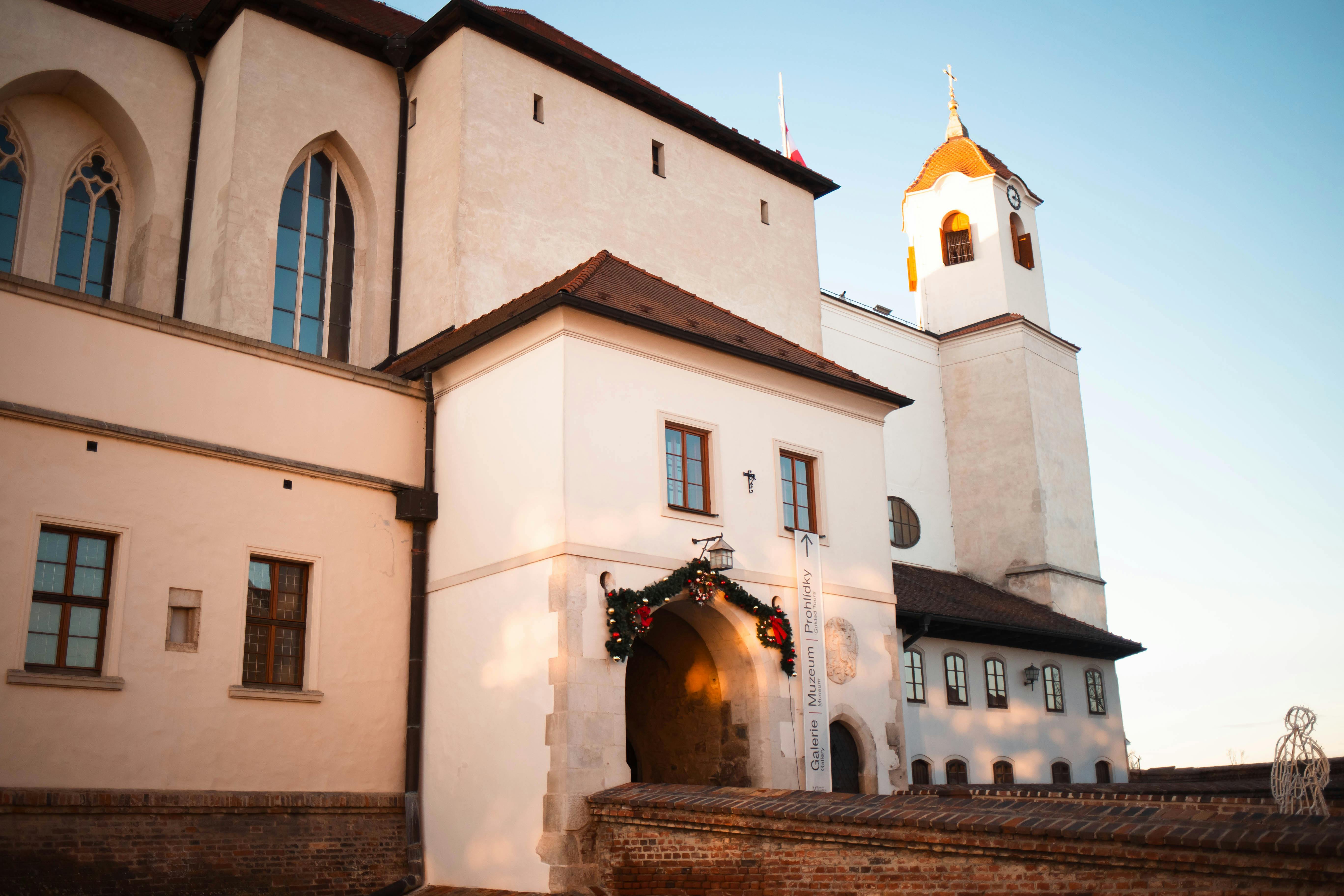
Other nearby places to visit include Špilberk Castle, a historic fortress with panoramic city views, and the Brno Underground, a network of tunnels and cellars beneath the city.
Frequently asked questions
Masaryk University
Is there an entrance fee?
Most university grounds and public areas are free. Tickets may be required for selected exhibitions, guided tours, or special events.
What are the campus visiting hours?
Most city-center buildings are open Monday–Friday, 8:00 AM–6:00 PM. Bohunice Campus is typically open on weekdays during those hours, but individual buildings may have different access arrangements.
Are guided tours offered?
Yes. Tours are available by appointment or advance booking; check visitor services.
Is the campus accessible?
The campus is described as accessible, with barrier-free routes and adapted facilities. Many central buildings have ramps, elevators, and accessible restrooms.
Is photography allowed?
Photography is generally allowed in public areas. Restrictions may apply in research and teaching zones.
Are visitor amenities available?
Yes. Cafes and shops are available near main campus locations, and Brno Campus Square has dining and shopping options.
How do I get to the campus from the city center?
Trams and buses connect the campus with the city center in 15–20 minutes.
Monument of St. Wenceslas
What are the monument’s hours?
It is open year-round in a public square; recommended visiting hours are 8:00 AM–8:00 PM.
Is there a fee?
No. Admission is free.
Are tours available?
Yes. They can be booked through the Tourist Information Center or city websites.
Is the monument accessible, and what is nearby?
It is wheelchair accessible. Nearby sights include Brno Cathedral, Špilberk Castle, and Freedom Square.
Cathedral of St. Peter and Paul
What is the entrance fee?
Adults pay 100 CZK; students and seniors pay 50 CZK; children under 6 enter free.
Are guided tours offered?
Yes. Multilingual tours are available daily, with advance booking recommended.
Can I attend mass?
Yes. The public is welcome at services.
Is the cathedral accessible?
Yes. Barrier-free access includes elevators and ramps, with assistance available.
Is photography allowed?
Photography without flash is allowed. Restrictions apply during services, and tripods are not permitted during services.