Introduction
A Czech Republic travel guide starts with a surprise: this small landlocked country holds one of Europe’s densest clusters of castles, spas, and storybook squares.
Czechia rewards travelers who like their beauty with a backbone. Prague has the imperial spectacle, but the country’s real trick is range: the Baroque fountains of Olomouc, the Renaissance geometry of Telč, the bone chapel and silver-mining past of Kutná Hora, the painted facades of Český Krumlov. Distances stay short, which changes the rhythm of a trip. You can wake under Gothic vaults, eat svíčková for lunch, and be in a wine town or spa colonnade before dinner without losing a day to transit.
History sits close to the surface here, and not in a museum-glass way. Charles IV turned Prague into a 14th-century capital with a university and a new town plan; Jan Hus’s execution helped set off wars that changed Central Europe; the Habsburgs left fortresses, monasteries, and an instinct for grand facades hiding harder stories. You feel that tension in Brno’s functionalist villas, in Kroměříž’s palace gardens, in Ostrava’s blast furnaces, and in Karlovy Vary, where elegant spa architecture was built around the simple fact that hot mineral water kept bubbling out of the ground.
Food and travel logistics make the country easy to love without turning it soft. Beer is cheaper than bottled water in some pubs, trains connect Prague, Brno, and Ostrava with little drama, and smaller places like Třeboň, Znojmo, and Liberec still feel lived in rather than staged. Come in May for clear light and manageable crowds, or in September when South Moravia turns toward wine harvest. Either way, the Czech Republic works best when you treat it as more than a Prague city break.
A History Told Through Its Eras
Before Prague, a clay figurine and a kingdom of missionaries
Celtic Bohemia and Great Moravia, c. 400 BCE-906
A small clay figure, fired around 29,000 years ago at Dolni Vestonice in Moravia, is where the story should begin. She is barely 11 centimeters tall, broken in two, and a child's fingerprint still clings to her surface. Long before crowns, long before cathedrals, someone held her in warm hands.
By around 400 BCE, the Boii had settled the basin that would later be called Bohemia, from the Latin Boiohaemum, the home of the Boii. Ce que l'on ignore souvent, c'est que this was not a forgotten edge of Europe: amber from the Baltic, Roman goods, glass and coins all passed through these lands. Trade arrived early. Ambition did too.
Then came the Slavic centuries, less theatrical on the surface and more decisive underneath. In the 9th century, Great Moravia gathered power across the eastern half of the country, and in 863 Prince Rastislav invited the Byzantine brothers Cyril and Methodius to his court. They did not just bring Christianity. They brought language as politics, liturgy in Slavonic, and an alphabet designed so local speech would no longer kneel entirely to Latin priests from the Frankish world.
That choice changed everything. Rome resisted, bishops maneuvered, and Great Moravia itself fractured under pressure from internal rivals and Magyar raids, but the idea had already escaped: faith could speak in a local tongue, and power could be claimed from the center rather than borrowed from abroad. From Moravia to Olomouc and beyond, the ground was ready for dynasties.
Saints Cyril and Methodius were not dreamy scholars in sandals; they were hard-edged strategists who understood that alphabets can be weapons.
The Venus of Dolni Vestonice preserves the fingerprint of a child, likely between 7 and 15 years old, pressed into the clay before firing.
The saint, the murderer, and the birth of a kingdom
Premyslid Bohemia, 907-1306
Legend places Princess Libuse on a rock above the Vltava, pointing toward the future site of Prague and predicting a city whose glory would touch the stars. A legend, yes, but a useful one: it gave the Premyslid dynasty not just ancestry, but destiny. Czech history has always understood the value of staging.
The first great martyr came early. Duke Wenceslas, whom Europe sentimentalized as "Good King Wenceslas," was killed on 28 September 935 at Stara Boleslav, cut down on his way to Mass after an invitation from his brother Boleslav. One brother became a saint. The other built the state. It is a family arrangement royal houses know well.
Bohemia thickened into a kingdom under the Premyslids, and the country learned to live between empires without disappearing into them. Silver, trade and church patronage enriched the crown; fortified seats multiplied; the political center around Prague hardened. By the 13th century, Premyslid power reached astonishingly far, and Ottokar II, the so-called Iron and Golden King, ruled lands stretching toward the Adriatic.
His fall was as brutal as his rise. In 1278, at the Battle on the Marchfeld, Ottokar was defeated by Rudolf of Habsburg and his allies, and with that defeat one can almost hear the hinge of Central European history turn. The Premyslid line ended in 1306. The stage was set for a different house, a different capital, and a glittering century that would make Prague the envy of Europe.
Saint Wenceslas remains the country's patron, but the harder truth is that his brother Boleslav turned a bloodstained succession into durable rule.
According to tradition, Ottokar II's body lay on the battlefield for weeks after Marchfeld, an emperor in waiting reduced to a warning.
Charles IV builds a capital, Jan Hus lights the fuse
Luxembourg Prague and the Hussite Fire, 1310-1437
On a September day in 1348, masons, clerics and royal officials stood over plans that would redraw Prague. Charles IV, educated in Paris, steeped in French court culture, knew exactly what a capital should look like because he had spent his childhood away from his own. Ce que l'on ignore souvent, c'est que he spoke Czech only after French, Latin and Italian. Exile made him ambitious.
He built with the appetite of a collector and the precision of a banker. Charles University opened in 1348, the first university in Central Europe north of the Alps; the New Town of Prague spread in deliberate lines beyond the older medieval core; work surged on Saint Vitus Cathedral and Charles Bridge. He gathered relics with near-obsessive devotion because relics drew pilgrims, pilgrims brought money, and money gave splendor a spine.
Then the mood darkened. Jan Hus, preacher at Bethlehem Chapel in Prague, denounced clerical corruption in Czech, not in the safe distance of Latin, and for that he became dangerous. Summoned to the Council of Constance with promises of safe conduct, he was condemned and burned on 6 July 1415. The line often associated with him, "Seek the truth, hear the truth, learn the truth," gained its force precisely because power had tried to silence him.
What followed was not a footnote but a revolution. Hussite armies, many of them common townsmen and peasants, defeated crusading forces again and again under commanders like Jan Zizka, and the Czech lands became the laboratory of religious war a century before Luther. In Prague, Kutna Hora and beyond, the quarrel over sermons turned into a struggle over who had the right to rule bodies as well as souls.
Charles IV liked to appear as a serene father of the nation, yet behind the marble pose stood a ruler obsessed with prestige, memory and the humiliation of having once been a foreign child.
Charles IV wrote his own autobiography in Latin, one of the rare medieval rulers to leave such an intimate account of wounds, fear and destiny.
Windows, exile, baroque splendor and a nation that refused to vanish
Habsburg Rule, White Mountain and National Awakening, 1526-1918
A room in Prague Castle, 23 May 1618: angry Protestant nobles seize two imperial governors and a secretary, drag them to a window and throw them out. The Second Defenestration of Prague has become almost comic in the telling, but the consequences were not comic at all. This was the spark that helped ignite the Thirty Years' War.
Two years later came the catastrophe at White Mountain, just outside Prague, on 8 November 1620. The defeat of the Bohemian estates crushed hopes of a more autonomous crown, and the reprisals were theatrical in the cruel Habsburg manner: executions on Old Town Square, confiscations, exile for nobles and intellectuals, and an aggressive recatholicization that changed the country's cultural face. Prague kept its churches. It lost much of its political voice.
And yet the 17th and 18th centuries did not leave only silence. Across Bohemia and Moravia, the Habsburg era filled the land with baroque pilgrimage churches, monasteries, chateaux and gardens of extraordinary confidence, from Kromeriz to the countryside around Olomouc. This is one of Czech history's great paradoxes: political defeat produced some of its most seductive architecture.
The 19th century answered in a different register. Language scholars, writers, historians and composers stitched Czech identity back together word by word, score by score, archive by archive, until what had been pushed toward provinciality returned as a national claim. By 1918, when the Habsburg Empire collapsed, the Czechs did not invent themselves overnight. They had spent a century preparing their reappearance.
Frantisek Palacky looked like a patient scholar surrounded by papers, but he was in fact one of the chief political architects of modern Czech self-understanding.
After White Mountain, 27 Bohemian leaders were executed in Prague's Old Town in 1621, and their severed heads were displayed on the Charles Bridge tower as a warning.
From Masaryk's republic to Havel's stage, with tanks in between
Republic, Occupation, Communism and Velvet Freedom, 1918-present
On 28 October 1918, while the old empire was collapsing, a new state appeared with astonishing elegance: Czechoslovakia. Tomas Garrigue Masaryk gave it intellectual seriousness, Edvard Benes supplied diplomatic craft, and Prague became the capital of one of interwar Europe's most cultured democracies. The First Republic was never paradise, but it had style, confidence and a civic faith rare in the region.
Then came the betrayal. The Munich Agreement of 1938 amputated the borderlands without Czech participation, and in March 1939 Nazi Germany occupied what remained, creating the Protectorate of Bohemia and Moravia. One sees the history in names and stones: Lidice erased in 1942 after the assassination of Reinhard Heydrich, Terezin turned into a ghetto and propaganda showcase, the Jewish quarters of Prague and Brno hollowed by deportation.
Liberation did not bring calm for long. After the Communist coup of February 1948, the state hardened into surveillance, censorship and show trials, though even that system cracked under human pressure in 1968 when Alexander Dubcek tried to build "socialism with a human face." Soviet-led tanks rolled into Prague in August, and the hope of reform was crushed under tracks in Wenceslas Square.
The last act is quieter and therefore, in its way, more moving. In November 1989, students, actors, workers and writers filled the streets during the Velvet Revolution, jangling keys and draining fear from public life. Vaclav Havel, playwright and dissident, entered Prague Castle as president, and on 1 January 1993 the Czech Republic emerged peacefully from the federation with Slovakia. A country shaped by martyrs, emperors, invaders and bureaucrats had ended up in the hands of a man who understood theater better than force. That is a very Czech ending.
Vaclav Havel turned moral stubbornness into statecraft, carrying the irony of an imprisoned playwright all the way to Prague Castle.
During the Velvet Revolution, crowds jingled their keys in public squares to signal that the regime's time was up and it should go home.
The Cultural Soul
Cases Like Locked Doors
Czech declines everything as if every noun had a private life and did not wish to be addressed casually. Seven cases, two registers, and that grave little ceremony of permission before people move from Vy to ty: a language that makes social distance audible before a single opinion is spoken.
In Prague, you hear it at bakery counters and tram stops. Dobrý den first, then the request, then děkuji, and only after that does the human temperature rise by half a degree. The smile comes late. That is why it matters.
A country reveals itself in its untranslatable words. Litost is pain made self-conscious; pohoda is the relief of finding the chair, the beer, the hour that fit your body exactly. Czech does not flatter reality. It names the bruise, then hands you a dumpling.
The Courtesy of Restraint
Czech manners do not throw their arms open. They stand in the doorway, assess you, and then, if you have behaved correctly, invite you in for soup. Foreigners often mistake this for coldness. It is economy. Why spend warmth before the occasion deserves it?
You see the code in Brno as clearly as in Prague. Shops are greeted when entered and thanked when left; beer is received with respect; shoes come off in homes without debate. Loudness is a form of bad tailoring here. It never fits.
The beauty of this reserve is what follows it. Once admitted, you are fed with serious intent, corrected with care, and included without speeches. A country is a table set for strangers. In Czechia, the place card appears late, but it is written in ink.
Gravy, Cream, and Moral Seriousness
Czech food distrusts the decorative. It wants sauce that clings, dumplings that absorb, pork that has known time, and soups that restore the soul to the body after beer, frost, or both. One does not nibble here. One commits.
Svíčková arrives like a small theology: beef, root vegetables, cream, cranberry, whipped cream, bread dumplings. The first bite sounds absurd on paper and then becomes inevitable in the mouth. Vepřo-knedlo-zelo follows the same national principle: fat must meet acid, starch must meet gravy, lunch must leave consequences.
Regional vanity improves everything. In Olomouc, the tvarůžky announce themselves before they enter the room; in Třeboň, carp and ponds shape the appetite; in South Bohemia near Český Krumlov, kulajda tastes of dill, mushrooms, and wet forest memory. Czech cuisine is peasant grammar raised to literature.
Laughter With a Knife Inside
Czech literature has a habit of smiling while sharpening the blade. Jaroslav Hašek built an idiot so intelligent that empires collapsed around him; Karel Čapek gave the world the word robot and then used fiction to ask whether modern intelligence had any right to call itself civilized.
Kafka hovers over Prague even when people pretend otherwise. He belongs to the city the way fog belongs to a river: not always visible, always present. Then Kundera arrives and turns exile, desire, and political absurdity into ballroom philosophy, elegant enough to seduce you before the floor gives way.
This tradition does not admire power. It studies it, mocks it, survives it. Read Hašek on a train to Brno, or Čapek before a walk through Prague, and the country changes shape: less postcard, more diagnosis. The pages know something the monuments refuse to say aloud.
Stone That Learned Irony
Czech architecture practices accumulation with unusual talent. Romanesque rotundas crouch like old animals, Gothic churches rise in disciplined hunger, Baroque facades curl and preen, Cubist houses in Prague break the line of the street as if geometry had developed nerves. The centuries did not replace one another here. They argued and stayed.
Kutná Hora proves that wealth can become architecture in one generation. Silver paid for vaults, chapels, and ambition; Saint Barbara's Church still looks like a prayer spoken by financiers. In Telč, arcades and painted gables perform a quieter miracle: order without boredom.
Then the twentieth century arrives and refuses to behave. Functionalist Brno strips ornament down to intention, while Prague keeps its Cubist lamps, staircases, and facades as evidence that even furniture can develop metaphysics. Czech buildings do not merely stand. They think.
A Violin in the Beer Hall
Czech music lives in two bodies at once. One body is ceremonial: Dvořák, Smetana, Janáček, concert halls, state occasions, the Vltava turned into sound so completely that the river now seems to quote the score. The other body sits at a wooden table with a beer and starts singing before anyone has proposed a program.
Janáček heard speech as melody and built compositions from the grain of ordinary voices. That may be the most Czech artistic gesture imaginable: taking daily talk, impatience, gossip, and village cadence, then turning them into something severe and tender. Music here listens before it speaks.
In Moravia, folk rhythm still carries real weight, not museum weight. Cimbalom bands at festivals near Znojmo or village feasts outside Kroměříž do not perform folklore as embalming. They use it. The tune enters through the ear and settles in the knees.
What Makes Czech Republic Unmissable
Castles And Chateaux
The Czech Republic has more than 2,000 castles and chateaux, from hilltop ruins to polished aristocratic residences. Kutná Hora, Český Krumlov, and the countryside beyond Prague turn that density into a real travel advantage.
Gothic To Baroque
Few countries layer architecture this tightly. Prague’s Gothic skyline, Olomouc’s Baroque core, and Telč’s Renaissance square show how power, faith, and money kept rebuilding the same land in different styles.
Beer With Standards
Czech beer culture is not a slogan; it is daily life with exacting habits around pours, foam, and glassware. Order a pale lager in Prague or Brno and you are drinking one of the country’s most serious craft traditions.
Spa Town Rituals
Karlovy Vary turned hot mineral springs into colonnades, porcelain cups, and a whole architecture of convalescence. The result is part health cure, part Habsburg theatre, and still oddly practical.
Easy Multi-City Trips
This is a country built for travelers who want variety without long transfers. Prague, Brno, Olomouc, and Ostrava are linked by efficient rail, while smaller places like Třeboň or Znojmo fit neatly into a wider route.
Serious Comfort Food
Czech cooking is built on sauce, dumplings, roast meats, dill, garlic, and sharp pickled notes that keep the plate honest. Svíčková, vepřo-knedlo-zelo, and Moravian wine give the country more range than its old stereotypes suggest.
Cities
Cities in Czech Republic
Prague
"Prague feels like a city built for echoes: bells over cobblestones at dawn, tram brakes at dusk, and the river catching every century in one strip of light."
587 guides
Brno
"Czechia's second city runs on students, Functionalist architecture, and a crypt beneath the Capuchin monastery where 18th-century monks mummified naturally in the ventilated floor."
122 guides
Český Krumlov
"A Renaissance castle loops above a horseshoe bend in the Vltava, and the medieval street plan below it hasn't been meaningfully altered since the Schwarzenbergs left."
Olomouc
"Six Baroque fountains punctuate a city of 100,000 that most international tourists skip entirely, leaving the UNESCO Trinity Column standing in near-solitude most mornings."
Kutná Hora
"Silver mining made this town briefly richer than Prague in the 14th century; the Sedlec Ossuary, decorated with the bones of 40,000 people, is the most matter-of-fact memento mori in Europe."
Telč
"Every house on the main square is a different pastel shade with a different Renaissance gable, the whole thing reflected in a mill pond, and the population is under 6,000."
Karlovy Vary
"Thirteen hot springs bubble through a valley of colonnaded spa halls where Beethoven, Goethe, and Marx all came to drink sulfurous water and argue about everything."
Liberec
"A neo-Renaissance town hall built when this was a German-speaking textile capital sits below the Jizera Mountains, and the cable car to Ještěd deposits you inside a 1973 brutalist transmitter-hotel that doubles as the be"
Ostrava
"A decommissioned coal and steel complex called Dolní Vítkovice — blast furnaces, gas holders, coking plant intact — has been turned into a cultural venue without sanitizing a single rivet."
Třeboň
"A medieval fish-farming town in South Bohemia still harvests carp from Renaissance ponds in October exactly as it did in 1590, and the local carp is the fish Czechs eat on Christmas Eve."
Kroměříž
"An Archbishop's palace with a UNESCO garden and a picture gallery holding a Titian that Miloš Forman used as a stand-in for Vienna when he filmed Amadeus here in 1983."
Znojmo
"An underground labyrinth of medieval cellars runs beneath this wine-town on the Moravian-Austrian border, and the 11th-century rotunda inside the castle contains the only surviving Přemyslid dynasty frescoes in existence"
3 Days in PRAGUE 2026: The Perfect Travel Itinerary (Czech Republic)
The Traveler’s AtlasRegions
prague
Prague and Central Bohemia
This is the country's political and visual center, where the Vltava, the castle ridge and a thousand years of state theater all crowd into one basin. Stay for prague, but make time for Kutná Hora, because the story of Czech power was never written in one city alone.
Karlovy Vary
West Bohemian Spa Belt
West Bohemia runs on mineral water, 19th-century confidence and a slightly faded grandeur that suits rainy afternoons. Karlovy Vary is the obvious anchor, but the region is best understood as a chain of spa towns and wooded valleys rather than one single stop.
Liberec
North Bohemia and the Sudetes Edge
The north feels more weather-beaten and more experimental than the postcard south, with mountain light, textile history and some of the country's strangest modern landmarks. Liberec makes a practical base, especially if you want cities in the morning and ridge walks by afternoon.
Český Krumlov
South Bohemia and the Pond Country
South Bohemia trades imperial drama for water, stone and patient wealth. Český Krumlov brings the theatrical skyline, while Třeboň shows the region's quieter talent: fishpond engineering, arcaded squares and a pace that improves after sunset.
Brno
Moravian Heartland
Moravia feels looser, warmer and more argumentative than Bohemia, with stronger food traditions and less patience for Prague-centered narratives. Brno is the engine room, but Olomouc, Kroměříž and Znojmo each pull the region in a different direction: university city, archbishop's garden city, wine town on a frontier.
Ostrava
Silesian East
The far east has the country's hardest edges and some of its best surprises: coal and steel turned into culture, blunt humor and serious music festivals. Ostrava is not polished, which is exactly the point, and it makes the rest of the Czech Republic look tidier than it really is.
Suggested Itineraries
3 days
3 Days: Prague and Kutná Hora
This is the clean first trip: three days in prague for the castle district, the Old Town and late tram rides, then a day trip or overnight in Kutná Hora for a sharper, older kind of grandeur. It works well by train, keeps transfers short, and gives you both imperial scale and a small-city medieval aftertaste.
Best for: first-timers, short breaks, architecture lovers
7 days
7 Days: Moravian Cities by Rail
Start in Brno, then move east through Olomouc, Kroměříž and Ostrava for a week that swaps Prague's stage set for working Czech cities with real daily rhythm. The route is compact, rail-friendly and full of good meals, baroque squares, modern industry and one of the country's strongest beer cultures.
Best for: repeat visitors, food travelers, rail trips
10 days
10 Days: South Bohemia to the Austrian Border
This route moves through Český Krumlov, Třeboň, Telč and Znojmo, where ponds, Renaissance facades, wine cellars and long lunches matter more than headline sights. It is a slower trip, better by car or a mix of train and bus, and it suits travelers who like old towns once the day-trippers have left.
Best for: slow travel, couples, wine and small-town architecture
14 days
14 Days: Bohemian Capitals, Spas and Mountains
Begin in prague, then head west to Karlovy Vary for spa architecture and forest walks before finishing in Liberec under the northern hills. Two weeks gives you time for museum days, train days and weather days, which matters in a country where a cold front can turn a mountain plan into a café plan very quickly.
Best for: mixed-interest trips, shoulder season, travelers who want cities and landscapes
Notable Figures
Princess Libuse
legendary · Prophet-queen of Czech traditionLegend places Libuse above the Vltava, foretelling Prague before the city existed in stone. Whether or not she stood on that cliff, the Czechs kept her because she offered something dynasties adore: a founding woman with vision, authority and a peasant husband chosen by her own will.
Saint Wenceslas
c. 907-935 · Duke and patron saintEurope remembers him as a Christmas carol. The Czech lands remember the more useful truth: a duke educated in Christian statecraft, killed by his brother at the church door, then transformed into the patron whose death outlived the killer's victory.
Charles IV
1316-1378 · King of Bohemia and Holy Roman EmperorCharles IV treated Prague as both beloved hometown and political project. He founded Charles University, expanded the New Town and filled the capital with relics, bridges and ceremonies because he understood that grandeur needs institutions, not just poetry.
Jan Hus
c. 1370-1415 · Preacher and reformerHus brought theology down from the university lectern and into the language people spoke in the street. When the Council of Constance burned him, it did not settle an argument; it gave the Czech lands a martyr whose ashes would ignite armies.
Jan Zizka
c. 1360-1424 · Hussite commanderBlind in both eyes by the end of his life, Zizka remained one of medieval Europe's most formidable commanders. He turned peasant wagons into moving fortresses and proved, to the horror of crusading nobles, that discipline could humiliate pedigree.
Maria Theresa
1717-1780 · Habsburg rulerMaria Theresa never fit the ornamental role expected of a queen. In the Czech lands she governed through war, reform and maternal authority, taxing, centralizing and arguing with a court that often preferred female symbolism to female power.
Tomas Garrigue Masaryk
1850-1937 · Statesman and first president of CzechoslovakiaMasaryk gave the new republic its moral tone. He was not a romantic revolutionary but a philosopher who believed institutions mattered, which is precisely why the state he helped found felt, for a brief and luminous period, more adult than many of its neighbors.
Alphonse Mucha
1860-1939 · ArtistPeople come to Mucha through Parisian posters and elegant actresses, then discover the far larger obsession underneath. His Slav Epic was not decoration but a national offering, an attempt to paint history itself on a scale fit for churches and empires.
Vaclav Havel
1936-2011 · Playwright, dissident and presidentHavel wrote absurdist plays because absurdity was the native language of late communism. When the system finally cracked, the man who had spent years under surveillance and in prison became president, bringing to politics an unusual combination of courtesy, irony and steel.
Photo Gallery
Explore Czech Republic in Pictures
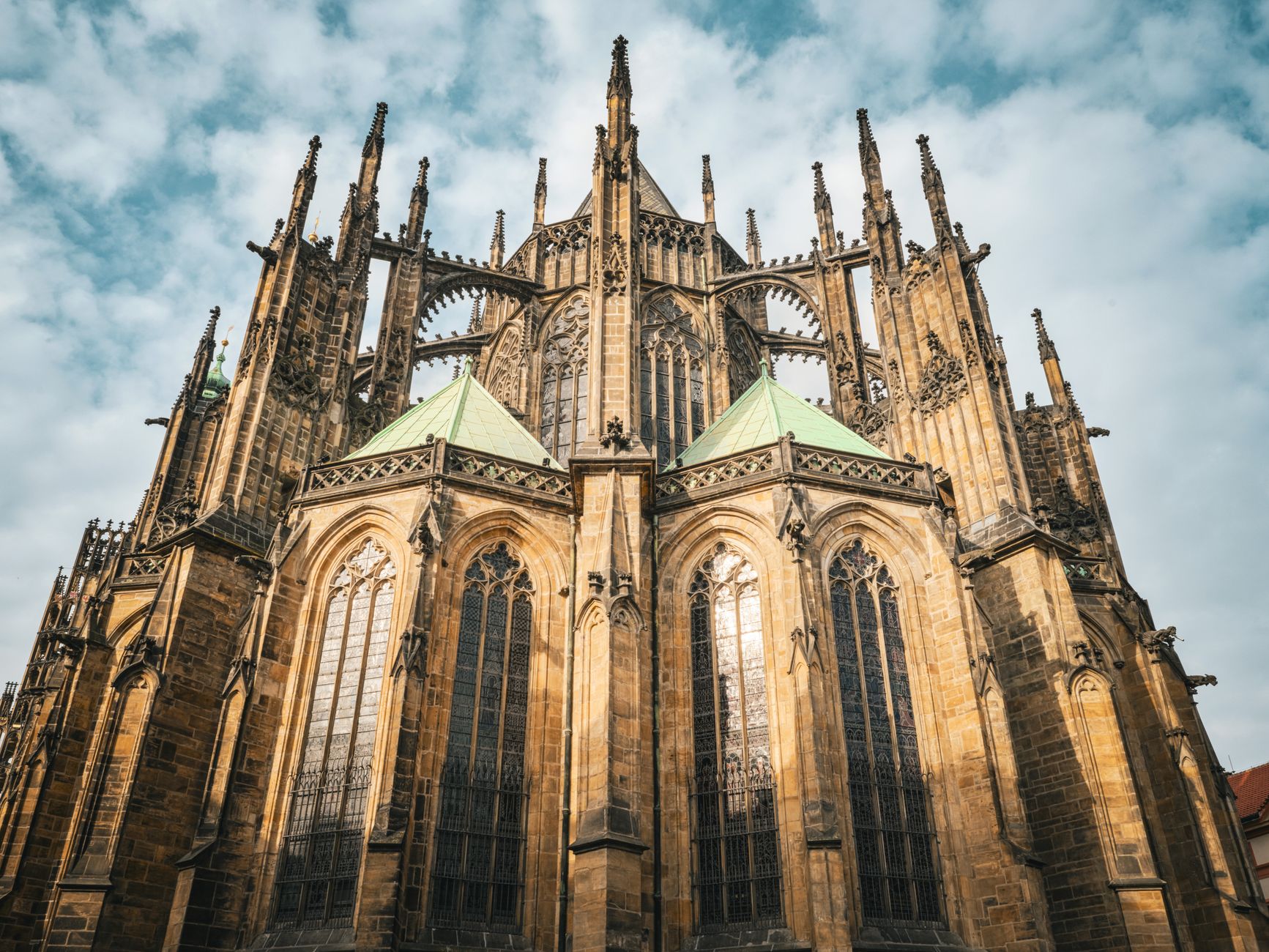
Captivating Gothic architecture of St. Vitus Cathedral in Prague with a dramatic sky backdrop.
Photo by Calvin Seng on Pexels · Pexels License
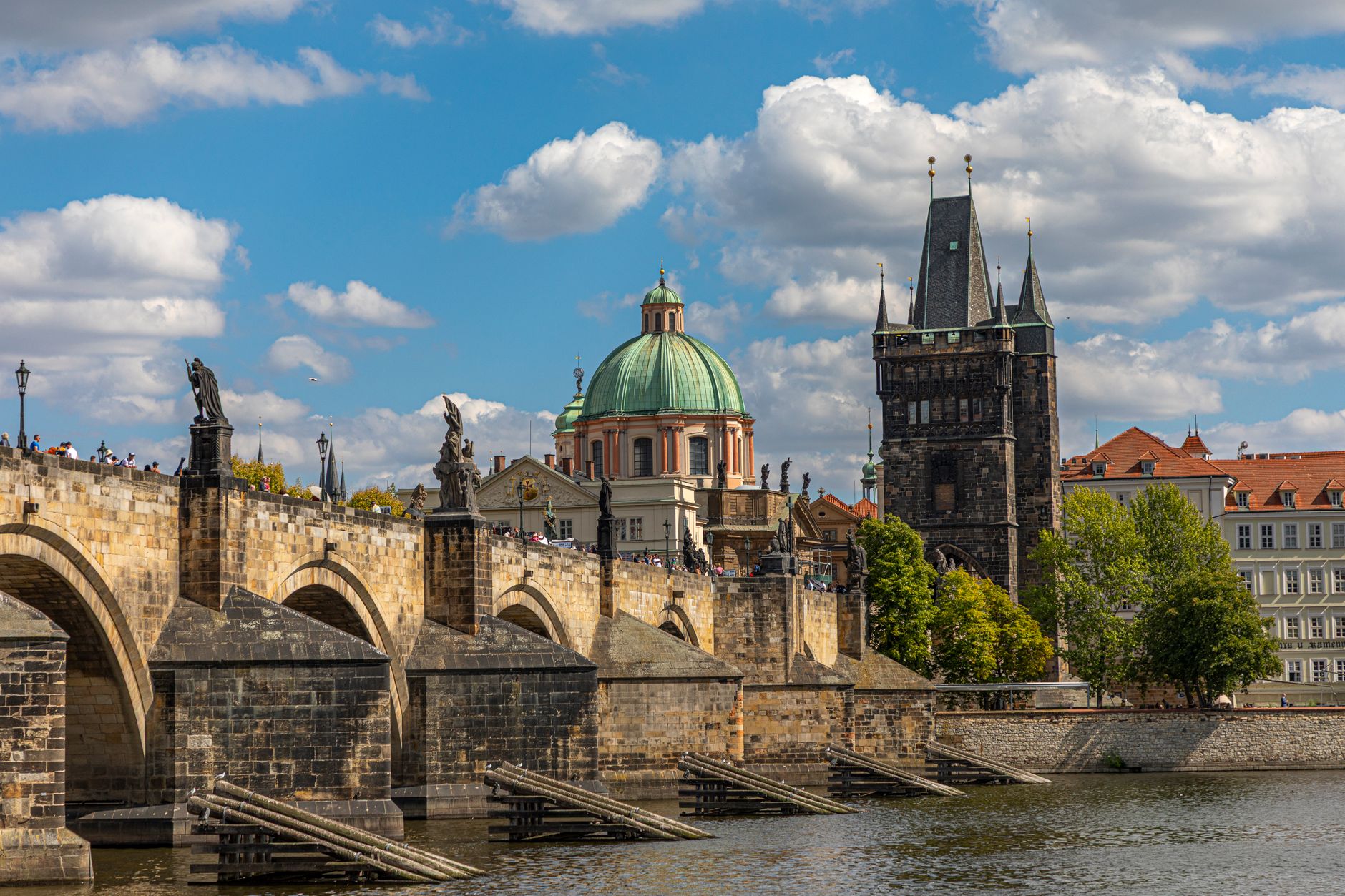
View of Charles Bridge and historical architecture in Prague under a vibrant blue sky.
Photo by Frank van Dijk on Pexels · Pexels License
View of the medieval Karlštejn Castle surrounded by greenery under a cloudy sky.
Photo by Nadiia Astakhova on Pexels · Pexels License
Explore the historic charm of Prague's bridges and architecture with this stunning aerial cityscape.
Photo by Diego F. Parra on Pexels · Pexels License
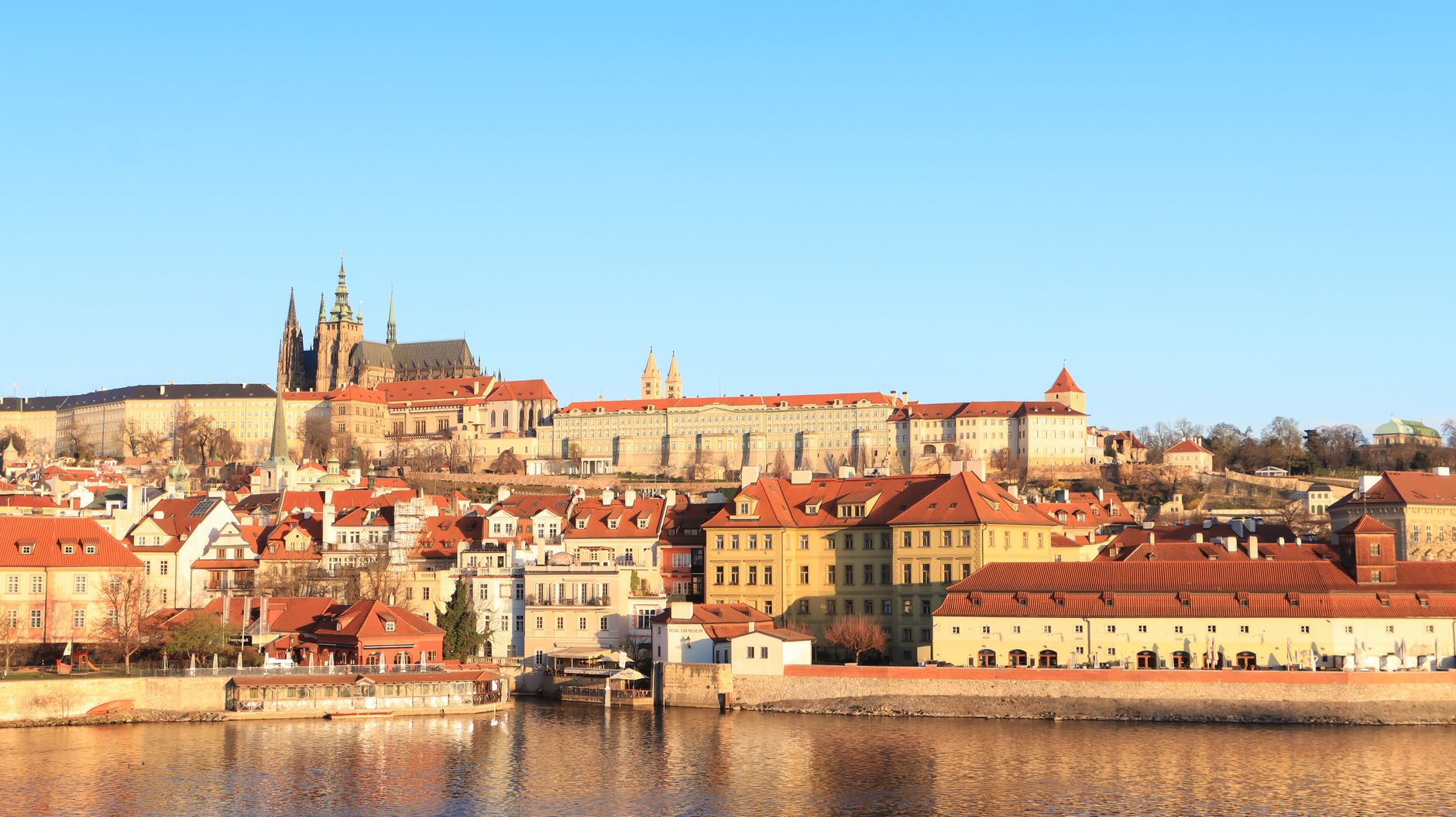
Beautiful panoramic view of Prague Castle and surrounding architecture under warm sunlight.
Photo by Gokul K S on Pexels · Pexels License
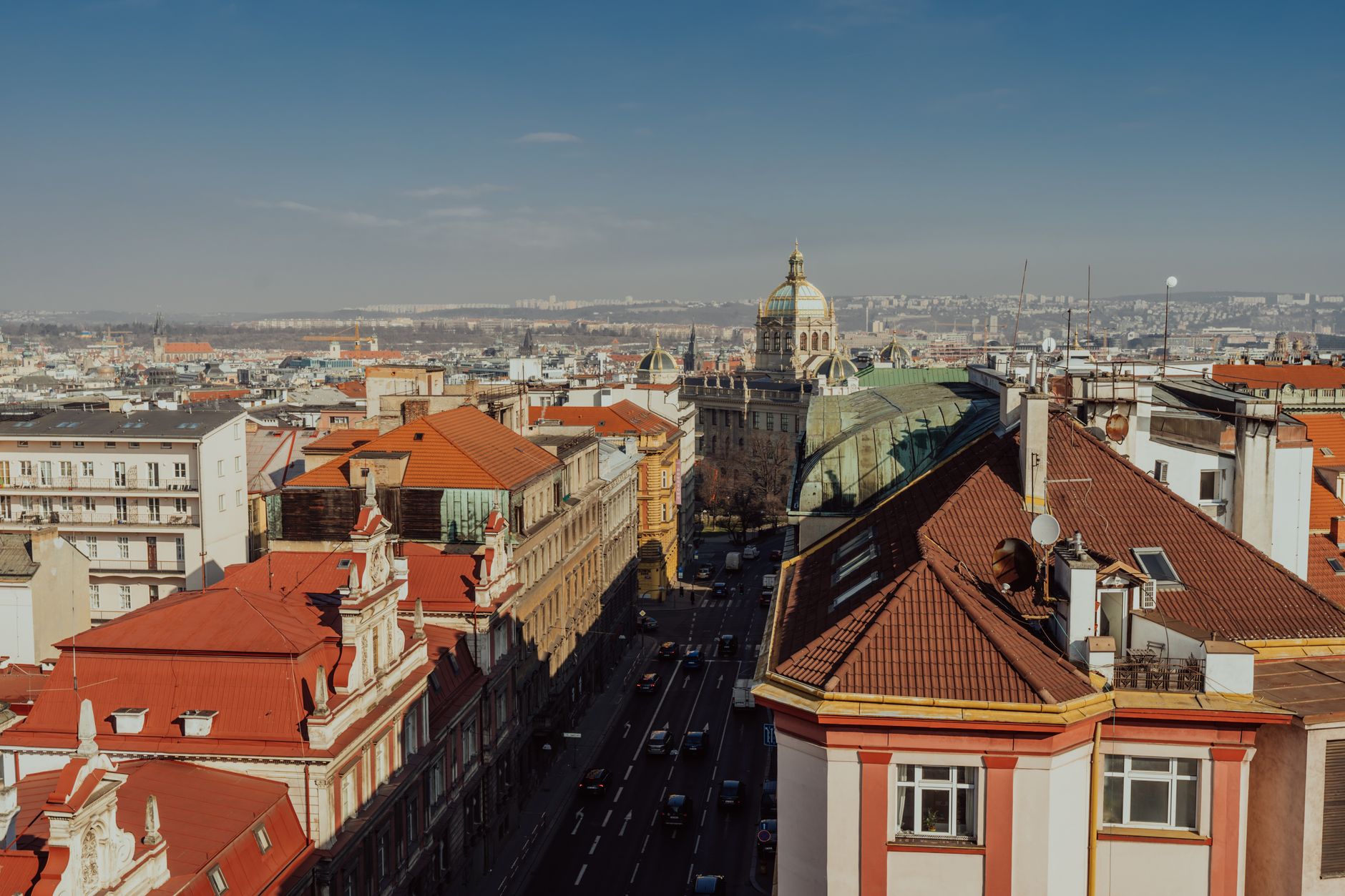
Aerial view of Prague's historic architecture with the National Museum in the background.
Photo by Raymond Petrik on Pexels · Pexels License
Scenic aerial view of Čestín, showcasing lush green landscapes and fields in warm evening light.
Photo by Stepan Vrany on Pexels · Pexels License
A tranquil aerial view of the rural landscape in Zbraslavice, Czech Republic, during summer.
Photo by Stepan Vrany on Pexels · Pexels License
Aerial view of a serene countryside landscape in Zbraslavice, Czech Republic with fields and a lake.
Photo by Stepan Vrany on Pexels · Pexels License
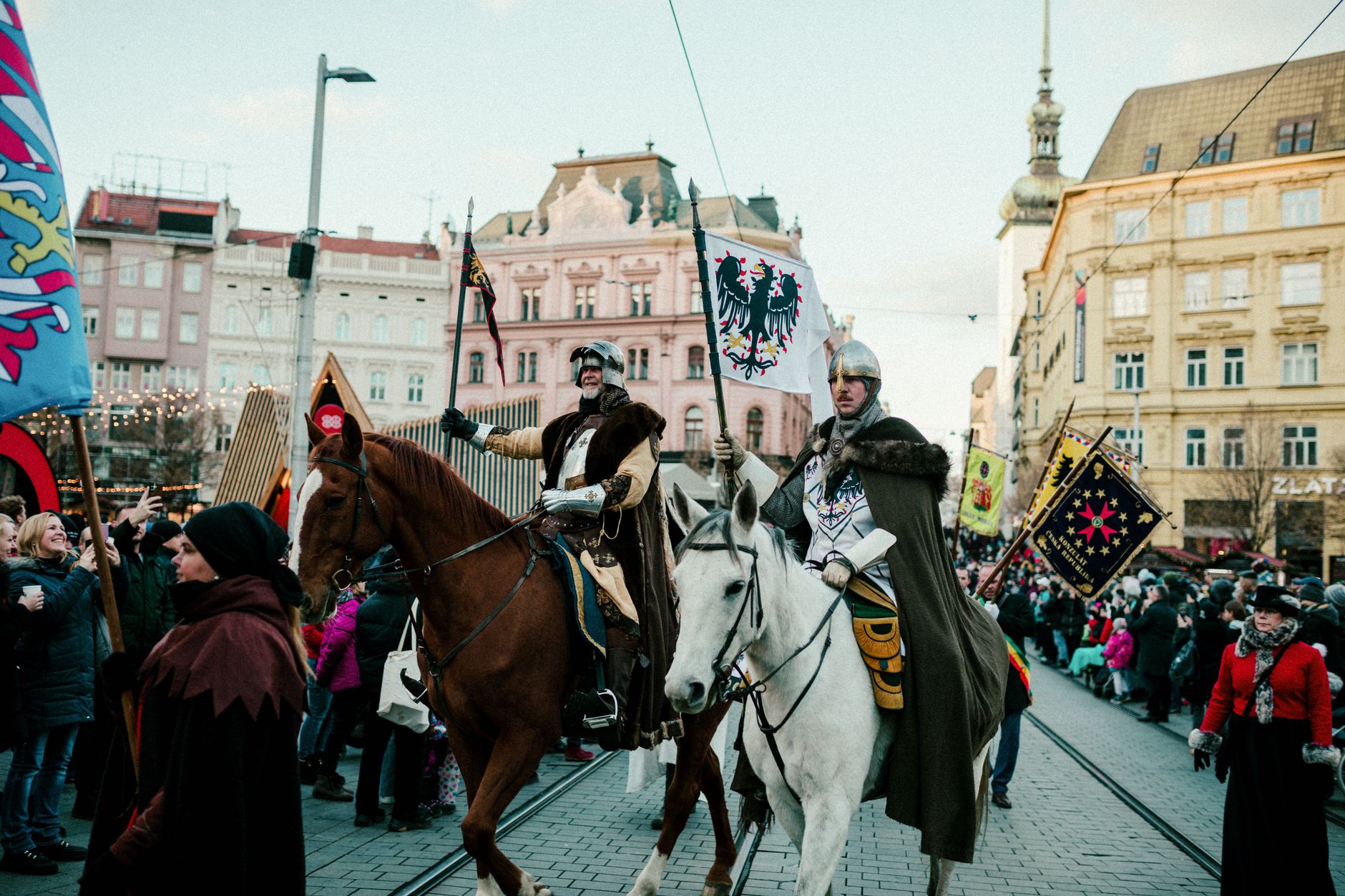
Medieval knights on horseback parade through a historic city square during a vibrant festival.
Photo by Helena Jankovičová Kováčová on Pexels · Pexels License
A vibrant medieval-themed parade with costumed participants and flags in a bustling city square.
Photo by Helena Jankovičová Kováčová on Pexels · Pexels License
Knights in medieval attire parade on horseback through a European city street, captivating crowds.
Photo by Helena Jankovičová Kováčová on Pexels · Pexels License
A high-angle shot of popcorn crusted fish with creamy sauce, presented on a wooden table.
Photo by fahri tokcan on Pexels · Pexels License
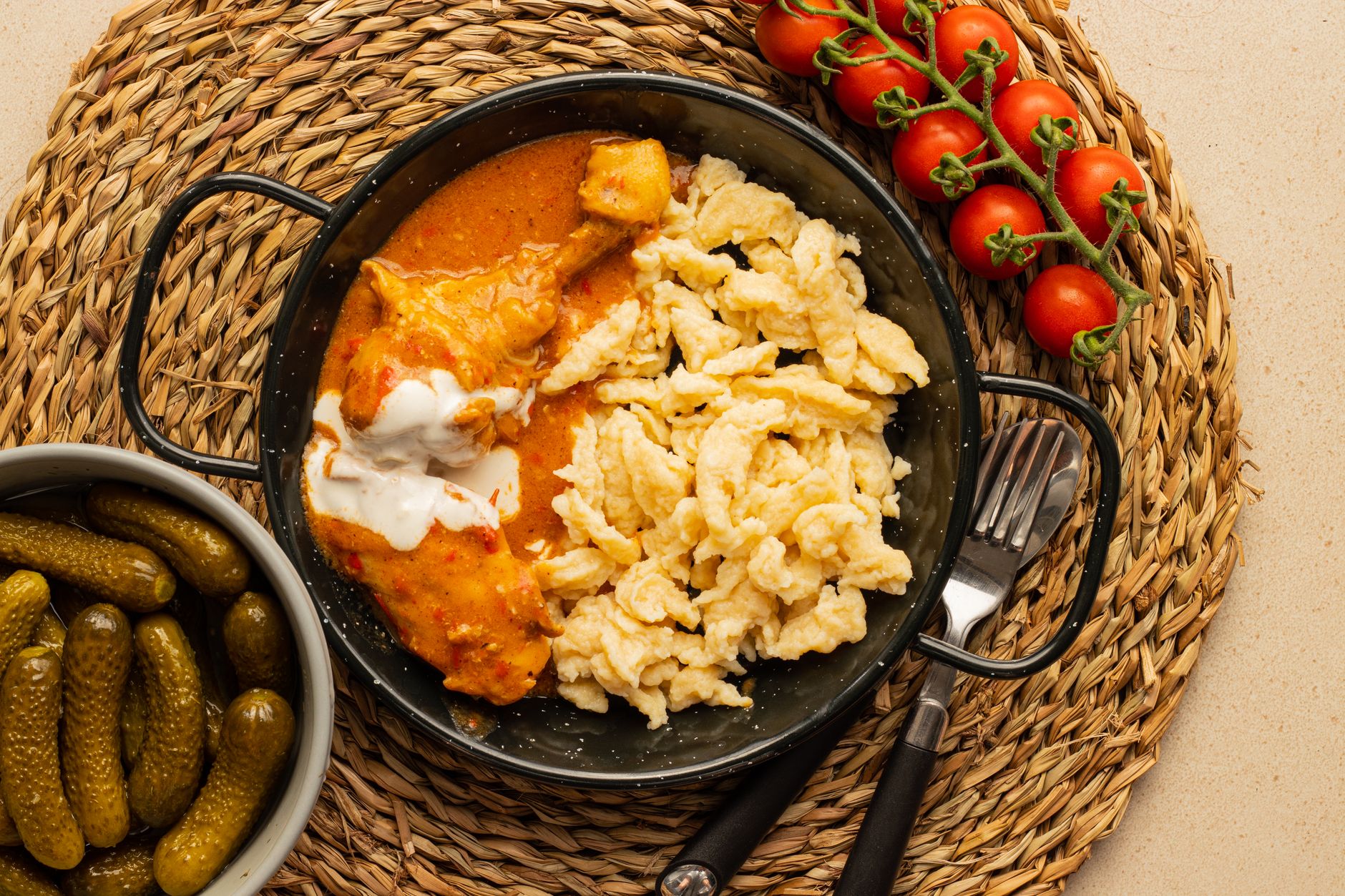
Traditional chicken paprikash with spaetzle, tomatoes, and pickles, served on a woven placemat.
Photo by Istvan Szabo on Pexels · Pexels License
A top-down view of various gourmet dishes, perfect for food enthusiasts.
Photo by Valeria Boltneva on Pexels · Pexels License
Charming street view of historic architecture in Prague city center, showcasing ornate facades in golden sunlight.
Photo by Arpan Bhatia on Pexels · Pexels License
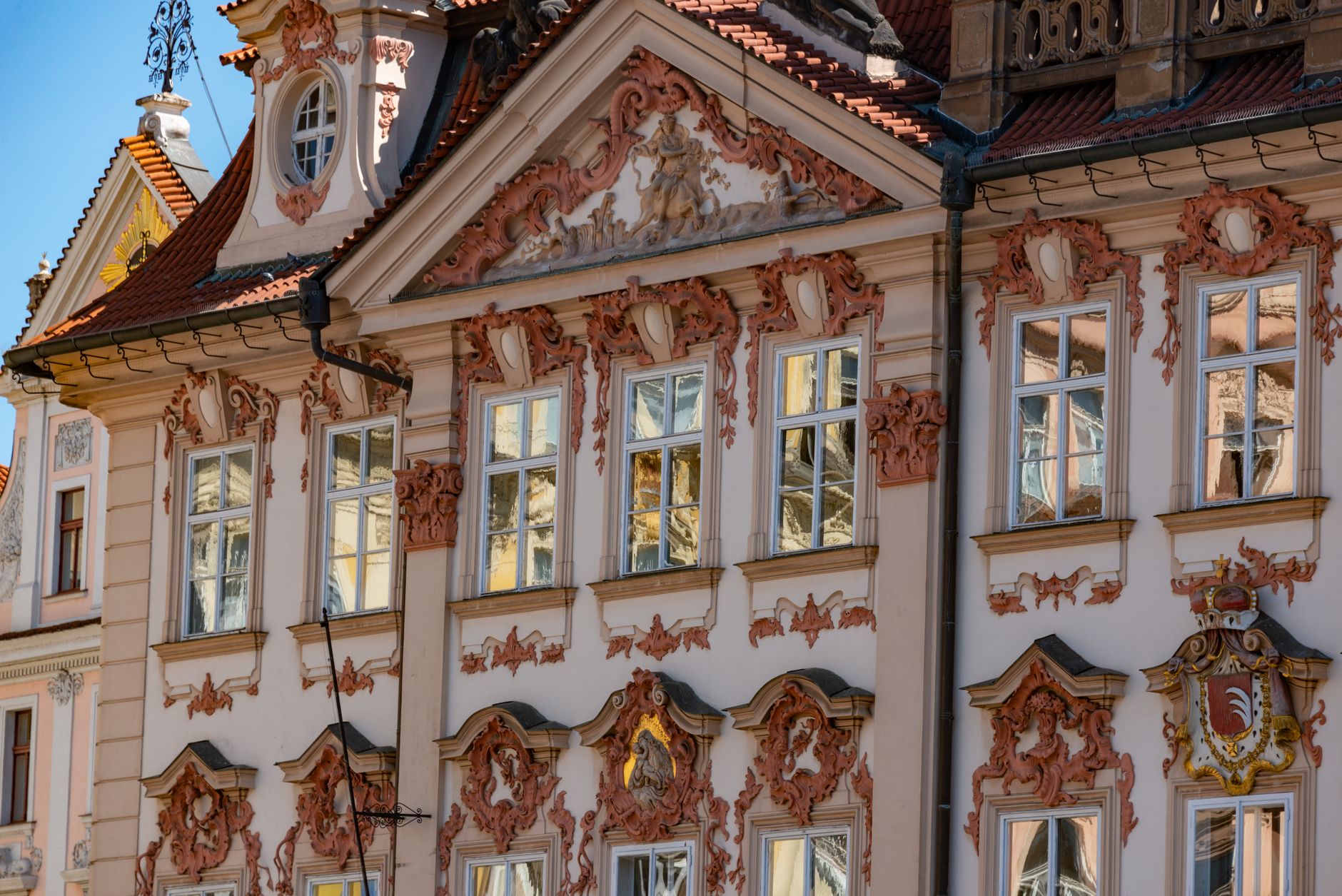
Elegant Baroque building facade in Prague, showcasing intricate design elements.
Photo by Diego F. Parra on Pexels · Pexels License
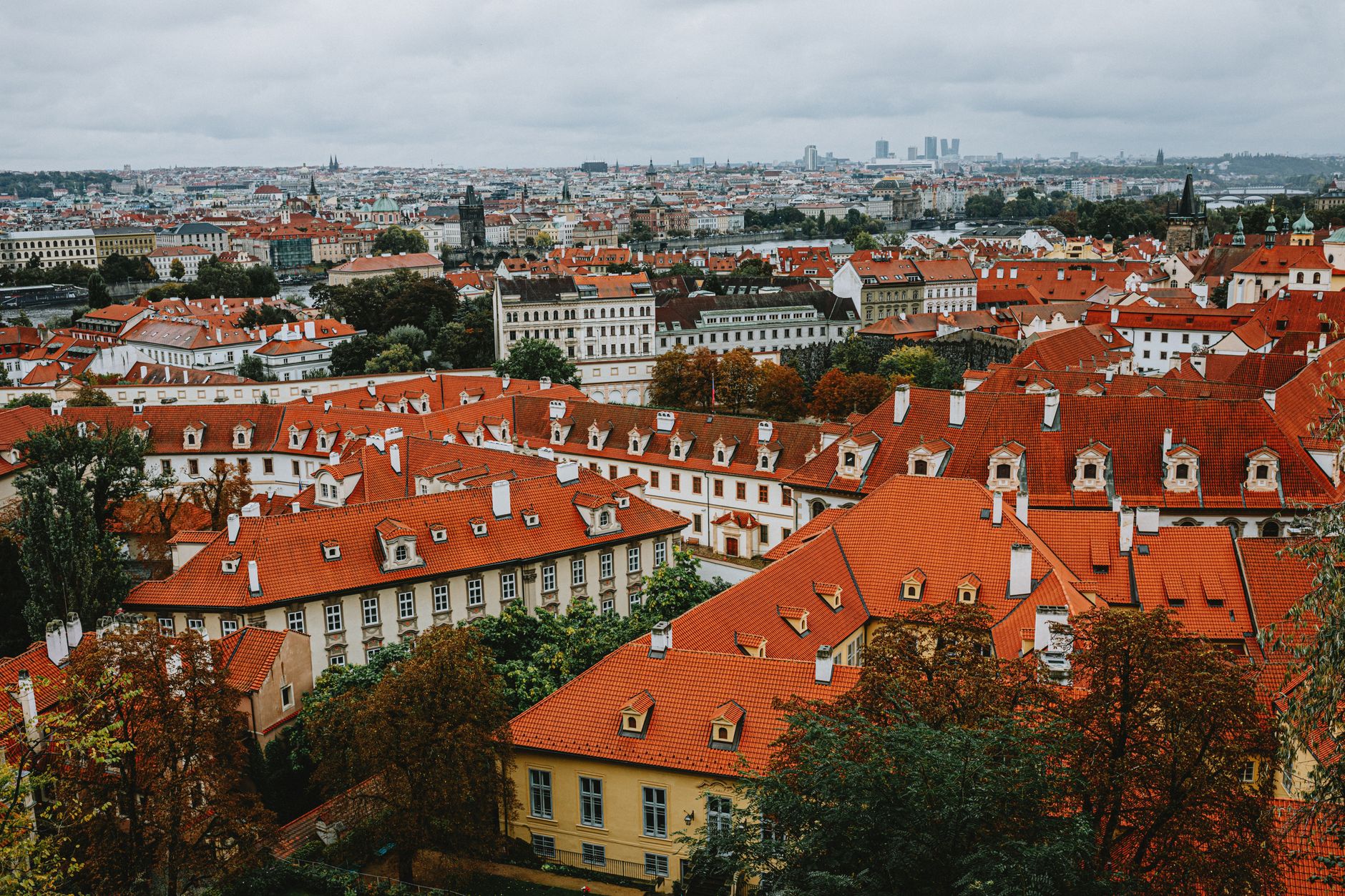
Explore the charming red rooftops of Prague's historic district from an aerial perspective on a cloudy day.
Photo by Helena Jankovičová Kováčová on Pexels · Pexels License
Top Monuments in Czech Republic
Špilberk Castle
Brno
Brno's former prison fortress now works as a hilltop park, museum, and summer stage, with city views that matter as much as the cells below today still.
Oppidum Závist
Prague
Prehistoric ramparts and a 2021 lookout tower crown this wooded hill above the Vltava, where Prague's story starts long before castles, saints, or kings.
Kryt Folimanka
Prague
A heated Cold War bunker still works beneath Folimanka Park in Prague 2, with blast doors, filter rooms and tunnels built to shelter 1,300 people for 72 hours.
Rozhledna Diana
Karlovy Vary
Imperial Spa
Karlovy Vary
Loket Castle
Karlovy Vary
Cathedral of St. Bartholomew
Plzeň
Botanical Garden of Charles University
Prague
Malšovická Aréna
Hradec Králové
Svatošské Skály
Karlovy Vary
Moravian Karst
Brno
Zpívající Fontána
Mariánské Lázně
Západočeské Muzeum v Plzni
Plzeň
Petřínské Bludiště
Prague
Brno-Řečkovice a Mokrá Hora
Brno
Brno Astronomical Clock
Brno
Memorial to the Victims of Communism
Prague
Kladské Rašeliny
Mariánské Lázně
Practical Information
Visa and Entry
The Czech Republic is in the Schengen Area, so EU and EEA travelers can enter with a national ID card or passport, while many non-EU visitors, including Americans, Canadians, Britons and Australians, can usually stay visa-free for up to 90 days in any 180-day period. Rules do change, so check the Czech Ministry of the Interior and your local embassy before you book anything non-refundable.
Currency
The country uses the Czech koruna, not the euro. Cards work almost everywhere in prague and Brno, but carry some cash for village cafés, market stalls and rural buses, and skip airport exchange counters unless you enjoy bad rates.
Getting There
Most travelers arrive through Václav Havel Airport Prague, with smaller airports at Brno and Ostrava handling regional and seasonal traffic. Overland is often better: Vienna to prague takes about 4 hours by train, Berlin about 4.5 hours, and Munich about 5.5 hours.
Getting Around
Trains are the sensible way to cross the country, with České dráhy covering the full network and RegioJet often winning on comfort and price on routes like prague to Brno or Ostrava. Use IDOS for timetable planning, buy motorway vignettes online at edalnice.cz if you rent a car, and do not bother with domestic flights.
Climate
April to May and September to October give you the best balance of mild weather and thinner crowds, especially in prague, Karlovy Vary and Český Krumlov. Winter is cold and grey in the lowlands but good for Christmas markets in Brno and Olomouc, while mountain areas such as the Krkonoše stay colder for much longer.
Connectivity
Wi-Fi is routine in hotels, cafés and most long-distance trains, and contactless payment is so common that many travelers barely touch cash in the cities. Local SIMs and eSIMs are easy to set up, but signal can thin out in forested border regions and smaller villages.
Safety
The Czech Republic is one of the safer countries in Europe for everyday travel, with the main nuisance being pickpockets and exchange scams in the busiest parts of prague. Tap water is safe, emergency care is solid, and hikers should think about tick protection from late spring through autumn.
Taste the Country
restaurantSvíčková na smetaně
Sunday lunch, family table, slow eating. Dumplings tear, beef rests, cream sauce floods, cranberry cuts, beer waits.
restaurantVepřo-knedlo-zelo
Midday meal, pub table, two or four people. Pork slices, sauerkraut bites, dumplings soak, conversation slows.
restaurantBramboráky
Market snack, standing up, cold air. Potato hisses in lard, garlic rises, marjoram follows fingers.
restaurantČesnečka
Morning repair after beer. Garlic stings, broth heals, egg breaks, bread bowl softens.
restaurantOlomoucké tvarůžky
Dark bread, onion, mustard, beer. Friends watch the first bite in Olomouc and laugh without mercy.
restaurantKoláče
Coffee hour, station bench, grandmother kitchen. Poppy seed, quark, plum jam, powdered sugar, quiet.
restaurantSvařák
December square in Prague or Brno. Cup warms hands, cloves rise, breath smokes, people linger.
Tips for Visitors
Pay in Koruna
If a restaurant or taxi in prague offers to charge you in euros, decline and pay in CZK. You will almost always get a worse rate when someone else does the conversion for you.
Book Fast Trains Early
RegioJet and České dráhy release cheaper advance fares on the busiest routes, especially Friday afternoons between prague, Brno and Ostrava. Buy as soon as your dates are fixed if you are traveling on weekends.
Reserve Český Krumlov Ahead
Český Krumlov fills quickly from May through September and can feel oddly expensive for its size. Sleep there only if you want the town after dark; otherwise visit early and move on.
Tip With Your Voice
In sit-down restaurants, tell the server the total you want charged before the card runs or before cash is handed back. Rounding up is normal, and 10 percent is generous rather than automatic.
Use Buses for Gaps
Not every city pair is best by train. Liberec in particular is often quicker by bus from prague, and smaller towns in South Bohemia and southern Moravia may require one bus leg even on a rail-heavy trip.
Watch ATM Fees
Use bank ATMs and avoid flashy exchange shops in the historic center of prague. Dynamic currency conversion, bad exchange spreads and surprise withdrawal fees are a bigger threat to your budget than food prices.
Time Moravia for Harvest
September and early October are the sweet spot for Brno, Znojmo and the wine villages around them. Cellars open longer, menus improve, and the countryside finally smells like grapes instead of traffic.
Videos
Watch & Explore Czech Republic
15 Things I Wish I Knew Before Visiting Prague 🇨🇿
Best Things to do in Prague Czech Republic 2026 4K
Where to Eat Traditional & Cheap Czech Food in Prague? (Honest Guide)
Explore Czech Republic with a personal guide in your pocket
Your Personal Curator, in Your Pocket.
Audio guides for 1,100+ cities across 96 countries. History, stories, and local insight — offline ready.
Audiala App
Available on iOS & Android
Join 50k+ Curators
Frequently Asked
Do I need cash in the Czech Republic or can I pay by card everywhere? add
You can pay by card in most hotels, restaurants and transport systems, especially in prague and Brno. Carry some koruna anyway for village pubs, public toilets, farmers' markets and the occasional bus kiosk that still prefers cash.
Is Prague expensive compared with the rest of the Czech Republic? add
Yes, noticeably. prague is the country's most expensive city for hotels, cocktails and tourist-zone restaurants, while Brno, Olomouc and Ostrava usually cost less, and smaller towns such as Třeboň or Telč can be cheaper still outside peak summer weekends.
How many days do you need for the Czech Republic? add
Seven to ten days is a strong first trip if you want more than prague. That gives you time to add one Moravian route or one South Bohemian route without turning the whole holiday into a packing exercise.
Is the Czech Republic good for train travel? add
Yes, very good. The rail network is dense, fares are reasonable, and the country is small enough that routes such as prague to Brno or Brno to Olomouc stay manageable without losing half a day in transit.
When is the best time to visit the Czech Republic? add
Late April to May and September to early October are the best all-round windows. You get milder weather, fewer crowds than high summer, and better conditions for both city walking and side trips to places like Karlovy Vary, Český Krumlov and Znojmo.
Is English widely spoken in the Czech Republic? add
Yes in the main tourist centers, less reliably once you leave them. In prague, Brno and Český Krumlov you will manage easily, but in rural Moravia or small railway stations a few Czech basics and a translation app still help.
Can you visit Kutná Hora as a day trip from Prague? add
Yes, easily. Trains and buses make Kutná Hora one of the simplest and most rewarding day trips from prague, though an overnight stay gives you the old town before the crowds and after they leave.
Is it better to rent a car in the Czech Republic? add
Only if your route includes countryside stops, wine areas or smaller towns with awkward bus connections. For prague, Brno, Olomouc, Ostrava and most classic city itineraries, the train is cheaper, faster and far less irritating.
Is the Czech Republic safe for solo travelers? add
Yes, it is one of the easier countries in Europe for solo travel. Standard city precautions are enough, with extra attention for pickpockets, nightlife scams and dishonest exchange offers in the busiest parts of prague.
Sources
- verified Ministry of the Interior of the Czech Republic — Official entry, visa and residence rules for foreign visitors.
- verified Czech Statistical Office — Authoritative population and national baseline data.
- verified České dráhy — National rail operator for routes, fares and travel planning.
- verified IDOS — Main Czech timetable planner for trains, buses and urban transport.
- verified Czech Hydrometeorological Institute — Official climate and weather data used for seasonal guidance.
Last reviewed: