Introduction
The first thing you notice is the silence. One minute you're dodging mopeds on Ledra Street, the next you're standing in a UN buffer zone where birdsong replaces car horns and a rusting oil drum marks the last checkpoint before Turkey. Nicosia, Cyprus does division like nowhere else: the world's only split capital where you can breakfast on Greek coffee, lunch on Turkish mezze, and be back in time for a Lebanese craft beer that tastes like pine forests.
Inside the 16th-century Venetian walls—wider than a London bus is long—the city folds in on itself like a secret map. A Gothic cathedral sprouts Ottoman minarets. A caravanserai built for camel trains now houses baristas who speak code instead of Arabic. The same family has been rolling halloumi in the Bandabulya market since 1938; they'll let you taste the difference between export rubber and the real squeak, then point you toward a courtyard where old men still play backgammon with Byzantine coins instead of plastic chips.
Crossing takes ninety seconds and a passport stamp you can't keep. The north smells of cardamom and diesel, the south of orange blossom and espresso, but both sides share the same dry heat that makes stone sweat at dusk. Here, politics is geography and dinner is diplomacy—every taverna argument about who makes better kleftiko is really about who gets to call this island home.
What Makes This City Special
A Capital Split in Two
Nicosia is the only divided capital on earth: Ledra Street ends at a UN hut where you flash ID and step from the euro-zone into Turkish lira-land inside 30 seconds. The 5 km of star-shaped Venetian walls still wrap both sides, so you can walk a 16th-century rampart and cross a 21st-century border in the same hour.
Zaha Hadid’s Concrete Carpet
Eleftheria Square flows like poured liquid marble beneath the bastions—Hadid’s 2021 swoop of ramps and cantilevers is the only capital square she ever finished. Stand underneath: the concrete ribs are 40 cm thick, wide enough for a toddler’s nap, and they frame the old city gate like a cinematographer’s storyboard.
Halloumi at the Green Line
Grill-smoke drifts from both sides of the buffer zone: southern cafés serve the semi-hard PDO version, northern kitchens fry the lighter, mint-flecked hellim. Try both within 200 m—no customs officer will confiscate your cheese.
Historical Timeline
Europe's Last Divided Capital
Three empires, four religions, one Green Line
First Written Mention
An Assyrian clay prism lists "Lidir" — a cluster of mud-brick villages where the capital stands today. King Onasagas pays tribute in silver and copper. No one calls it a city yet.
Lusignan Capital Born
French crusader Guy de Lusignan buys Cyprus from the bankrupt Knights Templar for 40,000 bezants. Nicosia becomes a proper royal capital, complete with Gothic cathedrals and palace intrigue.
Peter I of Cyprus
Born in today's Old City, this warrior-king would lead the only successful Crusade of his century — sacking Alexandria in 1365. Chaucer immortalized him in Canterbury Tales. Nicosia's golden age begins.
Genoese Invasion
Genoese merchants storm the city after unpaid debts. They burn the royal palace and carry off everything portable. The first city walls rise from this trauma — thick limestone blocks meant to keep invaders out.
Venetian Star Fort
Military engineer Giulio Savorgnan demolishes 90 churches and monasteries to create the perfect star-shaped fortress. 11 heart-shaped bastions, 5 km circumference. The walls stand intact 460 years later.
Ottoman Siege
50,000 Ottomans camp outside the Venetian walls. After 45 days, the gates open to massacre. 20,000 bodies litter the streets. The Gothic Cathedral of St. Sophia becomes the Selimiye Mosque within days.
Büyük Han Rises
From the ashes, Ottoman governor Muzaffer Pasha builds Cyprus's largest caravanserai. 68 rooms around a sun-drenched courtyard. Today it houses silversmiths and coffee houses, the heartbeat of Turkish Nicosia.
Kornesios Mansion
Dragoman Hadjigeorgakis Kornesios builds his mansion — the most powerful Greek Cypriot under Ottoman rule. Secret negotiations happened in these rose-scented rooms. His execution in Constantinople sparked island-wide riots.
British Troops March In
Red-coated soldiers parade through Eleftheria Square. The Union Jack replaces the crescent moon. First electric lights flicker on Ledra Street. Modern Nicosia begins here.
Makarios III Born
Born Michael Mouskos in a mountain village, he would become Archbishop and first President. His office in Nicosia sits where medieval kings once held court. Independence and division — his life's twin themes.
EOKA Guerrilla War
Explosions echo through narrow streets as Greek Cypriots fight for union with Greece. British soldiers patrol in khaki shorts. The Ledra Palace Hotel becomes a sniper's nest. Everyone chooses a side.
Independence Proclaimed
The Union Jack comes down. Archbishop Makarios III raises the Cypriot flag — copper-orange map on white field. British troops depart but leave two sovereign bases. Nicosia becomes capital of the new republic.
Green Line Drawn
After 'Bloody Christmas' violence, British General Peter Young draws a green line on his map. From pencil to concrete — barbed wire, oil drums, and eventually a 3-meter wall. The city splits in two.
Partition and Exodus
Greek junta's coup against Makarios triggers Turkish invasion. 35,000 Greek Cypriots flee south as 60,000 Turkish Cypriots head north. The airport becomes a UN buffer zone. Nicosia International never flies again.
Northern Capital Declared
Turkish Cypriots proclaim the 'Turkish Republic of Northern Cyprus.' Only Ankara recognizes it. The northern half of Nicosia becomes capital of a country that doesn't officially exist. Maps show a blank space.
Ledra Crossing Opens
For the first time since 1974, pedestrians walk freely across Ledra Street. Greek and Turkish Cypriots queue at passport control, then share coffee in the same cafés. The wall didn't fall, but someone cut a door.
Nobel for Nicosia
Christopher Pissarides, born in Nicosia during British rule, wins the Nobel Prize in Economics. His search-and-matching theory helps explain unemployment. The ceremony mentions 'a boy from a divided city who learned how markets connect people.'
Notable Figures
Christopher A. Pissarides
born 1948 · Nobel-winning economistHe grew up above his father’s electrical shop on Ledra Street and still keeps an office in the city. The labor-market models that won him a Nobel were sketched on napkins in a now-closed kafeneion behind the Venetian walls.
Makarios III
1913–1977 · Archbishop and first PresidentHe governed from the Archbishop’s Palace, preached in St. John’s, and is buried in Throni. His funeral cortege in 1977 was the last time both sides of Nicosia opened their checkpoints for a single crowd.
Peter I of Cyprus
1328–1369 · King of CyprusHe rode out of the Famagusta Gate to lead a crusade that sacked Alexandria in 1365, then came home to build new bastions. The minaret piercing his cathedral today would have horrified him.
Alparslan Türkeş
1917–1997 · Turkish nationalist leaderBorn in the Ottoman quarter just north of the Green Line, he left for Turkey at 18 and founded the Grey Wolves. His childhood house still stands, shuttered and unmarked, around the corner from Büyük Han.
Michalis Hatzigiannis
born 1979 · Pop singer-songwriterHe wrote platinum-selling ballads in a tiny studio above a stationery shop on Solonos Street. When he sells out the GSP Stadium, he still drives home to sleep in the same suburb.
Photo Gallery
Explore Nicosia in Pictures
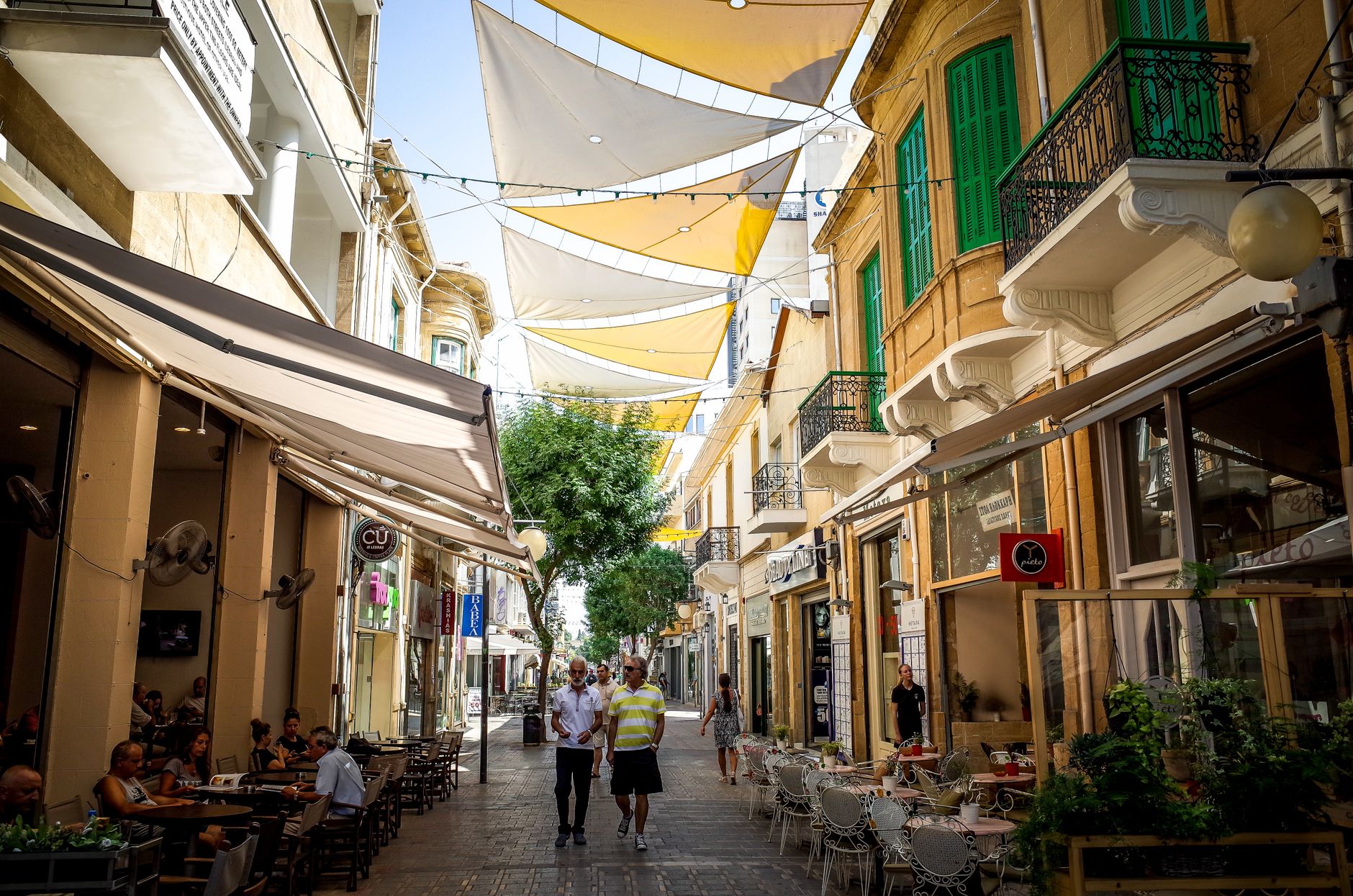
A vibrant pedestrian street in Nicosia, Cyprus, lined with historic architecture, outdoor cafes, and colorful overhead sunshades.
Krisztina Papp on Pexels · Pexels License
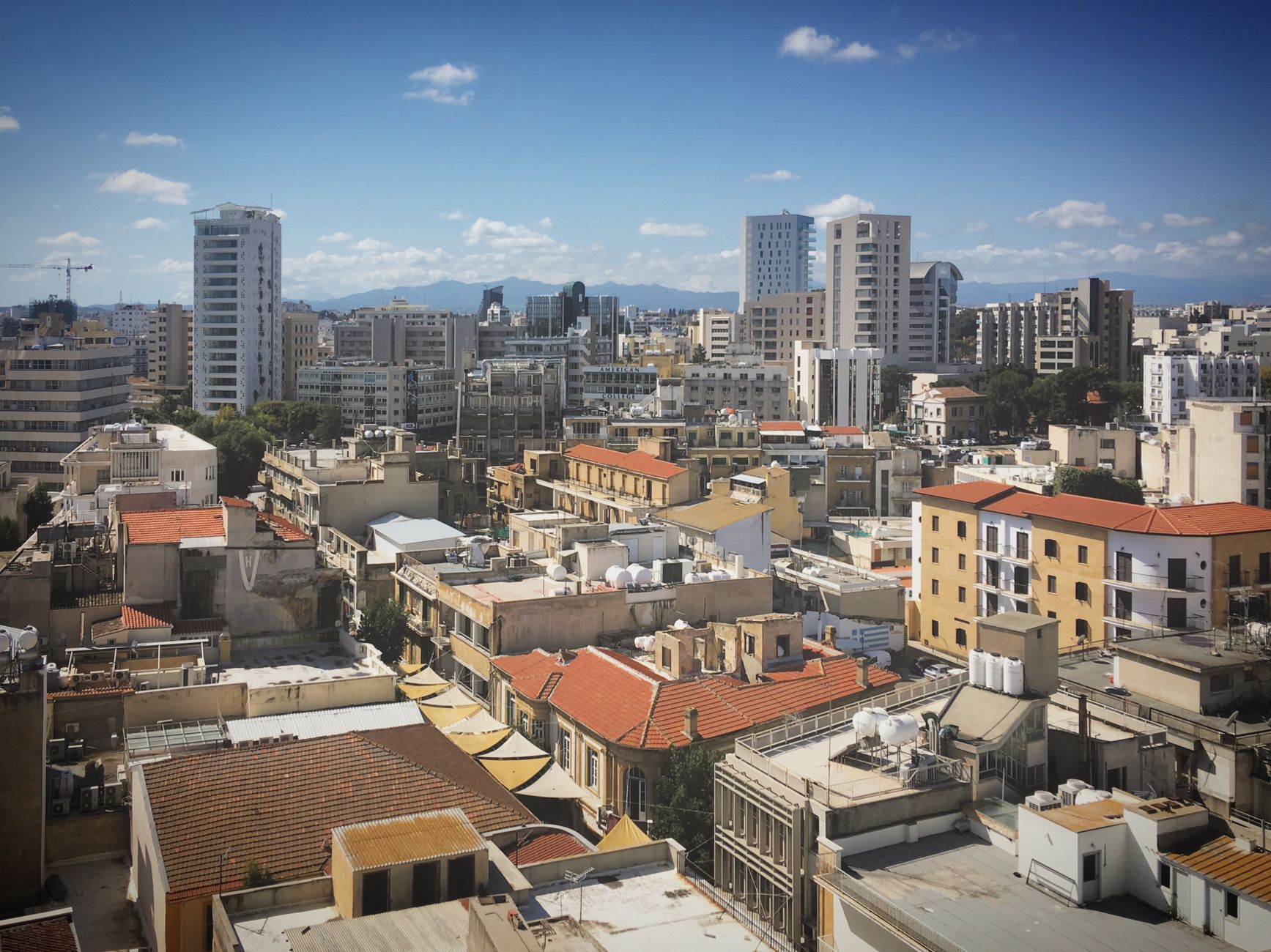
An elevated perspective of Nicosia, Cyprus, capturing the contrast between traditional Mediterranean architecture and the city's modern skyline.
Sergei Gussev on Pexels · Pexels License
A charming, sun-drenched street in Nicosia, Cyprus, captures the relaxed atmosphere of a local cafe nestled among historic stone buildings.
Seref on Pexels · Pexels License
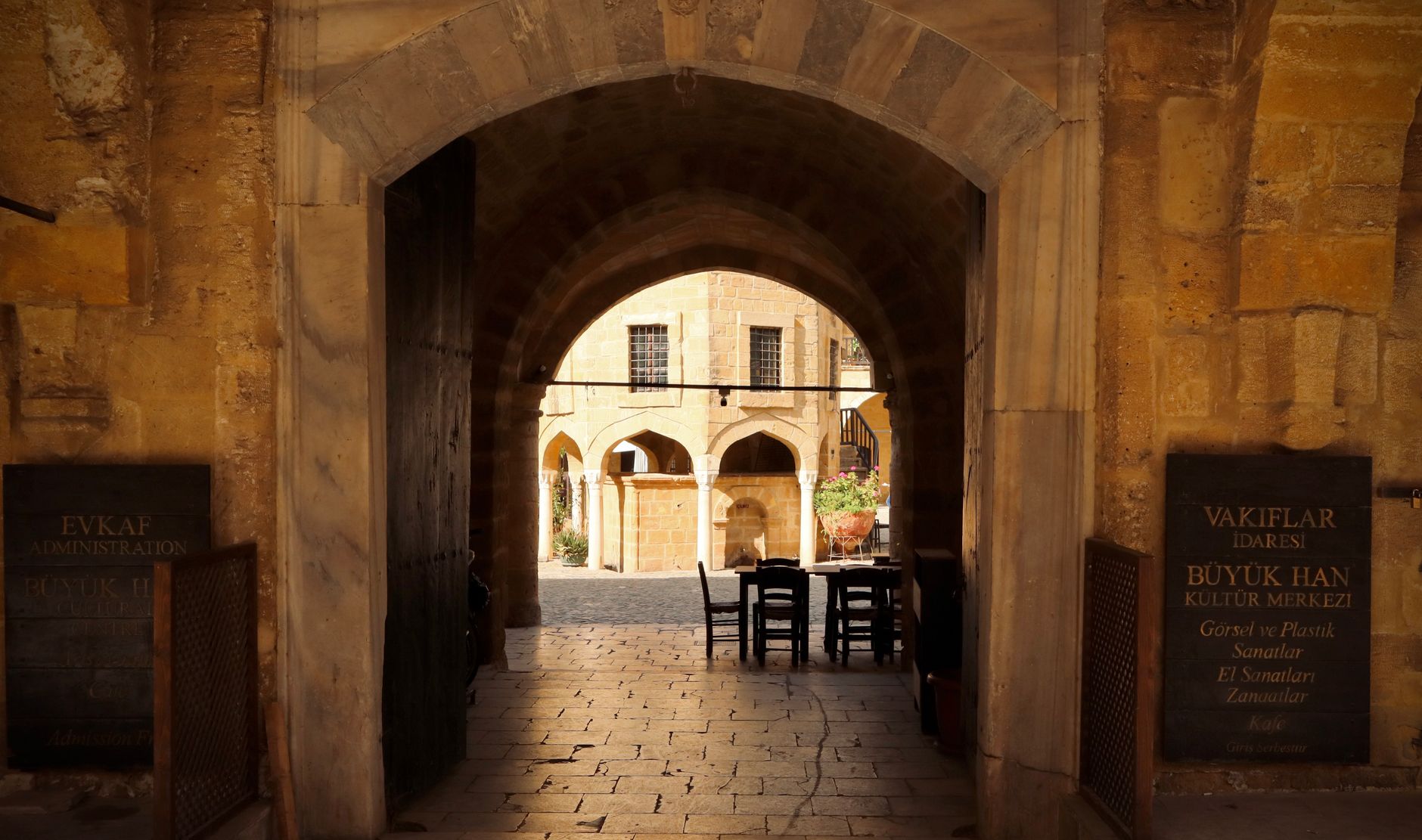
The historic stone archway of Büyük Han in Nicosia, Cyprus, frames a sunlit courtyard filled with traditional architecture and quiet cafe seating.
Seref on Pexels · Pexels License
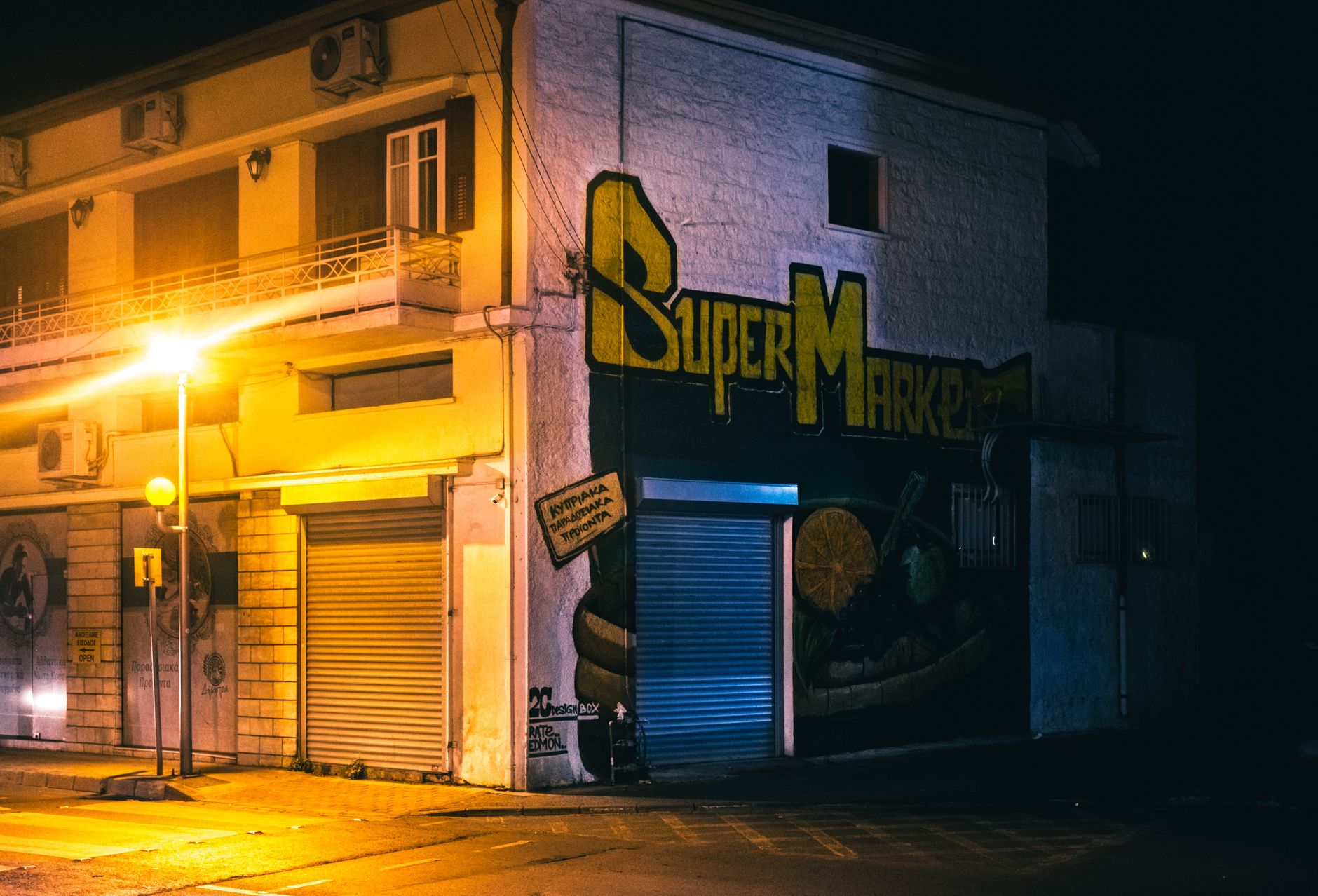
A tranquil night view of a local shop in Nicosia, Cyprus, illuminated by the warm glow of street lamps against a dark, quiet urban backdrop.
Igor Starkov on Pexels · Pexels License
The decaying facade of a former optical shop stands as a silent witness to the history of Nicosia, Cyprus.
Melih Akkus on Pexels · Pexels License
A picturesque view of historic stone buildings and traditional storefronts along a quiet, sun-drenched street in Nicosia, Cyprus.
Hert Niks on Pexels · Pexels License
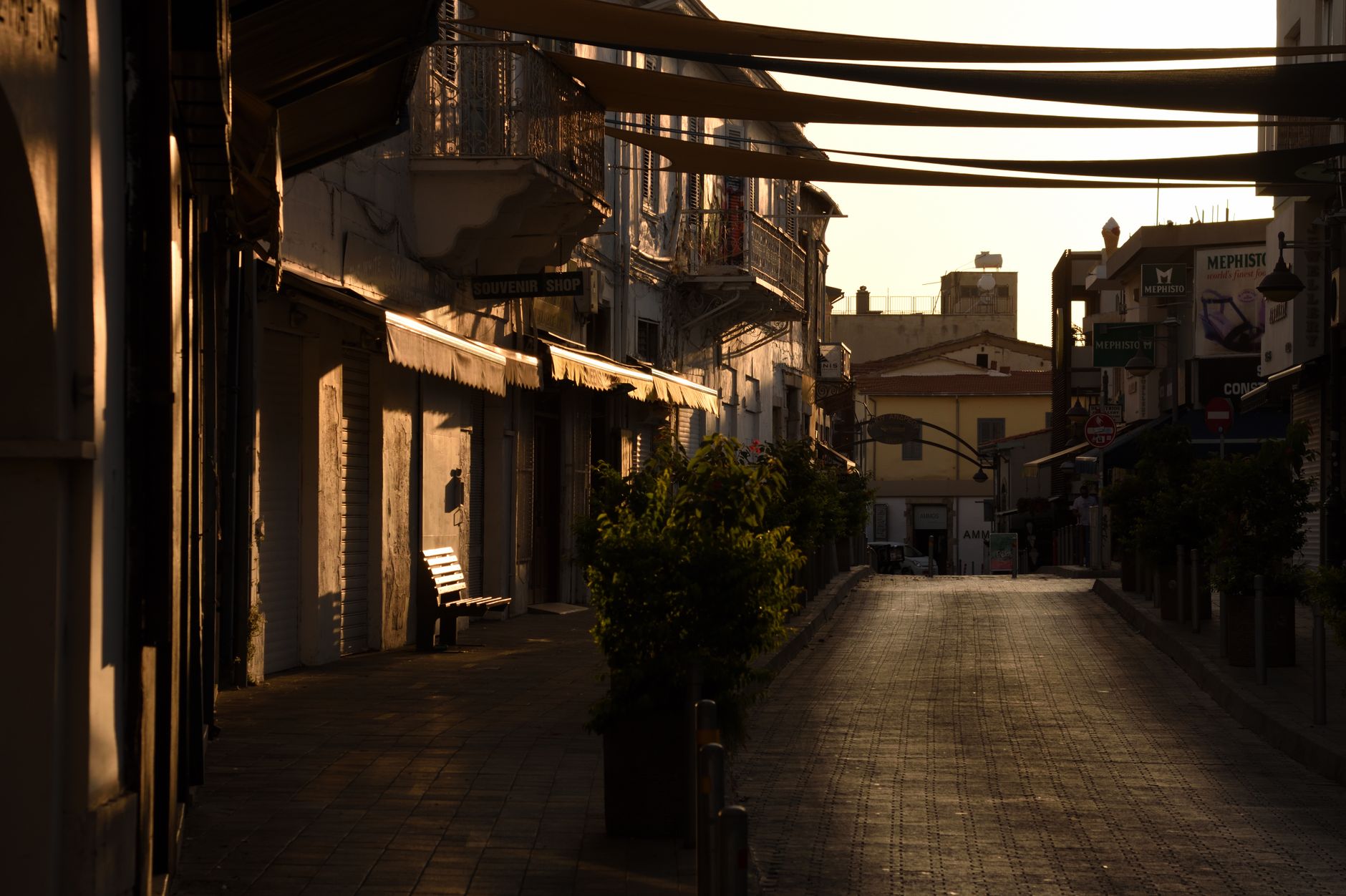
The warm glow of the setting sun illuminates a peaceful, narrow street in Nicosia, Cyprus, highlighting the historic architecture and quiet atmosphere.
Arndt-Peter Bergfeld on Pexels · Pexels License
A charming street scene in Nicosia, Cyprus, featuring a vintage light blue scooter parked outside a creative studio with rustic architecture.
BilimBirYerde Ayşem Kaya on Pexels · Pexels License
Practical Information
Getting There
Fly into Larnaca International Airport (LCA) 50 km south; OSEA InterCity buses reach Solomos Square in Nicosia every 30–60 min for €7–9. Paphos (PFO) is 140 km away but doable if you rent a car and take the A6/A1 motorways. Do NOT use Ercan (ECN) in the north—Republic of Cyprus classifies arrival there as illegal entry.
Getting Around
No metro, no tram—Nicosia is bus-only in 2026. Urban lines hub at Solomos Square; single tickets €1.50, day pass ~€5. The Old City inside the Venetian walls is walkable end-to-end in 20 min. Shared service taxis between towns cost ~€15–20 per seat; Bolt operates for metered rides.
Climate & Best Time
Spring (Apr–May) 24–30 °C days, 20 mm rain; ideal for walking the walls. Summer (Jun–Aug) spikes to 40 °C—explore 07:00–11:00 or after 18:00. Autumn (Oct) still 28 °C but only 25 mm rain. Winter (Dec–Feb) 15–17 °C and 70 mm monthly; cheapest hotels, quiet museums.
Language & Currency
Greek in the south, Turkish in the north—English spoken fluently on both sides. Euros south; Turkish lira north, though euros are accepted at poor rates. Carry cash for market stalls; cards work everywhere else.
Tips for Visitors
Cross the Green Line
Keep your passport in your pocket and walk across Ledra Street into the north—Büyük Han’s Ottoman courtyard is ten minutes away and the coffee’s better.
Skip Ledra Strip
Restaurants on the main pedestrian drag cater to cruise crowds; duck one block south to Onasagorou for mezze at local prices.
Golden Hour at Walls
The 16th-century Venetian walls glow at sunset; start at Famagusta Gate and walk the moat park for photos without tourists.
Sunday Souvla Ritual
Families fire up souvla spits after 11 a.m.; if you’re invited, arrive hungry and stay three hours—anything less is rude.
No Tipping Needed
Service is built into the bill; rounding up a euro is plenty, and staff won’t chase you for it.
Summer Siesta
Shops close 1–4 p.m. in July–August; plan morning museum runs and late dinners after the mercury drops.
Explore the city with a personal guide in your pocket
Your Personal Curator, in Your Pocket.
Audio guides for 1,100+ cities across 96 countries. History, stories, and local insight — offline ready.
Audiala App
Available on iOS & Android
Join 50k+ Curators
Frequently Asked
Is Nicosia worth visiting? add
Yes—it's the world’s only divided capital. You can breakfast on Greek coffee, lunch on Turkish mezze, and be back for dinner without ever showing a visa. The walled Old City packs 4,500 years into 5 km.
How many days in Nicosia? add
Two full days cover the museums, both sides of the Green Line, and a village lunch in the Troodos foothills. Add a third if you want a proper hammam session or a wine-festival evening.
Can you walk across the border? add
Yes—pedestrian crossings at Ledra Street and Ledra Palace require only an ID or passport. You get stamped out of the Republic and into the Turkish north in under two minutes.
Is Nicosia safe at night? add
Extremely. Both sides of the city rank among Europe’s lowest crime rates. Locals linger over coffee until midnight; the biggest risk is over-ordering mezze.
How do I get from Larnaca airport to Nicosia? add
InterCity Bus 45 runs every 30–60 min, €9, 50 min to Solomos Square. A metered taxi is €45–55; Bolt works too if you have data on arrival.
Do I need cash? add
Cards are accepted almost everywhere, but carry a few €5 notes for bakeries and backgammon cafés—some still write orders in pencil and don’t do plastic.
What’s the best souvenir? add
Buy halloumi from the Bandabulya market north side; it’s vacuum-sealed for travel and tastes nothing like the supermarket version. Lace from Lefkara village if you’re heading south afterwards.
Sources
- verified TripAdvisor Nicosia Attractions & Tours — Live reviews, tour ratings, and up-to-date prices for Segway tours and north-side day trips.
- verified World Travel & Tourism Council Nicosia guide — Architectural details on Eleftheria Square, Famagusta Gate, Archbishop’s Palace complex.
- verified Cyprus Intercity Buses — Official timetables and fares Larnaca Airport–Nicosia.
Last reviewed: