Havana
Cuba Updated Apr 2026
The first thing that hits you in Havana isn’t the heat—it’s the sound. A trumpet solo spills from a third-floor balcony while a 1953 Chevy backfires below, and somewhere a santería bell rings through the salt air. Cuba’s capital doesn’t ask permission; it simply starts playing, and you realize the whole city is an instrument that’s been warming up for five centuries.
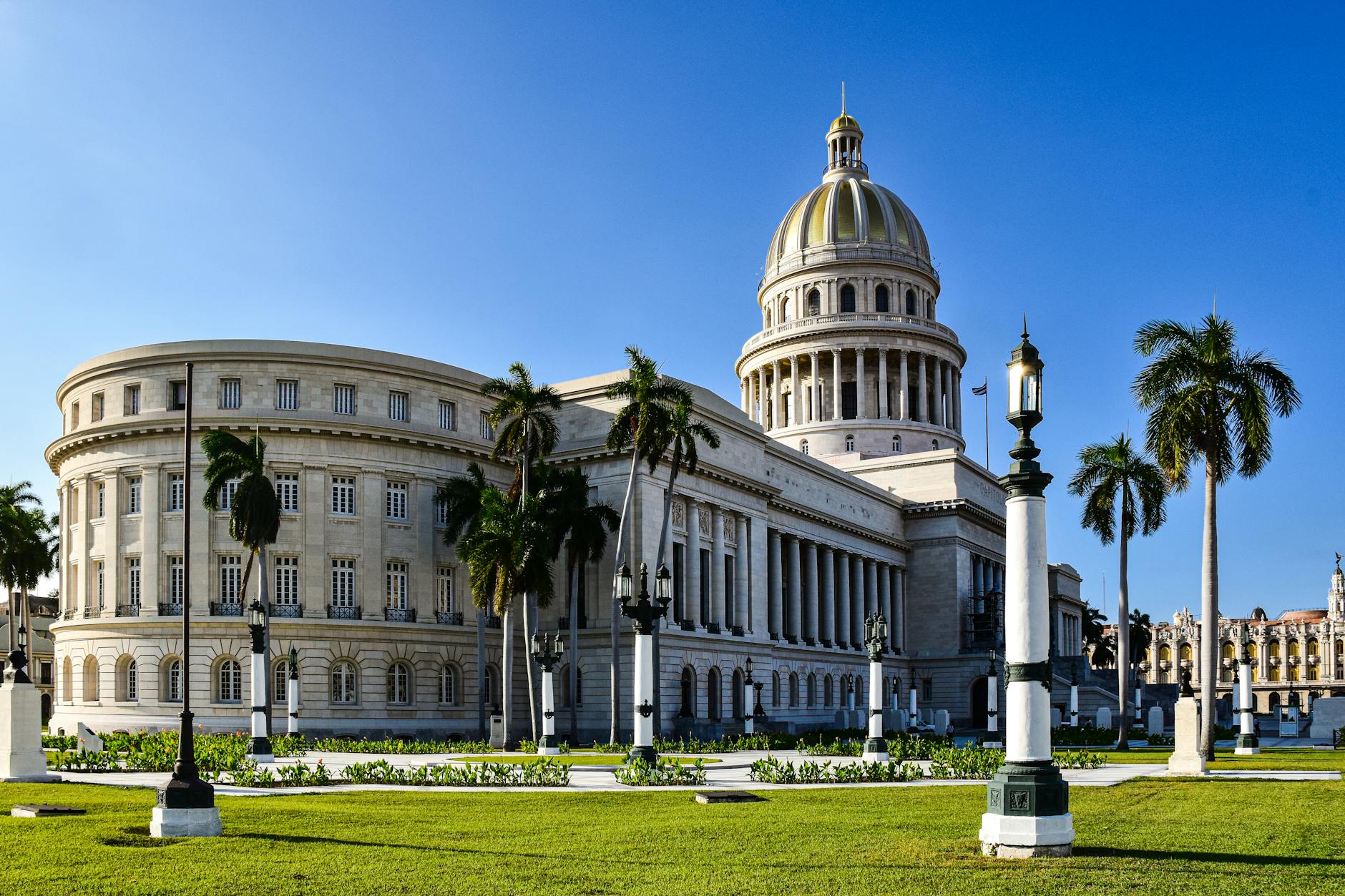 Photo: AXP Photography / Pexels
- Attractions
- 35
- Audio
- 3 h 48 min
- Trip length
- 3–5 days
- Best season
- March–mid-April
Why Havana
Built from cited sources · see the method · How we make our guides →
Walk three blocks and the score changes. One moment you’re tracing 18th-century cobbles past the Palacio de los Capitanes Generales, its limestone glowing like bone in the 4 p.m. light; the next you’re in Centro Habana, where laundry lines cross five-meter gaps and a peso pizza man flips dough hotter than the sun. The architecture is a timeline you can touch: Baroque portals worn smooth by pirate-era shoulders, Art Deco bacardí tiles still cobalt against the sea, and 1950s mansions in Miramar whose marble foyers now house three-generation families.
Havana rewards the nose as much as the eyes. Stand on the Malecón at sunset: the Atlantic hurls spray over the seawall, diesel mixes with cigar smoke, and someone’s grandmother fries plantains in palm oil that drifts like perfume. Money here is a double currency, but the real exchange rate is measured in conversation—porters who once studied engineering, taxi drivers quoting Hemingway, ballet dancers earning more guiding tourists to Fábrica de Arte than performing at the Gran Teatro. Stay long enough and the city’s greatest monument reveals itself: a stubborn talent for improvising elegance out of scarcity, a daily rehearsal that never quite ends.
Fábrica de Arte Cubano
A former cooking-oil plant turned into a warehouse of live art, DJ sets, and film at Calle 26 #1035. Doors open at 8 pm; arrive before ten or the queue snakes around the block.Art Deco Bacardí
The 1930 Edificio Bacardí rises 47 m on Avenida de las Misiones; ride the original brass-cage lift to the mirador for a 360° view of the harbour and the cracked mosaic of rooftops.Paladar Culture
Private restaurants operate out of living rooms and 1950s garages—try the ropa vieja at San Cristóbal (San Rafael #469) where Obama dined in 2016 and the tiles still show cigar burns.Bosque de La Habana
A 30-hectare riverside forest ten minutes west of Vedado; locals leave coconut offerings under ceiba trees while herons skim the Almendares at sunset.
Neighborhoods
Where to wander, by quarter — each with its own rhythm.
Habana Vieja
The grid that Spanish galleons once circled is still the pulsing heart. Plaza de Armas smells of second-hand books and royal palms; Plaza Vieja rings with espresso cups at 9 a.m. Expect to lose hours inside the 1772 Palacio del Segundo Cabo’s new cultural center, then surface for a 5-peso ice cream on Calle Obispo while salsa leaks from the 1920s radio at El Floridita.Centro Habana
No postcards here—just noise, color, and the city’s most honest kitchen vents. Walk San Rafael market at 11 a.m. when butchers shout prices over reggaeton; duck into Casa de la Música for Tuesday matinee salsa cheaper than a bottle of water back home. The building fronts peel like sunburn, but inside you’ll find hand-pulled noodles at Los Mercaderes and rooftop bars lit by bare bulbs.Vedado
Built on a 19th-century garden-city plan, its wide avenues feel almost sleepy—until night falls. Hotel Nacional’s lawn still shows 1940s machine-gun posts; order a daiquiri and you’re drinking where Meyer Lansky once counted receipts. Calle 23 packs student theaters, clandestine craft breweries, and midnight jazz at La Zorra y el Cuervo where the cover is 5 CUC and the bass line is priceless.Miramar
Mansions the size of embassies—because many are—line Fifth Avenue under banyan shade. Post-1959 they turned into diplomatic compounds and ballet schools; today you’ll find Casa Vera’s green ceramic façade hosting invitation-only art salons and the city’s only proper sushi counter. The sea wall here is quieter than the Malecón; locals fish for barracuda at dawn while joggers trace cracks where tree roots have lifted the sidewalk 20 cm.Regla
A ten-cent ferry ride across the bay drops you into a working-class dock where the Virgin of Regla—syncretized with Yemayá—receives offerings of honey and watermelon. The church interior is dim, candle-heavy; outside, diesel locomotives from the 1970s still shunt sugar cars. Come on September 7 to see thousands dressed in white and blue, drums crossing the harbor as flotillas of flowers float behind them.Jaimanitas (Fusterlandia)
Artist José Fuster began tiling his house in 1975 and didn’t stop until the entire block shimmered like a broken kaleidoscope. Mosaic benches tell Santería parables; a 30-meter dragon arches over rooftops. Kids sell paper cones of peanuts for a peso while grandmothers watch from pastel porches unchanged since 1958. It’s fifteen minutes past Miramar but feels like falling into someone’s bright, obsessive dream.Alamar
Soviet-style prefab blocks stacked on a coral ridge east of the city. Built for factory workers in the 1970s, it’s now a hip-hop nursery and agricultural experiment: front-yard organopónicos grow lettuce for hotel restaurants. Sunday’s open-air market sells guava by the kilo and bootleg reggaeton DVDs; the 50-cent bus from Parque Central drops you amid kids playing baseball with taped broom handles.
Plan your trip
Before you go
- Getting There
- José Martí International Airport (HAV) has three passenger terminals; T3 handles most long-haul flights. No rail link exists; the Vía Blanca highway (A4) feeds straight into Centro Habana in 25 min by taxi.
- Getting Around
- Havana has no metro. Public buses (guaguas) cost 5 CUP but are packed; tourists default to classic-car taxis (negotiate 500–800 CUP for Vedado–Old Town). The Lanchita de Regla ferry shuttles pedestrians across the bay every 20 min for 2 CUP.
- Climate & Best Time
- Dry season runs December–May: 17–28 °C, <50 mm rain monthly. Hurricane season peaks September–October (humidity 80 %, 180 mm rain). Visit March–mid-April for steady sun and lower hotel rates before European Easter rush.
- Language & Currency
- Spanish only outside hotels; learn numbers and directions. Cash is king—CUP notes in small denominations. Exchange Euros or USD at Cadeca kiosks; US-issued cards still won’t work in 2026.
- Safety
- Violent crime is rare, but pickpockets work crowded buses and the Malecón at dusk. Ignore jineteros offering cigars or ‘best paladar’—they earn 20 % kickbacks. Walk Plaza Vieja after midnight in groups.
A City That Refused to Behave
Havana’s five-century habit of rewriting the rules
- 1519
Spain Plants a Port
Conquistador Diego Velázquez orders the settlement moved from the swampy south coast to this deep, sheltered bay. The new town grid: 12 narrow blocks, two churches, one prison, no fresh water. A wooden dock goes up the same week; it will still be replaced every hurricane season for the next 300 years.
- 1558
Castle Rises from Coral
African masons slice living coral blocks at low tide and haul them up the hill. The Castillo de la Real Fuerza becomes the first stone fortress in the Americas, its tower offset so cannons can cover both harbor and town. Inside, the governor keeps a pet crocodile in the cistern.
- 1608
Fleet Capital of the Empire
Philip III decrees Havana the gathering point for the silver flota. Each spring, 60 galleons cram the bay like floating warehouses; taverns stay open until the priests ring the alarm bell for mass. The town’s population doubles overnight, then halves when the wind changes.
- 1762
British Storm the Walls
Admiral Pocock lands 2,800 redcoats under dawn fog; Morro castle falls after a 44-day siege. English officers billet themselves in the cathedral, hold horse races down Calle Oficios, and introduce cockfighting on Sundays. Eleven months later London swaps the city back for Florida, never having collected the customs duties.
- 1771
Cabaña Fortress Rises
Spain builds the largest colonial fort in the Americas across the bay—700 meters of wall, 120 cannon embrasures, a chapel painted the color of dried blood. Construction kills 400 soldiers and convicts; their bones are mixed into the mortar. From the ramparts you can still read ship names with a spyglass.
- 1819
Carlos Manuel de Céspedes
Born in a timber house on Calle de Paula, the boy who will free slaves before freeing the nation. He grows up listening to ships’ bells and whispers of revolution in his father’s law office. At 49 he will ring the Yara bell himself.
Show the full timeline (22 moments)
- 1853
José Martí
A frail, fierce-eyed child delivered at 41 Paula Street. Before he turns 17 the colonial police exile him to quarries in San Lázaro for writing a letter deemed treasonous. Havana teaches him that words can be weapons; he will carry that lesson to every battlefield.
- 1868
Cry of Yara Ignites War
Céspedes frees his own slaves and declares rebellion from a sugar mill 500 km east, but Havana feels the tremor: patrols triple, theaters close, black flags hang from balconies. The Ten Years’ War will kill one in ten Cubans and still leave Spain in control.
- 1895
Martí Killed at Dos Ríos
He rides into a Spanish ambush wearing his black frock coat, determined to see Havana liberated. The city he never reached again receives his body under curfew, escorted by soldiers who whisper his poems. Bullet holes still scar the bronze plaque on the Malecón put up the following year.
- 1898
USS Maine Explodes
At 9:40 p.m. the battleship’s forward magazine detonates, killing 268 sailors. Havana wakes to a rain of debris and the smell of burnt coal. The US declares war within weeks; Spain loses an empire in 113 days.
- 1902
Republic Raised, Star-Spangled
The Cuban flag replaces the Spanish standard on Morro castle, but the Platt Amendment lets Washington intervene whenever it chooses. Havana celebrates with fireworks financed by American sugar barons who already own half the docks. The city’s first electric streetlights flicker on that same night.
- 1925
Celia Cruz
Born in the Santos Suárez quarter, she sells guava sweets to tram passengers to buy shoes for singing contests. The voice that will carry Afro-Cuba to every continent is first heard at the local Cybersión radio station at age 14. She leaves for exile in 1960 and never stops counting the city’s bridges.
- 1929
Capitolio Opens, Taller Than Rome’s
Dictator Gerardo Machado imports 8,000 tons of marble and a diamond-dust torch to top a dome 2 cm higher than the Pantheon’s. Inside, the Statue of the Republic stands 14.6 m tall—covered in 22-carat gold leaf paid for by a special lottery. Havana suddenly has a skyline.
- 1939
Hemingway Anchors at Cojímar
He docks Pilar at the little fishing village east of the bay and drinks rum with a mechanic named Gregorio Fuentes who will become Santiago. That winter he rents Finca Vigía, plants a tennis court, and starts typing at a stand-up desk made from an old Spanish door. The city learns to recognize the white-bearded man buying gin at the corner of Obispo y Compostela.
- 1953
Moncada Barracks Attack Fails
Fidel Castro leads 132 rebels against the second-largest garrison; 61 die in the first hour. At his trial inside the old Piar school he delivers “History Will Absolve Me,” smuggled out on cigarette papers. The speech sells 50,000 underground copies in Havana within a month.
- 1959
Batista Flees at Dawn
The dictator’s private DC-4 lifts off from Rancho Boyeros at 3:15 a.m. with 40 suitcases and the national gold reserve. By sunrise crowds pour onto the Malecón waving palm fronds; a milk-truck loudspeaker announces the revolution’s arrival. The city smells of diesel and uncut sugar cane.
- 1962
Missile Silos in the Citrus Groves
Soviet R-12 rockets roll into San Cristóbal province under tarpaulin and mango branches. Havana residents practice blackout drills; movie theaters show cartoons on how to build basement shelters. Kennedy and Khrushchev bargain while the city holds its breath for 13 days.
- 1982
UNESCO Seals Old Havana
The agency declares the core 214 hectares a World Heritage site, citing “the most impressive set of colonial fortifications in the Caribbean.” Restoration starts block by block; masons mix lime mortar the 18th-century way because cement traps salt and crumbles. Residents trade ration cards for paintbrushes.
- 1997
Buena Vista Social Club
Ry Cooder drags a portable studio into EGREM’s weather-worn building on San Miguel Street. The resulting album sells eight million copies and puts Compay Segundo’s guayabera on every dorm-room wall. Havana realizes its grandparents’ music is suddenly worth more than state salaries.
- 2020
Eusebio Leal Dies
The city’s historian-in-chief, who walked every alley with a cane and quoted Martí by heart, succumbs to cancer at 77. Under his stubborn eye 35% of Habana Vieja was rescued from collapse, one colonnade at a time. Flags drop to half-mast; even taxi drivers honk in rhythm to a funeral march.
- 2021
Private Shops Legal Again
The government licenses 2,000 small businesses in three weeks—ice-cream parlors, shoe-repair kiosks, bike-rental shacks. Calle Obispo turns into a queue of neon signs hung beside 1950s vitrolas. For the first time since 1968, a teenager can legally sell you a café cubano from his front door.
- c. 8000 BCE
First Canoe Beachheads
Stone-age voyagers from the Orinoco delta beach logs, light fires and stay. Shell middens at Playa de Guanabo show they ate queen conch the size of dinner plates. Their descendants will still be here when the Spanish arrive.
Who lived here
-
Novelist · 1899–1961
Ernest Hemingway
Lived at Finca Vigía 1939–1960
He wrote ‘The Old Man and the Sea’ in a bedroom that still smells of cedar and dog-eared bullfight programs. Walk the fishing village of Cojímar at dusk and you’ll hear the same slapping waves that inspired him—only the Daiquiris are stronger now.
-
Singer · 1925–2003
Celia Cruz
Born in Santos Suárez neighbourhood
Before she became the Queen of Salsa, Celia sang lullabies to her eleven siblings in a tiny wooden house on Calle Catorce. Today taxi drivers blast ‘La Vida es un Carnaval’ at the same spot; the echo off cracked balconies feels like she’s still warming up backstage.
-
City Historian · 1942–2020
Eusebio Leal
Directed Old Havana restoration 1967–2020
He salvaged Plaza Vieja from a parking lot and turned rubble into boutique hotels using UNESCO cash and sheer charm. Without his daily walks with clipboard in hand, half the pastel façades you photograph would have collapsed into pigeon nests.
-
Poet & Revolutionary · 1853–1895
José Martí
Born on Paula Street, Habana Vieja
His childhood schoolroom is now a museum where guides recite verses kids still chant in playgrounds. Martí died in battle before seeing free Cuba, but every Havana park keeps a white marble bust watching the future he imagined.
-
Prima Ballerina · 1920–2019
Alicia Alonso
Founded Ballet Nacional de Cuba, Havana
She danced Giselle on a Havana stage half-blind, counting steps by muscle memory and orchestra breath. The Gran Teatro now carries her name; step inside and the gilt balconies still lean forward the way she used to listen for tempo.
-
Crime Writer · born 1955
Leonardo Padura
Born and still lives in Mantilla
His detective Mario Conde trudges through Centro Habana smelling fried onion and damp colonial stone—routes you can retrace at twilight. Padura claims the city’s real mystery is how everyday Habaneros keep laughing; buy him a beer at Bodeguita and he’ll prove it.
Where to Eat
Where locals actually book dinner — not the tourist menus.
Insider tips
Small things that change how the city treats you.
Cash Only
Bring euros or dollars in small notes; US cards don’t work and ATMs often run dry. Exchange at Cadeca booths, never on the street.Haggle Before You Ride
Classic-car taxis have no meters—agree the fare in advance. A 15-min ride between Habana Vieja and Vedado should be 500–700 CUP.Beat the Heat
Sight-see before 11 a.m.; July–August hits 32 °C with stifling humidity. March–mid-April gives you 25 °C days and breezy evenings.Ask Before You Shoot
Locals often expect a 50–100 CUP tip if you photograph them, especially cigar rollers or santería drummers in Callejón de Hamel.Paladar Rule
State restaurants charge tourist prices; family-run paladares serve better food for half the cost—look for hand-written menus in CUP.Jinetero Alert
Friendly strangers offering “cheap cigars” or “secret bars” usually earn a commission. Politely decline and keep walking.
Gallery
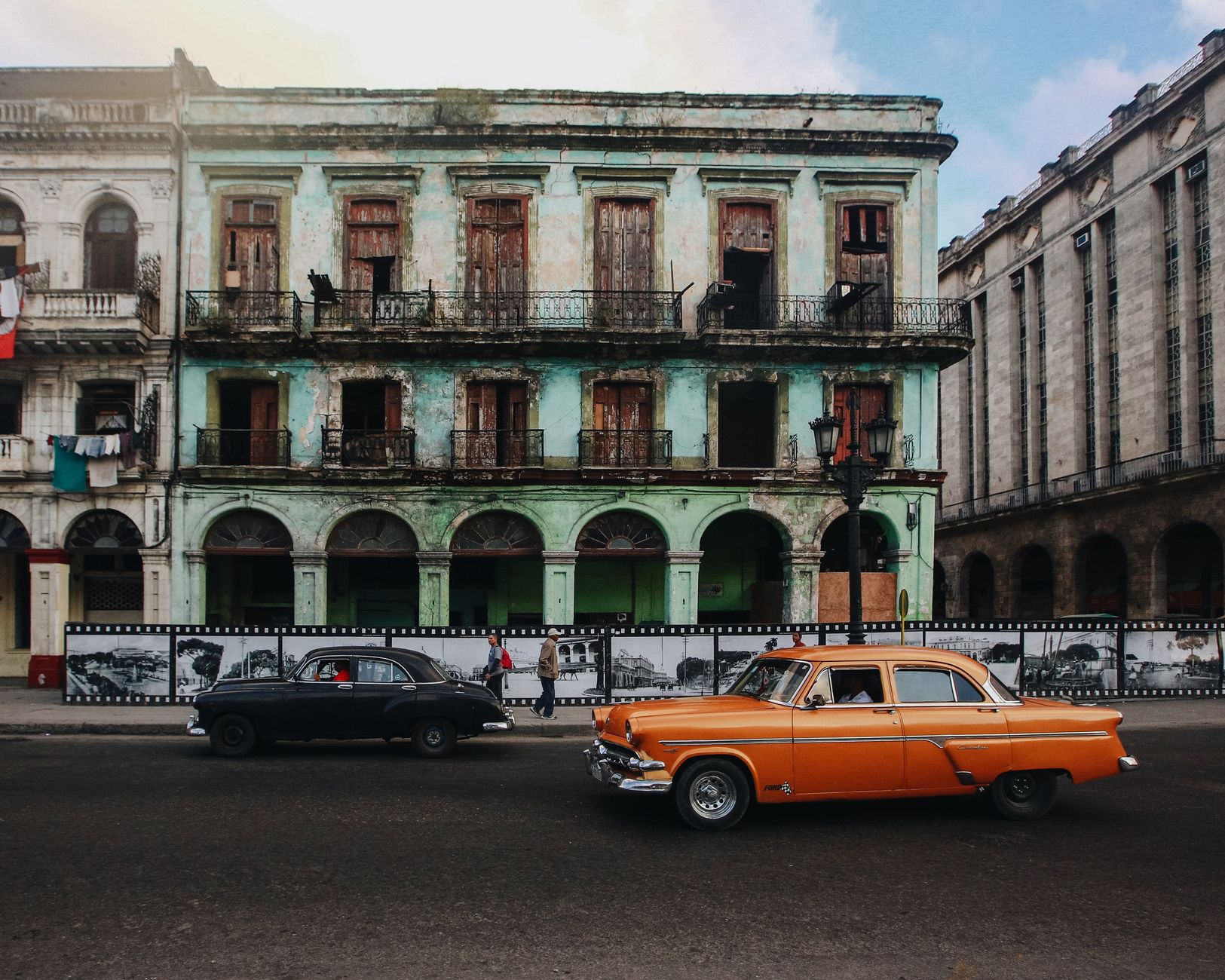
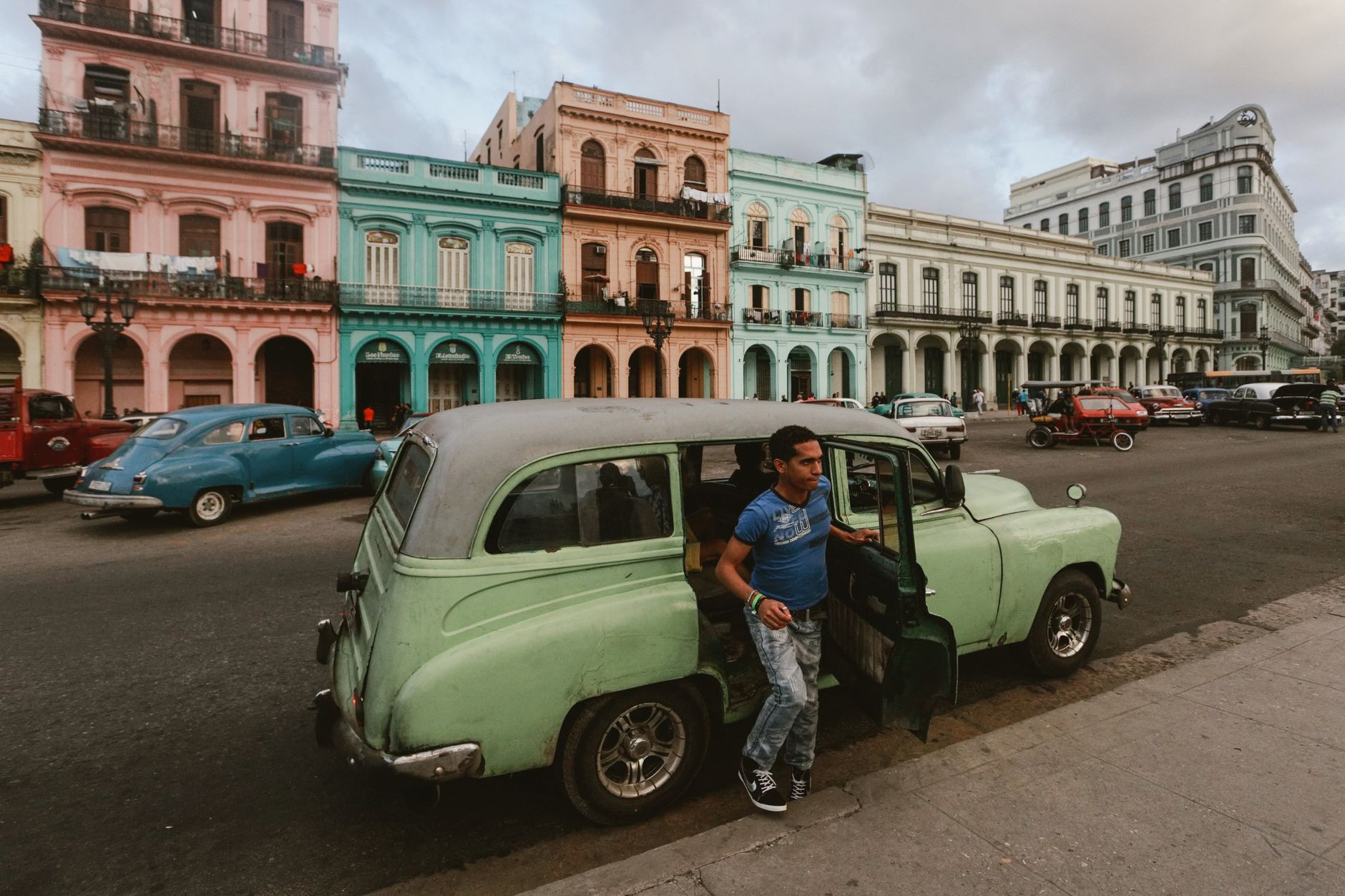
The city, as it actually looks.




Frequently asked
Is Havana worth visiting?
Yes—its layered 500-year architecture, live music on every corner and time-warp transport exist nowhere else. Expect friction (cash queues, patchy Wi-Fi) but the sensory payoff is huge.
How many days in Havana?
Three full days lets you cover Habana Vieja, Vedado nightlife, a cabaret and Hemingway’s house. Add two more if you want day-trips to Viñales or Trinidad.
Is Havana safe for solo female travellers?
Violent crime is rare; petty theft and unwanted attention happen after dark. Stick to main streets, take registered taxis and you’ll walk freely by day.
Can I use credit cards in Havana?
No—US-issued cards are blocked everywhere, European cards work in fewer than 10 % of hotels. Bring enough cash for your entire stay.
What’s the cheapest way from the airport to the city?
Official taxi—25–30 USD fixed fare, 25 min. Public buses exist but skip them with luggage; touts inside the terminal will overcharge.
When is hurricane season?
June–November, peaking September–October. Dry season December–May gives clear skies and lower humidity—book then for rooftop sunsets without storms.
Pick up where you left off
Saved and recently read places — kept on this device only.
Photo credits (9)
- AXP Photography — Pexels License (https://www.pexels.com/license/) — Source: https://www.pexels.com/photo/16534398/
- Vika Glitter — Pexels License (https://www.pexels.com/license/) — Source: https://www.pexels.com/photo/16010375/
- Mehmet Turgut Kirkgoz — Pexels License (https://www.pexels.com/license/) — Source: https://www.pexels.com/photo/11355768/
- Mehmet Turgut Kirkgoz — Pexels License (https://www.pexels.com/license/) — Source: https://www.pexels.com/photo/11800239/
- Mehmet Turgut Kirkgoz — Pexels License (https://www.pexels.com/license/) — Source: https://www.pexels.com/photo/16808318/
- Mehmet Turgut Kirkgoz — Pexels License (https://www.pexels.com/license/) — Source: https://www.pexels.com/photo/11267203/
- AXP Photography — Pexels License (https://www.pexels.com/license/) — Source: https://www.pexels.com/photo/16716970/
- Mehmet Turgut Kirkgoz — Pexels License (https://www.pexels.com/license/) — Source: https://www.pexels.com/photo/18374342/
- Mike The Fabrica — Pexels License (https://www.pexels.com/license/) — Source: https://www.pexels.com/photo/27378940/
Photos may have been resized or cropped.