Plan and listen to Ban Jelačić Square with Audiala.
Audio guide in your pocket, itinerary in your browser. Built for the way you actually visit.
Introduction to Ban Josip Jelačić Square
Discover the heart of Zagreb through the lens of Ban Josip Jelačić Square, a historical and cultural landmark that stands as a testament to Croatia's rich heritage. Named after the revered Croatian nobleman and military leader Josip Jelačić, the square is not just a bustling hub of activity but also a symbol of national pride and historical significance (Zagreb Tourist Board). Whether you're a history buff or a curious traveler, understanding the legacy of Josip Jelačić offers a deeper appreciation for the cultural fabric of Zagreb and Croatia as a whole.



Historical Background of Ban Josip Jelačić (1801-1859)
Early Life and Education
Josip Jelačić was born on October 16, 1801, in the town of Petrovaradin, now part of Serbia. He hailed from a noble Croatian family with a long military tradition. His father, Franjo Jelačić, was a high-ranking officer in the Austrian army, which influenced Josip's early inclination toward a military career. Jelačić received his education at the Theresian Military Academy in Wiener Neustadt, Austria, where he excelled in his studies and demonstrated strong leadership qualities (Croatian History).
Military Career and Rise to Prominence
Jelačić's military career began in earnest in 1819 when he joined the Austrian army. He quickly rose through the ranks due to his strategic acumen and bravery in various military engagements. By 1841, he had achieved the rank of colonel and was stationed in various parts of the Austrian Empire, including Italy and Hungary. His reputation as a capable and loyal officer caught the attention of the Austrian Emperor, Ferdinand I, who appointed him as the Ban (Viceroy) of Croatia in 1848 (Encyclopedia Britannica).
Role in the Revolutions of 1848
The year 1848 was a tumultuous period in European history, marked by widespread revolutionary movements. In Croatia, Jelačić played a crucial role in navigating the complex political landscape. Upon his appointment as Ban, he immediately took steps to assert Croatian autonomy within the Habsburg Monarchy. He convened the Croatian Parliament (Sabor) and advocated for the abolition of serfdom, the establishment of a Croatian national army, and the unification of Croatian territories (History Today).
Jelačić's most significant contribution during this period was his military campaign against the Hungarian revolutionaries. The Hungarian government had declared independence from the Austrian Empire, and Jelačić was tasked with quelling the rebellion. He led a Croatian army into Hungary and played a pivotal role in the Battle of Pákozd on September 29, 1848. Although the battle was inconclusive, it marked the beginning of a series of engagements that eventually led to the defeat of the Hungarian forces (Military History).
Administrative Reforms and Nationalism
As Ban, Jelačić implemented several administrative reforms aimed at modernizing Croatia and strengthening its national identity. He established the Croatian National Guard and reformed the judicial system to ensure greater fairness and efficiency. Jelačić also promoted the use of the Croatian language in official documents and education, which was a significant step towards cultural and national unification (Croatian National Archives).
Jelačić's efforts to promote Croatian nationalism were not without controversy. His policies often put him at odds with both the Hungarian authorities and the central Austrian government. However, his popularity among the Croatian people remained high, and he is credited with laying the groundwork for the eventual establishment of an independent Croatian state (National Geographic).
Legacy and Commemoration
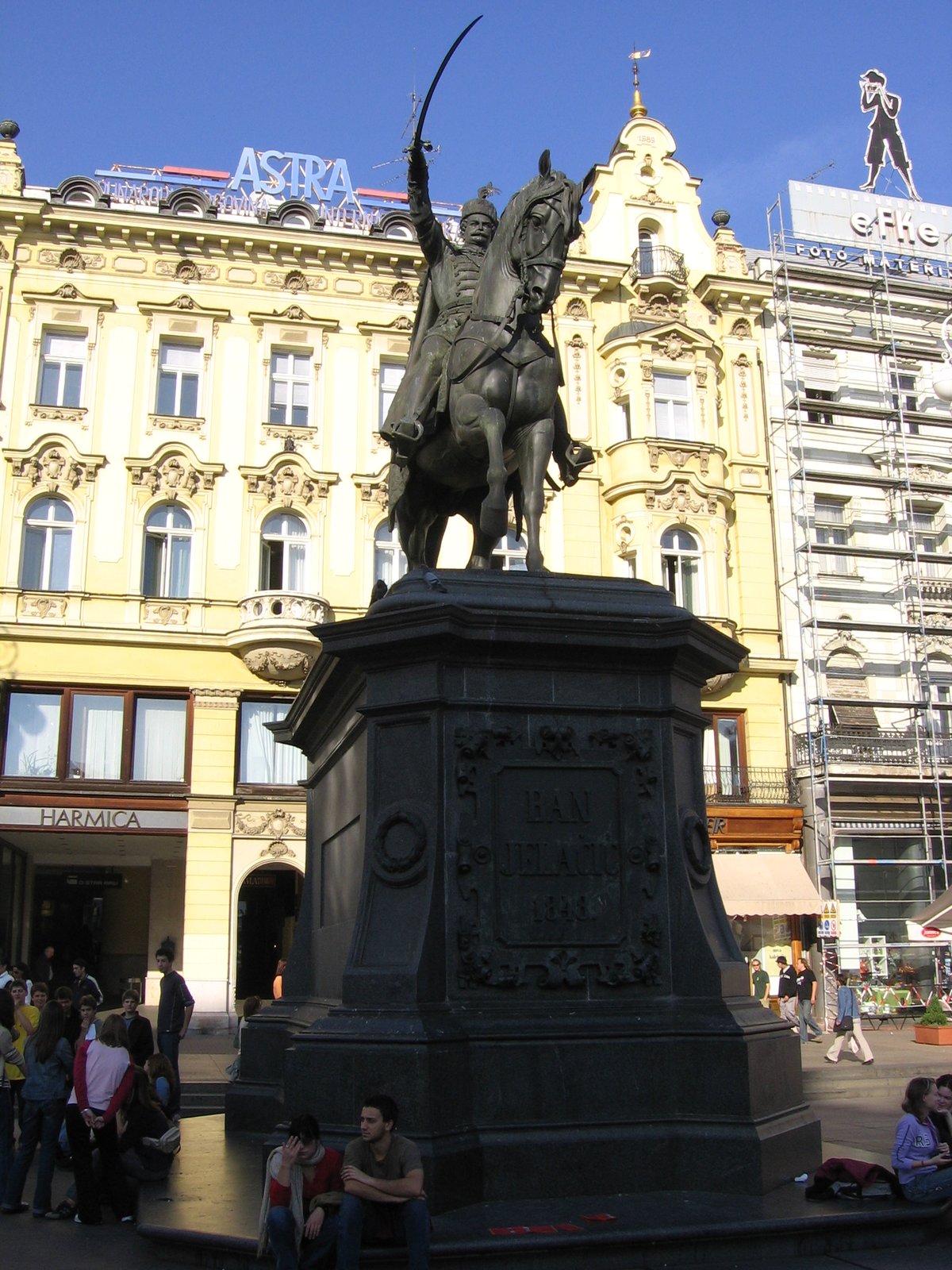
Josip Jelačić's legacy is deeply ingrained in Croatian national consciousness. After his death on May 20, 1859, he was buried in the family crypt in Zaprešić, near Zagreb. His contributions to Croatian autonomy and national identity have been commemorated in various ways. The most prominent tribute is the Ban Jelačić Square in Zagreb, which features an equestrian statue of Jelačić. The square is a central gathering place in the city and a symbol of Croatian pride (Zagreb Tourist Board).
In addition to the square, numerous streets, schools, and institutions across Croatia bear Jelačić's name. His life and achievements are also a subject of study in Croatian history curricula, ensuring that future generations understand his role in shaping the nation's history (Croatian Academy of Sciences and Arts).
Historical Controversies
Despite his celebrated status, Jelačić's legacy is not without its controversies. Some historians argue that his actions during the 1848 revolutions were driven more by loyalty to the Habsburg Monarchy than by a genuine desire for Croatian independence. Critics point to his suppression of the Hungarian revolutionaries as evidence of his commitment to maintaining the status quo rather than pursuing radical change (Historical Journal).
Moreover, Jelačić's relationship with other South Slavic nations was complex. While he advocated for Croatian autonomy, his vision did not always align with the aspirations of neighboring Serbs and Slovenes. This has led to debates about his role in the broader context of South Slavic nationalism and the eventual formation of Yugoslavia (Balkan Studies).
Visitor Information
Visiting Hours
Ban Josip Jelačić Square is open to visitors 24 hours a day, seven days a week. However, the best time to visit is during daylight hours to fully appreciate the statue and the vibrant atmosphere of the square.
Ticket Prices
There is no admission fee to visit Ban Josip Jelačić Square. The square is a public space and can be accessed freely at any time.
Accessibility
The square is wheelchair accessible and has ample seating areas. Public transportation options, such as trams and buses, make it easy to reach the square from various parts of Zagreb.
Travel Tips and Nearby Attractions
Travel Tips
- Weather: Check the weather forecast before your visit to ensure a comfortable experience. Zagreb experiences a continental climate, with hot summers and cold winters.
- Local Cuisine: Don't miss out on trying traditional Croatian dishes at nearby restaurants. Popular options include štrukli, a type of pastry, and peka, a slow-cooked meat and vegetable dish.
Nearby Attractions
- Zagreb Cathedral: Just a short walk from Ban Josip Jelačić Square, this iconic cathedral is a must-see for its stunning architecture and historical significance.
- Dolac Market: Located nearby, this vibrant market offers a variety of fresh produce, local delicacies, and souvenirs.
- Tkalčićeva Street: Known for its lively atmosphere, this street is lined with cafes, bars, and shops, making it a great place to relax and people-watch.
FAQ
What are Ban Josip Jelačić's visiting hours?
Ban Josip Jelačić Square is open 24/7, allowing visitors to explore at any time of the day.
Where can I buy tickets for Ban Josip Jelačić Square?
There are no tickets required as the square is a public space with free access.
What is the historical significance of Ban Josip Jelačić?
Ban Josip Jelačić is celebrated for his military prowess, administrative reforms, and efforts to promote Croatian national identity. His legacy is commemorated through various monuments, including the equestrian statue in Ban Jelačić Square.
Tickets & tours.
These are guided options from our partners — same price as booking direct.
Prices are indicative — final pricing and availability are confirmed at checkout. Audiala may earn a commission from bookings made through these links.
Listen to the full story in the app
The whole Ban Jelačić Square,
told well.
Listen to sourced travel stories with local history and practical context — ready offline.
Verified, and shown.
Researched and written by the Audiala editorial team from historical records, architectural archives, and local expertise.
Built from cited sources · see the method · How we make our guides →