Zadar
Croatia Verified Apr 2026
You hear the Adriatic before you see it. Beneath marble steps, thirty-five polyethylene pipes translate wave pressure into shifting chords that drift across the promenade at dusk. Travelers come to Zadar, Croatia, to listen to this conversation between stone and sea, proving that ancient cities don’t need to choose between preservation and play.
 Photo: DeLuca G / Pexels
- Attractions
- 12
- Trip length
- 3-4 days
- Best season
- May or September
Why Zadar
Built from cited sources · see the method · How we make our guides →
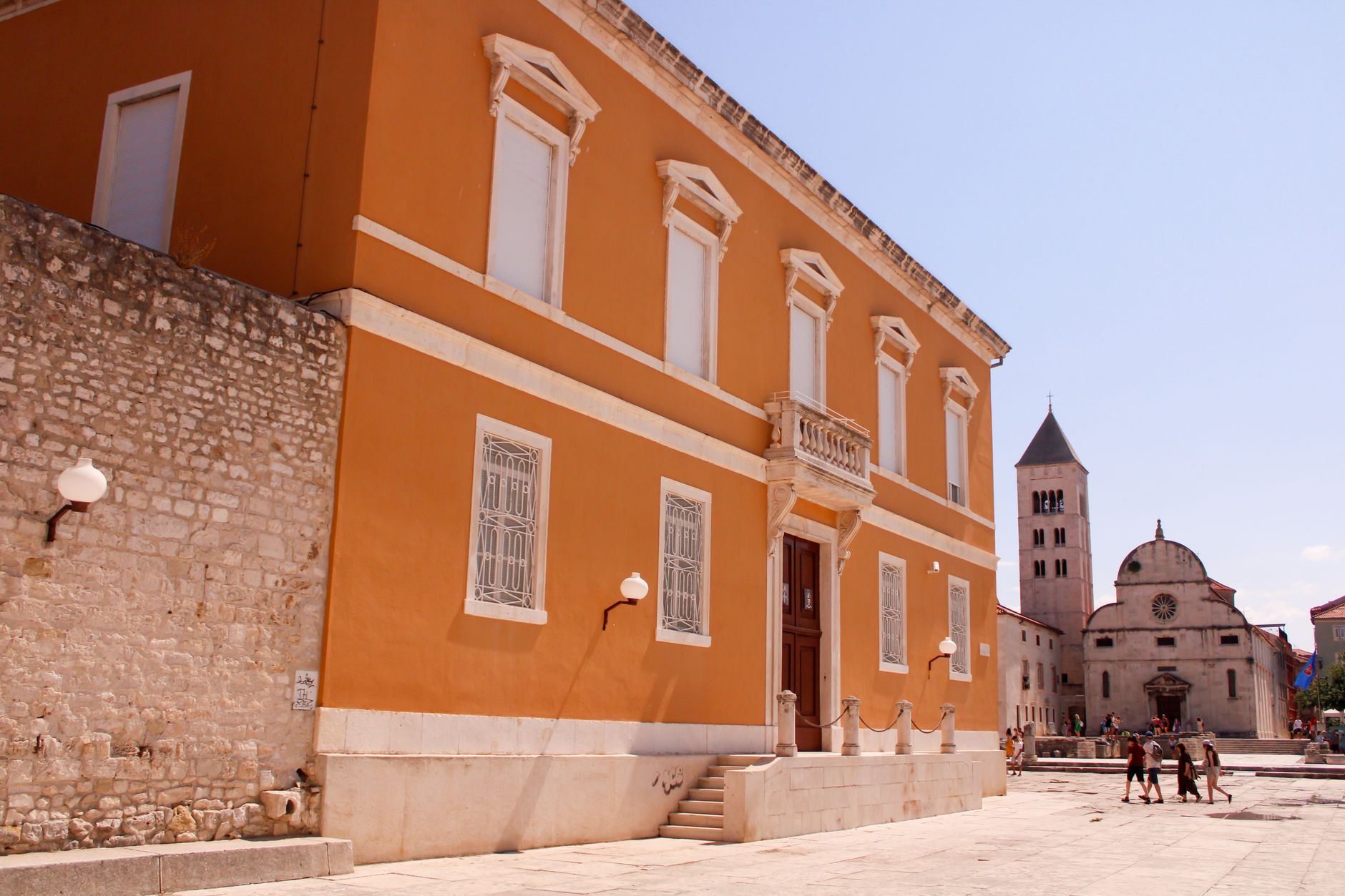
The peninsula compresses three millennia into a ten-minute walk. Augustus commissioned the Roman Forum between the first century BC and third century AD, leaving limestone stumps and a carved altar to anchor the square. The ninth-century Church of St. Donatus rises beside it, a circular pre-Romanesque drum where summer recitals use the stone acoustics to amplify Gregorian chants.
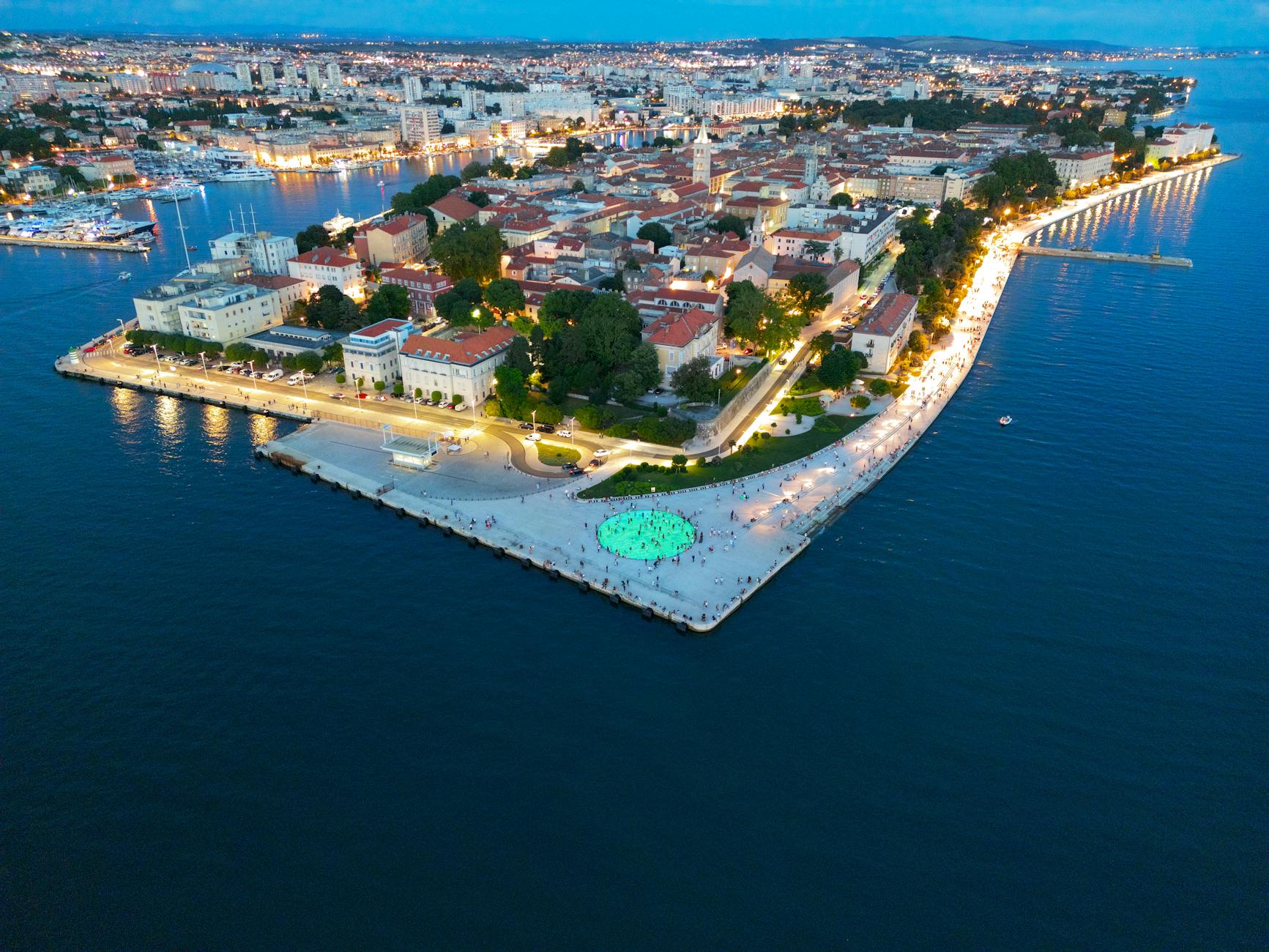
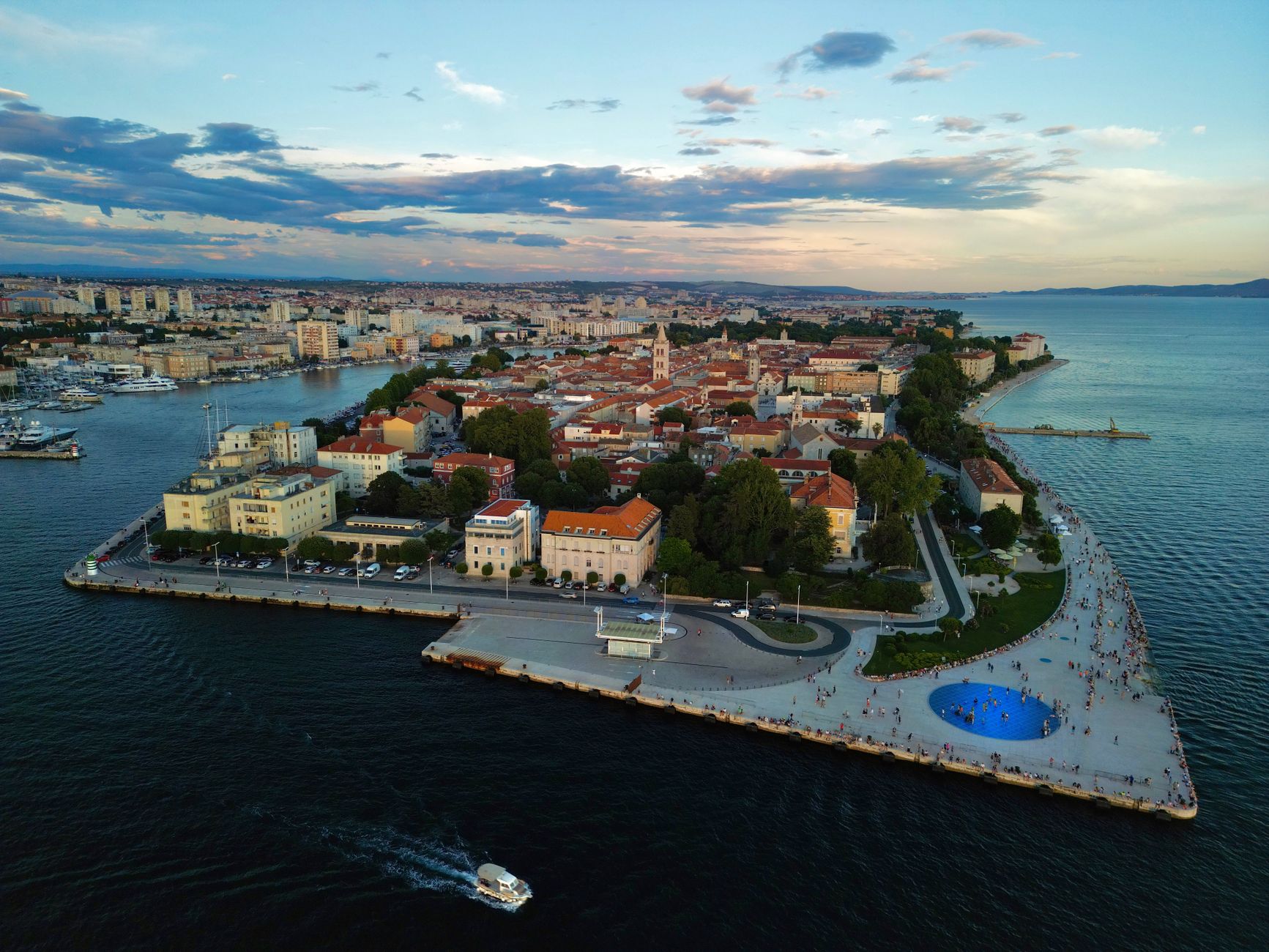
Contemporary architects refused to treat this waterfront as a museum diorama. Nikola Bašić embedded a twenty-two-meter solar disc of layered glass into the concrete. Locals measure forty minutes over a single espresso while the tide shifts pitch on the stone steps.
The city’s rhythm bends toward slow observation. You will notice how Venetian Gothic palaces share wall space with 19th-century Austro-Hungarian facades, each layer patched with local limestone. Skip the midday rush and return after dark, when the heat breaks and the promenade fills with residents walking dogs, trading gossip, and watching the water.
Roman and Venetian Layers
The 1st-century BC Roman Forum shares its stone pavement with the 9th-century pre-Romanesque rotunda of St. Donatus. Walking from the Forum’s remaining columns to the Land Gate’s 1543 Renaissance arch traces three empires in under five minutes.The Waterfront Soundscape
Architect Nikola Bašić carved 35 polyethylene pipes beneath the Riva’s stone steps to turn Adriatic swells into harmonic chords. The adjacent 22-meter Greeting to the Sun converts stored daylight into a pulsing floor mosaic after dusk.The Kalelarga and Morning Markets
This marble-paved main street follows the exact line of the ancient Roman decumanus, flanked by Venetian Gothic palaces and Baroque doorways. Two blocks north, the Ribarnica fills with fishmongers and olive oil producers before noon, offering a raw look at Dalmatian supply chains.
Neighborhoods
Where to wander, by quarter — each with its own rhythm.
Poluotek (Old Town Peninsula)
The entire quarter operates as a car-free archaeological site. You walk the ancient decumanus line along Kalelarga, passing Venetian Gothic facades and rusted brass door handles. Fig trees drop heavy shade onto quiet courtyards.Varoš
Cross the western land gate and the pavement softens into residential streets. Family-run konobe serve black risotto to neighbors who have known the owners since childhood. Evening crowds gather for acoustic sets that spill onto stone steps past midnight.The Riva & Waterfront
This linear promenade connects the historic core to the ferry terminal. Stone terraces descend directly into the water. They hide acoustic chambers that turn wave pressure into harmonic chords, while locals gather at the western edge as the glass photovoltaic circle powers the streetlights.Kolovare
Locals abandon the main beaches for this pebble stretch just outside the Venetian walls. Aleppo pines drop canopy onto the shoreline. The water cools by late afternoon, offering a quiet counterpoint to the peninsula’s daily cruise-ship schedule.
Plan your trip
Before you go
- Getting There
- Zadar Airport (ZAD) sits 12 kilometers southwest of the historic peninsula. Shuttle buses run 25-minute express routes for €4.50–€8.00. The 2026 Bolt and Uber fleet charges €10–€15 to the Old Town, while the main bus terminal handles FlixBus and Arriva connections to Split and Zagreb.
- Getting Around
- The Old Town operates as a fully pedestrianized peninsula, making walking the only practical way to reach major sights. Liburnija Zadar runs 11 municipal bus lines in 2026 with single fares at €1.50. Avoid cycling on coastal arteries, as dedicated lanes remain fragmented and local traffic moves unpredictably.
- Climate & Best Time
- Summer peaks at 29°C with July averaging just 35 millimeters of rain, while winter settles into a damp 4–11°C range. The Adriatic reaches a comfortable 25°C by August, but September and May offer the ideal balance of swimmable water and mild heat. Accommodation rates drop 20–40 percent below the July peak during those shoulder months.
- Language & Currency
- Croatia runs on the Euro, and card payments dominate restaurants, though cash remains mandatory for market vendors and regional bus tickets. English is widely spoken across hospitality and transport networks. Learning basic greetings like dobar dan and hvala smooths interactions at older family-run taverns.
A City Shaped by Tides and Empires
From Liburnian trading post to a living acoustic canvas
- c. 800 BCE
Liburnian Traders Claim the Peninsula
A rocky spit juts into the Adriatic. Illyrian seafarers claim it as Iader, carving out a trading post that outlasts empires. Salt wind and pine resin fill the air long before stone replaces timber.
- 48 BCE
Rome Grants Iader Municipal Status
Julius Caesar rewards the city's loyalty during civil wars by elevating it to a municipium. Roman engineers straighten the decumanus. Limestone pavement eventually becomes the Kalelarga.
- 27 BCE
Augustus Commissions the Adriatic Forum
The first emperor orders a grand public square paved with imported marble. Senators debate beneath newly raised columns. The ruins still hold the heat of summer stone.
- c. 800
Bishop Donatus Arrives from Constantinople
A pragmatic cleric lands on the peninsula with Byzantine architectural plans. He commissions a massive circular church, stacking local limestone into a towering rotunda. Greek rites blend with Latin traditions.
- 1181
Croatian Kings Assert Coastal Authority
Medieval monarchs push back against Venetian merchants, fortifying the harbor with new watchtowers. Trade routes shift inland. The city bridges Byzantine Greek and Western Latin traditions.
- 1202
Crusaders Breach the City Walls
Venetian ships and French knights storm the harbor. Fire gutters through wooden houses as defenders retreat behind inner stone gates. The sack funds the Fourth Crusade's march toward Constantinople.
Show the full timeline (21 moments)
- 1358
Hungarian Crown Claims Dalmatian Ports
King Louis I forces Venice to sign a treaty ceding the city after years of naval skirmishes. Croatian-Hungarian administrators take over the customs houses. The shift brings a brief era of relative stability.
- 1409
Venice Buys Dalmatia for Ducats
King Ladislaus of Naples sells his fading claims for 100,000 ducats. Merchants return to the waterfront. Venetian governors install new magistrates.
- 1508
Zoranić Chronicles the Dalmatian Coast
Born to a local merchant family, the young writer drafts pastoral tales in the Croatian vernacular. His manuscript captures the rugged Velebit mountains. The work waits decades for the printing press.
- 1543
Sanmicheli Designs the New Land Gate
The Venetian Republic hires a military architect to fortify the peninsula. He carves classical reliefs and lion statues into the limestone entrance. The gate becomes a defensive choke point.
- c. 1560
Star-Shaped Walls Encase the City
Laborers haul thousands of cubic meters of earth and stone. Angled bastions deflect cannon fire and reshape the urban perimeter. Zadar becomes the capital of Venetian Dalmatia.
- 1669
Fire Sweeps the Old Town
Dry winds carry sparks from a baker's oven into tightly packed wooden roofs. Flames race down narrow alleys, consuming centuries of accumulated manuscripts. Rebuilders switch to brick.
- 1805
French Troops March into Zadar
Napoleon's armies dissolve centuries of Venetian tradition overnight. French administrators rewrite property laws. The city trades silk merchants for uniformed clerks.
- 1806
The First Dalmatian Newspaper Debuts
Printers set type for Il Regio Dalmata. Journalists debate civic reform under French oversight. The ink stains the fingers of a new generation.
- 1819
Lisinski Composes the First Croatian Opera
A young prodigy trains in the city's conservatories before moving to Zagreb. He channels Dalmatian folk melodies into classical arrangements. His compositions echo across the Habsburg lands.
- 1920
Treaty of Rapallo Transfers the City
Post-war diplomats hand Zadar to the Kingdom of Italy. Authorities impose new street names and suppress the native language. The old town grows quiet.
- 1944
Allied Bombers Target the Harbor
Warplanes drop high-explosive ordnance on German supply lines. Eighty percent of the historic center turns to rubble. The dust settles on a shattered Roman Forum.
- 1946
Nikola Bašić Is Born in the Old Town
Raised among post-war reconstruction sites, the young architect studies urban planning. He draws inspiration from coastal tides. His designs eventually redefine the waterfront.
- 1991
Defenders Hold the Peninsula
JNA artillery shells rain down on the old town. Local volunteers dig trenches behind the Venetian walls and repel the assault. The city survives.
- 2005
Waves Power the Sea Organ
Architect Nikola Bašić installs polyethylene tubes beneath the concrete steps. Tidal currents push air through the chambers. Tourists sit on the stone, listening to the Adriatic play its own music.
- 2017
UNESCO Recognizes the Venetian Walls
International heritage officials formally protect the Land Gate and surrounding bastions. Conservators begin restoring eroded limestone. The inscription draws preservation grants to the coast.
Who lived here
-
Writer · 1508–1543
Petar Zoranić
Born and educated here
He watched Venetian galleys load in the harbor while drafting Planine, the first Croatian novel. His unfinished manuscript captured the tension between coastal commerce and inland wilderness, cementing Zadar’s place in Renaissance literature.
-
Architect · born 1946
Nikola Bašić
Designed the Sea Organ and Greeting to the Sun
He turned the city’s scarred post-war waterfront into an acoustic playground. By embedding polyethylene pipes beneath stone steps, he proved contemporary engineering could converse with Roman stone without overwhelming it.
Where to Eat
Where locals actually book dinner — not the tourist menus.
-
Black Risotto (Crni Rižot)
Cuttlefish ink stains Arborio rice a deep charcoal while slow-cooked fish stock and garlic build a rich, briny base. Order it at a waterfront konoba and watch locals eat it with a fork to preserve the firm grain texture.
-
Peka
Octopus, veal, or lamb slow-roasts under a heavy iron bell covered in hot embers for three hours. The trapped steam and woodsmoke tenderize the meat while rosemary and coastal potatoes absorb the rendered fats. Many family taverns require advance ordering because the baking cycle cannot be rushed.
-
Pag Island Cheese (Paški Sir)
This hard, salty cheese owes its distinctive herbal tang to wild sage and mineral-rich grasses grazed by sheep on the wind-battered island of Pag. Buy aged wheels at the Zadar Market or pair a slice with local honey and Debit white wine at a neighborhood bar.
-
Fresh Grilled Brancin (Sea Bass)
Local fishermen land brancin at the Ribarnica before dawn, and chefs typically grill it whole with nothing more than olive oil, sea salt, and a squeeze of lemon. Ask for the na lešo preparation if you prefer poached fish, which highlights the delicate sweetness of Adriatic catch.
-
Maraschino Liqueur
Distilled from the sour Marasca cherry grown exclusively in the Zadar hinterland and aged in ash wood barrels. The flavor profile balances bitter almond notes with a dry, clean finish, making it a traditional digestif after heavy seafood meals.
Insider tips
Small things that change how the city treats you.
Beat the Cruise Crowds
Arrive at the Roman Forum by 8 AM. Midday cruise ships flood the peninsula, making the Sea Organ steps impassable by 11.Walk, Don’t Drive
The Old Town peninsula is fully pedestrianized and flat. Renting a car for city exploration will only force you into expensive peripheral garages.Carry Cash for Markets
Cards work everywhere, but the morning Ribarnica fish market and island ferry kiosks require euros for small purchases.Wear Water Shoes
The Adriatic coastline is dominated by rocky shelves and concrete platforms. Smooth-soled sandals will leave you slipping during entry and exit.Skip the Riva Tourist Trap
The main promenade charges a steep markup. Walk two blocks inland along Obala Kralja Petra Krešimira IV for authentic dining at local prices.
Gallery
The city, as it actually looks.



Frequently asked
Is Zadar worth visiting?
Yes. It offers a quieter, more affordable alternative to Split and Dubrovnik, packing Roman ruins and contemporary waterfront art into a compact peninsula. The limited cruise traffic keeps the old town walkable and relaxed.
How many days in Zadar?
Three nights covers the essentials comfortably. This gives you one day for the Roman Forum and museums, a second for the Sea Organ and coastal walks, and a third for a ferry to Ugljan or a day trip to Paklenica.
How do I get from Zadar airport to the city center?
Take the official Pleso Prijevoz shuttle bus. It meets every arriving flight and reaches the historic center in 25 minutes for under €8. Taxis run €10 to €15, but verify the meter or use Bolt to avoid inflated rates.
Is it safe to walk around Zadar at night?
Extremely safe. Violent crime against visitors is virtually nonexistent, and the pedestrianized peninsula stays well-lit until late. Just guard your wallet near the main bus station and the crowded Pijaca market.
Do I need a car to explore Zadar and the coast?
No, unless you plan to drive deep into the inland canyons. Ferries and local buses handle island hops and park connections efficiently. Driving on narrow coastal roads with heavy summer traffic often causes more stress than it saves.
Pick up where you left off
Saved and recently read places — kept on this device only.
Photo credits (10)
- DeLuca G — Pexels License (https://www.pexels.com/license/) — Source: https://www.pexels.com/photo/17268875/
- DeLuca G — Pexels License (https://www.pexels.com/license/) — Source: https://www.pexels.com/photo/17218259/
- DeLuca G — Pexels License (https://www.pexels.com/license/) — Source: https://www.pexels.com/photo/17268870/
- DeLuca G — Pexels License (https://www.pexels.com/license/) — Source: https://www.pexels.com/photo/17268880/
- BAB2056 — Pexels License (https://www.pexels.com/license/) — Source: https://www.pexels.com/photo/13410239/
- DeLuca G — Pexels License (https://www.pexels.com/license/) — Source: https://www.pexels.com/photo/17268868/
- Marija Piliskic — Pexels License (https://www.pexels.com/license/) — Source: https://www.pexels.com/photo/33779853/
- Kristina Kutleša — Pexels License (https://www.pexels.com/license/) — Source: https://www.pexels.com/photo/31809400/
- Kristina Kutleša — Pexels License (https://www.pexels.com/license/) — Source: https://www.pexels.com/photo/31809382/
- Raymond Petrik — Pexels License (https://www.pexels.com/license/) — Source: https://www.pexels.com/photo/28608706/
Photos may have been resized or cropped.