Split
Croatia Updated Apr 2026
You will trip over a Roman column while reaching for your espresso cup. Split does not preserve its past behind glass; it uses antiquity as a backdrop for Tuesday groceries and evening strolls. The city of Split, Croatia, was built inside an emperor’s retirement villa, so every narrow alley and sudden plaza carries the weight of 1,700 years of continuous habitation.
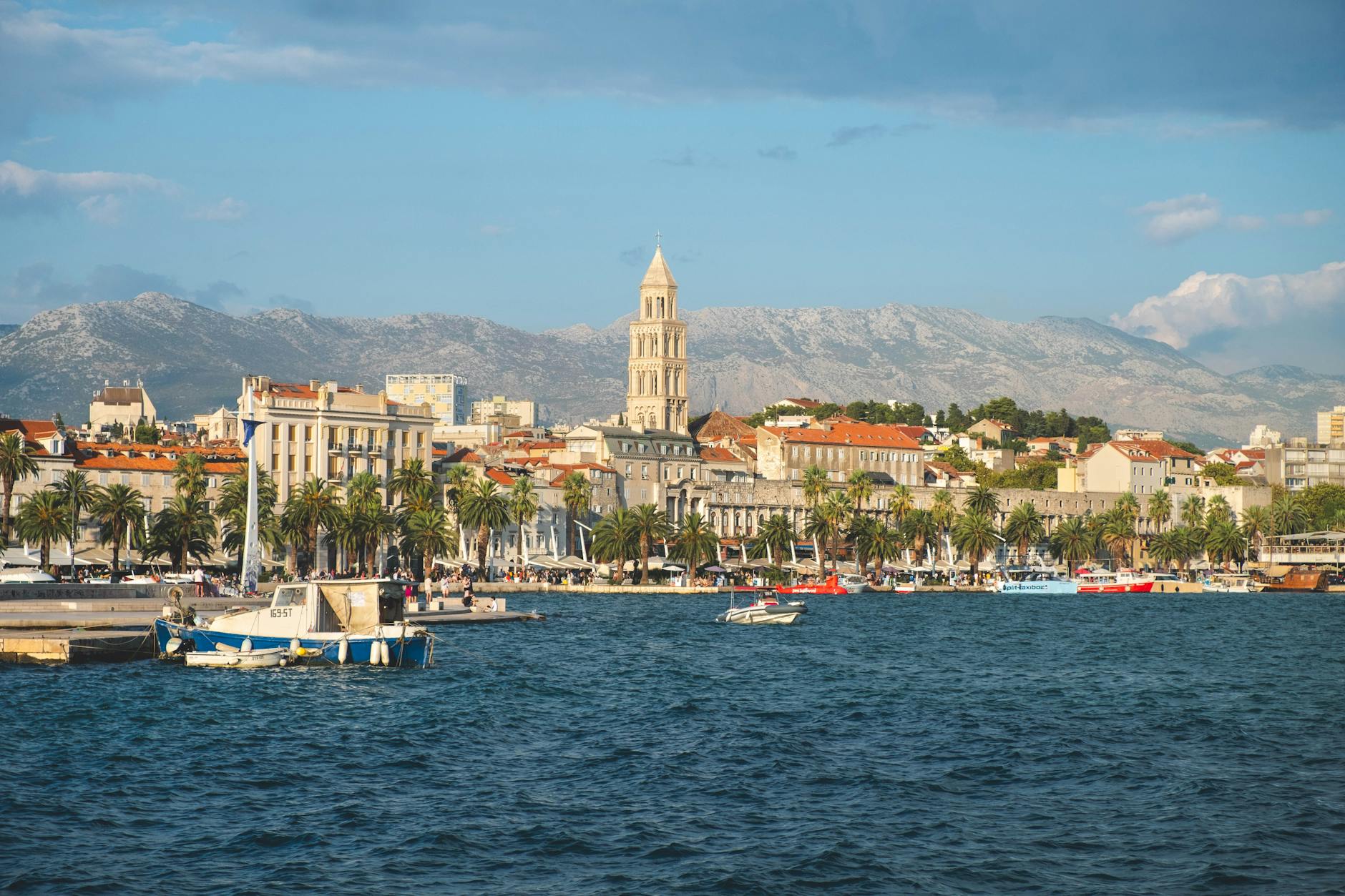 Photo: Jo Kassis / Pexels
- Attractions
- 12
- Trip length
- 3–4 days
- Best season
- May–June & Sept–Oct
Why Split
Built from cited sources · see the method · How we make our guides →
The so-called Diocletian’s Palace functions more like a densely packed neighborhood than a fenced monument. You can stand on the Peristyle and watch a wedding procession pass through a fourth-century colonnade, then duck into the Cathedral of Saint Domnius to hear footsteps echo off a floor that once held an imperial sarcophagus. The substructures rise 11 meters from the damp limestone floor, a ceiling height that matches a four-story apartment building, holding up the vanished residential quarters exactly as the original Roman engineers intended.
Step past the stone gates and the imperial scale gives way to Dalmatian rhythm. The Riva waterfront operates as a social ledger where locals measure the afternoon by the slow consumption of coffee and the occasional ferry horn cutting through the Adriatic haze.
This city refuses to stay neatly in one century. You will walk past a Venetian clock tower, squeeze through a tenth-century stone archway, and find yourself at a wine bar pouring a glass of Plavac Mali under a string of fairy lights. Split teaches you that history does not sit still when people keep living in it.
A Roman Emperor's Living Room
Diocletian’s retirement complex isn’t a fenced ruin. You’ll drink espresso where the Vestibule once echoed with imperial footsteps, then step into the Peristyle where Romanesque arches frame a cathedral built inside a 4th-century mausoleum.Pine-Scented Escape
Marjan Forest Park climbs 178 meters above the city. Follow the footpaths past 13th-century hermitages to viewpoints where the Adriatic stretches to the Brač Channel.Fish Markets and Morning Rituals
The early 20th-century Secession building housing the Peškarija fish market smells of brine and crushed ice before dawn. Vendors slice fresh sea bream while locals haggle for Dalmatian prosciutto at the neighboring Pazar.
Neighborhoods
Where to wander, by quarter — each with its own rhythm.
Diocletian’s Palace / Old Town
The Roman grid still dictates where you walk, even if the buildings now house bakeries and design studios. The Peristyle serves as the neighborhood’s main square, while the labyrinthine side streets reveal medieval doorways carved directly into ancient masonry.Varoš
Tucked just west of the palace walls, this former fishing quarter trades Roman symmetry for a tangled web of narrow stone lanes. The air here carries the smell of woodsmoke and slow-simmering stews from family-run konobas that survive on local patronage rather than tourist foot traffic.Marjan Hill
A forested peninsula that acts as the city’s green lung, dotted with thirteenth-century chapels and hiking paths carved into soft limestone. Marjan rises 178 meters above the harbor, a limestone spine taller than a 50-story residential block that breaks the coastal humidity with scented pine needles.Pjaca & Prokurative
Split’s civic heart shifted outside the Roman grid in the thirteenth century, leaving behind a patchwork of Venetian towers, Baroque facades, and a neo-Renaissance square built to host summer festivals. The Old Town Hall clock ticks above a plaza that fills with locals during the late afternoon spica ritual.Tržnica Backstreets
The commercial pulse of Split beats in the market alleys behind the Secession-style fish market, where vendors stack seasonal figs, local olive oils, and freshly caught Adriatic sardines. Walk through before noon to watch the city stock its kitchens before the tourist crowds arrive.Bačvice
A shallow, sandy bay where the water warms quickly enough for locals to play picigin, a traditional ball game played in ankle-deep surf. The beachfront transitions into a string of seasonal bars as the sun drops, keeping the shoreline active well past midnight.Meje & Meštrović Gallery
The western coast shifts toward early twentieth-century modernism, anchored by Ivan Meštrović’s villa-studio and its sprawling garden of bronze and marble figures. The promenade here offers a quieter, wind-swept perspective of the harbor away from the palace crowds.Sustipan
Perched on a western cliff, this park layers a nineteenth-century cemetery over the ruins of a medieval monastery to create one of the city’s most contemplative vantage points. The stone walls face directly into the open Adriatic, making it a favorite spot for evening walks and quiet reflection.
Plan your trip
Before you go
- Getting There
- Split Airport (SPU) sits 25 kilometers west in Kaštela. In 2026, Promet Split buses run directly to the central bus station for €2.00, taking 40 to 60 minutes depending on coastal traffic. Licensed taxis and pre-booked transfers cost €40–€50, while the main rail terminal on Trg Bana Josipa Jelačića offers limited daily service to Zagreb.
- Getting Around
- Split lacks a metro or tram network, so the Promet Split bus system handles daily transit. As of 2026, single rides cost a flat €2.00 and require validation via the official app or onboard electronic readers. Purchase 24-hour or 72-hour zone tickets to cover multiple stops, then walk the pedestrianized palace core to Jadrolinija ferry terminals.
- Climate & Best Time
- Spring and early autumn deliver reliable walking conditions, with April and October averaging 15–20°C and minimal rain. July and August push past 30°C, drawing peak crowds and turning the Riva into a dense promenade. Rainfall spikes from October through December, making May–June and September the optimal windows for 2026 travel.
- Language & Currency
- Croatia adopted the Euro (€) in January 2023, and the Kuna remains completely phased out for 2026 visitors. English works seamlessly in hospitality and transit, though a quick *dobar dan* smooths interactions at family-run konobas. Contactless card payments are standard across museums and cafes, but carry €10–€20 in cash for market stalls and island ferries.
A City Built Inside an Emperor's Dream
From Roman retirement palace to Adriatic crossroads
- c. 280 BCE
Greek Settlers Found Aspálathos
Illyrian tribes and Hellenic traders establish a modest trading post along a sheltered coastal inlet. The name likely derives from the local spiny broom that thrives on the rocky limestone slopes. This quiet harbor plants the first permanent roots on the peninsula.
- 293
Diocletian Commissions His Palace
Emperor Diocletian orders a fortified retirement complex spanning thirty hectares on the Dalmatian coast. Workers quarry white Brač limestone to raise walls twenty-five meters high and lay a precise grid of marble colonnades. The sheer scale of the project transforms a quiet shoreline into an imperial capital.
- 305
The Emperor Abdicates The Throne
After two decades of ruling the tetrarchy, Diocletian voluntarily steps down and retreats to his coastal fortress. He refuses offers to return to power when civil war erupts, preferring to tend his cabbage gardens in the palace courtyards. The complex quickly shifts from imperial residence to administrative garrison.
- 615
Avars Sack Salona; Refugees Flee
Nomadic Avar cavalry overruns the provincial capital just five kilometers north. Survivors flee south. They take shelter behind Diocletian’s intact defensive walls, turning abandoned imperial quarters into a densely packed medieval town.
- c. 700
Mausoleum Becomes Christian Cathedral
The city’s bishop consecrates Diocletian’s octagonal mausoleum. He strips pagan sarcophagi and erects a bell tower beside Roman columns. Saint Domnius becomes the patron protector. This architectural repurposing gives Europe one of its most unusual sacred spaces.
- 1102
Croatian Nobles Join Hungarian Crown
Local aristocrats sign the Pacta Conventa, binding Dalmatian coastal towns to the Kingdom of Hungary under a personal union. Split retains its communal statutes and elected podestà while paying tribute to the distant monarch. This arrangement secures decades of relative autonomy against Venetian naval pressure.
Show the full timeline (19 moments)
- c. 1200
Thomas The Archdeacon Arrives
Born in Split around the turn of the century, this cleric rises to lead the city’s cathedral chapter and document its turbulent past. His Historia Salonitana preserves the only continuous chronicle of early Dalmatian history. Without his meticulous copying of older charters, much of the city’s medieval identity would be lost.
- 1420
Venetian Republic Conquers Coast
Venetian galleys breach the harbor defenses. Decades of intermittent sieges finally end. Doge Tommaso Mocenigo appoints a provveditore to oversee trade and naval logistics from the palace gates, while Venetian Gothic palaces rise alongside Roman ruins.
- 1450
Marko Marulić Is Born
A local merchant family welcomes a son who will eventually write Judita, widely considered the first major work of Croatian vernacular literature. Marulić studies law and medicine while quietly composing poetry that blends Renaissance humanism with local dialects. His manuscripts circulate through Adriatic trading networks, planting the seeds of a national literary tradition.
- 1537
Ottoman Advance Closes Hinterland
Ottoman forces capture Klis Fortress, severing Split’s direct land routes to inland Croatia and Bosnia. The city transforms into a heavily fortified border outpost, relying entirely on Venetian supply ships and coastal trade. Stone watchtowers and reinforced bastions sprout along the perimeter as the frontier hardens.
- 1822
Antonio Bajamonti Begins Modernization
Born into a prominent local family, this physician and mayor spends three decades reshaping the medieval city into a modern port. He drains marshes, plants trees along the new Riva promenade, and funds the first public library and theater. His infrastructure projects quietly prepare Split for an industrial future.
- 1860
Croatian National Revival Takes Root
Intellectuals and merchants push back against Italian administrative dominance, demanding Croatian language instruction and civic representation. Printing presses begin publishing local newspapers in the vernacular, while reading societies gather in palace courtyards. The city shifts from a Venetian cultural outpost to a center of South Slavic political organizing.
- 1918
Austro-Hungarian Empire Collapses
Four centuries of imperial rule end abruptly. Habsburg authorities pack their ledgers and withdraw from the Adriatic coast. Local committees declare union with the newly formed Kingdom of Serbs, Croats, and Slovenes, trading Vienna for Belgrade. The transition brings economic uncertainty but also civic autonomy.
- 1941
Italian Forces Annex Dalmatia
Axis troops march through the Riva after the partition of Yugoslavia, imposing martial law and restricting movement. Resistance cells form in the narrow alleys behind the palace walls, smuggling supplies and organizing strikes. The occupation fractures the city’s social fabric but strengthens underground networks.
- 1944
Partisans Liberate The Harbor
Allied bombardments weaken German naval installations. Street fighting clears the remaining occupying forces by late October, leaving damaged warehouses and a liberated port. Municipal councils form immediately under the new socialist administration.
- 1955
Brodosplit Shipyard Expands Production
The state directs massive investment into coastal heavy industry, transforming the waterfront into a sprawling industrial complex. Thousands of workers arrive from inland villages, filling newly constructed concrete apartment blocks east of the historic center. Smoke from welding yards mixes with sea salt, marking the city’s shift from trade to manufacturing.
- 1979
UNESCO Inscribes Historic Complex
International conservation experts formally recognize the palace and medieval quarter as a living archaeological site. The designation coincides with the city hosting the Mediterranean Games, showcasing restored Roman columns to a global audience. Preservation mandates strictly limit new construction within the ancient walls.
- 1991
Naval Blockade Cuts Off City
Yugoslav People’s Army warships anchor off the coast. Shelling severs ferry connections to the islands. Residents stockpile supplies in palace cellars while volunteer medics treat shrapnel wounds in makeshift clinics. The siege hardens local resolve.
- 2013
Croatia Joins European Union
The city celebrates its integration into European trade frameworks after decades of post-war rebuilding. EU structural funds flow into port modernization and heritage conservation, while low-cost carriers fill the terminal with international visitors. The ancient gates now open to a steady stream of cruise ships and backpackers.
Who lived here
-
Roman Emperor · c. 245–311
Diocletian
Commissioned and retired to his palace here
He abandoned Rome’s political theater to build a 30,000-square-meter limestone fortress on this exact coastal strip. He would likely recognize his octagonal mausoleum’s transformation into a Christian cathedral, though the idea of his private drainage channels echoing with modern tourists sipping espresso would probably amuse him.
-
Renaissance Writer & Humanist · 1450–1524
Marko Marulić
Born in Split
He drafted epic poetry in the local vernacular inside these same narrow stone alleys, proving Croatian could carry classical weight. His quiet courtyard workspace sits just steps from the cathedral, anchoring a literary tradition that outlasted every empire passing through the Adriatic.
-
Composer · 1819–1895
Franz von Suppé
Born in Split
He traded the Dalmatian salt air for Vienna’s grand stages, yet his municipal birth certificate remains filed in Split’s archives. The city’s summer theater still echoes with the theatrical rhythm he absorbed as a boy, though locals now prefer jazz in the exact courtyards he once played in.
-
Composer & Mayor · 1895–1976
Ivo Tijardović
Born in Split, served as mayor
He captured the city’s maritime cadence in operettas like Splitski akvarel before taking a seat at city hall during wartime. His melodies still drift across the Peristyle during open-air performances, a reminder that the man who scored the coastline also navigated its political storms.
-
Sculptor · 1883–1962
Ivan Meštrović
Apprenticed and lived in Split
He shaped clay in Split’s backstreets long before he ever touched a master’s chisel, training in the very city that taught him to read stone. His former villa now houses monumental bronzes, and his marble figures still watch the harbor he once measured with his hands.
-
Singer-Songwriter · 1947–2018
Oliver Dragojević
Born in Split, died in Split
His baritone carried the specific melancholy of the Adriatic into living rooms across three generations. Locals still visit his grave near Bačvice beach with fresh flowers, treating his recorded ballads like weather reports for the local soul.
Where to Eat
Where locals actually book dinner — not the tourist menus.
Insider tips
Small things that change how the city treats you.
Airport Transit Hack
Skip the €40 taxi queue and take Promet Split bus 37 or 38. Buy the €2 ticket in the official app, validate immediately on board, and reach the main station in 40 minutes.Master Local Coffee Ritual
Order a kava and expect to sit for at least two hours. Service staff never rush you or drop the check unasked; say račun, molim only when you are actually ready to leave.Respect Old Town Codes
Municipal inspectors issue on-the-spot fines for shirtless walking or swimwear inside Diocletian’s Palace gates. Keep your shoulders covered and move quietly past residential courtyards after 10 PM.Dine Behind the Market
Avoid the inflated menus lining the Riva waterfront and walk inland toward the Varoš quarter. Family-run konobas here serve cuttlefish ink risotto and slow-braised beef at local prices.Beat the Midday Crowd
Visit the Cathedral of Saint Domnius and the Palace substructures before 9 AM or after 6 PM. The white stone retains intense summer heat, and early hours offer quiet acoustics without tour group chatter.
Gallery
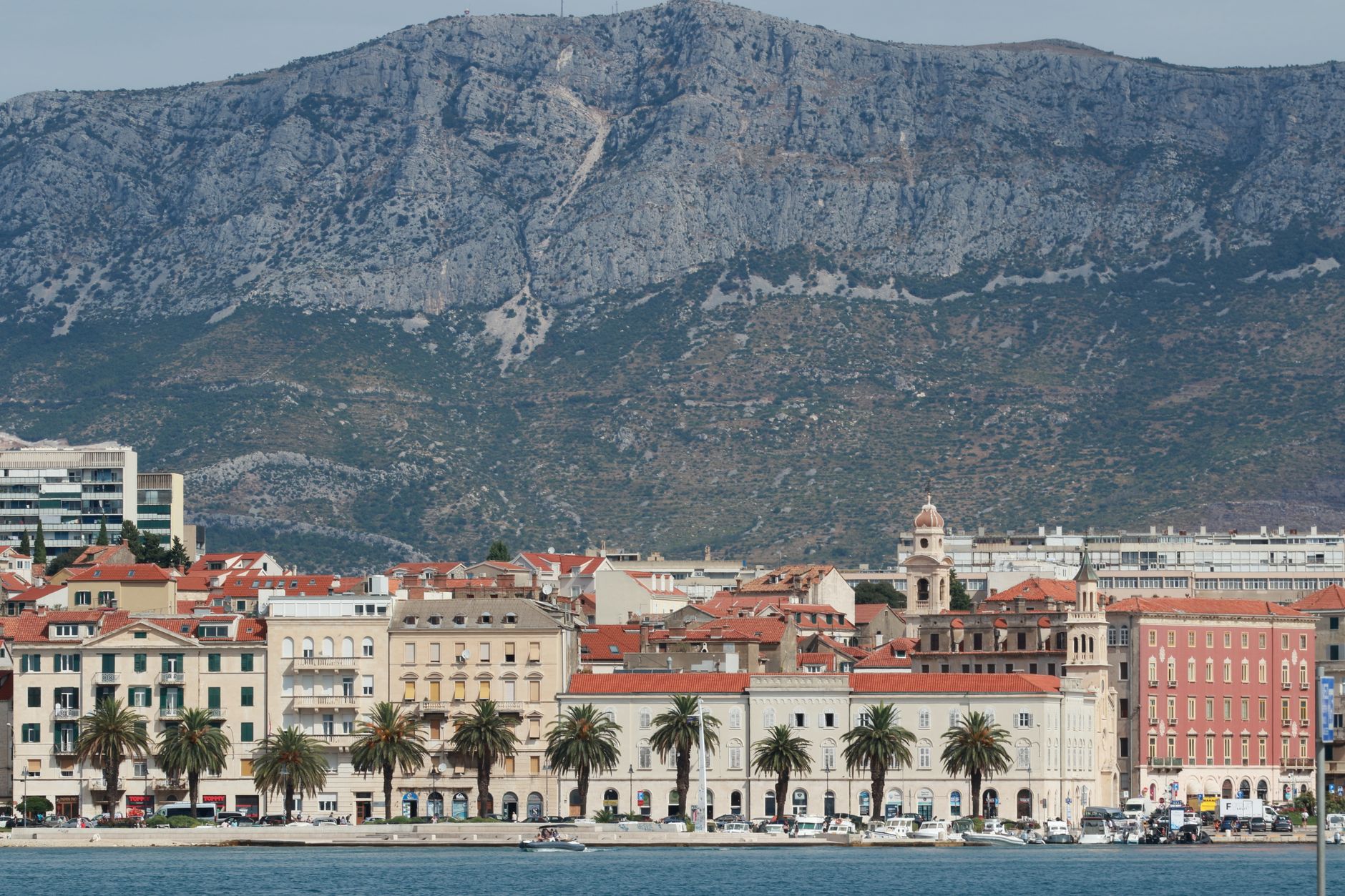
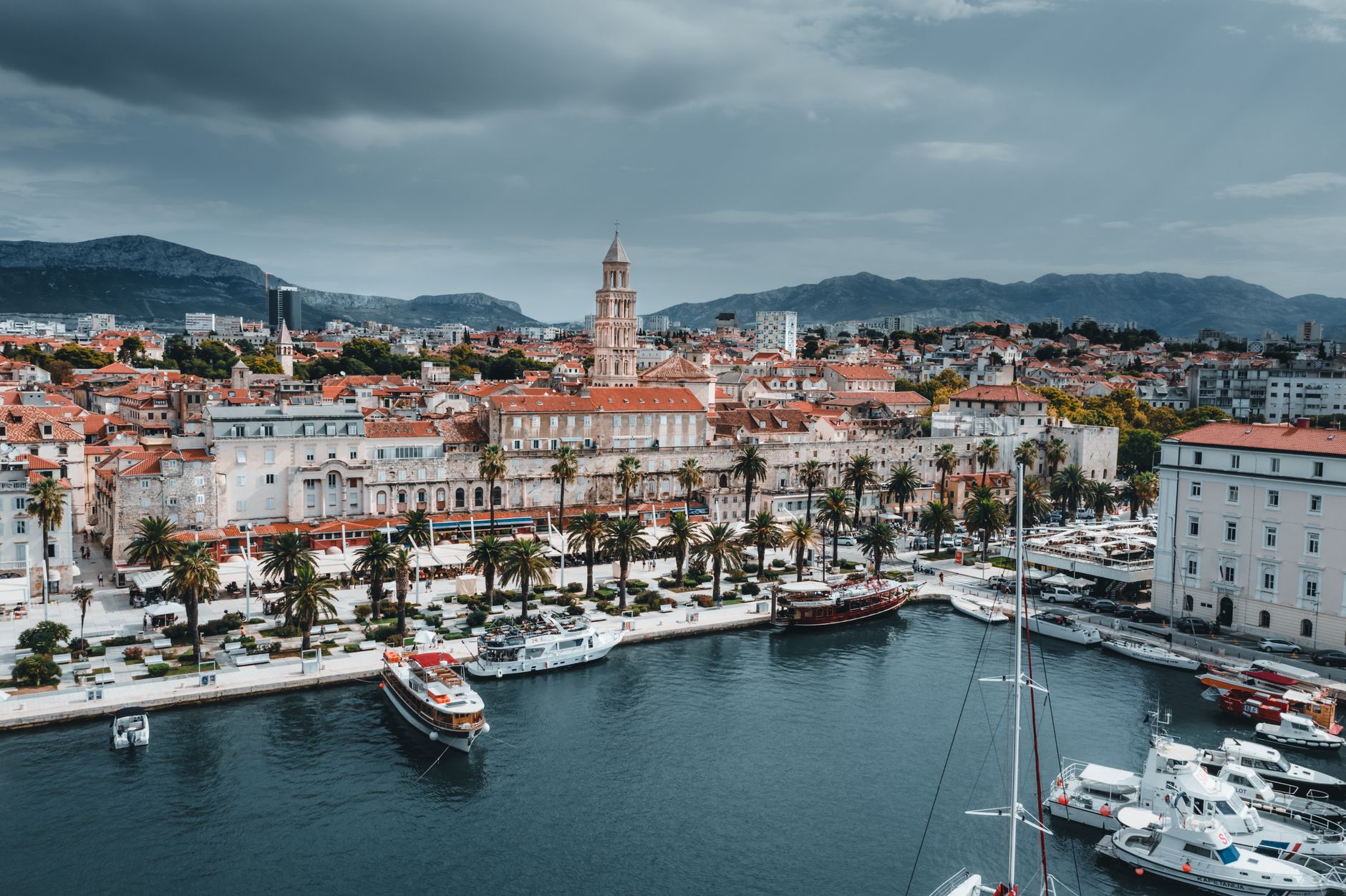
The city, as it actually looks.




Frequently asked
Is Split worth visiting?
Yes, because the city functions as living archaeology rather than a preserved museum district. The historic core grew directly inside Emperor Diocletian’s retirement complex, meaning you will drink espresso beneath Roman columns and sleep in converted imperial apartments. It rewards visitors who treat the streets as an active neighborhood rather than a checklist.
How many days in Split?
Three days covers the essential historic core, Marjan Hill, and a nearby island comfortably. Spend day one walking the Peristyle, exploring the Cathedral, and descending into the Palace cellars. Dedicate day two to a coastal hike and Bačvice Beach, then reserve day three for a ferry to Hvar or Brač before the afternoon heat peaks.
How much does public transport cost in Split?
A single ride costs a flat €2, purchased through the official Promet Split app or at tobacco kiosks. You must validate the QR code immediately after boarding to avoid a €35 fine during routine checks. The 24-hour pass runs around €6 and becomes cost-effective after your third ride across the city.
Is it safe to walk around Split at night?
Violent crime remains extremely rare, though petty theft spikes during peak summer months and major events. The Riva promenade and Peristyle stay well-lit and active until late, but keep bags zipped and avoid poorly lit alleys after midnight. Steer clear of the Brda neighborhood after dark, where residential streets lack consistent lighting.
Pick up where you left off
Saved and recently read places — kept on this device only.
Photo credits (13)
- Jo Kassis — Pexels License (https://www.pexels.com/license/) — Source: https://www.pexels.com/photo/30958640/
- Salim Chauhan — Pexels License (https://www.pexels.com/license/) — Source: https://www.pexels.com/photo/6701514/
- Peter Safranka — Pexels License (https://www.pexels.com/license/) — Source: https://www.pexels.com/photo/17563087/
- Luciann Photography — Pexels License (https://www.pexels.com/license/) — Source: https://www.pexels.com/photo/11102714/
- KENNEDY L. GREENAWAY — Pexels License (https://www.pexels.com/license/) — Source: https://www.pexels.com/photo/34588006/
- Jan Tang — Pexels License (https://www.pexels.com/license/) — Source: https://www.pexels.com/photo/18759971/
- Lukas Lussi — Pexels License (https://www.pexels.com/license/) — Source: https://www.pexels.com/photo/28142401/
- Luciann Photography — Pexels License (https://www.pexels.com/license/) — Source: https://www.pexels.com/photo/5984682/
- Jo Kassis — Pexels License (https://www.pexels.com/license/) — Source: https://www.pexels.com/photo/30958652/
- Dark Indigo — Pexels License (https://www.pexels.com/license/) — Source: https://www.pexels.com/photo/31452763/
- Spencer Davis — Pexels License (https://www.pexels.com/license/) — Source: https://www.pexels.com/photo/4353557/
- Jan Tang — Pexels License (https://www.pexels.com/license/) — Source: https://www.pexels.com/photo/18759975/
- Aleksander Dumała — Pexels License (https://www.pexels.com/license/) — Source: https://www.pexels.com/photo/19862745/
Photos may have been resized or cropped.