Rovinj
Croatia Updated Apr 2026
The copper statue of Saint Euphemia pivots against the salt air, catching morning light across the bay while you stand below in the shade. Look up. Rovinj, Croatia, pulls you upward through uneven limestone where roasted coffee and damp plaster cling to pastel walls. You stay for the architecture.
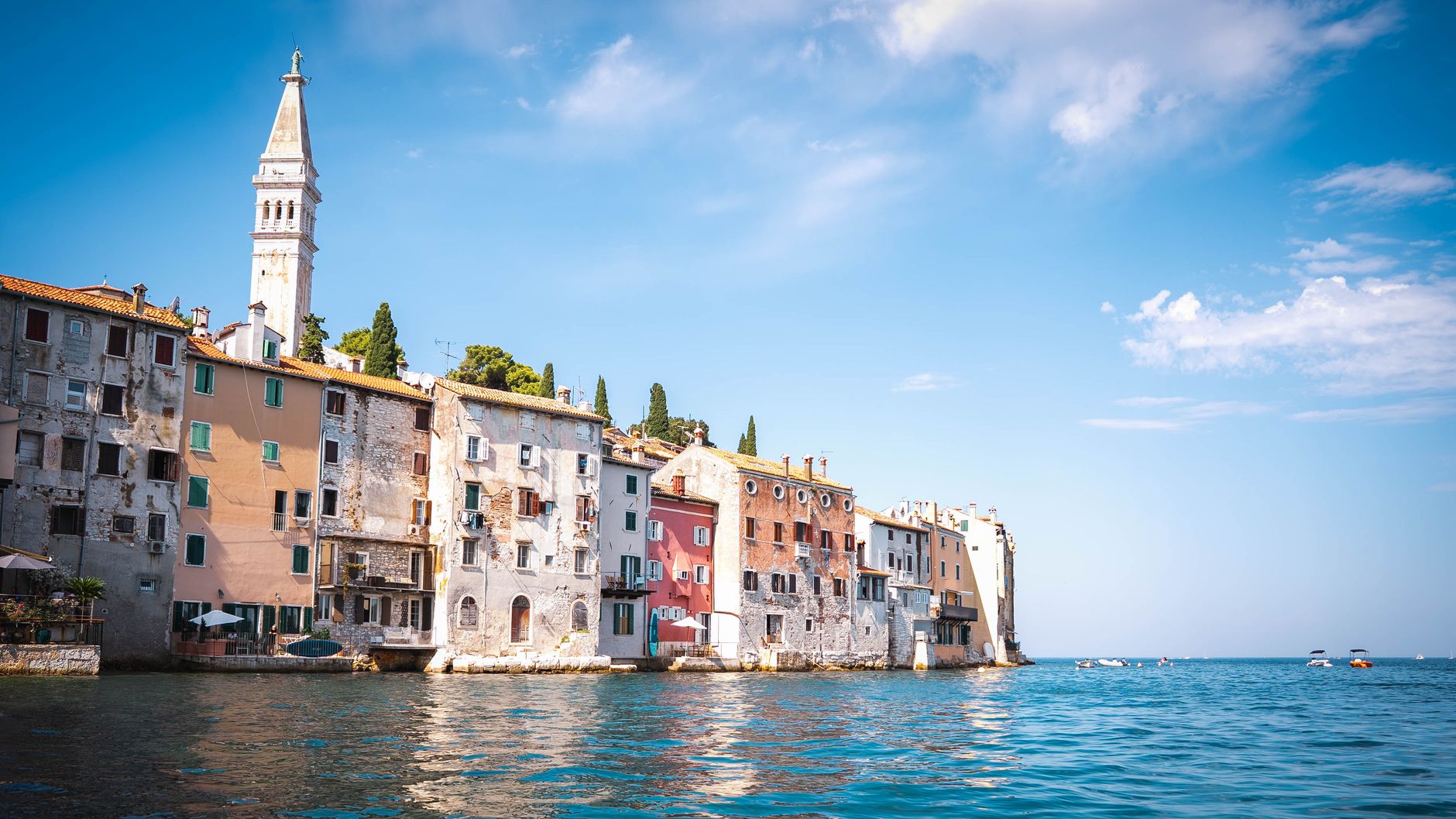 Photo: Sven Huls / Pexels
- Attractions
- 8
- Trip length
- 2-3 days
- Best season
- May or September
Why Rovinj
Built from cited sources · see the method · How we make our guides →
The entire peninsula operates as a pedestrian-only labyrinth that forces a deliberate pace modern resort developers usually try to manufacture. Walk slowly. You pass the Balbi Arch, carved in 1678 and still wearing its Turkish head like a stone dare.
Deconsecrated chapels like the Church of the Holy Cross now function as working studios, filling fourteenth-century vaults with linseed oil and sea damp. Smell the paint. Artists have claimed these alleys long before the August gallery openings begin.
Locals measure time in slow espresso pulls and evening aperitivos rather than rigid itinerary checkmarks or prebooked ticketed attractions. Breathe in. The peninsula quiets after the charter boats depart, leaving only wet stone and the low hum of Istrian dialect.
St. Euphemia’s Copper Saint
The 61-meter bell tower houses a copper weathervane of the patron saint, spinning with Adriatic winds since 1758. Climb its worn stone stairs for a 360-degree sweep over terracotta roofs and the water.A Peninsula of Layers
Cars stop at the edge. Beyond the 1678 Balbi Arch, the Old Town unfolds as a pedestrian maze of Romanesque, Gothic, and Venetian Baroque facades. Every alley leads to a courtyard, an atelier, or a sudden glimpse of water.Churches Turned Studios
Deconsecrated chapels now breathe with contemporary art. The 17th-century St. Charles Borromeo and the 14th-century Holy Cross operate as working ateliers, letting you watch painters mix pigments beneath original stonework.Golden Cape Trails
Five kilometers of shaded pine paths loop around Punta Corrente’s limestone cliffs. The water drops from clear turquoise to deep navy, offering quiet swimming spots far from the midday crowds.
Neighborhoods
Where to wander, by quarter — each with its own rhythm.
Stari Grad (Old Town)
The original peninsula operates as a pedestrian-only maze of uneven Istrian limestone and tightly packed Venetian facades. You climb steep staircases and narrow passages that predate modern tourism planning. The layout rewards aimless wandering rather than strict routing.Grisia Street & Artist Quarter
This cobbled thoroughfare anchors the peninsula’s creative economy, housing year-round studios and small galleries. Every August, the street transforms into an open-air exhibition where painters display work directly on the stones. Deconsecrated chapels nearby now smell of turpentine and canvas.Harbor & Riva
The waterfront functions as Rovinj’s daily rhythm, docking fishing vessels alongside charter sailboats. Evening light catches the rigging while locals gather at terrace bars for spritzes and grilled octopus. Skip the front-row tourist traps and sit two rows back for better prices.Carera Street Corridor
This straight thoroughfare marks the transition from mainland parking to the historic peninsula. It absorbs the town’s nightlife energy, housing pubs and late-night cafes. The architecture shifts from compact residential blocks to wider civic facades as you approach the water.Zlatni Rt Coastal Park
Locals retreat to this engineered pine forest when the Old Town heat becomes oppressive. Winding trails drop onto rocky coves where the water runs clear and cold. The park was originally designed by nineteenth-century planners to shield the coastline from harsh winds.
Plan your trip
Before you go
- Getting There
- Fly into Pula Airport (PUY), then take a 40-minute taxi (€50–€65) or a direct Arriva bus to the Autobusni Kolodvor Rovinj. As of 2026, the bus terminal sits 800 meters from the Old Town, while FlixBus intercity routes connect you to Poreč, Rijeka, and Ljubljana within two hours.
- Getting Around
- Leave the car behind. The peninsula is strictly pedestrian, though the steep, polished cobblestones demand sturdy footwear. Rent an e-bike for €30–€45 daily to reach the coastal loop or catch the municipal bus (€1.70 per ride) to outer beaches. No transit passes exist here; you pay per journey.
- Climate & Best Time
- Winter settles around 5.7°C, while August averages a breezy 23°C. Aim for May or September, when the Adriatic reaches 18°C and summer day-trippers thin out. Book accommodations early; the shoulder season remains the sweet spot for light and quiet streets.
- Language & Currency
- Croatia adopted the Euro in 2023, and the kuna is fully obsolete by 2026. English works seamlessly in hospitality, though ordering in Croatian earns quieter service. Carry small bills; some harbor vendors and market stalls still run on cash-only terminals.
- Safety & Logistics
- Register with local police within 24 hours if staying privately; hotels handle this automatically for you. The real hazard is environmental. Rain turns the historic cobbles into slipways, so watch your footing near cliff paths like Plaza Balota after a downpour.
A City Carved by Sea, Stone, and Shifting Borders
From Bronze Age hillfort to Adriatic arts haven
- 1000 BCE
Histri Fortresses Guard the Coast
Bronze Age tribes stacked dry-stone walls along the limestone ridges, watching for Etruscan copper traders on the horizon. Smoke from their hearths drifted over the cove, marking one of Istria’s earliest permanent settlements.
- 500 CE
Castrum Rubini Takes Shape
Mainland refugees fled to the rocky outcrop as barbarian raids swept through the peninsula, piling defensive walls atop the natural stone. They brought Roman masonry techniques and a fierce determination to hold the high ground. The settlement clung to the cliff edge.
- 804
Rižana Assembly Defies Frankish Taxes
Local delegates marched inland to negotiate an end to crushing tributes, securing fishing exemptions and limited self-rule. The agreement bought the harbor centuries of breathing room. Independence here was never absolute, but it kept the granaries full.
- 1283
Venice Claims the Island
Town elders swore fealty to the Doge in a ceremony heavy with salt air and wax seals. They traded local autonomy for naval protection and direct access to Mediterranean trade routes. A Venetian podestà arrived to collect tolls.
- 1379
Genoese Galleys Sack the Harbor
Enemy warships breached the seawalls during a fierce summer storm. They carried off the relics of Saint Euphemia and left ash in the cobbled alleys. Survivors rebuilt the outer districts with thicker limestone walls. The loss of the patron’s bones became a centuries-long obsession.
- 1531
Maritime Statute Codifies Daily Life
Magistrates compiled fishing rights, guild regulations, and inheritance laws into three bound volumes that sat on the council table. The code dictated everything from net sizes to chimney placement on cramped merchant houses. Order on the water required exact rules on land.
Show the full timeline (20 moments)
- 1680
Balbi Arch Frames the Old Town
Prefect Daniele Balbi commissioned the limestone gateway, carving a proud Venetian lion above the arch to signal civic pride. The structure replaced a simple fish-market gate with something far more theatrical. Visitors still pass beneath it.
- 1725
St. Euphemia Rises in Baroque Splendor
Master builders dismantled the old medieval shell and raised a sweeping nave crowned by a towering bell tower. The interior flooded with pale Adriatic light, while gold leaf caught the afternoon sun. The architect borrowed heavily from Venetian models, but the proportions belong entirely to this hill.
- 1763
The Channel Fills, Island Joins Mainland
Engineers dumped rubble and quarry waste into the narrow strait, permanently tethering the rocky peninsula to the Croatian coast. New streets sprouted where fishing boats once moored, pushing the town outward.
- 1852
Georg Hütterott Lands in Istria
The German industrialist arrived with a cement fortune and a quiet obsession with native Mediterranean pines. He bought the scrub-covered headland south of town and began terracing the slopes by hand. His vision turned a barren cape into a shaded forest park.
- 1875
Antonio Gandusio Steps Off the Dock
Born in Rovigno to a modest family, he memorized the harbor’s dialect before ever touching a Vienna stage. His theatrical timing grew out of watching Venetian merchants haggle in the shadow of the bell tower. He carried that coastal sharpness to Italian theaters.
- 1876
Railway Links Rovinj to the Capital
Steam engines finally conquered the Istrian hills, unloading coal, timber, and tourists at a newly built coastal station. The whistle shattered centuries of maritime silence and brought cheap goods to local markets. Fishers traded their sails for factory shifts.
- 1903
Giustina Abbà Walks the Factory Floor
She clocked into the tobacco mill as a teenager, breathing in heavy dust and learning how to organize exhausted workers. Her voice carried over the loom clatter, eventually igniting a 1942 strike that halted production. She traded quiet survival for open resistance.
- 1911
Giuseppe Budicin Joins the Docks
Born to Istrian laborers, he watched Italian nationalist flags replace Austrian ones and felt the weight of shifting borders. He studied law in secret, drafted anti-fascist pamphlets, and organized dockworkers into underground cells. His handwriting eventually cost him his life.
- 1918
Rovigno Falls Under Italian Rule
Treaties redrew the coastline. The Kingdom of Italy hoisted its banners over the municipal palace. Local Italianization policies silenced Croatian schools and replaced bilingual street signs overnight. Resistance simmered in tavern backrooms.
- 1947
Paris Treaty Shifts the Border
Postwar diplomats placed a line through Istria, transferring Rovinj to socialist Yugoslavia without asking its residents. Suitcases packed quickly, and thousands of Italian-speaking families boarded trains for Trieste. The harbor emptied.
- 1965
Socialist Hotels Replace Fishing Nets
State planners poured concrete along the southern bays, erecting massive resort blocks to attract foreign currency. Traditional boatyards made way for sun loungers and wide promenades. The town traded its maritime grit for a carefully curated coastal charm.
- 1991
Independence Brings a New Flag
Croatian forces secured the peninsula as Yugoslavia fractured, hoisting the red-white-blue tricolor over the harbor master’s office. Tourism rebounded quickly, bringing fresh capital and strict preservation laws. The old town became a pedestrian sanctuary.
- 1998
Mirko Kovač Finds Quiet Here
The celebrated writer left Belgrade’s political storms for a small studio overlooking the Adriatic. He spent his final years drafting essays on exile while listening to the evening ferry horns. His presence cemented the city’s reputation as a refuge.
- 2013
European Borders Open Wider
Croatia’s EU accession brought structural grants for heritage restoration and stricter coastal zoning. Scaffolding appeared on Baroque facades as local masons repaired centuries of salt damage.
Who lived here
-
Novelist · 1938–2013
Mirko Kovač
Lived here 1993–2013
He traded Belgrade’s literary circles for a quiet Istrian studio after Milošević’s rise, spending his final twenty years drafting essays that dissected Balkan nationalism. The Adriatic light in his late prose feels earned rather than borrowed. His former apartment windows still catch the same evening glare over the old town roofs.
-
Labor organizer · 1903–1974
Giustina Abbà
Born and organized here
She walked from a tobacco factory floor to lead the 1942 strike that fractured fascist control over local industry. The same narrow streets where she distributed underground pamphlets now host summer art exhibitions. Her defiance shifted the peninsula’s political gravity long before the war ended.
-
Partisan commander · 1911–1944
Giuseppe 'Pino' Budicin
Born and executed here
He returned from political imprisonment in 1941 to wire the town’s anti-fascist network before the 1943 armistice. His capture near the Valdibora harbor and subsequent execution cemented his name on local memorials. The harbor waters still reflect the same limestone walls that witnessed his final stand.
Where to Eat
Where locals actually book dinner — not the tourist menus.
Insider tips
Small things that change how the city treats you.
Ditch the Wheels
The peninsula is strictly car-free and climbs sharply toward the basilica. Leave heavy luggage at your hotel and wear grippy soles; polished limestone becomes a slip hazard when wet.Pay in Cash
Croatia switched to the euro in 2023, but smaller taverns still prefer bills. Carry coins for the €4 bell tower fee and round up your café tab by five percent instead of hunting for a terminal.Order by the Catch
Skip fixed menus and ask what landed that morning. Traditional spaccio taverns serve unpretentious grilled Adriatic fish and handwritten daily specials that change with the tide.Target May or September
July crowds choke the narrow alleys and double accommodation rates. Visiting in late spring or early autumn keeps temperatures mild and leaves the riva promenade open for evening strolls.Bring Headlamps
The path up to St. Euphemia lacks railings in several sections and grows treacherous after dusk. A small phone torch or dedicated headlamp keeps your footing steady on the worn stone.Book Buses Early
Arriva runs the Pula line, but seats vanish during peak summer weekends. Reserve your intercity ticket online and arrive at the station twenty minutes before departure.
Gallery
The city, as it actually looks.


Frequently asked
Is Rovinj worth visiting?
Yes, but approach it as a walking museum rather than a resort town. The Venetian-era peninsula packs centuries of maritime history into half a kilometer, with deconsecrated churches doubling as artist studios and a functioning bell tower anchoring the skyline. You will need patience for the summer crowds, but the architectural density justifies the trip.
How many days in Rovinj?
Plan for two full days to cover the Old Town properly without rushing. The first day tackles the basilica bell tower, Grisia Street galleries, and harbor promenade. The second works better for cycling Golden Cape forest trails or taking a half-day boat trip to the Lim Fjord.
Is Rovinj walkable for strollers?
No. The historic core features steep limestone staircases, uneven medieval paving, and narrow passages that block wheeled access. Stick to the flat waterfront riva for pushing prams, or use a baby carrier if you intend to reach the upper piazzas.
How do I get from Pula Airport to Rovinj?
Take a direct intercity bus or pre-booked private transfer, as rideshare apps remain unreliable along the Istrian coast. The bus costs €5–€7 and takes roughly forty-five minutes, while a taxi runs about €50–€65 depending on traffic.
Is Rovinj safe at night?
The town remains quiet and heavily patrolled, with violent crime virtually unheard of. Petty bag theft can occur near crowded dusk promenades, but the real hazard is the terrain. Uneven cobblestones and low lighting near cliffside paths demand steady footing.
What currency does Rovinj use?
Croatia adopted the euro in January 2023, retiring the kuna entirely. Credit cards work in most hotels and larger restaurants, but you will need physical euros for market stalls, bus tickets, and the basilica admission desk.
Pick up where you left off
Saved and recently read places — kept on this device only.
Photo credits (13)
- Sven Huls — Pexels License (https://www.pexels.com/license/) — Source: https://www.pexels.com/photo/36230973/
- 2004 Kroatien 04 — Derbrauni — CC BY-SA 4.0 (https://creativecommons.org/licenses/by-sa/4.0/) — Source: https://commons.wikimedia.org/wiki/File:2004_Kroatien_04.jpg
- 2001 08 23-30 Rovinj DSCF0168 (50985938652) — János Korom Dr. >17 Million views from Wien, Austria — CC BY-SA 2.0 (https://creativecommons.org/licenses/by-sa/2.0/) — Source: https://commons.wikimedia.org/wiki/File:2001_08_23-30_Rovinj_DSCF0168_(50985938652).jpg
- 2001 08 23-30 Rovinj DSCF0121 (50985830766) — János Korom Dr. >17 Million views from Wien, Austria — CC BY-SA 2.0 (https://creativecommons.org/licenses/by-sa/2.0/) — Source: https://commons.wikimedia.org/wiki/File:2001_08_23-30_Rovinj_DSCF0121_(50985830766).jpg
- 2001 08 23-30 Rovinj DSCF0171 (50985124148) — János Korom Dr. >17 Million views from Wien, Austria — CC BY-SA 2.0 (https://creativecommons.org/licenses/by-sa/2.0/) — Source: https://commons.wikimedia.org/wiki/File:2001_08_23-30_Rovinj_DSCF0171_(50985124148).jpg
- 2001 08 23-30 Rovinj DSCF0150 (50985830696) — János Korom Dr. >17 Million views from Wien, Austria — CC BY-SA 2.0 (https://creativecommons.org/licenses/by-sa/2.0/) — Source: https://commons.wikimedia.org/wiki/File:2001_08_23-30_Rovinj_DSCF0150_(50985830696).jpg
- 2001 08 23-30 Rovinj DSCF0170 (50985938582) — János Korom Dr. >17 Million views from Wien, Austria — CC BY-SA 2.0 (https://creativecommons.org/licenses/by-sa/2.0/) — Source: https://commons.wikimedia.org/wiki/File:2001_08_23-30_Rovinj_DSCF0170_(50985938582).jpg
- 2004 Kroatien 10 — Derbrauni — CC BY-SA 4.0 (https://creativecommons.org/licenses/by-sa/4.0/) — Source: https://commons.wikimedia.org/wiki/File:2004_Kroatien_10.jpg
- 2004 Kroatien 13 — Derbrauni — CC BY-SA 4.0 (https://creativecommons.org/licenses/by-sa/4.0/) — Source: https://commons.wikimedia.org/wiki/File:2004_Kroatien_13.jpg
- 2004 Kroatien 07 — Derbrauni — CC BY-SA 4.0 (https://creativecommons.org/licenses/by-sa/4.0/) — Source: https://commons.wikimedia.org/wiki/File:2004_Kroatien_07.jpg
- 23 International Choir Festival "Chorus Inside Croatia" 2016 (enhanced) — AECantabile30lat — CC BY-SA 4.0 (https://creativecommons.org/licenses/by-sa/4.0/) — Source: https://commons.wikimedia.org/wiki/File:23_International_Choir_Festival_"Chorus_Inside_Croatia"_2016_(enhanced).jpg
- 33 CHORUS INSIDE CROATIA 26-31.08.2016 — AECantabile30lat — CC BY-SA 4.0 (https://creativecommons.org/licenses/by-sa/4.0/) — Source: https://commons.wikimedia.org/wiki/File:33_CHORUS_INSIDE_CROATIA_26-31.08.2016.jpg
- 2004 Kroatien 15 — Derbrauni — CC BY-SA 4.0 (https://creativecommons.org/licenses/by-sa/4.0/) — Source: https://commons.wikimedia.org/wiki/File:2004_Kroatien_15.jpg
Photos may have been resized or cropped.