Pula
Croatia Verified Apr 2026
The smell of brine and sun-baked limestone hits you before you even see the amphitheater. Pula, Croatia, parks a first-century Roman colosseum directly onto a working waterfront where trawlers still unload their morning catch. Visit for the living history.
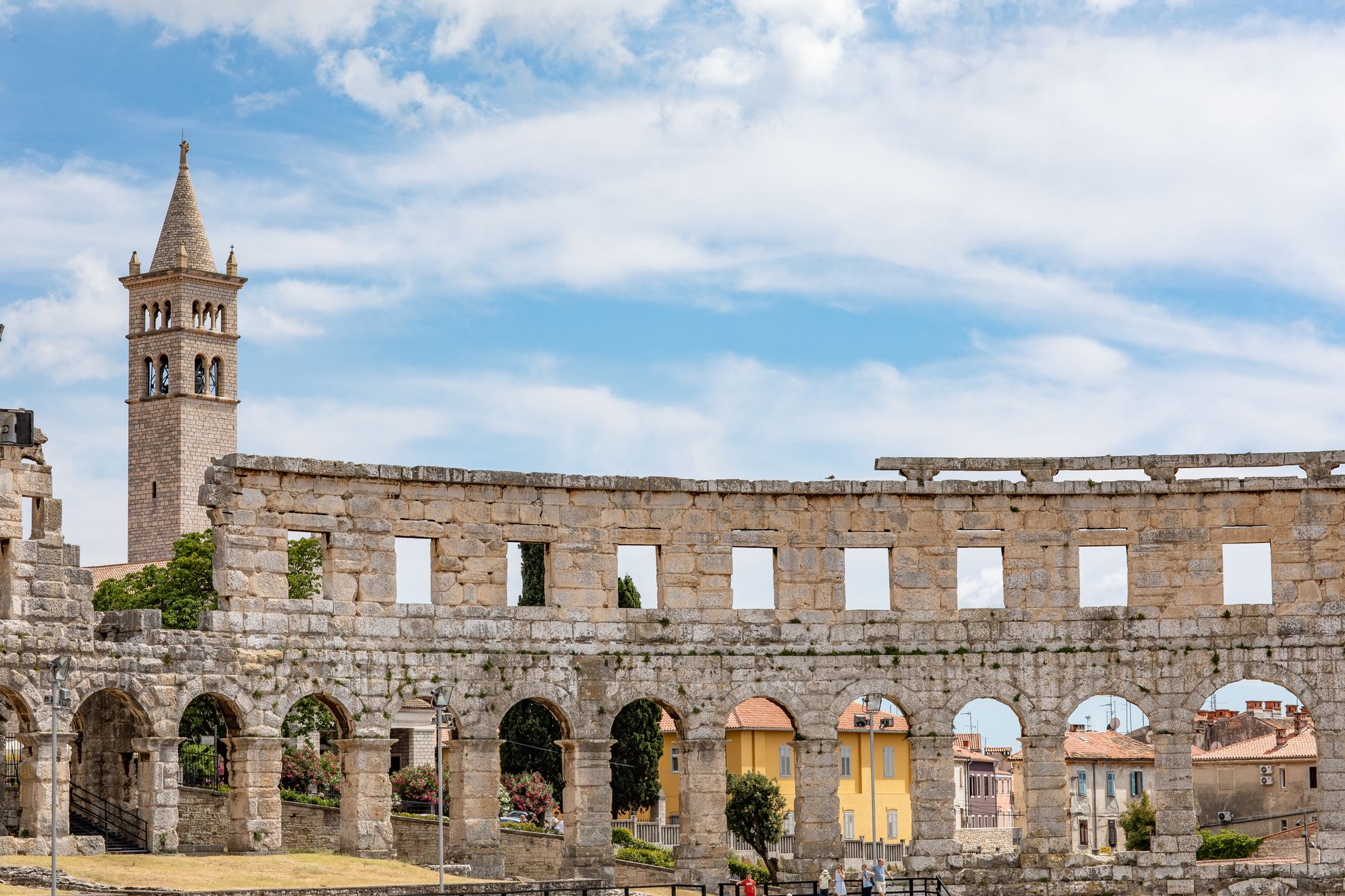 Photo: Volker Meyer / Pexels
- Attractions
- 8
- Trip length
- 2-3 days
- Best season
- May-June or September
Why Pula
Built from cited sources · see the method · How we make our guides →
Walk the Forum square at 11:00 a.m. and you will catch the local ritual of špica. Hundreds of residents claim wrought-iron chairs to nurse espresso beneath Corinthian columns that were erected between 2 BC and 14 AD. Antiquity is just furniture here.
Beneath the pavement, a 400-meter network of World War I shelters carved through seven hills still holds the damp chill of the Adriatic. The temperature drops instantly. Above ground, Austro-Hungarian coastal forts designed for naval artillery now host bass-heavy music festivals.
Skip the overpriced menus lining the harbor promenade. Order hand-rolled fuži pasta at a family-run tavern two blocks inland, then let the afternoon dissolve into a long macchiato. Pula rewards patience.
A Roman Amphitheatre Still Breathing
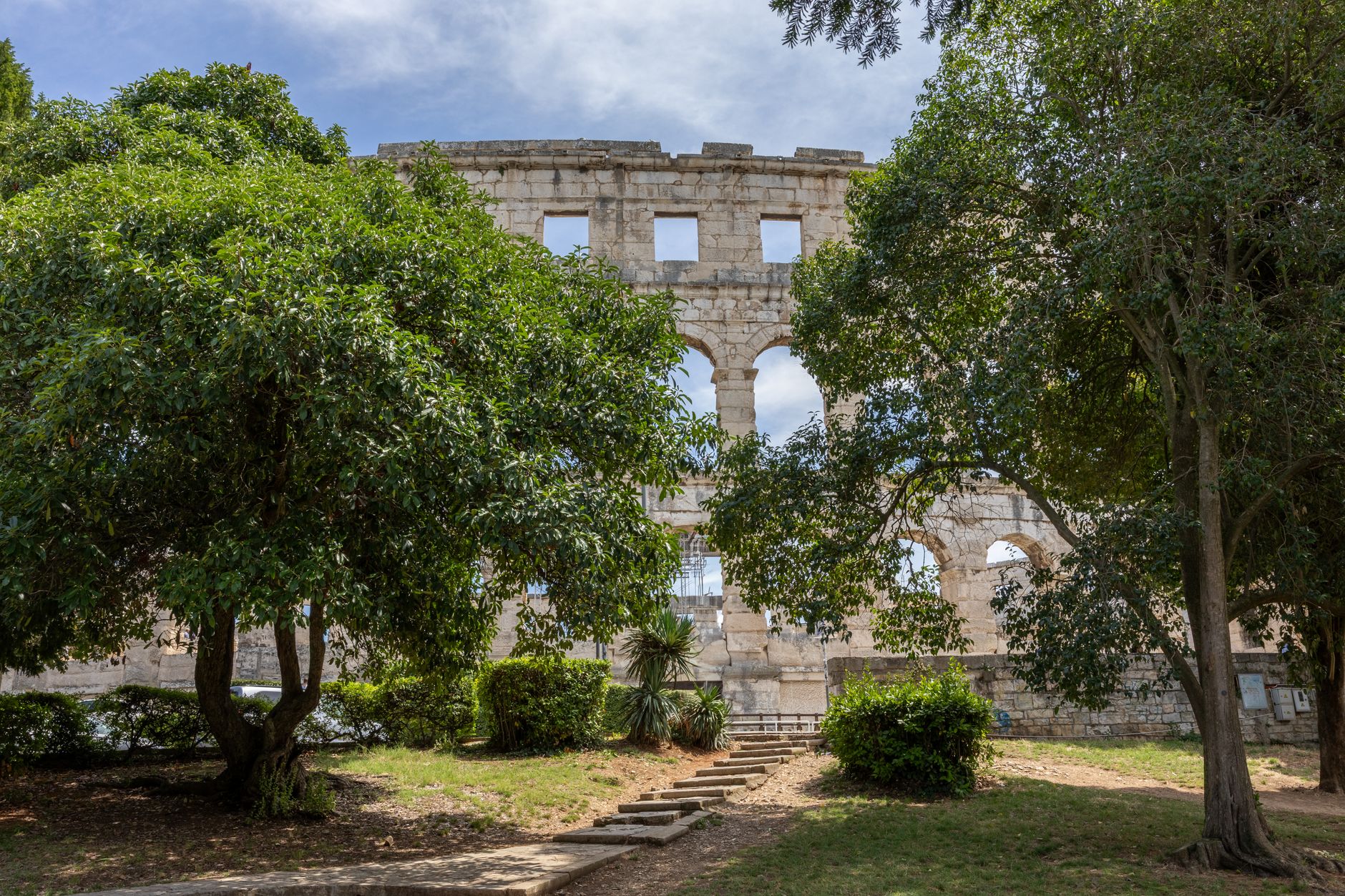
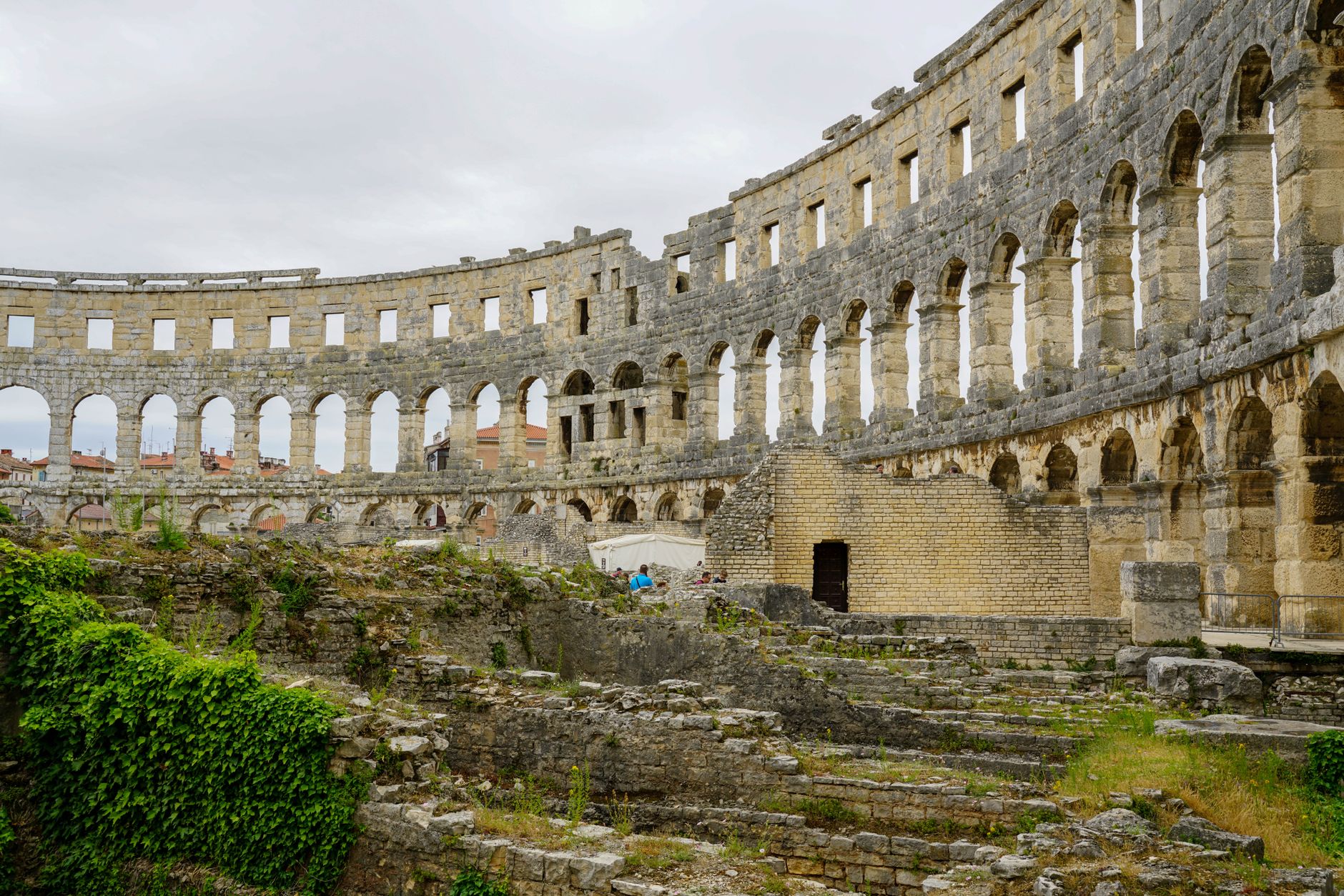
The 1st-century Arena stands fully intact with four tiers of limestone arches, hosting summer film screenings and gladiator reenactments beneath open skies. You can walk its subterranean corridors where an exhibition details ancient olive presses and wine amphorae.Forum Square & The Temple of Augustus
Augustus commissioned this Corinthian-columned temple between 2 BC and 14 AD, anchoring a civic plaza that still functions as the city’s social heart. Morning espresso tastes sharper here when paired with the sight of 2,000-year-old stone friezes catching the Adriatic light.Zerostrasse Underground Shelters
Carved during World War I, this 400-meter network of limestone tunnels once linked seven city hills to the central fortress. The damp air drops to a steady 14°C, offering a quiet refuge from July crowds and a direct line to Austro-Hungarian military engineering.Fortress Coastlines & Hidden Coves
Abandoned Austro-Hungarian forts like Punta Christo and Ovine guard pebble beaches where the water shifts from pale turquoise to deep cobalt. The rough stone paths demand sturdy shoes, but the payoff is a shoreline untouched by commercial beach bars.
Neighborhoods
Where to wander, by quarter — each with its own rhythm.
Stari Grad (Old Town)
The historic core folds into a tight grid where Roman arches share alleys with Venetian loggias. The Temple of Augustus anchors the main square. Sidestep the tourist thoroughfare to spot a 3rd-century floor mosaic tucked inside a quiet residential courtyard.Verudela Peninsula
This coastal spit trades ancient stone for soft pebble coves and Art Nouveau military architecture. The Pula Aquarium occupies a former fortress. Walk the cliff paths past Fort Ovine to find uncommercialized swimming spots where locals actually spend their weekends.Monte Zaro
The elevated ridge offers a sharp break from the summer heat. A 17th-century Venetian castle guards the summit and houses the maritime museum. Step outside for a vantage point that frames the entire city against the Adriatic horizon.Centar
Austro-Hungarian planners designed this district for naval officers and imperial administrators. The wide boulevards now host intimate live music venues. Grab a macchiato on Sergijevaca Street and listen for bass lines echoing from converted garrison halls.
Plan your trip
Before you go
- Getting There
- Fly into Pula Airport (PUY), located 7 km southwest of the historic center. A seasonal shuttle bus departs 30 minutes after flight arrivals and drops you at the main bus terminal, while Uber and Bolt taxis run a fixed €25–30 fare to downtown as of the 2026 season. No rail connection exists, so private transfers handle the remaining transit.
- Getting Around
- Pula relies on foot traffic and the Pulapromet bus network, as no metro or tram lines exist. Single onboard tickets cost €2.00 in cash, while the 2026 daily pass runs €6.50 and covers routes to Verudela beaches. The historic center is fully pedestrianized, leaving dedicated bike lanes along the Lungomare for early morning rides.
- Climate & Best Time
- Aim for mid-April through June or September, when daytime temperatures hover between 15°C and 24°C and the Roman sites stay comfortably walkable. July and August push highs to 29.5°C with sea temperatures reaching 25°C, ideal for swimming but heavy with tourist traffic. Winter brings the biting Bora wind and frequent rain, closing most seasonal venues.
- Language & Currency
- Croatian is the official language, though English, Italian, and German flow easily through hotels and restaurants. Croatia adopted the Euro in 2023, and 2026 payment terminals accept contactless Visa/Mastercard widely. Round up taxi fares or leave roughly 10% in cash at sit-down restaurants when a service charge isn’t itemized.
From Illyrian Outpost to Adriatic Stage
A timeline of conquest, decay, and revival on the Istrian coast
- 177 BCE
Roman Legions Shatter the Histri
Roman armies march into Istria and crush the indigenous tribe at Nesactium. The conquest opens the Adriatic coast to Latin administration. Pula shifts from a coastal outpost to a strategic waypoint.
- 45 BCE
Caesar Grants Colonial Status
Julius Caesar elevates the settlement to Colonia Iulia Pola, granting veterans land and citizenship rights. Grid streets replace irregular paths, and Latin becomes the language of commerce.
- 42 BCE
Octavian Razes the Rebel City
Pula backs Brutus and Cassius in the civil war, earning brutal retaliation. Legions tear down walls and temples. Survivors scatter across the peninsula. The punishment erases decades of civic growth.
- 27 BCE
Salvia Postuma Sergi Commissions the Arch
A wealthy widow funds the Arch of the Sergii to honor three family members lost in battle. The limestone monument leans against the eastern gate, its Corinthian columns carved with intricate foliage. She ensures her name outlives the empire.
- 14 CE
Temple of Augustus Consecrated
Priests dedicate a new shrine on the Forum to honor the first emperor’s peace. Corinthian columns support a pediment carved with winged victories.
- 68 CE
Vespasian Completes the Arena
The final tier of the elliptical amphitheatre rises, reaching 32 meters above the limestone bedrock. Twenty thousand spectators pack the stone tiers to watch gladiators. The massive structure outlives the empire that funded it.
Show the full timeline (20 moments)
- 476 CE
Odoacer’s Forces Burn the Harbor
Germanic mercenaries sack the western Roman fleet’s headquarters, reducing much of the city to ash. Survivors flee to the islands. The classical golden age ends abruptly.
- c. 550
Byzantines Construct Saint Mary Formosa
Eastern Roman engineers raise a cruciform basilica using marble columns salvaged from ruined temples. The brickwork reflects Constantinople’s architectural language. The church stands as a quiet testament to imperial reach.
- c. 1310
Dante Alighieri Documents the Necropolis
The exiled poet wanders past Roman tombs and records the haunting terrain in his Divine Comedy. His verses capture the scale of ancient cemeteries before medieval builders scavenged the marble. Literature preserves what time threatens to erase.
- 1331
Venetian Republic Claims Sovereignty
The city council formally swears allegiance to the Doge, trading autonomy for naval protection. Venetian merchants take over the docks, and the Lion of Saint Mark appears on civic buildings.
- 1350
Senate Halts Quarrying the Arena
Venice’s ruling council passes a decree forbidding locals from stripping the amphitheatre for building stone. The order saves the monument from complete dismantling. Future generations inherit a remarkably intact Roman shell.
- 1420
Malaria and Plague Empty the Streets
Marshlands breed mosquitoes while trade routes carry infected rats into the port. The population collapses from thousands to a few hundred scattered households. The once-mighty city becomes a fortified hamlet.
- 1475
Michelangelo Buonarroti Studies the Golden Gate
A young Florentine draftsman arrives with charcoal and studies the Arch of the Sergii. His annotations capture weathered Corinthian capitals. The sketches later circulate among Renaissance architects.
- 1813
Austrian Troops Reclaim the Coast
Habsburg forces push out Napoleon’s garrison, ending a decade of French provincial rule. Street trees planted during the Illyrian era begin to shade recovering boulevards. The city prepares for a new administrative chapter.
- 1859
Vienna Names Pula the Imperial Naval Base
Emperor Franz Joseph orders the construction of a massive shipyard and dry docks on the sheltered bay. Engineers dredge the harbor while workers arrive from across the empire. The population explodes from a thousand to forty thousand in two generations.
- 1916
Engineers Carve the Zerostrasse Tunnels
Austro-Hungarian laborers blast through limestone hills to create an underground network linking seven defensive positions. The cool, damp corridors shelter artillery crews from Italian bombing raids. The tunnels remain a subterranean map of wartime paranoia.
- 1947
Paris Peace Treaty Hands Pula to Yugoslavia
Allied diplomats redraw the Adriatic border, transferring the city from Italy to the new socialist republic. Ethnic Italians pack their trunks and walk toward Trieste. Demographic rupture reshapes the streets overnight.
- 1954
Pula Film Festival Lights the Arena
Organizers drape a canvas screen between ancient stone arches and project the first Yugoslav feature film. Audiences sit on folding chairs beneath Roman vaults. Gladiatorial pits become cinematic salons.
- 1991
Croatian Independence Reshapes the Coast
Local militias secure municipal buildings as the Yugoslav federation fractures. Administrators replace socialist plaques with new national emblems. The city pivots from military logistics to Mediterranean tourism.
- 2013
Croatia Joins the European Union
Border checkpoints dissolve as structural funds flow into Istrian infrastructure. Renovation crews patch limestone facades while ferry terminals expand. Pula steps fully into a modern, borderless Adriatic.
Who lived here
-
Novelist · 1882–1941
James Joyce
Lived here 1904–1905
He took a teaching post at the Berlitz school to escape Dublin’s gossip and financial ruin. The damp Adriatic winters and naval barracks shaped his early drafts of Dubliners, proving that exile sometimes sharpens a writer’s eye.
Where to Eat
Where locals actually book dinner — not the tourist menus.
-
Istrian Fuži with Truffle Ragù
Hand-rolled pasta shaped like small scrolls, tossed in a rich sauce of locally foraged black truffles and olive oil. The earthy aroma hits before the plate lands, and the texture holds up to generous pours of Malvasia.
-
Adriatic Brudet
A slow-simmered fish stew built on scorpionfish, monkfish, and red wine, resting on a bed of coarse polenta. The broth reduces until it coats the spoon, carrying a sharp garlic bite that balances the sweet seafood.
-
Istrian Pršut
Air-cured pork leg smoked over beechwood and aged for over twelve months in the dry bora wind. Slice it paper-thin and let it rest at room temperature before eating to release the full depth of salt and fat.
-
Malvasia Istriana
A crisp, aromatic white wine grown in Istria’s limestone-rich coastal vineyards. Expect notes of white peach and sea salt, making it the default pairing for grilled sardines and raw shellfish.
-
Teran
A high-acid red pulled from iron-heavy karst soil, historically served slightly cool to temper its tannins. The dark cherry and wild herb profile cuts straight through rich meat dishes and aged cheeses.
-
Buje Hills Olive Oil
Cold-pressed oil often carries protected designation status, with peppery finishes that signal high polyphenol counts. Drizzle it raw over fresh bread or grilled fish to catch the grassy, almost spicy aftertaste.
Insider tips
Small things that change how the city treats you.
Coffee Hour Ritual
Wait for the 11 AM špica rush to join locals at outdoor Forum cafes. Order a macchiato and leave your watch behind; rushing signals you are a tourist.Tipping Etiquette
Check your receipt for napojnica uračunata before adding a tip. If service isn’t included, leave 5–10% in cash directly on the table.Underground Cooling
Escape July heat in the Zerostrasse WWI tunnels beneath the city. The limestone network stays a steady 15°C year-round.Truffle Season Timing
Visit in October or November for peak white truffle season. Restaurants pivot to daily tartufi menus, and prices drop after the August crowds leave.Walking the Old Town
Skip the bus for the historic core. The Arena, Temple of Augustus, and Arch of the Sergii sit within a 15-minute flat walking circuit.Arena Event Booking
Reserve Pula Film Festival and concert tickets weeks in advance. Locals secure the upper tiers for the best acoustic balance and sea breeze.Airport Transfer
Use Uber or Bolt from Pula Airport instead of street taxis. The ride costs €20–25 and takes 10 minutes outside of peak summer traffic.
Gallery
The city, as it actually looks.




Frequently asked
Is Pula worth visiting in Croatia?
Yes, if you prefer layered Roman and Austro-Hungarian history over crowded beach resorts. The city packs a fully intact 1st-century amphitheatre and a network of WWI tunnels into a highly walkable historic core.
How many days should I spend in Pula?
Two full days cover the Roman monuments, Kaštel Fortress, and a coastal walk. Add a third day for a boat trip to Brijuni National Park or a truffle-focused drive inland.
How do you get around Pula?
Walk the flat old town and use Pulapromet buses for beaches like Stoja or Verudela. A daily pass costs €6.50 and runs every 15 minutes during summer.
Is it safe to walk around Pula at night?
The pedestrian center remains well-lit and active until midnight during summer. Stick to main squares and waterfront promenades, and avoid unlit alleys behind the Austro-Hungarian naval yards.
What should I eat in Pula besides seafood?
Order fuži, a hand-rolled Istrian pasta traditionally served with butter, local cheese, or shaved truffles. Pair it with Malvasia wine from a family-owned vineyard rather than a tourist trap near the Arena.
How much does a meal cost in Pula?
Expect to pay €15–25 for a casual konoba lunch and €40–60 for a sit-down dinner with wine. Street food spots like Agrippina offer hearty portions for under €10.
Pick up where you left off
Saved and recently read places — kept on this device only.
Photo credits (10)
- Volker Meyer — Pexels License (https://www.pexels.com/license/) — Source: https://www.pexels.com/photo/8640385/
- Gutjahr Aleksandr — Pexels License (https://www.pexels.com/license/) — Source: https://www.pexels.com/photo/13524886/
- Evi Fernengel — Pexels License (https://www.pexels.com/license/) — Source: https://www.pexels.com/photo/33487903/
- Vladimir Srajber — Pexels License (https://www.pexels.com/license/) — Source: https://www.pexels.com/photo/12337657/
- Vladimir Srajber — Pexels License (https://www.pexels.com/license/) — Source: https://www.pexels.com/photo/12337678/
- Ivan Dražić — Pexels License (https://www.pexels.com/license/) — Source: https://www.pexels.com/photo/18538729/
- Gutjahr Aleksandr — Pexels License (https://www.pexels.com/license/) — Source: https://www.pexels.com/photo/13524881/
- Vladimir Srajber — Pexels License (https://www.pexels.com/license/) — Source: https://www.pexels.com/photo/12337647/
- Val Apollonio — Pexels License (https://www.pexels.com/license/) — Source: https://www.pexels.com/photo/5078211/
- Val Apollonio — Pexels License (https://www.pexels.com/license/) — Source: https://www.pexels.com/photo/5078204/
Photos may have been resized or cropped.