Hvar
Croatia Updated Apr 2026
The first thing you notice in Hvar, Croatia, is not the Adriatic glare but the smell of crushed pine and salt drying on 16th-century limestone. It moves slowly. Beneath the summer yacht traffic lies a grid of dry-stone walls dividing the Stari Grad Plain exactly as Greek colonists drew it in 384 BC.
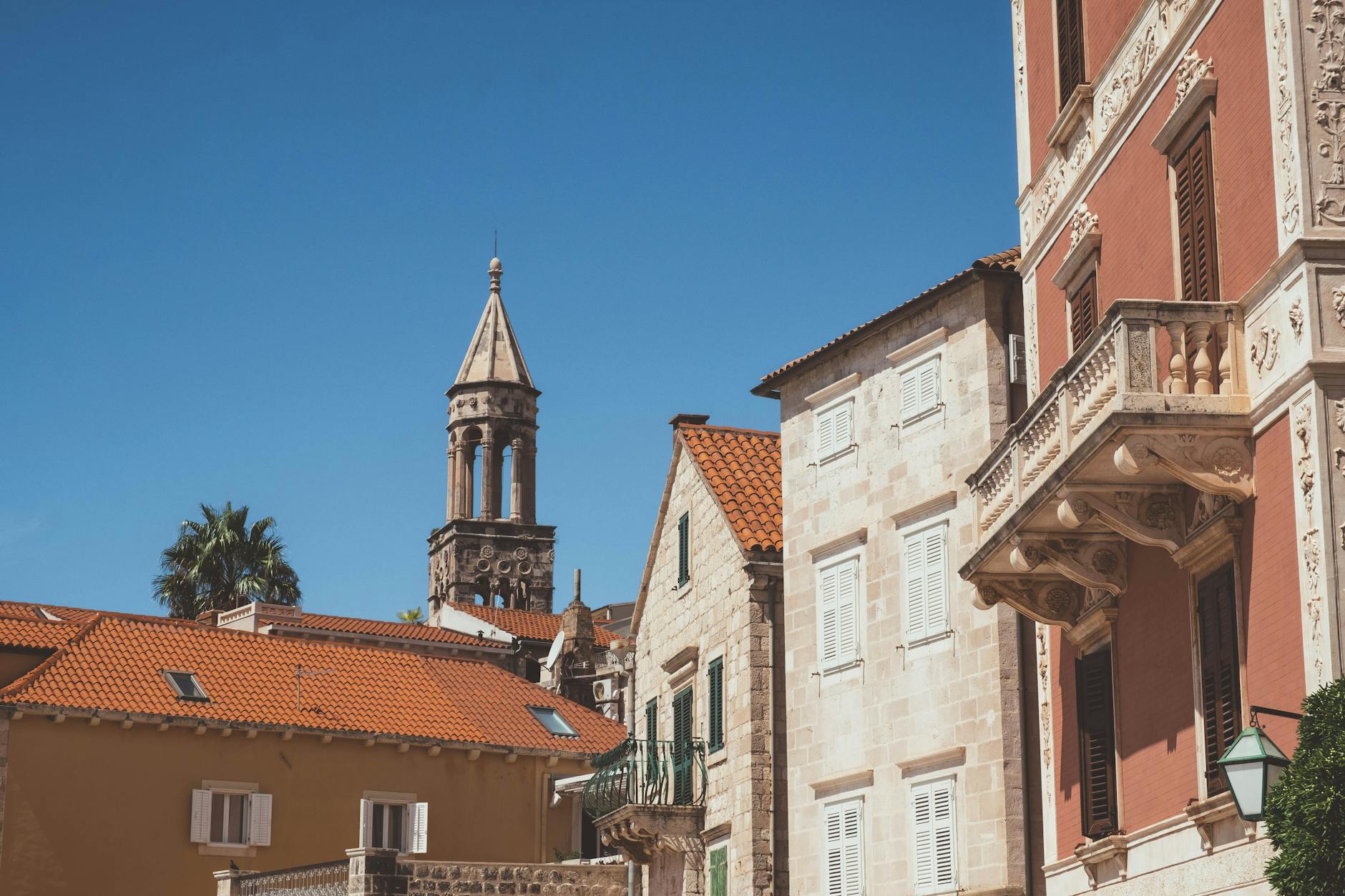 Photo: Jo Kassis / Pexels
- Attractions
- 7
- Trip length
- 3–4 days
- Best season
- May–June or September–October
Why Hvar
Built from cited sources · see the method · How we make our guides →
Venetian merchants shaped the stone harbor into a working fortress. The Arsenal, originally a galley repair shed from 1331, burned during Ottoman raids and rose again with Europe’s first public civic theatre bolted above it. Read the inscription.
Modern visitors chase sunsets across the water, yet the island’s true character reveals itself only when the ferries finally dock and the locals claim the evening air. It settles quickly. The daily market empties before noon, leaving behind baskets of figs and the quiet hum of a town that refuses to rush.
Hvar Fortress (Fortica)
Venetian engineers began this hilltop defensive complex after 1278, rebuilding it in 1551 to track Ottoman fleet movements. The limestone steps climb past Aleppo pine shade to a terrace where the Adriatic stretches toward the Pakleni Islands.Stari Grad Plain
Greek colonists surveyed these dry-stone field boundaries in the 4th century BC. Farmers still tend the same olive and grape plots defined by the ancient chora land-division system.Arsenal & Civic Theatre
The 1612 playhouse sits directly above a medieval galley repair yard, holding the title of Europe’s oldest public civic theatre. Look for the carved inscription ANNO SECVNDO PACIS MDCXII above the original box office.St. Stephen’s Square
Paved in 1780 over a silted medieval bay, the plaza anchors around a 1529 communal well. Ferries depart from the harbor just fifty meters away, so the square hums with salt air and horn blasts.
Neighborhoods
Where to wander, by quarter — each with its own rhythm.
Pjaca (St. Stephen’s Square)
The 4,700-square-meter heart of the island, fully paved in 1780, functions as a living theater where every stone remembers centuries of trade and debate. The square holds its breath. Ignore the laminated menus on the perimeter and watch the locals claim the shaded benches near the cathedral.Groda
The upper town’s labyrinth of limestone alleys climbs sharply away from the tourist current. Family-run konobas occupy vaulted cellars that originally stored grain, serving paprenjak cookies warm and dusted with cinnamon. Skip the waterfront crowds entirely.Mandrač & The Riva
This working harbor transitions from a 15th-century boat basin to a sun-baked promenade. Fishermen mend nets beside superyachts while the City Lodge bears the stone scars of a former Venetian courthouse. Walk here at dawn.Stari Grad Plain
A twenty-minute bus ride drops you into a fourth-century BC Greek land division that still feeds the island. Dry-stone walls stretch in straight geometric lines, mapping out olive groves exactly as surveyors marked them two millennia ago. Walk the rows.
Plan your trip
Before you go
- Getting There
- Hvar has no commercial airport, so fly into Split Airport (SPU) and catch the Pleso Prijevoz shuttle (€5.97, ~30 minutes) to the Split Bus Station. As of 2026, Jadrolinija and Krilo operate passenger catamarans to Hvar Town (50–60 minutes) and car ferries to Stari Grad (~2 hours). Secure June through August tickets on GetByFerry.com or carrier websites weeks before departure.
- Getting Around
- The island runs without a metro, tram, or unified transit pass. Point-to-point bus tickets link Hvar Town, Stari Grad, Jelsa, and Sućuraj, with real-time departure tracking available through the GetByBus app. Walk the pedestrianized historic core, or rent e-bikes and scooters for coastal routes that share narrow asphalt with seasonal traffic.
- Climate & Best Time
- July averages a high of 29°C (85°F), while November and December bring roughly 111 mm of monthly rainfall. May, June, September, and October offer comfortable 20–25°C daytime temperatures and open transport schedules. Summer months deliver peak beach conditions but pack the harbors with crowds and premium pricing.
- Language & Currency
- Croatia switched to the Euro (€) in January 2023, and Visa or Mastercard work at most hotels and sit-down restaurants. Carry cash for market stalls, local taxis, and remote island stops where card terminals lose signal. English handles nearly all hospitality transactions, though a quick Dobar dan sets a better tone.
An Island Forged by Greek Grids and Venetian Sails
From Neolithic caves to Europe's first civic theatre
- c. 3500 BCE
Clay Vessels Painted in Coastal Caves
Neolithic pokers fired ceramics deep inside Grapčeva and Markova caves. The charcoal fragments preserve Europe’s oldest known boat depiction. Archaeologists date the pigment to a maritime community that navigated these waters long before written records.
- 385 BCE
Greek Colonists Found Pharos
Ionian settlers from Paros mapped a geometric grid across the Stari Grad Plain. They carved dry-stone boundaries directly into the limestone to divide olive groves and vineyards. That grid still dictates property lines today.
- 219 BCE
Roman Legions Seize the Harbour
Roman legions marched ashore and claimed the harbour for the Republic. Land surveyors carved rural villa estates into the limestone hills. Those stone footings still brace the roots of working vineyards.
- c. 500 CE
Early Christian Basilica Takes Root
Croatian tribes arrived as imperial authority fractured. Masons stacked rough limestone near the shoreline. Pilgrims heard Latin chants echo off the damp walls, and that footprint still guides the nave's marble paving today.
- 1278
Venetian Doge Claims the Island
Venetian admirals claimed the port and ordered walls built along the coastal ridge. Quarrymen hauled limestone blocks up the steep slope. Hvar's economy suddenly depended on Venetian naval contracts.
- 1292
Arsenal Sheds Rise Above the Water
Naval engineers drafted plans to shelter war galleys from winter storms. Carpenters raised timber sheds along the waterfront. The Statute of Hvar codified the yard by 1331.
Show the full timeline (22 moments)
- 1485
Hanibal Lucić Born on the Island
A noble family welcomed a son who would draft the first secular Croatian drama. His play Robinja premiered decades later on the very stones of this port. The city’s literary identity traces directly to his pen.
- 1487
Petar Hektorović Enters the World
Born in Stari Grad, he studied classical geometry and vernacular poetry. He designed the fortified Tvrdalj estate to balance agricultural function with defensive walls. His fishing dialogues still echo across the Adriatic.
- 1529
Communal Well Anchors St. Stephen’s Square
Masons sank a carved limestone basin into the reclaimed bay. Residents drew water and traded news at the stone rim. The entire square finally received marble paving in 1780.
- 1550
Cathedral Bell Tower Reaches the Sky
Local builders hoisted the final limestone blocks to cap the trefoil Renaissance facade. The tower rises 47 meters above the old basilica foundations. Bells still ring across the square, marking hours much as they did for Venetian merchants.
- 1571
Turkish Fleet Burns the Arsenal
Ottoman raiders torched the waterfront during the summer campaign. Fire gutted the wooden ship shelters and blackened the City Lodge. Rebuilding took forty years.
- 1612
Europe’s First Public Civic Theatre Opens
Nobles and merchants finally agreed to fund a shared performance space above the rebuilt Arsenal. The stone lintel bears the inscription ANNO SECVNDO PACIS MDCXII. Actors still perform Hanibal Lucić’s plays on those original wooden floors.
- c. 1640
Martin Benetović Paints Monastery Frescos
A local artist and music teacher settled into the Franciscan cloister to decorate its walls. His religious panels blended Venetian color with Dalmatian light. He later taught composition to the island’s choir, leaving a quiet artistic legacy.
- 1664
Benedictine Nuns Establish Their Convent
Nuns occupied a waterfront cloister and opened textile workshops. They twisted raw agave fibers into delicate lace patterns. UNESCO recognized the technique in 2009.
- 1797
Venetian Republic Falls to Austrian Rule
Napoleon’s campaigns dismantled centuries of maritime governance. Habsburg administrators took over the island’s customs houses and tax registries. The shift brought bureaucratic efficiency but stripped the port of its naval privileges.
- 1803
Theatre Auditorium Adds Private Boxes
Architects modified the civic hall to accommodate elite spectators during imperial rule. Curved tiers and gilded balustrades transformed the performance space. The Theatre Association formalized its operations the same year, securing the venue’s survival.
- 1888
Grga Novak Begins Archaeological Studies
A local boy studied Roman antiquity and classical philology. He excavated villa sites and catalogued every surviving Latin inscription. His stone collection now rests in a ruined chapel.
- 1900
Hotel Palace Opens as Imperial Spa
Entrepreneurs gutted the old Loggia to build a seaside spa. Austrian aristocrats booked rooms to breathe coastal air and bathe in mineral pools. Wrought-iron balconies still face the Mandrač inlet.
- 1945
Port Demilitarized Under Socialist Yugoslavia
Partisan forces secured the island after brutal occupation and integrated it into the new federal state. Military installations were stripped from the waterfront. The city pivoted toward peacetime hospitality and coastal tourism.
- 1991
Croatia Declares Independence
The town declared allegiance to the new republic. Municipal clerks updated heritage registries overnight. Ferry schedules expanded to accommodate mainland commuters.
- 2000
Stari Grad Tunnel Shortens Island Transit
Tunneling crews bored straight through the central mountain ridge. The drive shrank from sixty minutes to fifteen. Drivers no longer navigate the old coastal switchbacks.
- 2008
Stari Grad Plain Earns UNESCO Status
UNESCO inscribed the Greek agricultural grid on the World Heritage List. Dry-stone walls and limestone cisterns still channel rainwater exactly as drafted in 385 BCE. Archaeologists treat the terraces as an active research site.
Who lived here
-
Renaissance Poet & Playwright · c. 1485–1553
Hanibal Lucić
Born and wrote in Hvar Town
He penned *Robinja* inside stone walls that still stand above the harbor. That play ignited a local literary circle and pushed Hvar’s nobility to build Europe’s first civic theatre, proving that drama could bridge centuries-old class divides.
-
Humanist Writer & Architect · 1487–1572
Petar Hektorović
Born in Stari Grad, built Tvrdalj estate
He designed his fortified summer residence not just as a retreat, but as a working farm that mirrored the island’s agricultural rhythms. His verses about local fishermen turned everyday labor into Renaissance poetry, and his estate remains a quiet museum where rainwater still fills the original stone fishponds.
Insider tips
Small things that change how the city treats you.
Book Ferries Early
Catamarans to Hvar sell out by May. Secure Split-to-Hvar tickets via Jadrolinija or Krilo weeks ahead, or you will pay double for a private water taxi.Carry Cash for Small Stops
Cards work in hotels, but the morning green market and remote konobas prefer euros. Keep small bills for bakery stops and local bus fares.Order Coffee Slowly
Locals treat espresso as a two-hour conversation, not a caffeine shot. Step off the Riva promenade and find a shaded table uphill to watch the ferries roll in.Ask for the Catch
Skip laminated tourist menus and ask the waiter what just came off the boat. Pair your grilled brancin or zubatac with blitva s krumpirom and a glass of Vugava.Visit in Shoulder Season
July and August bring crushing crowds and peak ferry prices. September offers warm Adriatic water, open-air concerts, and tables that do not require reservations.Walk the Greek Grid
Rent an e-bike and trace the Stari Grad Plain’s 4th-century BC stone walls. The ancient chora layout remains intact, and you will share the path with olive growers, not tour buses.
Gallery
The city, as it actually looks.


Frequently asked
Is Hvar worth visiting without renting a car?
Absolutely. Hvar Town is entirely walkable, and the island’s bus network connects major villages efficiently. Rent a scooter or e-bike only if you plan to explore remote coves, as parking near the harbor fills by 10 AM in summer.
How many days do you need in Hvar?
Three full days cover the essentials without feeling rushed. Spend one day exploring the Arsenal theatre and fortress, another cycling the UNESCO-protected Stari Grad Plain, and a third island-hopping to Pakleni Islands or nearby beaches.
How do you get from Split Airport to Hvar?
Take the Pleso Prijevoz airport shuttle to Split’s ferry port for €5.97, then board a Jadrolinija catamaran. The entire transfer takes about two hours, so align your flight arrival with the morning or mid-afternoon departures.
What is the Hvar Historic Theatre?
Opened in 1612 above the old Arsenal, it holds the title of Europe’s first publicly funded civic theatre. The intimate wooden auditorium still hosts opera and klapa performances, and the acoustics carry a soprano’s voice to the back row without amplification.
Is Hvar safe for tourists at night?
Violent crime is virtually nonexistent, but crowded bars and ferry terminals attract pickpockets. Keep your phone in a front pocket, walk back to your accommodation on well-lit stone streets, and watch your footing on uneven harbor steps.
Pick up where you left off
Saved and recently read places — kept on this device only.
Photo credits (8)
- Jo Kassis — Pexels License (https://www.pexels.com/license/) — Source: https://www.pexels.com/photo/30969126/
- Adriatic Island of Hvar — August Dominus — CC BY-SA 4.0 (https://creativecommons.org/licenses/by-sa/4.0/) — Source: https://commons.wikimedia.org/wiki/File:Adriatic_Island_of_Hvar.JPG
- Amfore na Hvaru — August Dominus — CC BY-SA 4.0 (https://creativecommons.org/licenses/by-sa/4.0/) — Source: https://commons.wikimedia.org/wiki/File:Amfore_na_Hvaru.JPG
- Center of Hvar, island of Hvar, Croatia OpenStreetMap — OpenStreetMap contributors — CC BY-SA 2.0 (https://creativecommons.org/licenses/by-sa/2.0/) — Source: https://commons.wikimedia.org/wiki/File:Center_of_Hvar,_island_of_Hvar,_Croatia_OpenStreetMap.png
- Cesta kroz Hvar — August Dominus — CC BY-SA 4.0 (https://creativecommons.org/licenses/by-sa/4.0/) — Source: https://commons.wikimedia.org/wiki/File:Cesta_kroz_Hvar.JPG
- City of Hvar, Island of Hvar — Boris Tylevich — CC BY 2.0 (https://creativecommons.org/licenses/by/2.0/) — Source: https://commons.wikimedia.org/wiki/File:City_of_Hvar,_Island_of_Hvar.jpg
- City of Hvar on August 9, 2015 — August Dominus — CC BY-SA 4.0 (https://creativecommons.org/licenses/by-sa/4.0/) — Source: https://commons.wikimedia.org/wiki/File:City_of_Hvar_on_August_9,_2015.JPG
- Evening Plaza (36869180223) — Los Paseos from Earth — CC BY-SA 2.0 (https://creativecommons.org/licenses/by-sa/2.0/) — Source: https://commons.wikimedia.org/wiki/File:Evening_Plaza_(36869180223).jpg
Photos may have been resized or cropped.