Plan and listen to Mala Onofrijeva Česma with Audiala.
Audio guide in your pocket, itinerary in your browser. Built for the way you actually visit.
Introduction
Mala Onofrijeva Česma, or the Small Onofrio’s Fountain, is a captivating Renaissance monument and a vital piece of Dubrovnik’s history. Located at the eastern end of Stradun in the heart of the UNESCO-listed Old Town, this elegant fountain stands as a testament to the city’s advanced medieval engineering, artistic heritage, and commitment to public welfare. Whether you're a history enthusiast, architecture lover, or simply exploring Dubrovnik’s charming streets, this comprehensive guide provides everything you need to know about visiting Mala Onofrijeva Česma, including its historical context, cultural significance, practical visitor information, and nearby attractions.


Historical Background of Mala Onofrijeva Česma
Origins and Construction
Mala Onofrijeva Česma was constructed between 1440 and 1442 by the renowned Neapolitan architect Onofrio di Giordano della Cava, with sculptural embellishments by Pietro di Martino (dubrovnik-travel.net). Its creation was part of Dubrovnik’s ambitious project to bring fresh water from the Knežica spring in Rijeka Dubrovačka—about 12 kilometers away—via a sophisticated aqueduct system (tzdubrovnik.hr). Prior to this, Dubrovnik relied primarily on cisterns and rainwater, which were insufficient during droughts.
Architectural Features
The fountain is octagonal, crafted from finely dressed local limestone, and adorned with Renaissance reliefs depicting dolphins, boys, pillars, and shell motifs—symbols that honor Dubrovnik’s maritime legacy (Putovnica). Grotesque stone faces, or “mascarons,” serve both decorative and functional purposes as spouts. Unlike its larger, freestanding counterpart at the opposite end of Stradun, Mala Onofrijeva Česma is partially recessed into the Main City Guard building, creating an intimate urban space (Wikipedia).
Role in Dubrovnik’s Water System
Both the Small and Large Onofrio’s Fountains were essential for distributing clean water throughout the city and supporting public health (historyhit.com). Mala Onofrijeva Česma’s strategic location near Luža Square and the city’s main market made it a vital resource for residents and vendors.
Damage and Restoration
The 1667 earthquake caused significant damage to many of Dubrovnik’s historical sites, including Mala Onofrijeva Česma. It has since undergone careful restoration to maintain its artistic and functional integrity (HRT Magazin). Recent conservation efforts continue to safeguard this heritage landmark.
Location and Setting
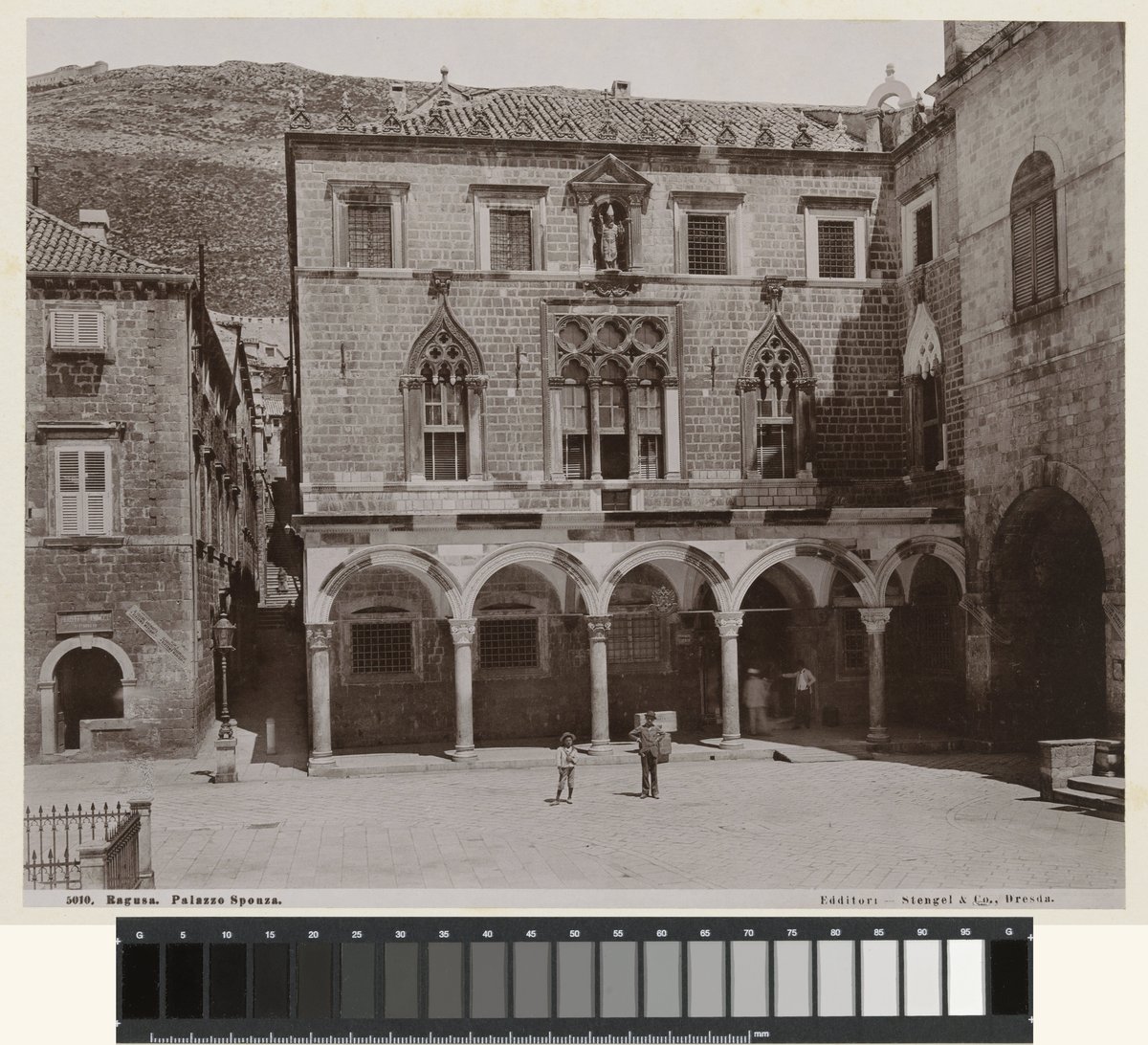
Mala Onofrijeva Česma is situated at the eastern end of Stradun, adjacent to the Main City Guard building in Luža Square. This area is a bustling hub, close to key landmarks such as the Sponza Palace, Rector’s Palace, the Church of St. Blaise, and the Dominican Monastery (Croatia Wanderlust). Its harmonious integration with surrounding Renaissance and Baroque architecture makes it a picturesque highlight for visitors.
Cultural Significance
The fountain has long served as a social gathering spot, a symbol of Dubrovnik’s resilience, and a testament to civic pride. Its decorative elements blend mythological and maritime themes, reflecting the city’s seafaring tradition. Historically, it marked social and religious boundaries in the city and played a central role in daily urban life (Lost in Dubrovnik). Local folklore suggests that drinking from the fountain ensures a return to Dubrovnik (The Tour Guy).
Visitor Information
Visiting Hours and Tickets
- Hours: Open 24/7, year-round, as it is in a public square.
- Tickets: No admission fee; visiting the fountain is free (Putovnica).
Accessibility
- The area is pedestrian-friendly and mostly flat, though some cobblestone surfaces may pose challenges for wheelchairs or strollers. Assistance is recommended for those with mobility concerns.
Best Time to Visit
- Early mornings or late afternoons are ideal to avoid crowds and capture beautiful photos in soft light.
Getting There
- The fountain is easily reached on foot from Dubrovnik’s main gates (Pile or Ploče). The Old Town is pedestrian-only, so comfortable walking shoes are recommended (Valamar Blog).
Travel Tips
- Water: Bring a reusable bottle and refill it with the fountain’s potable water—especially in summer.
- Etiquette: Respect the monument; avoid climbing or sitting on the structure.
- Safety: The Old Town is generally safe, but standard precautions apply in crowded areas (Agoda).
- Weather: Summers can be hot—use the fountain to stay hydrated.
Nearby Attractions
- Sponza Palace: Renaissance palace with historical archives.
- Rector’s Palace: Former seat of Dubrovnik’s rector, now a museum.
- Dominican Monastery: Houses a valuable art collection.
- Church of St. Blaise: Dedicated to the city’s patron saint.
- Stradun: Main pedestrian street lined with shops, cafes, and historic buildings (Croatia Wanderlust).
Guided Tours and Events
Many walking tours of Dubrovnik’s Old Town include Mala Onofrijeva Česma as a highlight, offering insights into its history and significance (Shipped Away). The area around the fountain is especially lively during festivals such as the Dubrovnik Summer Festival (Visit Croatia).
Preservation and Sustainability
Ongoing conservation protects the fountain from weathering and the impact of tourism. Dubrovnik’s pedestrian-only policy and sustainable tourism efforts help reduce stress on heritage sites (World City History). Restoration after the Croatian War of Independence ensured the fountain’s continued use and historical authenticity (HRT Magazin).
Frequently Asked Questions (FAQ)
Q: What are the visiting hours for Mala Onofrijeva Česma?
A: The fountain is accessible 24 hours a day, year-round.
Q: Is there an entrance fee?
A: No, the fountain is free to visit.
Q: Is the water safe to drink?
A: Yes, the water is potable.
Q: How do I get to the fountain?
A: It’s at the eastern end of Stradun, near Luža Square and the Dominican Monastery; walking from Pile or Ploče Gate is recommended.
Q: Are guided tours available?
A: Yes, many walking tours include the fountain (Shipped Away).
Q: Is the site accessible for people with disabilities?
A: The area is mostly accessible, but some cobblestones may be challenging.
Listen to the full story in the app
The whole Mala Onofrijeva Česma,
told well.
Audio guides for 1,100+ cities across 96 countries. History, stories, and local insight — offline ready.
Verified, and shown.
Researched and written by the Audiala editorial team from historical records, architectural archives, and local expertise.
Researched from Wikidata, Wikipedia & official sources · fact-checked · How we make our guides →