Plan and listen to Dominican Church And Monastery In Dubrovnik with Audiala.
Audio guide in your pocket, itinerary in your browser. Built for the way you actually visit.
Introduction
Nestled within Dubrovnik’s UNESCO World Heritage-listed Old Town, the Dominican Church and Monastery is a remarkable testament to the city’s medieval heritage, architectural grandeur, and vibrant cultural life. Established in the early 13th century, this iconic complex offers visitors a deep dive into Gothic, Renaissance, and Baroque architecture, as well as an impressive collection of priceless artworks, illuminated manuscripts, and religious relics. Strategically located near Ploče Gate and integrated into Dubrovnik’s city walls, the monastery has served both spiritual and defensive roles throughout history. Today, it remains an active religious institution and cultural beacon, hosting exhibitions, concerts, and scholarly research while welcoming thousands of visitors every year (Dubrovnik Tourist Board, DubrovnikCity, Visit Dubrovnik).
Foundations and Early Construction
The Dominicans arrived in Dubrovnik in 1225, invited by city authorities to bolster both the spiritual and defensive fabric of the city (Dubrovnik Tourist Board). Construction of the monastery began in 1228, near the city walls. Its strategic position was intentional, allowing the Dominicans to reinforce both education and civic protection. Initially modest, the complex expanded as Dubrovnik’s influence grew, with the main church largely completed by 1315. Local nobility and citizens funded its development, reflecting its importance to the community.
Architectural Evolution and Styles
The Dominican Church and Monastery is a masterful blend of Gothic, Romanesque, Renaissance, and Baroque elements (UNESCO World Heritage). The church features a single-nave design with high vaulted ceilings and pointed arches typical of Gothic architecture. The cloister, attributed to local master builders such as Utišenović and Grubačević, was completed in the 15th century and is renowned for its harmonious proportions and tranquil atmosphere. The 1667 earthquake caused significant damage, leading to Baroque reconstruction of the façade and bell tower while preserving the Gothic core (Croatia.hr, Viagallica).
Artistic and Cultural Treasures
The monastery houses an exceptional collection of art and religious artifacts. Highlights include:
- Main Altar Polyptych: Created by the Venetian workshop of Titian in the 16th century.
- Paintings: Works by Lovro Dobričević, Nikola Božidarević, and Mihajlo Hamzić, prominent artists of the Dubrovnik School.
- 14th-century Crucifix: Attributed to Paolo Veneziano, displayed above the nave.
- Relics and Ex Voto Jewelry: Over 220 relics, medieval chalices, and a significant collection of gold, silver, and coral jewelry, reflecting the city’s maritime wealth (Dubrovnik Museums, dubrovnikcity.com).
The Cloister: A Gothic Masterpiece
The heart of the monastery is the 15th-century cloister, considered one of the most beautiful in the Adriatic (Viagallica). The arcades, supported by slender columns and intricately carved capitals, enclose a peaceful quadrangle often filled with citrus trees. The pavement features gravestones from prominent Dubrovnik families. The cloister’s tranquil ambiance makes it a favorite for both contemplation and cultural events.
The Library and Archives
The monastery’s library is among Croatia’s most important, with over 20,000 volumes, including 220 incunabula (books printed before 1501), illuminated manuscripts, and rare documents (dubrovnikcity.com, visitededubrovnik.com). This collection is invaluable for researchers, providing insight into the intellectual and spiritual history of Dubrovnik.
Role in Dubrovnik’s Religious and Social Life
From its inception, the monastery played a central role in Dubrovnik’s spiritual and social life. It housed one of the city’s earliest scriptoria, supported education and manuscript production, and served as a focal point for religious ceremonies and public gatherings. Its thick walls provided refuge during sieges, and the Dominicans’ mediation skills made them key figures in resolving city disputes (tzdubrovnik.hr).
Impact of Historical Events
The Dominican Monastery has withstood earthquakes, wars, and periods of foreign occupation. The 1667 earthquake caused extensive damage but was swiftly restored due to its importance. During the Croatian War of Independence (1991–1995), its treasures were safeguarded, and post-war restoration preserved its legacy (UNESCO).
Visiting Hours, Tickets, and Practical Information
Opening Hours
- Summer (May 1 – October 31): 9:00 AM – 6:00 PM
- Winter (November 1 – April 30): 9:00 AM – 5:00 PM
(Dubrovnik Tourist Board)
Tickets
- General Admission: €7 per person (as of 2025; subject to change)
- Note: The entrance ticket is not included in the Dubrovnik Pass (Visit Dubrovnik).
- Purchase: Tickets are available at the entrance; combined tickets for other attractions may sometimes be offered.
Accessibility
- The monastery is partially accessible; some historic sections have steps or uneven surfaces. Wheelchair access is provided to most main areas, but check ahead for details.
Location & Directions
- Address: Ulica Svetog Dominika 4, near Ploče Gate
- Access: Short walk from Ploče Gate or Stradun promenade. Parking available outside city walls; public transport stops at Ploče Gate (Croatia Traveller, Holidify).
Travel Tips and Nearby Attractions
- Best Times to Visit: Early morning or late afternoon to avoid crowds and enjoy natural light (Showcasing the Globe).
- Duration: Allow 30–60 minutes; art lovers may wish to stay longer.
- Dress Code: Modest attire is required; shoulders and knees should be covered.
- Photography: Allowed in most areas (no flash/tripods in church; check signage).
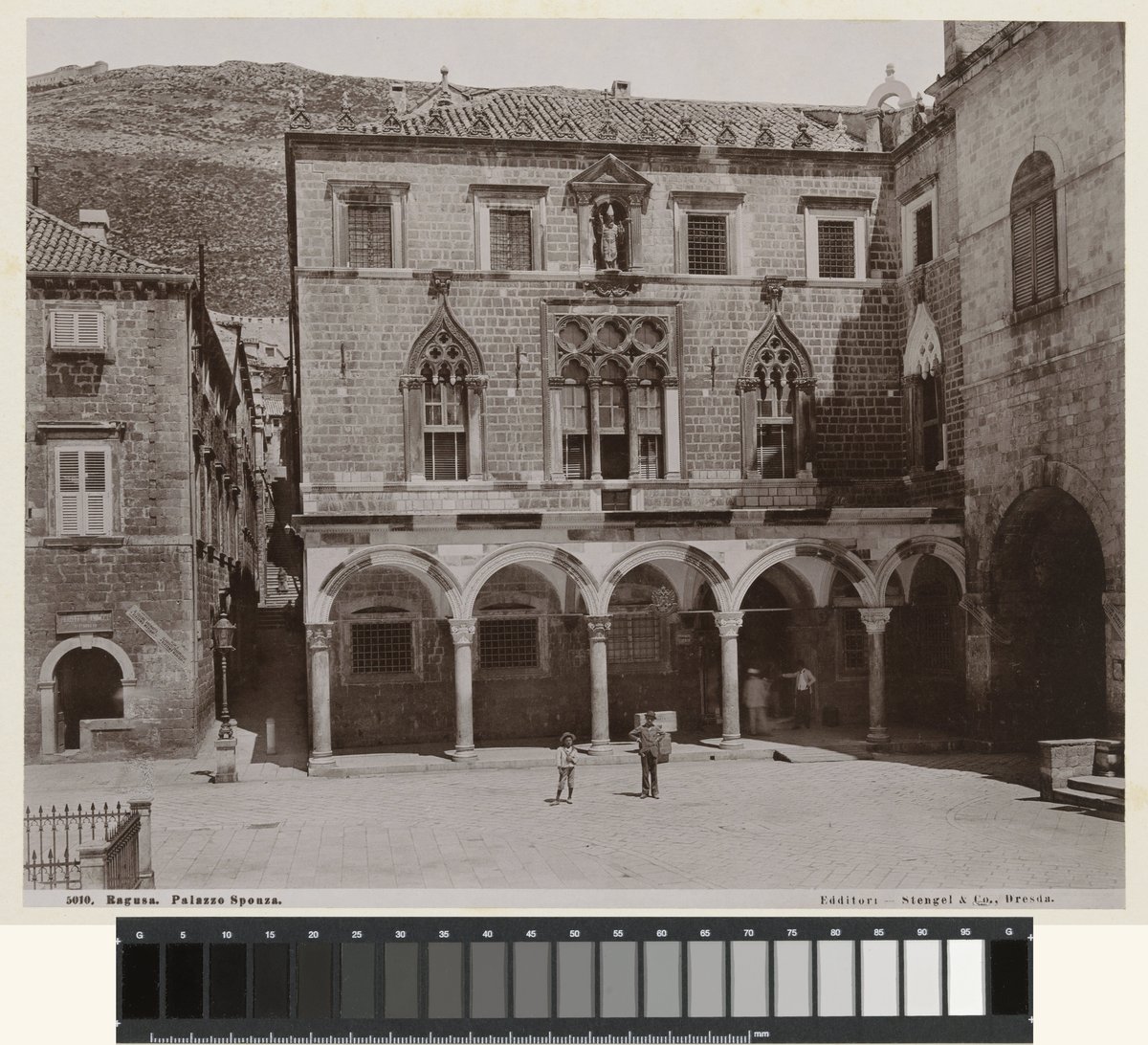
- Nearby Attractions: Rector’s Palace, Sponza Palace, city walls, Franciscan Monastery, Luža Square, and the Church of the Holy Annunciation (TripHobo).
- Gift Shop: Sells religious souvenirs, books, and local crafts.
Preservation and Modern Significance
The Dominican Monastery is protected as part of Dubrovnik’s UNESCO World Heritage site. Ongoing conservation projects safeguard its architecture and collections. The monastery remains a living monument—active in worship, scholarship, and cultural events (Dubrovnik Tourist Board).
Special Events and Cultural Life
The cloister and church are celebrated for their acoustics and ambiance, hosting concerts—especially during the Dubrovnik Summer Festival—as well as art exhibitions and poetry readings (Viagallica). The monastery continues to foster a vibrant community role.
Frequently Asked Questions (FAQ)
Q: What are the visiting hours for the Dominican Monastery Dubrovnik?
A: 9:00 AM–6:00 PM (May–October); 9:00 AM–5:00 PM (November–April).
Q: How much is the admission ticket?
A: €7 per person (as of 2025). Not included in the Dubrovnik Pass.
Q: Are guided tours available?
A: Yes, in multiple languages. Book on-site or via local agencies.
Q: Is the monastery wheelchair accessible?
A: Most main areas are accessible, but some historic sections have limited access.
Q: Can I take photos inside?
A: Photography permitted in the cloister and museum; check for restrictions in the church.
Q: What are the best nearby attractions?
A: Rector’s Palace, city walls, Sponza Palace, Franciscan Monastery—all within walking distance.
Listen to the full story in the app
The whole Dominican Church And Monastery In Dubrovnik,
told well.
Audio guides for 1,100+ cities across 96 countries. History, stories, and local insight — offline ready.

Verified, and shown.
Researched and written by the Audiala editorial team from historical records, architectural archives, and local expertise.
Researched from Wikidata, Wikipedia & official sources · fact-checked · How we make our guides →