Plan and listen to Crkva Gospe od Karmena with Audiala.
Audio guide in your pocket, itinerary in your browser. Built for the way you actually visit.
Introduction
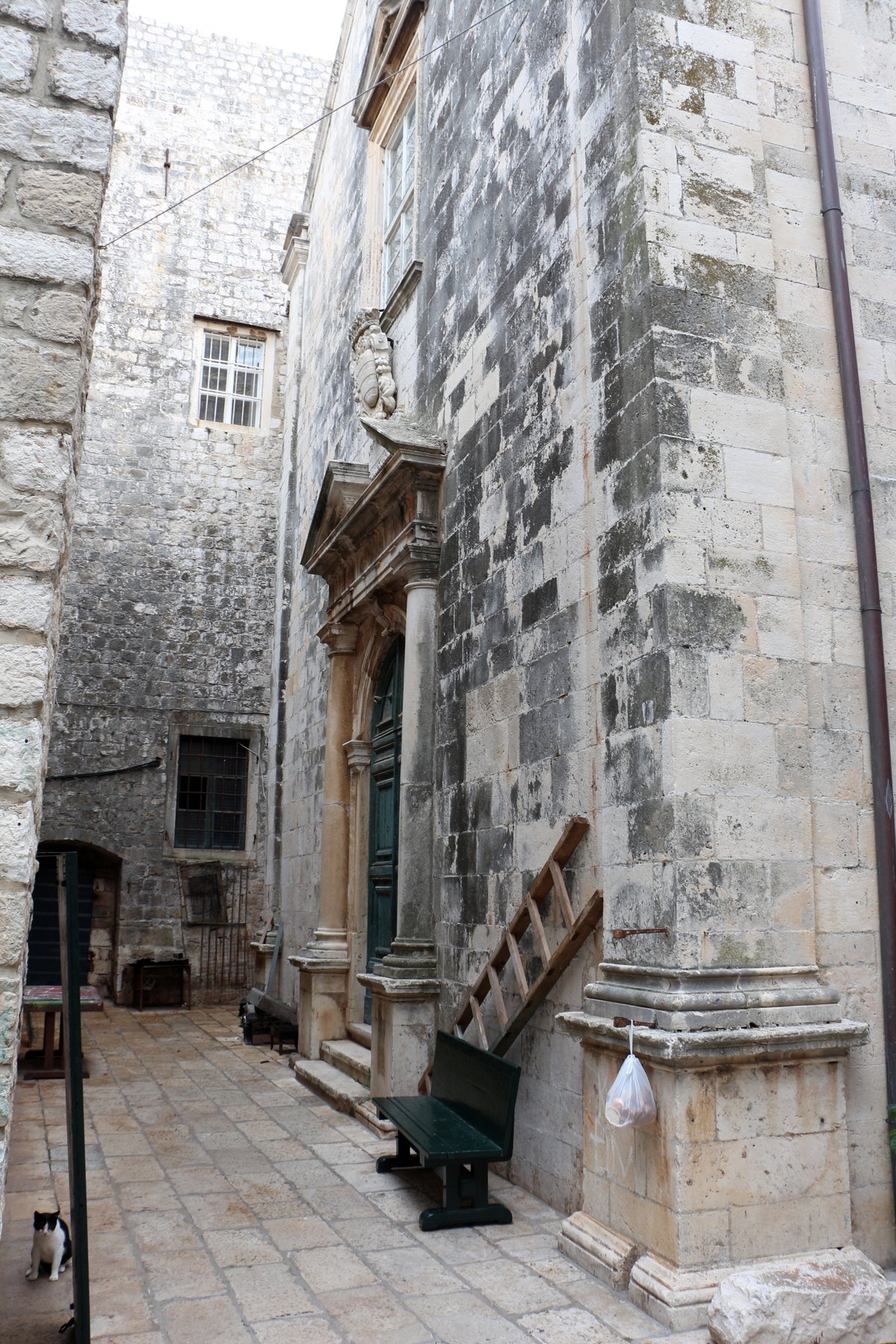
Nestled in the heart of Dubrovnik’s Old Town, Crkva Gospe od Karmena (Church of Our Lady of Mount Carmel) stands as a testament to the city’s spiritual heritage, artistic achievement, and resilience. With foundations reaching back to the early medieval era and a present form shaped by Baroque artistry and post-earthquake adaptation, this church is both a sanctuary for worshippers and a cultural gem for visitors. This guide provides a detailed overview of the church’s historical development, architectural highlights, religious significance, and essential visitor information including opening hours, accessibility, ticketing, and nearby attractions. Travelers and pilgrims alike will find Crkva Gospe od Karmena a rewarding stop, blending Dubrovnik’s layered history with living tradition. For more on current events and updates, refer to the Dubrovnik Tourist Board, scholarly research on Academia.edu, or cultural insights at Brela.hr.

Historical Development and Architecture
Early Foundations
Crkva Gospe od Karmena stands on the site of a much older church dedicated to St. John, dating back to at least the 8th–9th centuries. Archaeological discoveries from 2000–2001 revealed stone liturgical furnishings and ornamental fragments, confirming the site’s early religious use. The original structure evolved through pre-Romanesque and Romanesque periods, distinguished by a single-nave layout, a ciborium (altar canopy), and characteristic stone interlace (pleter) motifs.
Baroque Reconstruction and Post-Earthquake Adaptations
In the early 17th century, the medieval church was replaced by the current Baroque building, constructed between 1628 and 1636. The new design featured a rounded façade and an elliptical dome influenced by Italian Baroque architecture. After the catastrophic 1667 earthquake, which destroyed the dome, local artisans replaced it with a wooden roof decorated with painted beams imitating stone pilasters—a unique adaptation blending necessity with Baroque aesthetics. The current façade is flat with pilasters and a triangular pediment bearing Dubrovnik’s coat of arms and a dedicatory plaque, while the semicircular apse nods to earlier traditions.
Artistic and Spiritual Heritage
The church’s interior is richly adorned. The main altar is dedicated to Our Lady of Mount Carmel and features significant Baroque works, including altarpieces by Sebastiano Ricci, Andrea Vaccaro, and Giovanni Angelo Canini. A notable 15th-century stone statue of St. Blaise, Dubrovnik’s patron, is also present. The painted wooden ceiling—an artistic solution following the earthquake—adds a distinctive charm. Among the treasures is a 16th-century icon of the Madonna and Child attributed to Donato Bizamano, displayed during major Marian feasts (Brela.hr).
Religious and Cultural Significance
Marian Devotion and the Brown Scapular
Crkva Gospe od Karmena is closely linked to the Carmelite Order and the Marian devotion associated with the Brown Scapular, a tradition rooted in the 13th-century apparition of Our Lady to St. Simon Stock. The scapular symbolizes Mary’s protection and is widely worn among Croatian Catholics (EWTN). The church’s liturgical life centers on the annual feast of Our Lady of Mount Carmel on July 16th, marked by special Masses and processions that draw both locals and visitors.
Feast Day and Community Life
The July 16th feast is a highlight of the church calendar, featuring the solemn display of the Madonna and Child icon, processions, and communal worship. This tradition reinforces the church’s role as a focal point for Dubrovnik’s religious and cultural identity. Candles lit before the icon honor the church’s founders and benefactors, connecting present-day worshippers with generations past (Brela.hr).
Practical Visitor Information
Visiting Hours and Tickets
- Summer (May–September): 9:00 AM – 7:00 PM
- Winter (October–April): 9:00 AM – 5:00 PM
- Sunday/Holidays: Hours may vary; consult Dubrovnik Tourist Board or on-site notices.
- Tickets: Admission is free; donations are appreciated.
Accessibility
- The church entrance is at street level and accessible to visitors with limited mobility.
- Some historic flooring and narrow aisles may present challenges; assistance is available on request.
Guided Tours and Events
- Local guides and operators offer tours that often include the church among other Old Town highlights (Dubrovnik Tourist Board).
- Special events occur during feast days and Dubrovnik’s Summer Festival (Dubrovnik Summer Festival).
Photography and Visitor Conduct
- Non-flash photography is allowed except during services or special events.
- Dress modestly and maintain quiet inside.
- Do not touch painted surfaces or historic furnishings.
Nearby Attractions and Travel Tips
- Nearby Sites: St. John Fortress, Franciscan Monastery, Rector’s Palace, Dubrovnik Cathedral, city walls.
- Travel Tips: Early morning or late afternoon visits offer tranquility and optimal lighting. The church is within easy walking distance from both Pile and Ploče Gates; comfortable shoes are recommended.
Visitor Experience
Crkva Gospe od Karmena provides a peaceful refuge from Dubrovnik’s bustling streets. The scent of incense, flickering candles, and the serene ambiance invite reflection and appreciation of the city’s enduring faith and artistry. The church is less crowded than other major attractions, making it an ideal spot for contemplative visits.
Frequently Asked Questions (FAQ)
Q: What are the opening hours?
A: Generally 9:00 AM–7:00 PM in summer; 9:00 AM–5:00 PM in winter. Check for seasonal or event-related changes.
Q: Is there an entrance fee?
A: Entry is free, with donations encouraged for conservation.
Q: Is the church accessible to those with disabilities?
A: Yes, the entrance is level, and assistance is available.
Q: Are guided tours offered?
A: Yes, through local operators and the tourist board.
Q: Can I take photographs?
A: Yes, non-flash photography is permitted except during services.
Summary Table: Architectural Features by Period
| Period | Key Features | Notable Elements |
|---|---|---|
| 8th–13th century | Pre-Romanesque/Romanesque church | Ciborium, pleter stonework |
| 17th century | Baroque church construction | Rounded then flat façade, elliptical dome |
| Post-1667 | Earthquake adaptation | Wooden roof, painted beams, faux pilasters |
| 17th–18th c. | Artistic enrichment | Altarpieces by Ricci, Vaccaro, Canini, Bizamano |
Listen to the full story in the app
The whole Crkva Gospe od Karmena,
told well.
Audio guides for 1,100+ cities across 96 countries. History, stories, and local insight — offline ready.
Verified, and shown.
Researched and written by the Audiala editorial team from historical records, architectural archives, and local expertise.
Researched from Wikidata, Wikipedia & official sources · fact-checked · How we make our guides →