

What the museum is
The Shaanxi History Museum in Xi’an is a major cultural institution devoted to the history and heritage of Shaanxi Province. It is described as China’s first large-scale, modern, national-level museum. Its collection of more than 1.7 million artifacts spans over a million years, from prehistoric times to the Qing Dynasty, and includes 762 first-tier cultural relics and 18 national treasures. Two of the items are among the first batch of artifacts restricted from being exhibited abroad (chinatripedia).
The museum offers permanent and special exhibitions, as well as guided tours, educational programs, and thematic tours. Nearby cultural sites include the Big Wild Goose Pagoda and Xi’an City Wall (chinatripedia).
History and architecture
Construction began in the summer of 1986, and the museum officially opened on June 20, 1991. It covers 65,000 square meters, with exhibition halls spanning 11,000 square meters (chinatripedia).
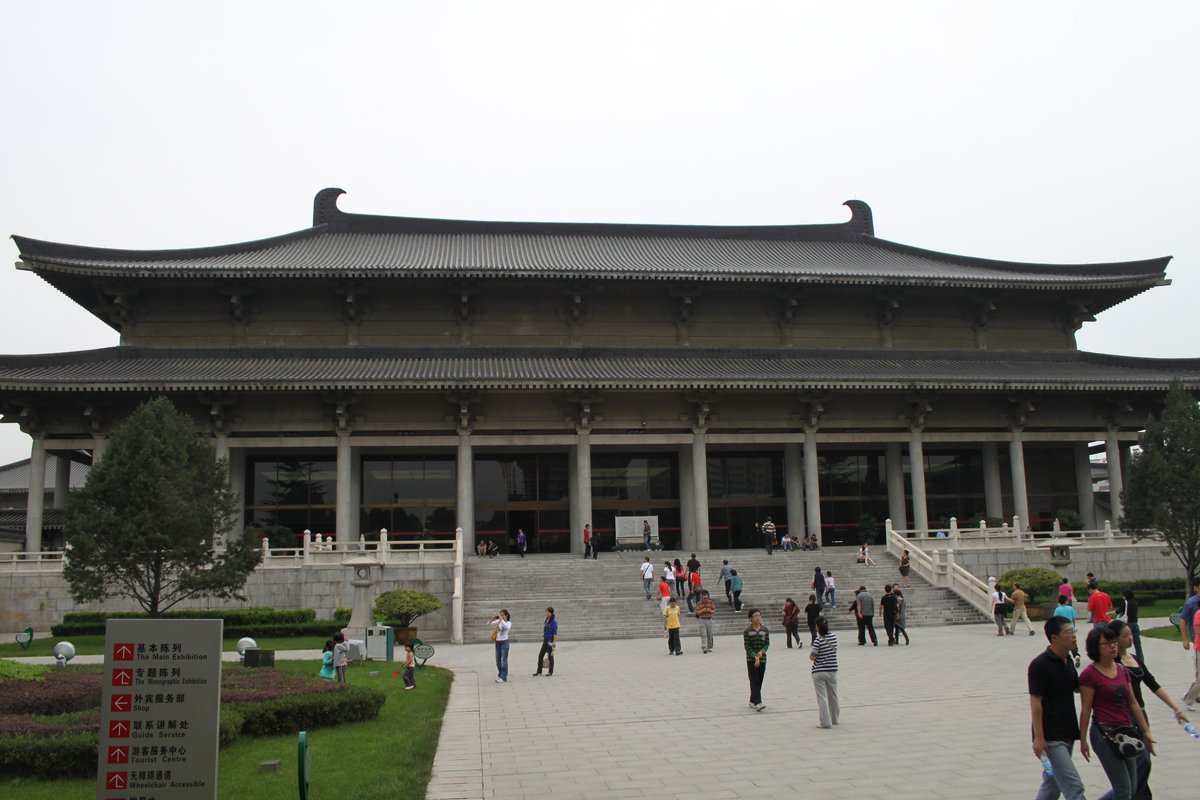
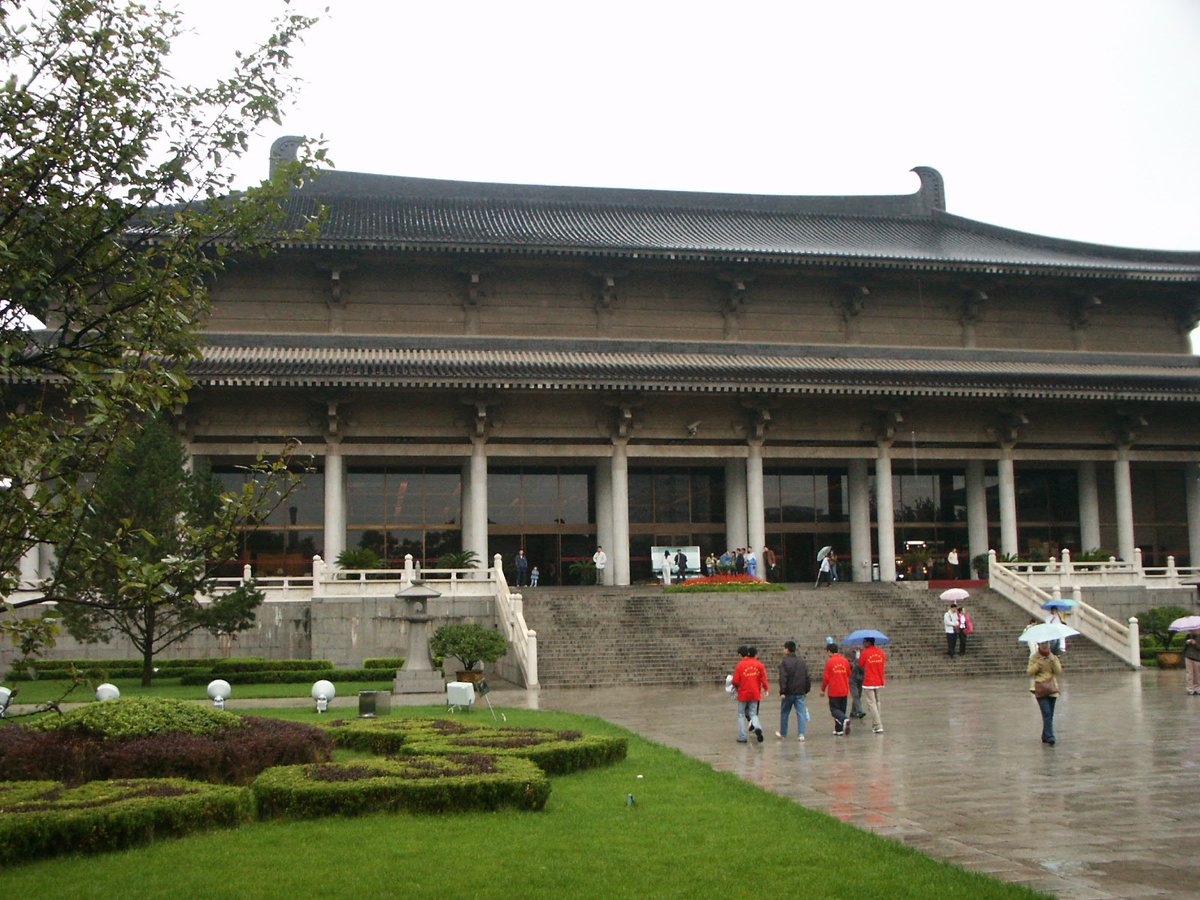
The architectural design blends traditional Chinese and modern styles and draws on Tang Dynasty principles. The main building has a central hall flanked by two wings, forming a symmetrical layout that reflects the grandeur and elegance associated with the Tang Dynasty.
What to see
Permanent exhibitions
The collection ranges from early stone tools to artifacts from pre-1840 Chinese society and the Qing Dynasty (chinatripedia). The permanent exhibitions are described as being divided into three main halls; the hall-by-hall descriptions also identify a final, fourth exhibition hall.
- Prehistoric Shaanxi Displays from the Paleolithic and Neolithic periods include stone tools, pottery, and other objects that offer glimpses of early human activities, daily life, agriculture, and the rise of settlements. The first hall traces Shaanxi’s culture from the Stone Age.
- Bronze Age The second hall presents bronze ware and the technological and artistic achievements of ancient Chinese civilizations.
- Qin and Han dynasties Exhibits include artifacts from both dynasties, such as bronze wares, jade pieces, and terracotta figures. The collection includes the Qi Ding and Wu Si Wei Ding, large bronze vessels used in ancient rituals (China Highlights). The collection description also mentions the Terracotta Warriors, buried alongside China’s first emperor, Qin Shi Huang, over 2,000 years ago (chinatripedia).
- Sui and Tang dynasties The third hall features paintings, sculptures, ceramics, murals, pottery, and gold and silver objects that reflect the prosperity and cultural achievements of the period.
- Song, Yuan, Ming, and Qing dynasties The final hall gives an overview of cultural and historical developments during these periods.
Special exhibitions
- Treasures of the Great Tang Dynasty and Hejia Village Treasures Located on the west side of the museum in the Treasure Hall, this exhibition presents more than 300 selected artifacts, primarily gold and silver, from over 1,000 items unearthed at the Hejiacun tomb (letstraveltochina). Another description identifies the objects as treasures excavated from a Tang Dynasty cellar, including gold and silver wares, ceramics, and other valuable items. The exhibition’s entrance fee is 30 yuan (Tour-Beijing).
- Tang Dynasty Mural Hall On the underground floor of the east exhibition hall, this collection includes nearly 600 murals from more than 20 Tang Dynasty tombs. The murals portray customs, rituals, clothing, leisure activities, architecture, court life, religious practices, and daily activities (letstraveltochina). Another description gives the mural area as over 600 square meters and lists a separate ticket price of 270 yuan (Trip.com).
- Horse Culture Display Organized with 14 cultural institutions from across China, this exhibition brings together more than 150 artifacts related to horses. It explores horses’ roles in agriculture, daily life, transportation, military campaigns, and cultural expression across different dynastic periods (chinatripedia).
Thematic tours
The museum offers thematic tours focused on particular periods and subjects.
- Qin and Han Civilizations This tour explores political unification and cultural development, with a visit to the Qin and Han Gallery, where objects include terracotta warriors, bronze mirrors, and coins. It addresses social, political, and cultural change during these dynasties (Trip.com).
- Silk Road and Cultural Exchange This tour highlights Shaanxi’s role as a hub in the ancient Silk Road network. Exhibits include silk textiles, exotic goods, and objects reflecting exchanges between China and other civilizations (China Discovery).
Practical visiting information
Opening hours
The museum is closed on Mondays except for national holidays. The available opening-hour information gives two schedules:
- One listing states that it is open Tuesday to Sunday from 8:30 AM to 6:00 PM, with last admission at 5:00 PM (chinatripedia).
- A seasonal schedule lists hours from March 16 to November 14 as 08:30 to 18:00, with last admission at 16:30. From November 15 to March 15, hours are 09:00 to 17:30, with last admission at 16:00 (Tour-Beijing).
Tickets and reservations
Admission to the basic exhibition halls is free, but a ticket is required. Free tickets can be obtained at the entrance or reserved in advance. Reservations are available through the museum’s official website or WeChat account. Tickets are released daily at 10:00, 11:00, 18:00, and 19:00; advance booking is advised, especially during peak seasons (Trip.com). Special exhibitions require separate paid tickets, including the 30-yuan Treasure Hall ticket and the 270-yuan Tang Dynasty Mural Hall ticket.
Tours and other services
Guided tours provide explanations and historical context for the exhibits and are recommended for visitors who want to learn more about the stories behind the objects (letstraveltochina). The museum also offers educational programs, lectures, and workshops, as well as research opportunities, internships, and collaborative projects with academic institutions.
Private VIP tours are available. They typically last about four hours, can be customized around particular interests or themes, and include a guide and transportation to and from the museum, starting at the visitor’s hotel (Yonder Tours).
Audio guides are available to rent for 30 yuan. Some visitors have found them confusing and not comprehensive (Trip.com).
Accessibility and amenities
The museum is at 91 Xiaozhai East Road, Yanta District, Xi’an, Shaanxi Province, China, in the southern suburb of Xi’an near the Big Wild Goose Pagoda and Small Wild Goose Pagoda.
The nearest bus stop is Shaanxi History Museum Stop (Shanxi lishi bowuguan 陕西历史博物馆), in front of the south gate. Listed bus routes include No. 5, 19, 24, 26, 30, 34, 271, 400, 401, 521, 701, and 713 (chinatripedia). Another route listing gives buses 27, 527, 400, 30, 19, and 401 (Tour-Beijing).
One metro route is to take line 1 or 2 to Xiaozhai Station, leave through the northeast exit, and walk about 500 meters east to the south gate (chinatripedia). Another listing gives subway lines 2, 3, and 4 as options (Tour-Beijing).
Free lockers are available for bags and backpacks, but not laptops. Cameras and phones are allowed, though flash photography is prohibited. The museum also has washrooms and small souvenir shops (Tour-Beijing).
Tips
- Visiting between 12 PM and 2 PM is suggested as a way to avoid some crowds. Weekends tend to be busier (chinatripedia).
- Be prepared for security checks. Lighters and other prohibited items are not allowed inside. Drinking water is provided, and visitors can bring a water bottle or refillable container (chinatripedia).
- The museum does not have air conditioning. A handheld fan may be useful in spring or autumn, especially when the museum is crowded and stuffy (chinatripedia).
- If time is limited, one suggested plan is to prioritize the Fourth, Second, and Third Exhibition Halls. The prehistoric section in the First Exhibition Hall can have long queues (chinatripedia).
Nearby places and events
Nearby attractions include the Big Wild Goose Pagoda, the Small Wild Goose Pagoda, Xi’an City Wall (also called the Ancient City Wall), and the Muslim Quarter. These sites offer further views of Xi’an’s historical and cultural heritage.
The museum also hosts events such as cultural festivals, temporary exhibitions, and workshops. The central hall and surrounding gardens are noted as photographic spots.
FAQ
What are the Shaanxi History Museum’s visiting hours?
The museum is closed on Mondays except for national holidays. The opening-hour listings and seasonal schedule are given above.
How much are tickets?
Admission to the basic exhibition halls is free, but a ticket is required. Separate tickets are listed for the Treasure Hall and Tang Dynasty Mural Hall.
How can I reserve a ticket?
Free tickets can be reserved through the museum’s official website or WeChat account. Daily release times are listed above.
What nearby historical sites can I visit?
Nearby attractions include the Big Wild Goose Pagoda, Small Wild Goose Pagoda, Xi’an City Wall, and Muslim Quarter.