

Visitor Information
Opening Hours
The Giant Wild Goose Pagoda is open daily from 8:00 AM to 5:30 PM. However, it's advisable to check the official website for any changes in the schedule.
Ticket Prices
The entrance fee for the pagoda is typically around 50 CNY for adults. Discounts are available for students and seniors. Additional fees may apply for access to certain areas within the Da Ci'en Temple complex.
Travel Tips
- Best Time to Visit The best time to visit is during the spring (March to May) or autumn (September to November) when the weather is pleasant.
- How to Get There The pagoda is easily accessible by bus, metro, or taxi. It is located in the Yanta District of Xi'an.
- What to Wear Comfortable walking shoes and modest attire are recommended, especially if you plan to enter the temple premises.
Nearby Attractions
- Shaanxi History Museum Located nearby, this museum offers a deeper insight into the region's rich history.
- Big Wild Goose Pagoda North Square A popular spot for visitors to relax and enjoy the musical fountain show.
Special Events and Guided Tours
The pagoda hosts various cultural events and festivals throughout the year. Guided tours are available in multiple languages and can be booked in advance through the official website.
Photographic Spots
The pagoda and its surrounding gardens offer numerous picturesque spots. The best views can be captured during sunrise or sunset.
History
Origins and Construction
The Giant Wild Goose Pagoda was constructed to house Buddhist sutras and figurines brought to China from India by the Buddhist monk Xuanzang, who is renowned for his 17-year pilgrimage to India. Xuanzang's journey and the subsequent construction of the pagoda are pivotal moments in the history of Buddhism in China (China Highlights).
Architectural Evolution
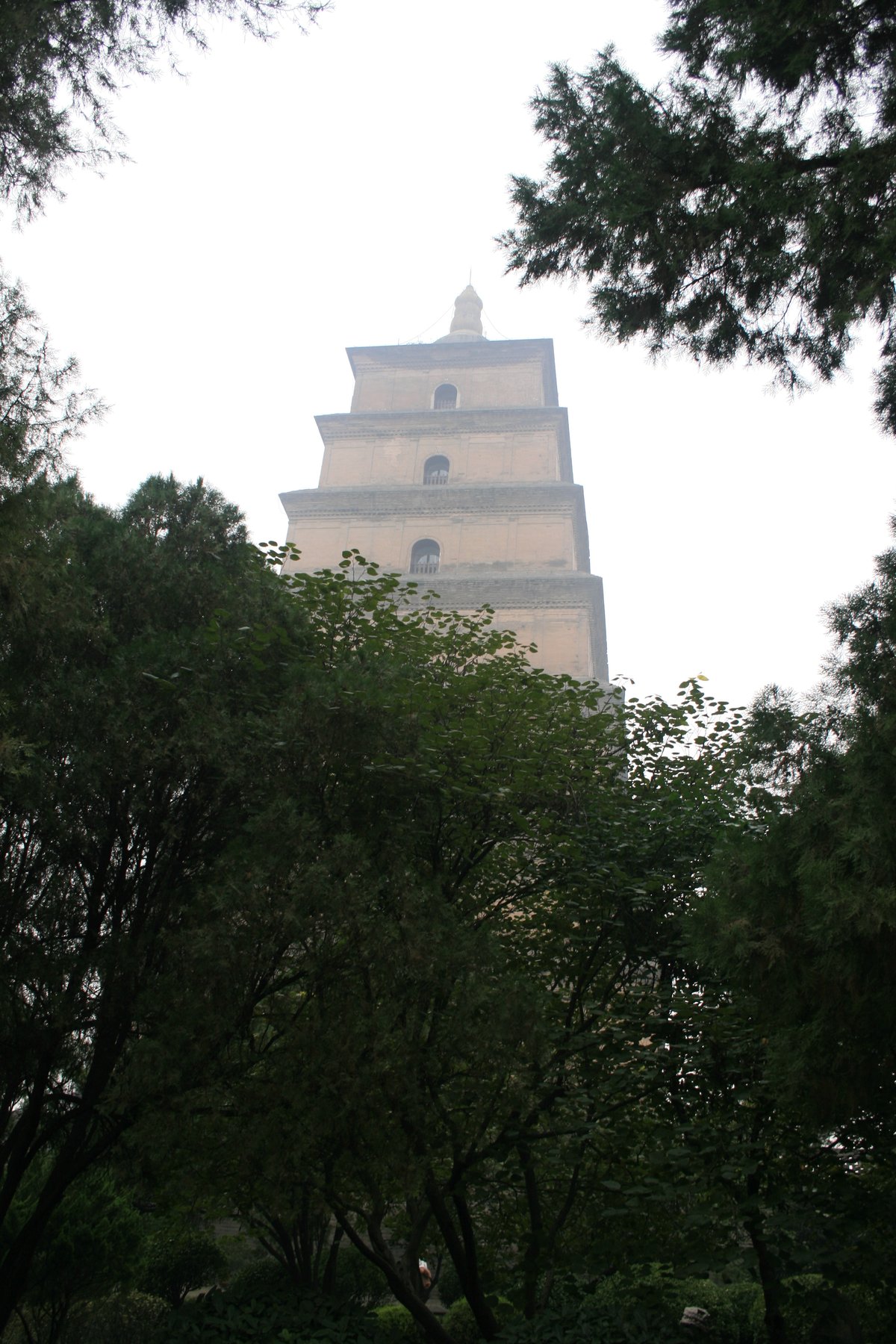
The original structure of the Giant Wild Goose Pagoda was a five-story building made of rammed earth with a stone exterior. However, due to natural disasters and the passage of time, the pagoda underwent several reconstructions and renovations. In 704 AD, during the reign of Empress Wu Zetian, the pagoda was rebuilt and expanded to its current height of seven stories, standing at approximately 64 meters (210 feet) tall (Travel China Guide).
Historical Significance
The Giant Wild Goose Pagoda holds immense historical significance as a symbol of the cultural and religious exchanges between China and India. Xuanzang's journey to India and his efforts to bring back Buddhist texts and relics played a crucial role in the spread of Buddhism in China. The pagoda served as a repository for these sacred texts and became a center for translating Buddhist scriptures from Sanskrit to Chinese. This translation work significantly contributed to the development of Chinese Buddhism and the dissemination of Buddhist teachings throughout East Asia (UNESCO).
Cultural and Religious Impact
The pagoda's construction marked a significant period in the Tang Dynasty, known for its cultural prosperity and openness to foreign influences. The Tang Dynasty is often regarded as a golden age in Chinese history, and the Giant Wild Goose Pagoda stands as a testament to the era's architectural and cultural achievements. The pagoda's design, with its simple yet elegant structure, reflects the architectural style of the Tang Dynasty and has influenced the design of subsequent pagodas in China and other parts of Asia (Cultural China).
Preservation and Restoration Efforts
Over the centuries, the Giant Wild Goose Pagoda has faced numerous challenges, including earthquakes and natural wear and tear. Significant restoration efforts have been undertaken to preserve this historic monument. Notably, during the Ming Dynasty (1368-1644) and the Qing Dynasty (1644-1912), extensive repairs were carried out to maintain the structural integrity of the pagoda. In recent years, modern preservation techniques have been employed to ensure the pagoda's longevity and to protect it as a UNESCO World Heritage Site (UNESCO).
Modern-Day Relevance
Today, the Giant Wild Goose Pagoda remains a prominent cultural and religious site, attracting millions of visitors annually. It is not only a place of worship for Buddhists but also a popular tourist destination. The pagoda is part of the Da Ci'en Temple complex, which includes beautiful gardens, statues, and halls that provide visitors with a glimpse into the rich history and cultural heritage of the Tang Dynasty. The site also hosts various cultural events and festivals, further enhancing its significance as a cultural landmark (China Travel).
Xuanzang's Legacy
Xuanzang's legacy is intricately linked to the history of the Giant Wild Goose Pagoda. His journey to India and his subsequent translation of Buddhist texts had a profound impact on Chinese Buddhism. The pagoda stands as a monument to his dedication and scholarly achievements. Xuanzang's life and work have been immortalized in Chinese literature, most notably in the classic novel "Journey to the West," which fictionalizes his pilgrimage and has become one of the Four Great Classical Novels of Chinese literature (Britannica).
Influence on Chinese Architecture
The architectural design of the Giant Wild Goose Pagoda has had a lasting influence on Chinese architecture. Its tiered structure and symmetrical form have inspired the design of numerous pagodas across China and other parts of Asia. The pagoda's construction techniques, which combine rammed earth with brick and stone, have also been studied and admired by architects and historians. The pagoda's enduring presence is a testament to the ingenuity and craftsmanship of ancient Chinese builders (China Daily).
FAQ Section
What are the visiting hours for the Giant Wild Goose Pagoda?
The pagoda is open daily from 8:00 AM to 5:30 PM. It is advisable to check the official website for any changes.
How much do tickets to the Giant Wild Goose Pagoda cost?
The entrance fee is generally around 50 CNY for adults, with discounts available for students and seniors. Additional fees may apply for access to certain areas.
What is the best time to visit the Giant Wild Goose Pagoda?
The best time to visit is during the spring (March to May) or autumn (September to November) when the weather is pleasant.
Discover More
For more information and updates, download the Audiala mobile app, check out our related posts, or follow us on social media. Plan your visit to the Giant Wild Goose Pagoda today and explore one of Xi'an's most iconic historical sites!