Introduction
The first time the scent of coconut chicken hot pot drifts past you on a Shenzhen street at 11 p.m., you realize this city never really sleeps. In a place once known only for fishing villages, glass towers now pierce the sky while 1,700-year-old walls still stand in Nantou. Shenzhen doesn't ease you in. It dares you to keep up.
What surprises most isn't the speed of its transformation but the layers that survived it. Walk five minutes from Ping An Finance Centre's free observation deck, where the city spreads out like a circuit board at night, and you'll reach streets where incense still curls from Chiwan Tianhou Temple, built during the Song Dynasty. The contrast isn't jarring. It's the point.
This is China's Silicon Valley with opinions. DJI's headquarters doesn't just manufacture drones. It reshapes how the world sees aerial space. Yet the same energy pulses through OCT Loft, where former factories now house galleries and cafes, and through Gankeng Hakka Town, where locals still wear traditional Hanfu for photos against centuries-old homes. The tech doesn't erase the past. It funds its revival.
Come for the futuristic skyline if you must. Stay for how the light hits the mirror installations at C Future City at dusk, or the particular quiet that falls over Enshang Wetland Park when the port lights flicker on. Shenzhen won't charm you politely. It will change how you understand what a Chinese city can become.
Places to Visit
The Most Interesting Places in Shenzhen
Chang Fu Jin Mao Tower
The Chang Fu Jin Mao Tower stands as a remarkable emblem of Shenzhen’s extraordinary transformation from a modest fishing village into a bustling global…
Shum Yip Upperhills Tower 1
Shum Yip Upperhills Tower 1 stands as one of Shenzhen’s most iconic skyscrapers, symbolizing the city’s rapid transformation into a global metropolis that…
Shenzhen Safari Park
Shenzhen Safari Park stands as a pioneering and immersive wildlife destination in Shenzhen, China, blending conservation, education, and entertainment within…
He Xiangning Art Museum
Nestled in the vibrant Overseas Chinese Town (OCT) of Shenzhen, the He Xiangning Art Museum stands as a distinguished cultural landmark celebrating one of…
China Merchants Bank Tower
The China Merchants Bank Tower, prominently situated in Shenzhen’s bustling Futian Central Business District, stands as a testament to China’s rapid economic…
Fairylake Botanical Garden
Fairylake Botanical Garden, also known as Xianhu Botanical Garden, stands as one of Shenzhen’s premier natural and cultural landmarks, offering visitors a…
Lianhuashan Park
Lianhuashan Park, also known as Lotus Hill Park, is a prominent urban green space nestled in the bustling heart of Shenzhen's Futian District.
Man Tin Cheung Park
Welcome to our comprehensive guide on visiting Man Tin Cheung Park, a prominent historical site located in Shenzhen, People's Republic of China.
Shenzhen Convention and Exhibition Center
The Shenzhen Convention and Exhibition Center (深圳会展中心) stands as a prominent landmark in the heart of Futian District, Shenzhen, China.
Ping an Finance Centre
The Ping An Finance Centre (PAFC) stands as a towering emblem of Shenzhen’s remarkable transformation from a modest fishing village into a thriving global…
Mang Gui Kiu
Mang Gui Kiu, also known as the Haunted Bridge or Ghost Bridge, is a fascinating landmark that offers a blend of historical intrigue and eerie folklore.
Zhaoshang Subdistrict
Sea World is not a marine park but a waterfront district built around a retired French liner, the Minghua, in Shekou's reform-era heart.
What Makes This City Special
Vertical Ambition
Ping An Finance Centre's free sky deck sits 600 metres up, where the glass floor vibrates slightly when the building sways in the wind. Stand there at dusk and watch the city flip its lights on in perfect synchrony. The view doesn't just impress. It quietly rewires how you see what a city can become in one generation.
Factory to Gallery
OCT Loft took an old industrial compound and filled it with galleries that still smell faintly of machine oil. The light falls through skylights built for assembly lines onto Zaha Hadid sketches. Walk these corridors long enough and you start to understand how Shenzhen turned speed into culture.
Borrowed Landscapes
Lianhuashan Park offers the best vantage of the Civic Centre and Ping An tower, especially on Friday nights when the light show begins. Climb at golden hour and the Deng Xiaoping statue casts a long shadow across grass worn smooth by morning tai chi. The contrast between controlled nature and unchecked vertical growth is the real exhibit.
Before the Boom
Nantou Ancient Town's restored gates and narrow lanes predate the 1980 special economic zone by eight centuries. Incense drifts from Chiwan Tianhou Temple, founded around 1300, while nearby cafés serve pour-over in 400-year-old Hakka courtyards. Here the city lets you see its face before it learned to code.
Historical Timeline
From Fishing Village to Lightning Strike
Shenzhen's compressed century still feels impossible
Neolithic Footprints
The first people left stone tools and pottery shards along the Pearl River estuary. Salt air and mangrove swamps shaped their days. Those scattered camps would wait four millennia before anyone called this place a city.
Qin Empire Claims the Coast
Imperial surveyors marched south and folded the estuary into Nanhai Commandery. Tax registers replaced oral memory. The smell of incense at makeshift altars now mingled with the scent of newly arrived northern administrators.
Bao'an County Born
Eastern Jin officials established Bao'an County and Dongguan Commandery on the same humid plain. Administrative ink dried on mulberry paper while fishermen still dried their nets an hour's walk away. The name Bao'an would outlast every dynasty that used it.
Song Emperor's Last Breath
Young Emperor Bing flung himself into the sea near what is now Nanshan as Mongol horsemen watched from the cliffs. The Song navy followed him down. Locals still leave offerings at the Song Shaodi Mausoleum where the final imperial standard disappeared beneath the waves.
Nantou Walled City Rises
Ming engineers laid stone for Nantou's defensive walls against Japanese pirates. The gates still stand. You can run your hand along blocks cut when cannon smoke first drifted across these waters.
Battle of Tunmen
Ming war junks met Portuguese caravels near Nantou in the first naval clash between China and Europe. Gunpowder smoke hung low over the Pearl River for days. Neither side quite understood what the other represented. Both were wrong.
Xin'an County Established
Officials carved Xin'an County from the old territory, its borders stretching across what would become both Shenzhen and Hong Kong. The stroke of a Ming bureaucrat's brush quietly joined two futures that would later be violently separated.
The Great Clearance
Qing soldiers burned every coastal home within 50 li of the sea to starve out Ming loyalists. Residents watched their villages reduced to ash. When the order was finally lifted, only ghosts and foundations remained. The silence lasted years.
Hong Kong Carved Away
The Treaty of Nanking handed Hong Kong Island to Britain. Xin'an County's southern limb was amputated. Families suddenly needed passports to visit relatives they could see from their doorsteps. The wound has never fully closed.
Railway Reaches Shenzhen
The Guangzhou-Kowloon Railway opened with Shenzhen Station as a sleepy halt. Steam whistles echoed across rice paddies. Within decades that same line would carry desperate refugees fleeing in the opposite direction.
PLA Enters Nantou
On October 19 the People's Liberation Army walked into Nantou without firing a shot. The old county seat changed hands quietly. Most residents had already seen enough history to know the next chapter would be written somewhere else.
Shekou Industrial Zone Founded
Deng Xiaoping's experiment began on a muddy peninsula called Shekou. The first slogans were painted directly onto factory walls because there was no time to wait for signboards. Farmers became welders overnight.
SEZ Status Granted
The National People's Congress declared Shenzhen a Special Economic Zone in August. The city received permission to break every rule that had governed China for thirty years. Concrete mixers started before the ink dried.
First Public Construction Bid
The International Commercial Building became mainland China's first project awarded through open bidding. Local officials held their breath. The experiment worked. Everything accelerated after that.
Typhoon and Fire
A Category 12 typhoon tore through makeshift barracks in September, followed weeks later by a fire that consumed 23,000 square meters. Twenty thousand demobilized PLA soldiers slept in the ruins and kept building at first light.
Stock Exchange Opens
The Shenzhen Stock Exchange began trading in a converted warehouse. Traders shouted prices under bare bulbs. Within a decade those voices would be replaced by servers cooled by distilled water from the Pearl River.
Wen Junhui Born
Wen Junhui entered the world in a Shenzhen hospital the same year the city passed two million people. The boy who would become a K-pop star trained in the same districts built by the generation that had arrived with nothing but a cardboard suitcase.
Steven He Born
Steven He arrived in the same whirlwind of births that marked Shenzhen's first generation of true natives. The future comedian grew up surrounded by people inventing futures faster than language could describe them. His timing was perfect.
OCT Loft Finds Its Voice
Abandoned factory halls in Nanshan became OCT Loft. Artists moved into spaces still smelling of machine oil. The transformation from sweatshop to gallery happened so smoothly that few noticed the poetry of it.
Ping An Finance Centre Tops Out
At 599 meters the Ping An tower became the city's tallest exclamation mark. Glass panels clicked into place while autonomous drones delivered parts to workers 500 meters above the street. The observation deck now lets you watch tomorrow arrive from above.
DJI Sky City Opens Bridge
The futuristic headquarters of the drone empire finally allowed public access to its sky bridge. Visitors stand 200 meters up and look down at the same fields their grandparents once farmed. The contrast is almost violent.
Notable Figures
Wen Junhui
born 1996 · Singer and actorHe trained in local children’s troupes before South Korea recruited him for SEVENTEEN. The speed with which Shenzhen turned farmland into recording studios mirrors his own trajectory from child actor to global idol. He still returns to eat coconut chicken hot pot when schedules allow.
Cheng Xiao
born 1998 · Singer and actressRaised among the first generation to know only the boom years, she moved from local dance classes to the K-pop group WJSN. The neon geometry of OCT Harbour looks exactly like the future she grew up expecting. She still posts photos from Nantou’s old lanes between filming schedules.
Steven He
born 1996 · Comedian and YouTuberBefore “Emotional Damage” became a global catchphrase, he was a Shenzhen kid watching the city rewrite itself every few years. The contrast between his parents’ memories of rice paddies and the Ping An tower became comedy fuel. He jokes that his accent still slips into Cantonese when he’s tired.
Plan your visit
Practical guides for Shenzhen — pick the format that matches your trip.
Shenzhen Money-Saving Passes & Cards
Should you buy a Shenzhen pass? Usually no. Compare metro tickets, Shenzhen Tong, attraction annual cards, break-even math, and common ticket traps.
First-Time Visitor Tips for Shenzhen That Actually Help
First-time Shenzhen tips from a local point of view: where queues are real, where they are imaginary, how to move fast, and where tourists get overcharged.
Photo Gallery
Explore Shenzhen in Pictures
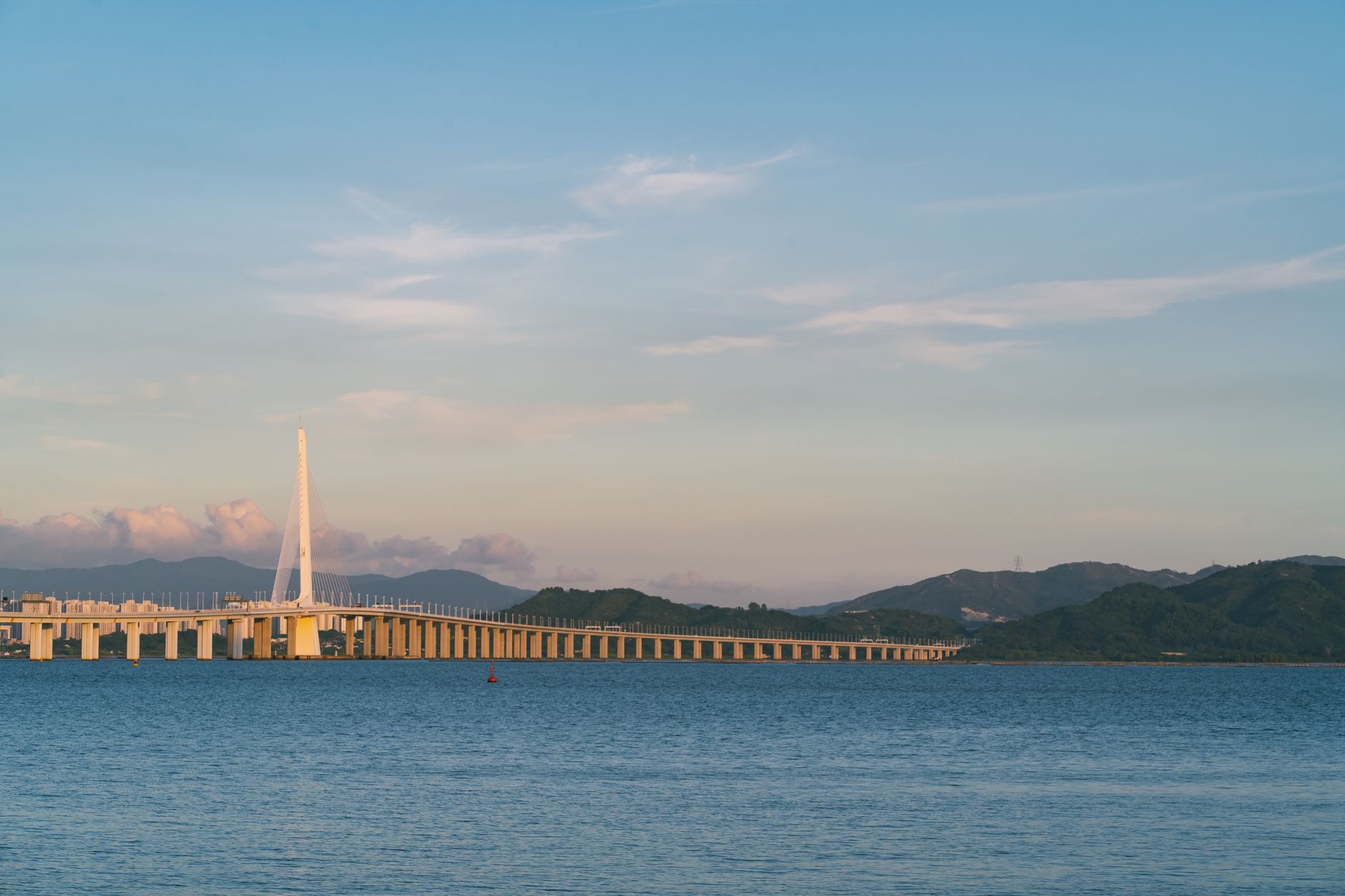
The tranquil waters of Shenzhen Bay reflect the warm hues of a sunset, highlighting the silhouette of a massive bridge under construction against distant mountains.
kf zhou on Pexels · Pexels License
The Shenzhen Airlines maintenance hangar facility in Shenzhen, China, captured on a cloudy day with a service vehicle parked on the tarmac.
Allen Boguslavsky on Pexels · Pexels License
The elegant Shenzhen Bay Bridge spans the tranquil waters, connecting the coastal landscape of Shenzhen, China, under a serene sunset sky.
Lywin on Pexels · Pexels License
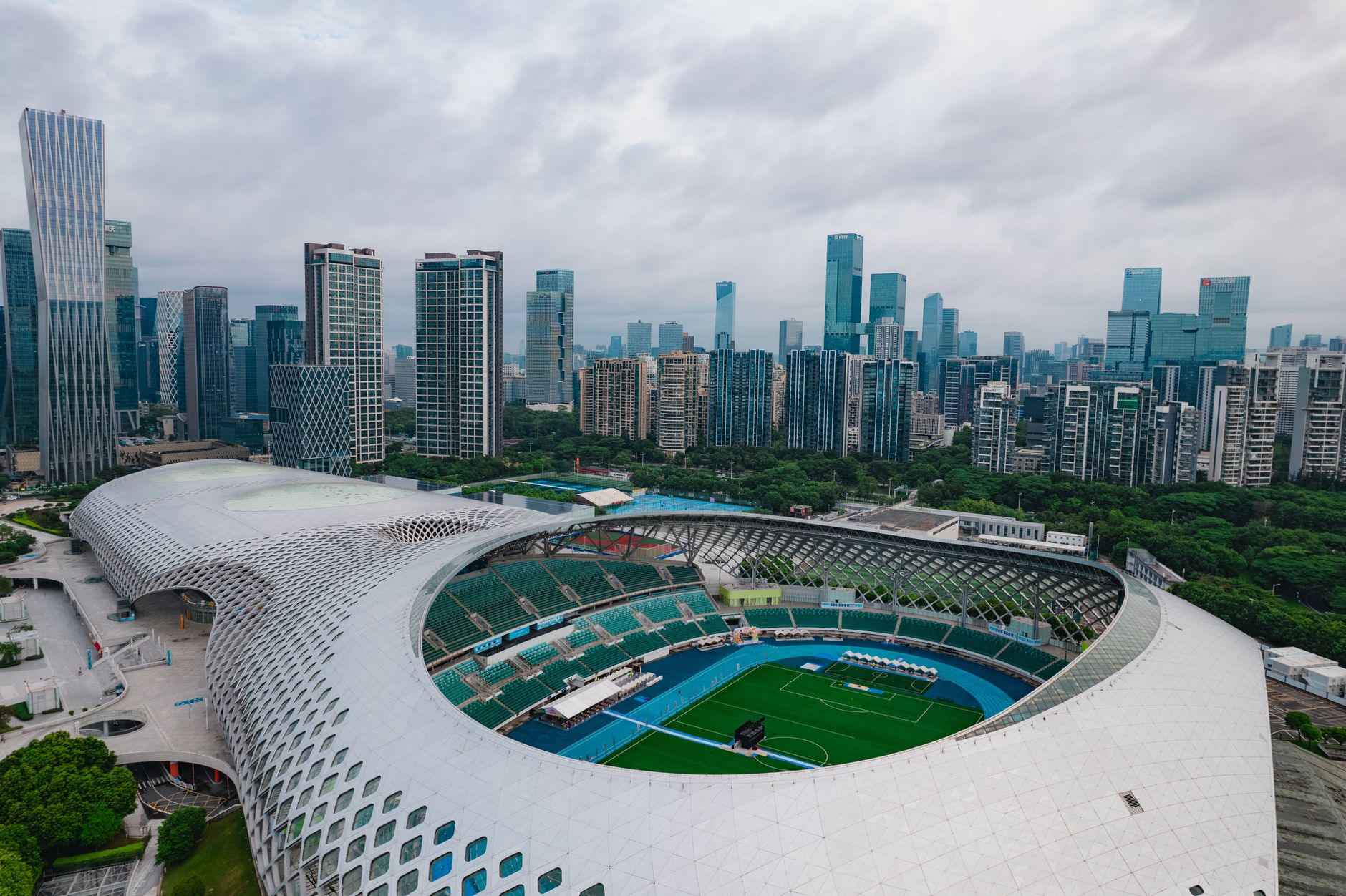
An impressive aerial perspective of the futuristic Shenzhen Bay Sports Center stadium set against the backdrop of Shenzhen's towering urban skyline.
jason hu on Pexels · Pexels License
The vibrant skyline of Shenzhen, China, comes alive at night with a dazzling array of illuminated modern skyscrapers and architectural landmarks.
ainc T on Pexels · Pexels License
The modern skyline of Shenzhen, China, glows under a twilight sky, showcasing a dense mix of architectural marvels and residential high-rises.
. what on Pexels · Pexels License
Practical Information
Getting There
Shenzhen Bao'an International Airport (SZX) sits 30km northwest of the centre. Metro Line 11 reaches Futian in 35 minutes. High-speed trains arrive at Futian Station and Shenzhen North from Hong Kong's West Kowloon in 15-19 minutes. Direct ferries also connect the airport to Hong Kong and Macau.
Getting Around
The Shenzhen Metro runs 18 lines in 2026 and remains the cleanest, most efficient option. Tap international Visa or Mastercard directly or use Alipay/WeChat transport QR codes. Shenzhen Tong cards cost ¥20 deposit with no expiry. Didi works everywhere once your payment is linked. Bike sharing via Meituan dots every block.
Climate & Best Time
October to December brings 18–26°C days, low humidity and almost no rain. January-February stays mild at 10–20°C. Summers hit 26–35°C with heavy humidity and typhoon risk from July to September. Visit in late autumn if you want clear skies for the skyscraper views and comfortable evening walks.
Language & Currency
Mandarin dominates, Cantonese is common, and English appears mainly in hotels and new malls. Download offline Chinese on Google Translate before arrival. Everything runs on Alipay or WeChat Pay linked to an international card. Cash is accepted but vendors often lack change for ¥100 notes.
Where to Eat
Don't Leave Without Trying
上井精致日本料理
local favoriteOrder: The omakase selection showcases pristine seasonal fish; locals swear by the sashimi platter and hand-rolled nigiri.
A refined Japanese spot that takes its craft seriously—the kind of place where precision matters as much as flavor. Tucked in the Yijing Center, it's where Futian professionals escape for an authentic meal.
Xiaolajiao
local favoriteOrder: Go for the mapo tofu—numbing Sichuan peppercorns balanced with fiery chili oil—and the chongqing chicken (la zi ji) if you can handle the heat.
This is honest, unpretentious Sichuan cooking that doesn't compromise. The tingling sensation from the peppercorns is addictive, and the portions are generous enough to share.
星河·COCOPARK酒吧街
fine diningOrder: Signature cocktails and craft beers; the bartenders here know what they're doing. Order whatever seasonal cocktail they're featuring.
COCOPARK bar street is Shenzhen's answer to a proper night out—multiple venues under one roof, lively energy, and bartenders who actually care about their craft. It's where the city comes to unwind after work.
深圳福田香格里拉大酒店大堂酒廊
fine diningOrder: Classic cocktails and premium spirits; the afternoon tea service is excellent if you visit earlier in the day.
The Shangri-La's lobby lounge is old-school elegance in a modern city—high ceilings, attentive service, and a sophisticated crowd. Perfect for a business meeting or a quiet evening drink.
Pepper Club
local favoriteOrder: House cocktails and small plates; the spicy martini lives up to the name.
Pepper Club has staying power in Shenzhen's nightlife scene for good reason—solid drinks, a fun atmosphere, and it's open late enough to catch the after-hours crowd.
西堤岛咖啡
quick biteOrder: Single-origin espresso drinks and pastries; the cappuccino is consistently excellent, and the croissants are flaky and buttery.
West Coast Island Coffee has built a loyal following in Futian CBD with no-nonsense espresso and a calm space to work or meet. It's the kind of cafe where the barista remembers your order.
太平洋咖啡
cafeOrder: Their signature blend and freshly baked pastries; the iced latte is perfect for Shenzhen's humid summers.
Pacific Coffee is a Hong Kong-born chain that understands coffee culture. In Futian CBD, it's a reliable spot for quality caffeine and a comfortable place to settle in for the morning.
可颂坊
quick biteOrder: The croissants are the star—buttery, flaky, and made fresh daily. Pair with a coffee for a proper breakfast.
Croissant Fang is a neighborhood gem inside Shenzhen Book City, turning out some of the best French-style pastries in Futian. It's a quick stop but worth the detour for fresh baked goods.
Dining Tips
- check Payment is almost entirely digital—WeChat Pay and Alipay dominate. Cash is rarely accepted. Have these apps set up before you arrive.
- check No tipping culture in mainland China. Service fees are either included or not charged at all, even in upscale restaurants.
- check Most restaurants charge a small per-person tea fee (茶位費, roughly ¥2–¥8), which covers tea and tableware. Ask if you can bring your own napkins to potentially reduce this.
- check Use the Dianping (大众点评) app to make reservations or join the queue remotely—popular spots fill up quickly, especially weekends. Scanning a QR code to order is standard practice.
- check Restaurants rarely have fixed closing days. Most operate year-round, though hours may vary seasonally.
- check Peak dining times are 11:30 AM and 5:30 PM. Arrive early to avoid long waits, or book ahead.
- check When someone pours tea for you, tap your fingers on the table twice as a thank-you gesture.
- check Use communal serving utensils (公筷) when sharing dishes—it's considered polite and hygienic.
Restaurant data powered by Google
Tips for Visitors
Visit October–December
These months deliver 15–22°C temperatures with low humidity and almost no typhoon risk. Book outdoor spots like Lianhuashan Park for the Friday night light shows.
Set up Alipay first
Link an international card to Alipay or WeChat Pay before landing. Cash is accepted but vendors often cannot change large notes, and almost every transaction runs through QR codes.
Metro over taxis
Line 11 whisks you from Bao’an Airport to Futian in 35 minutes for ¥10. International Visa cards tap directly at gates; download the Shenzhen Metro app for live routing.
Order coconut chicken
Runyuan Siji invented the clear coconut-water broth. Go at lunch when the birds are freshest and the queue moves faster than at dinner.
Sunset at Tiezaishan
Arrive 45 minutes before dusk. Planes descending into Bao’an create perfect silhouettes against the orange sea; bring a wide lens.
Watch for pickpockets
Dongmen Pedestrian Street gets packed after 7 pm. Keep phones in front pockets and use the metro’s dedicated women-only carriages during rush hour if traveling alone.
Explore the city with a personal guide in your pocket
Your Personal Curator, in Your Pocket.
Audio guides for 1,100+ cities across 96 countries. History, stories, and local insight — offline ready.
Audiala App
Available on iOS & Android
Join 50k+ Curators
Frequently Asked
Is Shenzhen worth visiting? add
Yes, if you want to see China’s transformation in fast-forward. The same city that was a fishing village of 30,000 in 1979 now holds Ping An Finance Centre and DJI Sky City. Three days is enough to feel the contrast between Nantou’s 1,700-year-old walls and OCT Loft’s galleries.
How many days do you need in Shenzhen? add
Three full days works for most visitors. One for Futian’s skyscrapers and Lianhuashan Park, one for Nanshan’s OCT Loft and Nantou Ancient Town, and one for a beach or Dapeng Fortress. Add two more if you plan day-trips to Xichong or Guanlan.
How do I get from Hong Kong to Shenzhen? add
High-speed rail from West Kowloon to Futian takes 14 minutes and runs every 10–15 minutes. The MTR connection is seamless. Ferries from Hong Kong Airport direct to Shenzhen Airport also run multiple times daily.
Is Shenzhen safe for tourists? add
Extremely safe by global standards. Violent crime is rare. Standard urban caution applies in crowded spots like Dongmen after dark. The metro is clean, well-lit, and patrolled.
Do I need cash in Shenzhen in 2026? add
Almost none. Mobile payments dominate. Set up Alipay with your foreign card before arrival. A few hundred yuan in small notes is useful only for emergency taxis or tiny stalls that still struggle with change.
Sources
- verified Trip.com 2026 Shenzhen Guide — Attraction details, transport times, best months, and bundled tickets for Window of the World and OCT sites.
- verified ShenzhenCat.org 2026 — Local food recommendations including coconut chicken spots, metro payment methods, and senior discounts.
- verified KKday 2026 Shenzhen Hidden Gems — Coverage of Nantou Ancient Town, Gankeng Hakka Town, C Future City, and current event calendars.
Last reviewed: