
Historical Background
Catholic Roots and Early Beginnings
Catholicism first took root in the Songjiang region in the early 17th century, with missionaries establishing communities despite long periods of prohibition. The faith was practiced in secrecy until 1844, when legalization allowed public worship to resume (catholicshrinebasilica.com).
The Taiping Rebellion and the Basilica’s Vow
During the Taiping Rebellion, Jesuit missionaries, led by Fr. Gu Zhen Sheng, vowed to build a church atop Sheshan Hill if their community was spared. Fundraising began in 1870, and the cornerstone was laid by Bishop Adrien Languillat in 1871. The first church was completed and consecrated in 1873 (fsspx.news; aleteia.org).
Expansion and Architectural Transformation
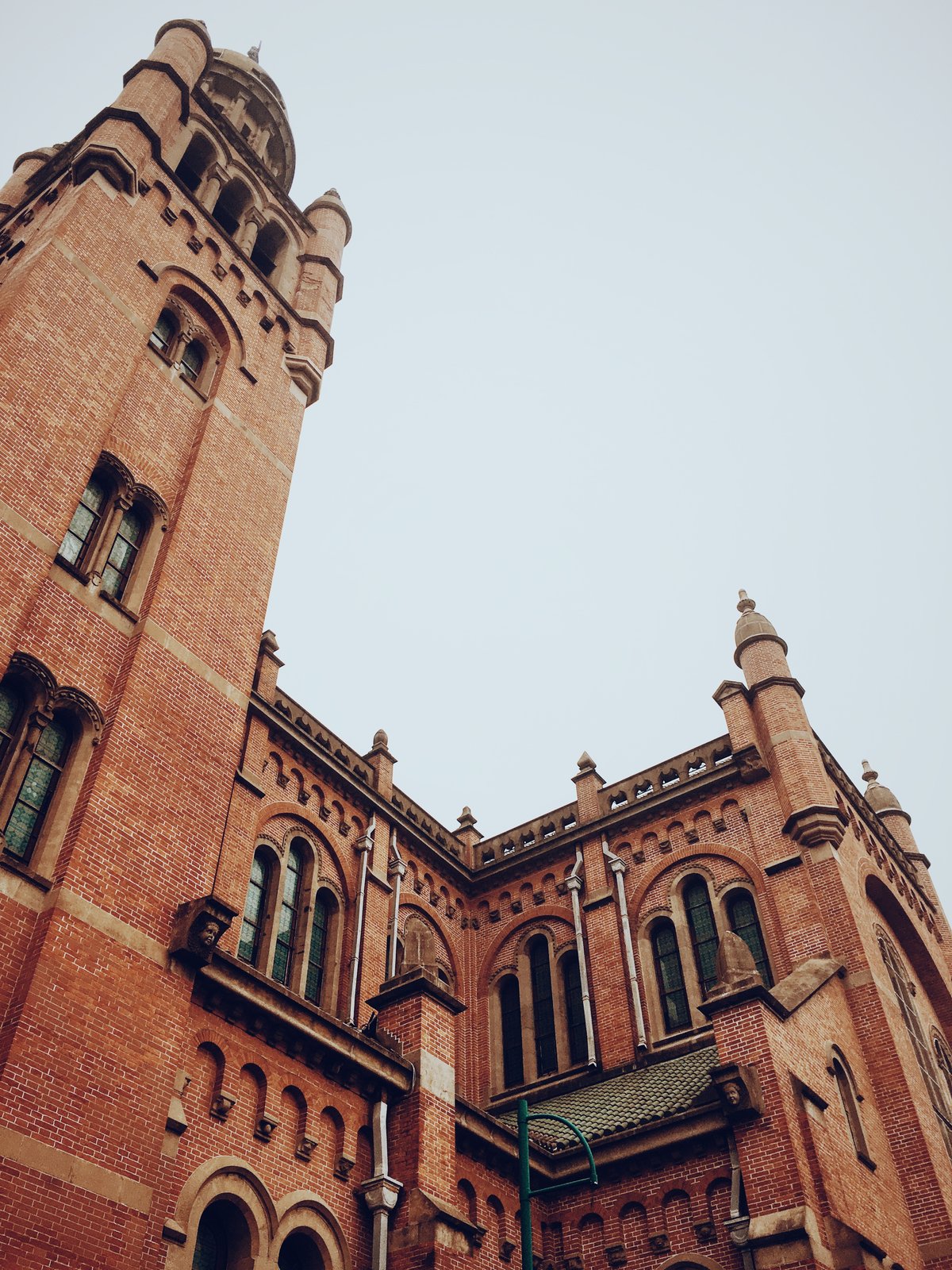
As pilgrimages grew, a need for a larger church emerged. Construction of the present basilica began in 1921 under architect Alphonse Frédéric De Moerloose and was completed in 1935. The basilica’s design harmonizes Romanesque, Gothic, and Chinese elements. Its 38-meter bell tower, crowned by the bronze statue of Our Lady, has become an iconic symbol (chinadragontours.com).
Papal Recognition and Pilgrimage Tradition
In 1942, Pope Pius XII elevated Sheshan to Minor Basilica status. The Marian statue was crowned in 1946, cementing the site’s importance for Chinese Catholics. In 2007, Pope Benedict XVI designated May 24 as the World Day of Prayer for the Church in China, highlighting Sheshan’s global spiritual significance (christianedirectory.com; catholicnewsagency.com).
Turbulence, Restoration, and Present Day
Sheshan Basilica faced adversity during the Cultural Revolution, suffering damage and closure. Restoration efforts, notably from the 1980s onward, revitalized the church, restoring stained glass, statuary, and architectural features. Today, it stands as a testament to resilience and faith (hsstudyc.org.hk).
Visiting Sheshan Basilica
Location and Access
Sheshan Basilica is approximately 35 kilometers southwest of central Shanghai, nestled in the Sheshan National Forest Park. Visitors can reach the site by:
- Metro Take Shanghai Metro Line 9 to Sheshan Station, then a short taxi ride or a 2 km walk to the hill’s base.
- Taxi/Ride-hailing Direct rides are available from downtown Shanghai, taking about 40–60 minutes depending on traffic.
- Car Ample parking is available near the site.
Visiting Hours
- Opening Hours Daily, 8:00 AM to 5:00 PM (sometimes as early as 7:00 AM; hours may vary on religious holidays).
- Note Hours can change during special events or public holidays; check local notices or the official website.
Tickets and Admission
- General Admission Free of charge.
- Donations Welcome to support maintenance and restoration.
- Guided Tours Available through local travel agencies or on weekends/public holidays; some may require advance booking or a nominal fee.
Accessibility
- Wheelchair Access Main paths and the basilica grounds have ramps and paved areas, though the hill ascent may be challenging. A paved road allows vehicles to drop visitors closer to the summit.
- Facilities Rest areas, restrooms, and benches are available at the base and summit.
On-Site Experience and Architectural Highlights
The Pilgrimage Route
The ascent to the basilica is a spiritual and scenic experience, lined with 14 Chinese-style Stations of the Cross pavilions. The journey takes about 20–40 minutes and offers panoramic views and contemplative stops (deepchinatravel.com).
Exterior and Façade
The basilica’s exterior is a harmonious blend of Romanesque arches, Gothic spires, and Chinese motifs. The central 38-meter bell tower rises above the forest, crowned with the bronze statue of Our Lady of Sheshan (wikiwand.com; sheshantravel.gov.cn).
Interior Features
- Nave and Sanctuary Accommodates up to 3,000–4,000 worshippers, with stained glass windows illuminating Marian and biblical scenes.
- Iconography The altar and chapels are adorned with statues and reliefs, many restored after the Cultural Revolution.
- Acoustics and Lighting Unique brick-and-stone construction creates excellent acoustics; modern LED lighting has been discreetly installed (iqclassic.wixsite.com).
The Madonna Statue
The statue of Our Lady of Sheshan—crowned in 1946 and restored in 2000—serves as a focal point for devotion and is a national symbol for Chinese Catholics.
Religious Services and Pilgrimage
- Masses Regular services are held, primarily in Mandarin, with Latin used for major events.
- Pilgrimage Season May, especially around May 24 (Feast of Our Lady Help of Christians), is the peak season, attracting tens of thousands.
- Devotional Practices Lighting candles, praying at the Marian statue, and walking the Stations of the Cross are customary.
Nearby Attractions
- Sheshan National Forest Park Offers hiking, birdwatching, and picnic spots.
- Sheshan Observatory China’s oldest astronomical observatory, open to visitors.
- Sheshan Botanical Garden Home to diverse plant species and tranquil trails.
- Happy Valley Shanghai A large amusement park for families.
- Songjiang Mosque and Thames Town Other historical and cultural sites in the vicinity.
Practical Information and Tips
Best Time to Visit
- Spring and Autumn March–May and September–November offer mild weather and vibrant scenery (chinaodysseytours.com; travelpander.com).
- May Pilgrimage Lively but crowded. For a quieter experience, visit on weekdays or outside major feast days.
What to Bring
- Comfortable walking shoes for the hill climb.
- Water and light snacks.
- Sun protection (hat, sunscreen).
- Modest attire, especially when attending services.
- Camera (non-flash photography is allowed outside of services).
Facilities
- Restrooms are located at the base and summit.
- Limited vendors offer drinks and snacks.
- Assistance for those with mobility challenges is available upon request.
Etiquette
- Maintain silence and respect during services.
- Avoid flash photography or photographing worshippers during Mass.
- Dispose of litter responsibly.
Frequently Asked Questions (FAQ)
Q: What are the basilica’s visiting hours?
A: Generally 8:00 AM to 5:00 PM daily, but check ahead for changes during major events.
Q: Is there an entrance fee?
A: No, entry is free; donations are appreciated.
Q: How do I get to Sheshan Basilica?
A: Take Metro Line 9 to Sheshan Station, then a short taxi or walk. Taxis and parking are also available.
Q: Are guided tours offered?
A: Yes, via local agencies and on site, especially weekends and holidays.
Q: Is the basilica wheelchair accessible?
A: Most main areas are accessible, with some limitations due to stairs near the summit.
Q: Can non-Catholics attend Mass?
A: Yes, all respectful visitors are welcome.
Visual and Interactive Enhancements
Include high-quality images of:
- The basilica’s exterior and bell tower
- Interior stained glass and Marian statue
- The ascent through Sheshan National Forest Park
- Panoramic summit views
Summary and Visitor Tips
Sheshan Basilica stands as a vibrant symbol of faith, culture, and resilience in China. Its unique architecture, storied history, and spiritual ambiance make it one of Shanghai’s most captivating historical landmarks. With free entry, accessible transport, and a wealth of nearby attractions, it promises a memorable visit for pilgrims and tourists alike. Thoughtful preparation—regarding hours, accessibility, and etiquette—will ensure a rewarding experience.
For the latest updates on visiting information, events, and travel tips, subscribe to our newsletter, follow us on social media, and explore our related articles on top Shanghai historical sites and pilgrimage destinations.