
Origins and Architecture
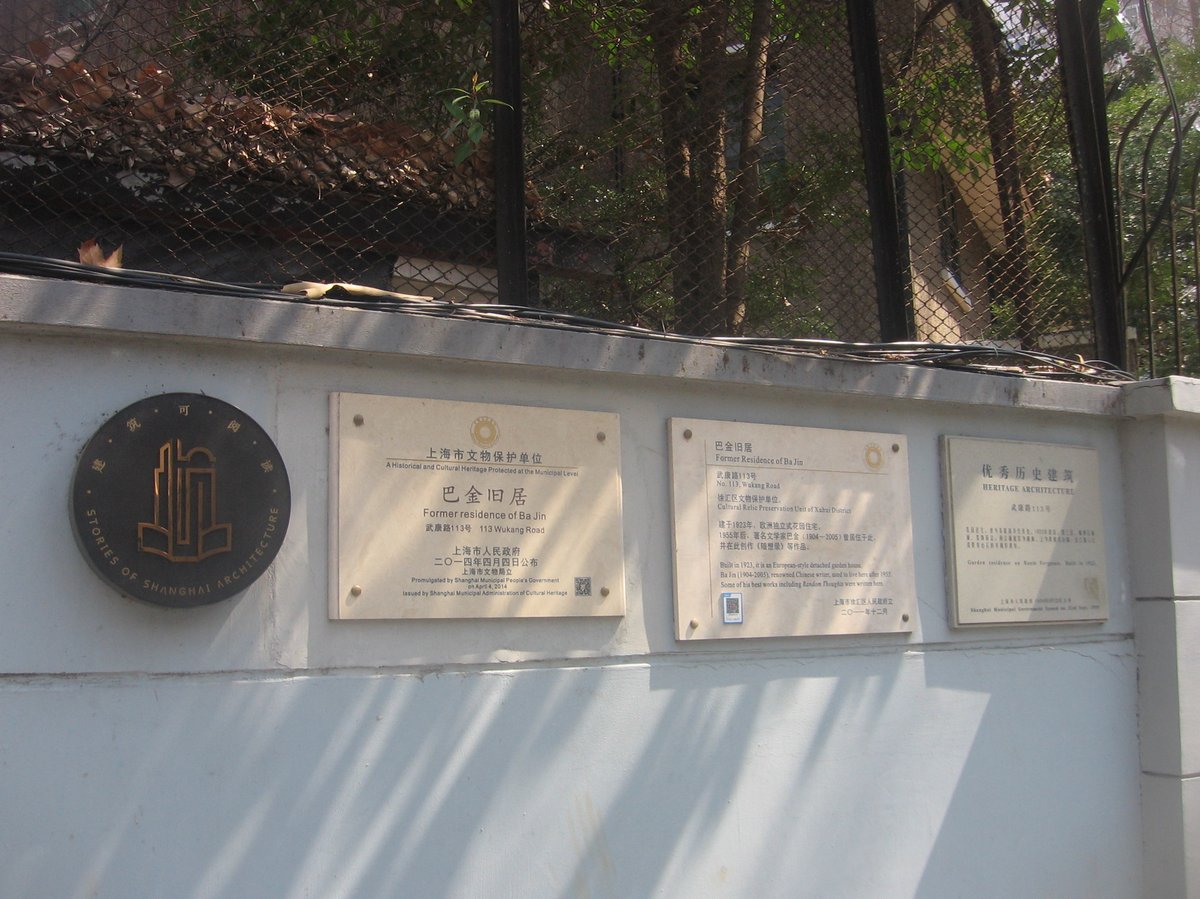
Built in the 1920s, the villa exemplifies the garden residences popular during the French Concession era. Its two-story brick construction, sloping tiled roof, and arched windows blend Western and Chinese influences. The enclosed garden and understated elegance mirror Shanghai’s cosmopolitan identity of that time (Shanghai Municipal Administration of Culture and Tourism).
Ba Jin’s Life and Residency
Ba Jin, born Li Yaotang, moved into this residence in 1955. Over the next five decades, he produced influential essays, novels, and translations. His home became a sanctuary for creativity and a discreet meeting place for fellow writers (China Daily).
The Residence During Political Upheaval
The villa witnessed political storms, notably the Cultural Revolution, during which Ba Jin faced persecution but remained committed to his humanitarian ideals. The preserved study and personal artifacts reflect his intellectual resilience (Sixth Tone).
Literary Contributions and Significance
Ba Jin’s novels, especially the “Torrents Trilogy” (Family, Spring, Autumn), and essays like “Random Thoughts” were written or revised here. The residence houses his manuscripts, letters, and personal library, offering insight into his creative process (Shanghai Daily).
Visiting Information
Hours and Admission
- Opening Hours Tuesday to Sunday, 9:00 AM – 5:00 PM (last entry at 4:30 PM)
- Closed Mondays (except national holidays)
- Admission Entry is generally free but may require advance booking due to capacity controls. Some special exhibitions may have separate fees.
Tickets and Booking
- How to Book Tickets can be reserved online via the official Shanghai cultural tourism website or, when available, at the entrance.
- ID Requirement Chinese visitors should present ID; foreign visitors may be asked for passports.
- Peak Times Book in advance for weekends, holidays, or special events.
Accessibility and Facilities
- Physical Access Wheelchair ramps are available at the entrance and in the garden, but upper floors may not be fully accessible due to the historic structure.
- Amenities Restrooms, a small gift shop (literature-themed souvenirs), and reading rooms are on site.
- Language Support Brochures are primarily in Chinese; guided tours in English are available by reservation.
Guided Tours and Events
- Guided Tours Offered in Chinese and English; strongly recommended for deeper historical and literary context. Book in advance, especially for groups.
- Events The residence hosts literary lectures, book readings, and cultural exhibitions throughout the year.
Travel Tips and Etiquette
- Best Time to Visit Weekday mornings or during spring/autumn for pleasant weather and fewer visitors.
- Transport Easily reached via Metro Line 10 (Shanghai Library Station) or Line 1 (Hengshan Road Station), with a short walk to the site. Several bus routes also serve Wukang Road.
- Dress and Conduct Wear comfortable shoes for walking; maintain silence and do not touch artifacts; food and drink are not allowed inside exhibition areas.
- Photography Permitted in the garden and public areas; restricted in exhibition rooms to protect artifacts. Observe any posted signs.
Architectural Features and Symbolism
The villa’s red brick exterior, white window frames, and tiled roof highlight the fusion of Western and Chinese architectural motifs. Inside, the preserved wooden floors, study, and period furnishings evoke the elegant simplicity valued by Ba Jin. The tranquil garden, with mature trees and winding paths, offered him a peaceful environment for reflection and writing.
Preservation and Museum Establishment
Following Ba Jin’s death in 2005, the residence was designated a protected cultural heritage site. Officially opened as a memorial museum in 2011, it retains original layouts and furnishings. Exhibits include manuscripts, photographs, personal effects, and correspondence. The site is recognized as a Major Historical and Cultural Site at the National Level (China.org.cn).
Nearby Cultural Attractions
Enhance your cultural exploration by visiting:
- Soong Ching Ling Memorial Residence Another prominent literary and political landmark in the French Concession.
- Shanghai Library The city’s largest public library, a short walk away.
- Wukang Mansion Iconic historic building nearby.
- Cafés and Bookshops The area features literary-themed cafés and independent bookstores.
- Art Festivals Events like the Anfu Road Art Festival showcase local creativity.
Frequently Asked Questions (FAQ)
Q: What are the visiting hours?
A: Tuesday to Sunday, 9:00 AM to 5:00 PM; closed on Mondays (except holidays).
Q: Is advance booking required?
A: Yes, due to limited capacity, online reservation is recommended.
Q: Is the site wheelchair accessible?
A: Main entrance and garden are accessible; some interior areas may be limited.
Q: Are guided tours available?
A: Yes, in Chinese and English; book in advance for best availability.
Q: Can I take photographs inside?
A: Only in outdoor and public areas; restricted in exhibition rooms.
Q: Are there other attractions nearby?
A: Yes, including the Soong Ching Ling Residence, Shanghai Library, and Wukang Mansion.