
Origins and Development
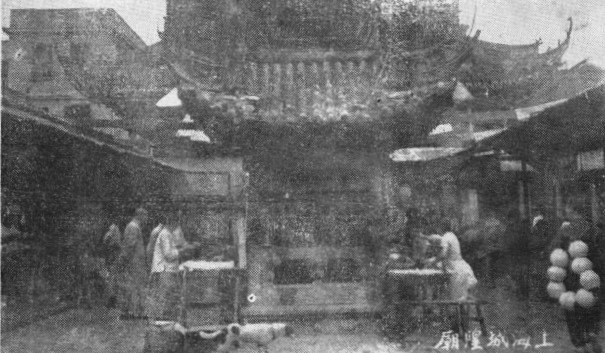
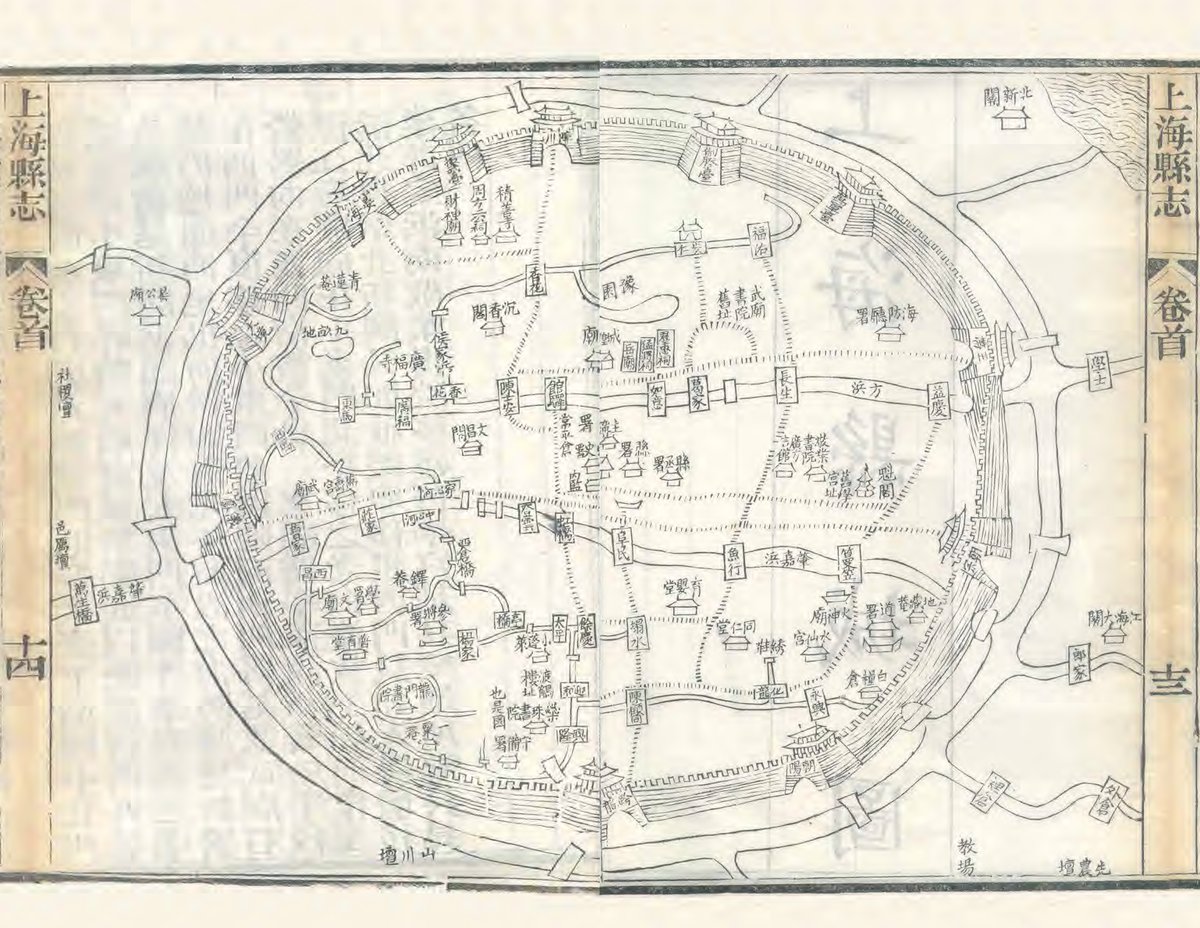
The City God Temple’s roots date back more than 600 years to the Yongle Emperor’s reign (1403–1424) of the Ming Dynasty. Originally established as the Jinshan Shrine, the temple was dedicated to the spirit of Jinshan Island. As Shanghai’s population and importance grew, the local magistrate, Zhang Shouyue, transformed the shrine into the City God Temple, marking a pivotal moment in Shanghai’s history (chinaculturetour.com).
Evolution Through the Ages
Ming and Qing Dynasties
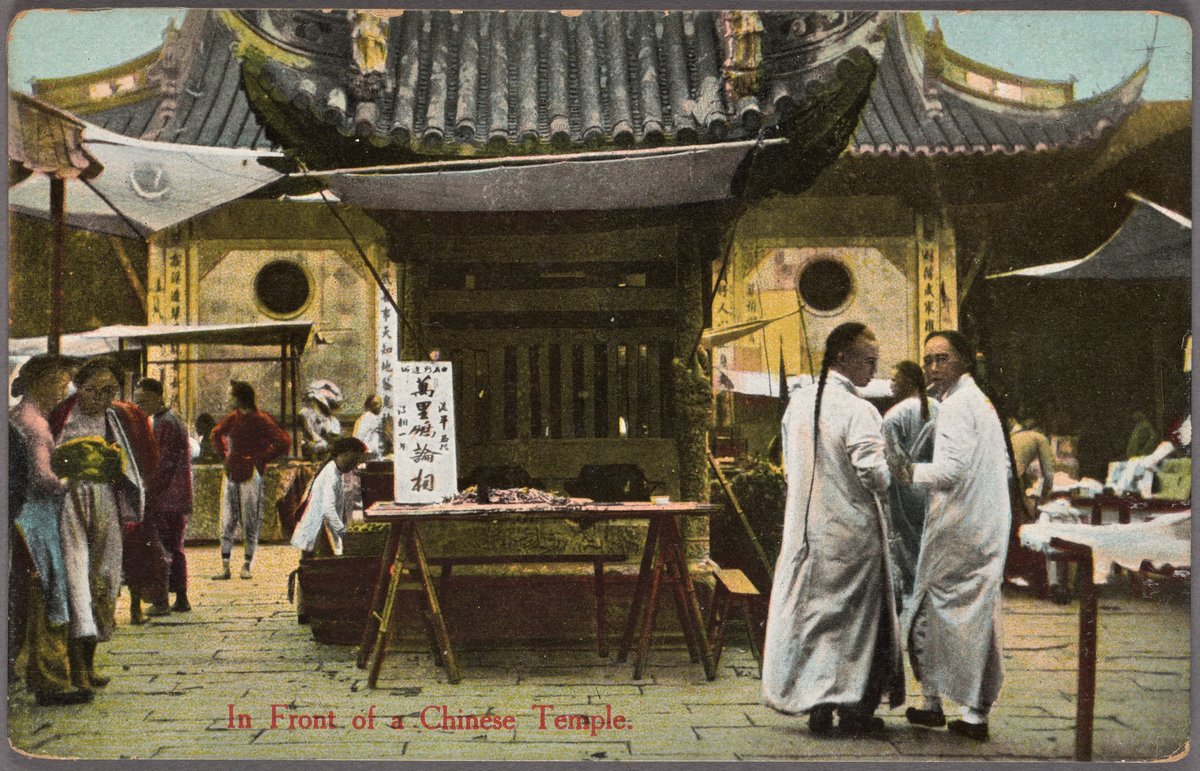
During the Ming Dynasty, the temple became a central Taoist institution, officially dedicated to Qin Yubo—a respected local official later appointed as Shanghai’s City God. The Qing Dynasty saw the temple’s expansion, both physically and in cultural influence, becoming a hub for religious worship, social gatherings, and festivals. The surrounding area flourished into a commercial and social center, laying the foundation for today’s bustling City God Temple Bazaar (travelchinaguide.com; chinatourguide.com).
Modern Era
Through periods of destruction and restoration, including significant rebuilding in 1926 and revitalization efforts by the Shanghai Taoist Association in the 1990s, the temple has remained a living symbol of Shanghai’s spiritual and communal life (prayerpeak.com).
Architectural Features and Layout
Traditional Jiangnan Style
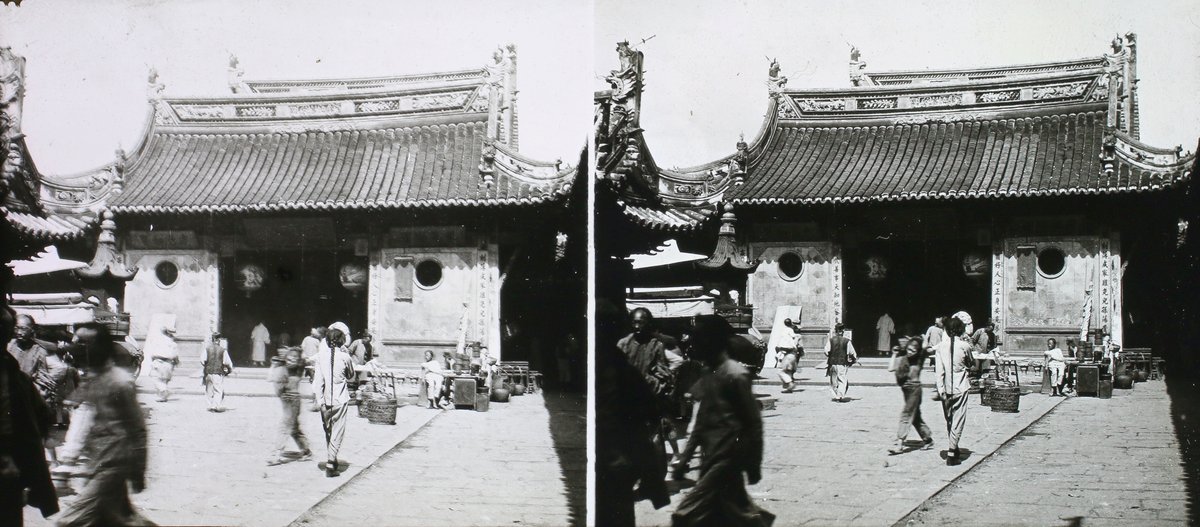
The City God Temple exemplifies Jiangnan (southern Yangtze) architecture, with dark timber beams, upturned eaves, red walls, and whitewashed surfaces. Its design follows feng shui principles, with a north-south central axis guiding visitors from the main gate through a sequence of halls and courtyards.
Main Structures
- Mountain Gate (Shanmen) Grand entrance adorned with guardian lions and auspicious carvings.
- Main Hall (Dadian) Spiritual heart of the temple, housing statues of the three principal City Gods, with a double-eaved roof and intricate woodwork.
- Front and Rear Halls Spaces for initial offerings and additional deities, including the God of Wealth and Guanyin.
- Bell and Drum Towers Used to mark time and ceremonies.
- Side Halls and Auxiliary Pavilions Devoted to various deities and historical figures, connected by covered walkways.
- Courtyards Stone-paved areas with ancient trees, lotus ponds, and rockeries, creating a tranquil atmosphere reminiscent of the neighboring Yuyuan Garden.
Decorative Arts
Elaborate wood carvings, painted beams in red, gold, and blue, and stone inscriptions highlight mythological stories and historical events, conveying spiritual and communal messages (chinagotrip.com).
The Three City Gods
A unique feature of the Shanghai City God Temple is its dedication to three historical protectors:
- Huo Guang (d. 68 BCE) Han Dynasty chancellor, revered for loyalty and governance.
- Qin Yubo (1295–1373) Scholar-official and the first designated City God of Shanghai, symbolizing integrity and civic duty.
- Chen Huacheng (1776–1842) Qing Dynasty general recognized for his heroism during the First Opium War (chinaculturetour.com).
These deities are believed to safeguard Shanghai, each embodying virtues deeply valued in the city’s history.
Cultural and Community Significance
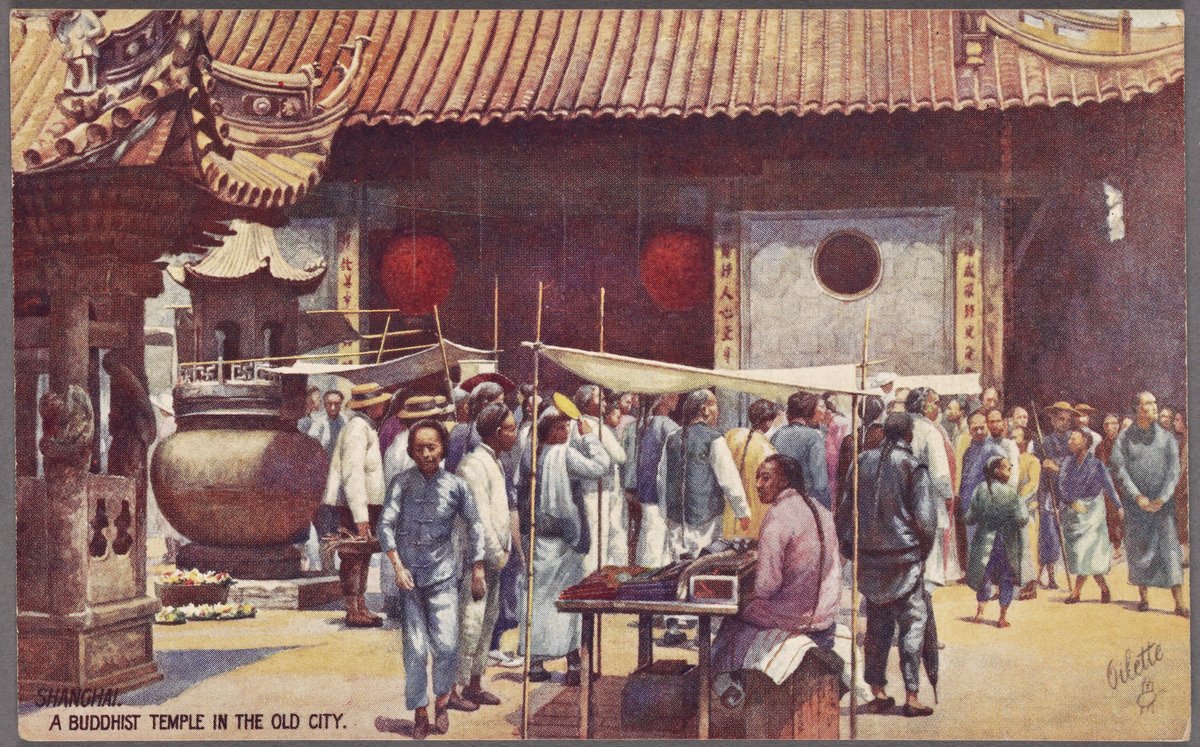
The City God Temple is a living center for Taoist worship, where rituals, chanting, and incense offerings take place daily. Annual temple fairs and festivals, especially during the Lunar New Year and Mid-Autumn Festival, draw large crowds and feature processions, music, opera, and communal celebrations (chinagotrip.com; prayerpeak.com).
Surrounding the temple is the vibrant City God Temple Bazaar, a bustling marketplace with traditional eateries, teahouses, crafts, and souvenirs—integrating sacred tradition with everyday life.
Visiting Information
Hours and Tickets
- Opening Hours Daily, 8:30 AM – 5:00 PM. Extended hours during major festivals.
- Admission Standard tickets are 10–40 RMB depending on the area and season; children under 1.2 meters typically enter free (chinadiscovery.com; chinatripedia.com).
- Purchase Tickets available at the main entrance (Fangbang Middle Road), online via official platforms, and authorized travel sites.
Getting There
- Metro Line 10 or 14 to Yuyuan Garden Station (Exit 1); a short walk to the temple.
- Bus Numerous lines including 11, 26, 64, 66, 126, 715, 920, 930.
- Taxi/On Foot Taxis are convenient but expect traffic; the area is very walkable, especially from Yu Garden and Yuyuan Bazaar (chinatripedia.com).
Accessibility
Most pathways are paved, and main entrances are wheelchair accessible, though some historic areas have steps or uneven surfaces. Restrooms and assistance are available; inquire at the tourist desk.
Visitor Tips
- Best Times Early morning and late afternoon for fewer crowds and optimal lighting.
- Dress Code Modest clothing; avoid revealing attire.
- Photography Permitted in courtyards and exteriors; check signage for indoor restrictions.
- Offerings Coins and incense; donation machines available.
- Etiquette Maintain quiet, do not touch religious artifacts, and bow three times when offering incense (shanghaideeptour.com).
Special Events and Festivals
- Lunar New Year Lion dances, lantern displays, and festive rituals.
- Sanxun Festival City God’s inspection parade with red lanterns and community offerings.
- Mid-Autumn Festival Lantern illuminations, mooncake sharing, traditional performances.
Guided tours (including English) are available daily and can be booked onsite or online. Virtual tours and interactive maps are also accessible through official websites.
Nearby Attractions
- Yuyuan Garden A classical Ming Dynasty garden directly connected to the temple.
- Yuyuan Bazaar Food, shopping, and traditional crafts.
- The Bund Iconic riverside promenade with historical architecture.
- Nanjing Road Premier shopping and entertainment street (chinadiscovery.com).
Frequently Asked Questions (FAQ)
Q: What are the City God Temple Shanghai visiting hours?
A: 8:30 AM to 5:00 PM daily, with possible extensions during festivals.
Q: How much are tickets?
A: Standard admission is 10–40 RMB; discounts for children, students, and seniors.
Q: Are guided tours available?
A: Yes, English-language tours are offered; book online or at the entrance.
Q: Is the temple accessible for those with disabilities?
A: Main areas are accessible, but some historic sections may have steps.
Q: What is the best way to get there?
A: Metro Line 10 or 14 to Yuyuan Garden Station is most convenient.
Q: Can I visit during festivals?
A: Yes, festivals offer vibrant experiences but expect larger crowds.