
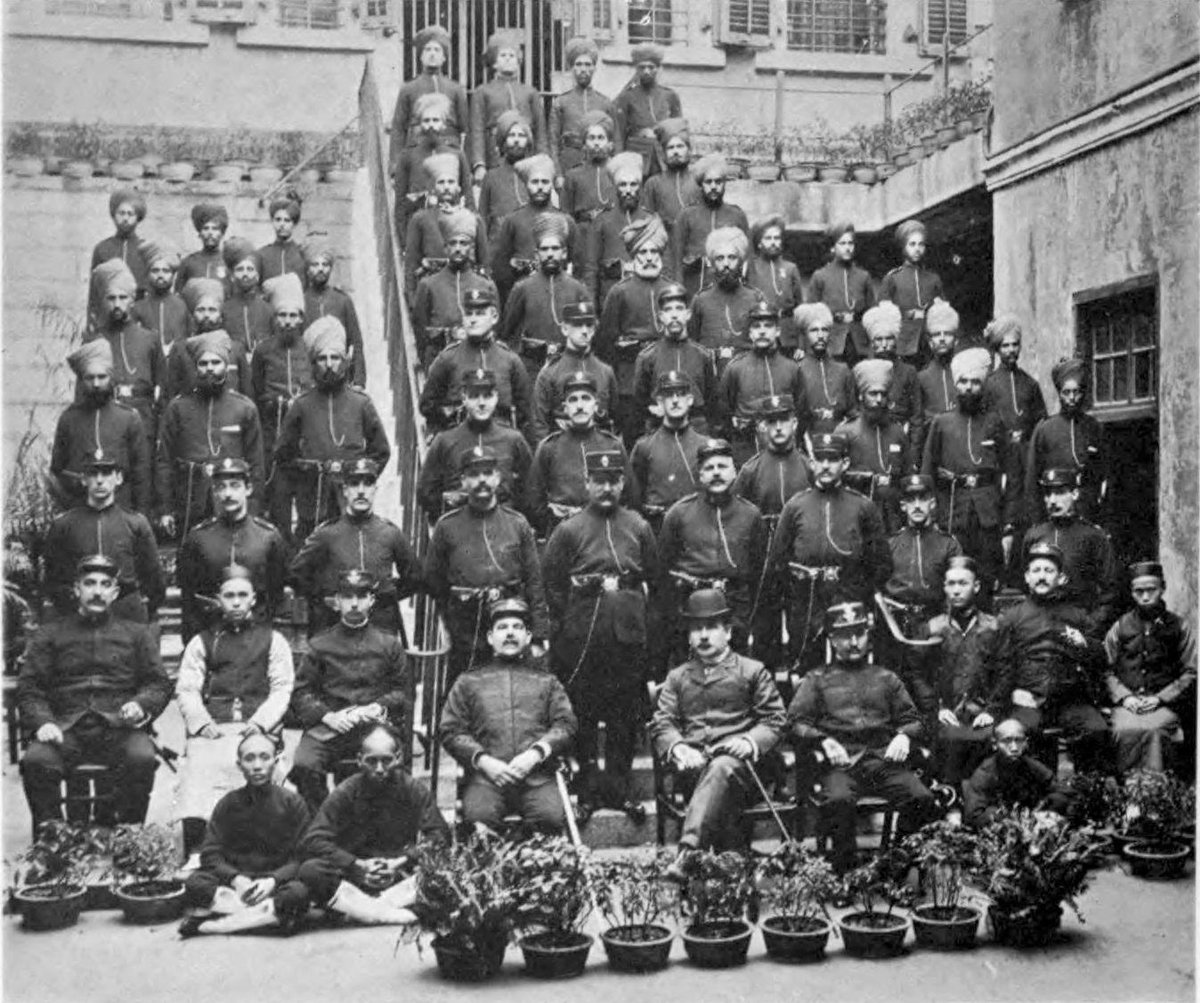
Origins and Development
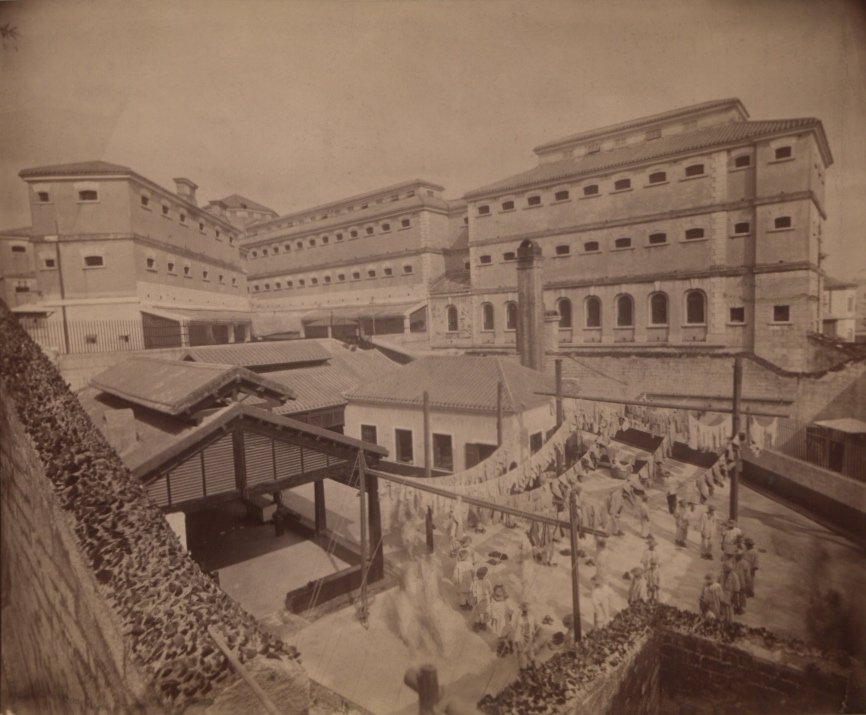
Victoria Prison, Hong Kong’s first and longest-running penal institution, began construction in 1841 and was completed in 1842, soon after the establishment of British rule. Located on Old Bailey Street in Central, its proximity to the colonial administrative core—alongside the Central Police Station and Central Magistracy—reflected its pivotal role in law enforcement (Wikipedia, AMO).
Over the decades, the compound expanded, evolving from its original radial plan (inspired by Philadelphia’s Eastern State Penitentiary) to include multiple cell blocks, administrative offices, and facilities for both male and female prisoners (Heritage.gov.hk). By the early 20th century, it comprised ten principal buildings, including the Warden’s Building, A–E Storehouses, Workshop and Laundry, and the notable F Hall, which served both as a printing factory and weaving area (China Advent, Wikipedia).
Role in Penal and Social History
For nearly a century, Victoria Prison was Hong Kong’s central penal facility, serving as the main remand and detention center (HKMemory). Its functions evolved through several eras:
- Victoria Gaol (1841–1937)
- Victoria Remand Prison (1939–1965)
- Victoria Reception Centre (1967–1977)
- Victoria Prison (1977–2005)
The prison bore witness to major historical events, including the detention of Vietnamese revolutionary Ho Chi Minh in the 1930s, damage and occupation during World War II, and its role as a refugee processing center for Vietnamese asylum seekers in the late 20th century (Wikipedia, Taikwun.hk).
Transition and Preservation
By the late 20th century, Victoria Prison’s facilities were outdated, leading to its decommissioning in 2005. Recognizing its historical value, the Hong Kong government declared the compound and its adjacent institutions as monuments in 1995 (AMO). This paved the way for its restoration and adaptive reuse as Tai Kwun, now internationally recognized for heritage conservation (Tai Kwun Awards).
Revitalization as Tai Kwun – Centre for Heritage and Arts
Following extensive restoration and adaptive reuse, Victoria Prison reopened as part of the Tai Kwun Centre for Heritage and Arts in 2018 (Wikipedia, Taikwun.hk). The project, led by Herzog & de Meuron, preserved the site’s essential architectural features—including granite facades, original cell blocks, and administrative areas—while creating modern art spaces, museums, and public courtyards (Herzog & de Meuron). The result is a unique fusion of solemn history and contemporary vibrancy.
Tai Kwun’s recognition includes the 2019 UNESCO Asia-Pacific Award of Excellence for Cultural Heritage Conservation and listings in TIME Magazine’s “World’s 100 Greatest Places” (Tai Kwun Awards).
Visiting Information
Opening Hours
- Tuesday to Sunday 10:00 AM – 7:00 PM (last admission 6:00 PM)
- Closed on Mondays (except public holidays)
- Note: Some event spaces may have extended hours; check the official website for updates.
Tickets and Admission
- General Entry Free
- Special Exhibitions/Guided Tours May require tickets; book online or at the venue (Tai Kwun Tickets)
Accessibility
- Wheelchair-accessible pathways, lifts, and restrooms throughout the site
- Assistance available for visitors with sensory or mobility needs
Guided Tours and Visitor Services
- Free Heritage Tours Offered daily in multiple languages, covering the history and architecture of Victoria Prison and adjacent buildings
- Audio Guides Available in English, Cantonese, and Mandarin
- Visitor Facilities On-site restrooms, cafés, shops, and free Wi-Fi
Travel Tips
- Getting There MTR Hong Kong Station (Exit D1), a short walk via Hollywood Road
- Best Times to Visit Weekday mornings for smaller crowds
- Photography Permitted in most areas, but watch for restrictions in some exhibitions
Nearby Attractions
- Central Police Station and Central Magistracy (within Tai Kwun)
- Man Mo Temple (historic Taoist temple)
- PMQ (Police Married Quarters, now a creative hub)
- Hollywood Road’s antique shops and galleries
Architectural Features and Conservation
The Tai Kwun complex comprises 16 historic buildings arranged around two main courtyards: the Parade Ground and the Prison Yard. Notable architectural features include:
- Granite Masonry and Brickwork Original thick granite walls and brick structures, reflecting colonial-era durability
- Verandahs and Balustrades Covered walkways for ventilation and shade
- Prison Cells Preserved in B Hall and D Hall, offering authentic insights into prison life
- Adaptive Reuse Contemporary additions by Herzog & de Meuron, using recycled cast aluminum panels and creating flexible cultural spaces
Conservation efforts focused on authenticity and minimal intervention, restoring ironwork, timber, and original color schemes while integrating modern accessibility features (Herzog & de Meuron).
Special Events and Cultural Programming
Tai Kwun hosts a dynamic calendar of events, including:
- Contemporary art exhibitions
- Heritage tours and educational workshops
- Music and performing arts festivals
- Community engagement projects focused on themes such as justice, memory, and identity
Check the Tai Kwun events page for the latest schedule.
Frequently Asked Questions (FAQ)
Q: What are the opening hours for Victoria Prison?
A: Tuesday to Sunday, 10:00 AM to 7:00 PM (last admission at 6:00 PM); closed on Mondays (except public holidays).
Q: Is there an entry fee?
A: General admission is free; some special exhibitions or tours may require tickets (Tai Kwun Tickets).
Q: Are guided tours available?
A: Yes, free heritage tours are offered daily in multiple languages. Booking in advance is recommended.
Q: Is the site accessible for visitors with disabilities?
A: Yes, with barrier-free access, ramps, lifts, and accessible restrooms.
Q: Can I take photos?
A: Photography is permitted in most areas, but some exhibitions may have restrictions.
Q: How do I get there?
A: Take MTR to Hong Kong Station (Exit D1), walk up Hollywood Road; multiple bus routes and taxis also serve the area.
Visuals and Interactive Elements
High-quality images of Victoria Prison’s granite facades, restored cell blocks, and Tai Kwun’s cultural events are available on the official website. Interactive maps and virtual tours help visitors plan their routes and preview key highlights.