Historical Background
Origins and Early Development (1841–1899)
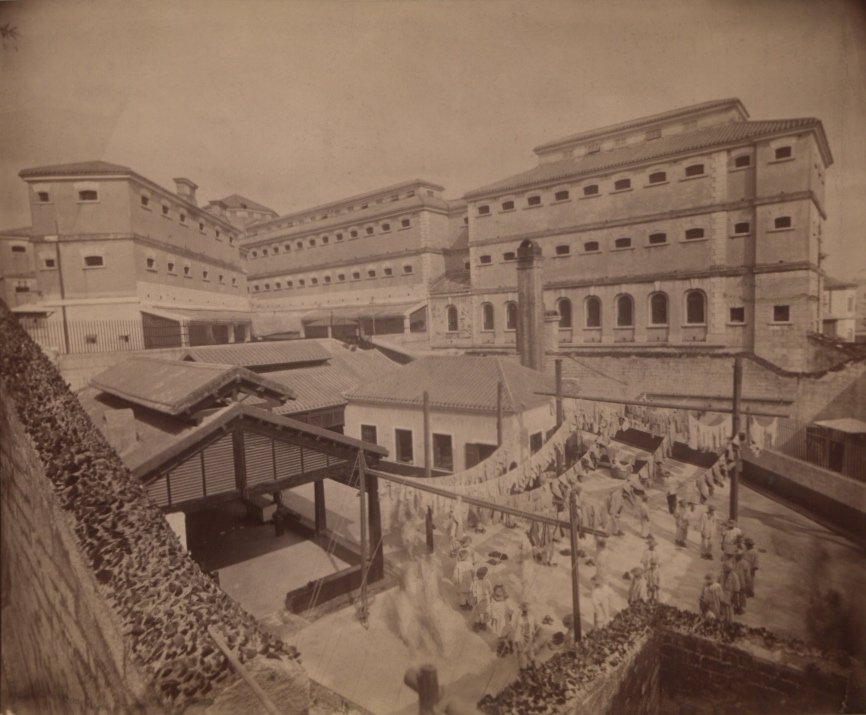
Tai Kwun, meaning “Big Station” in Cantonese, was established soon after Hong Kong became a British crown colony in 1841. The first structures, including the Magistrate’s House and jail blocks, were built to assert British authority and establish formal law and order in the rapidly growing port city. Prior to British rule, local disputes were managed by community groups such as the Kung Sor, often operating within temples. The British quickly introduced a Western-style police force and judiciary, selecting a strategic location bordered by Hollywood Road, Arbuthnot Road, Chancery Lane, and Old Bailey Street (Hong Kong Free Tours).
With a rapidly increasing population, the compound expanded, and by 1862, the construction of additional buildings was necessary to accommodate a rising number of prisoners. This led to the development of interconnected compounds collectively known as Tai Kwun (Wikipedia).
Architectural Evolution (Late 19th–Early 20th Century)
By 1925, Tai Kwun had evolved into a complex of 16 buildings, prominently featuring the Central Police Station, Central Magistracy, and Victoria Prison. The Barrack Block (1864) and Police Headquarters Block (1919) are notable for their neo-classical and Edwardian architectural styles, blending practical design with colonial grandeur. The Victoria Prison, renamed in 1899, saw ongoing expansion to meet changing penal requirements (Antiquities and Monuments Office).
Role in Colonial Governance
Tai Kwun served as the epicenter of colonial law enforcement, judiciary, and incarceration. The superintendent often acted as police chief, magistrate, and prison governor. The compound housed several notable historical figures, including Ho Chi Minh before his rise as a revolutionary leader (Hong Kong Free Tours).
Twentieth Century: Change and Decline
Tai Kwun remained Hong Kong Island’s police headquarters until after World War II. As the city modernized, the compound’s original functions diminished, leading to its decommissioning in 2004. Victoria Prison closed in 2006, marking the end of its direct law enforcement role (Antiquities and Monuments Office).
Conservation and Revitalization
Recognizing Tai Kwun’s heritage value, the Hong Kong Government and The Hong Kong Jockey Club launched a HK$3.8 billion revitalization project in 2008. Despite challenges, such as a partial wall collapse in 2016, the project preserved 16 heritage buildings and added two contemporary structures—JC Contemporary and JC Cube, designed by Herzog & de Meuron. Tai Kwun reopened to the public in 2018, quickly earning international recognition, including a UNESCO Asia-Pacific Award for Cultural Heritage Conservation (arup.com; greenbuilding.hkgbc.org.hk).
Declared Monument Status
Tai Kwun was declared a monument in 1995, cementing its status as a rare example of 19th-century police architecture and a key site in Hong Kong’s colonial and legal history (Antiquities and Monuments Office).
Visiting Tai Kwun: Practical Information
Visiting Hours
- General Hours Daily, 10:00 AM – 10:00 PM (last admission 9:30 PM)
- Special Exhibitions/Events May have different schedules; check the official website for details.
Tickets and Admission
- General Admission Free access to public spaces and heritage buildings.
- Special Exhibitions & Events Some may require tickets, available online or at the venue.
- Guided Tours Free 45-minute guided tours are offered; advance booking is recommended, especially on weekends and holidays (thingstodoinhk.com).
Accessibility
- Wheelchair accessible with ramps and elevators throughout the site.
- Accessible restrooms and support services for visitors with special needs (taikwun.hk).
Getting There
- Address 10 Hollywood Road, Central, Hong Kong
- MTR Central Station (Exit D2) or Hong Kong Station (10-minute walk)
- Bus/Taxi Multiple routes serve Central district.
- No On-site Parking Use nearby public car parks or public transport.
Site Features and Experiences
Heritage and Architecture
- 16 Preserved Buildings Including Central Police Station, Central Magistracy, and Victoria Prison.
- Architectural Styles Victorian and Edwardian, featuring red-brick facades, granite columns, and arched verandahs (DevB.gov.hk).
- Courtyards Parade Ground and Prison Yard provide open, tranquil spaces in the urban core.
Contemporary Additions
- JC Contemporary Modern art gallery for rotating local and international exhibitions.
- JC Cube Auditorium for performances and events.
- New structures designed by Herzog & de Meuron, harmonizing with the historical fabric (arup.com).
Exhibitions and Events
- Art Exhibitions 6–8 major shows annually in JC Contemporary.
- Performing Arts Theatre, dance, music, and film in JC Cube and outdoor spaces.
- Signature Festivals Including InnerGlow, a 3D architectural light festival (platformhk.com).
- Educational Programs Heritage tours, workshops, and community engagement activities (Tai Kwun Heritage).
Dining and Shopping
- Restaurants and Cafes Range of cuisines with al fresco options overlooking Parade Ground or Prison Yard.
- Boutique Shops Books, art prints, and Hong Kong-themed gifts, emphasizing local brands.
Nearby Historical Sites and Attractions
Enhance your heritage itinerary with these nearby sites:
- Man Mo Temple Historic temple dedicated to gods of literature and war.
- PMQ (Police Married Quarters) Creative hub for local designers.
- Hollywood Road Antique shops and galleries.
- Graham Street Graffiti Wall Iconic street art location.
Practical Visitor Tips
- Best Times Weekdays for quieter visits; weekends and evenings for events and vibrant atmosphere.
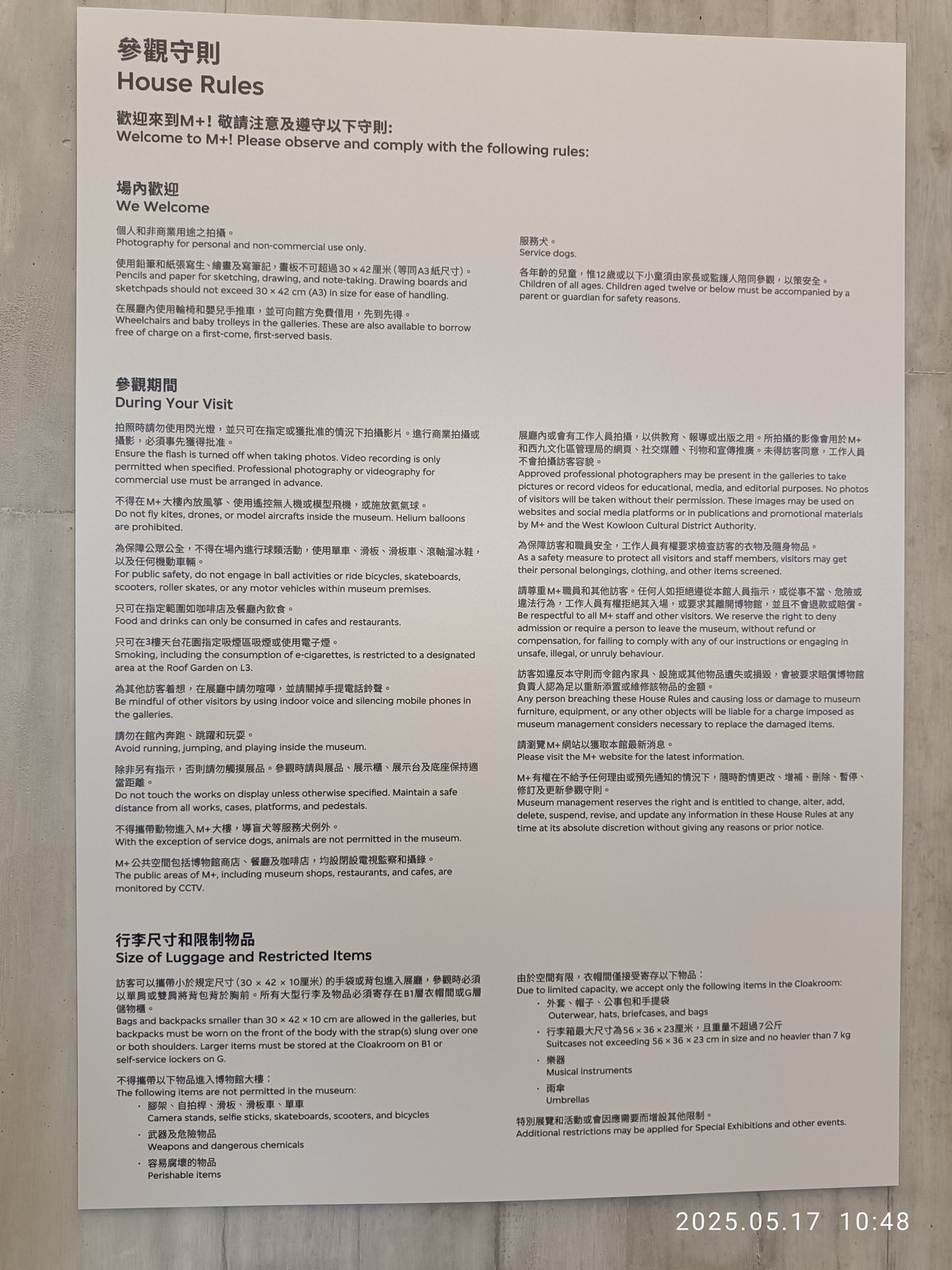
- Photography Allowed in most areas; some exhibitions restrict flash/tripods.
- Visitor Etiquette Preserve historic features, avoid touching artifacts, and keep the site clean.
- Language English, Cantonese, and Mandarin spoken by staff; signage is trilingual.
- Pets Only guide dogs permitted.
Frequently Asked Questions (FAQ)
Q: What are Tai Kwun’s visiting hours?
A: Daily from 10:00 AM to 10:00 PM; check the website for specific venue times.
Q: Is admission free?
A: Yes, general admission is free. Some events/exhibitions may require tickets.
Q: Is Tai Kwun wheelchair accessible?
A: Yes, with lifts, ramps, and accessible facilities throughout.
Q: Are guided tours available?
A: Yes, free guided tours are offered; book in advance.
Q: Can I take photos?
A: Yes, except in certain exhibitions or performances—observe signage.
Q: Are pets allowed?
A: Only guide dogs are permitted.