Plan and listen to Chigang Pagoda with Audiala.
Audio guide in your pocket, itinerary in your browser. Built for the way you actually visit.
Introduction
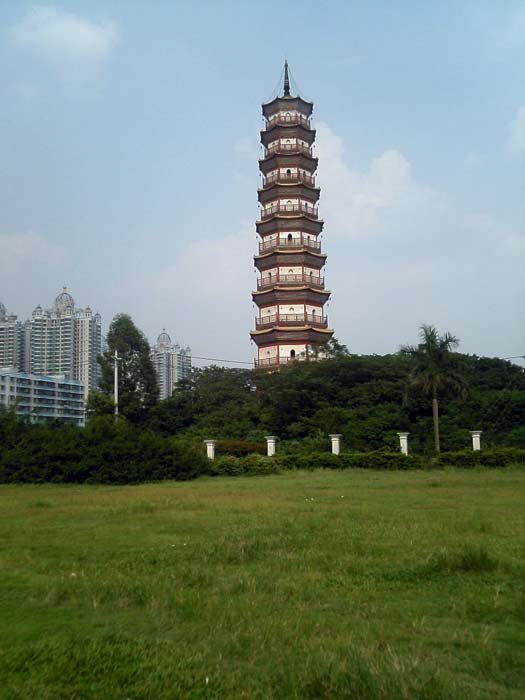
Chigang Pagoda (赤岗塔), often referred to as the Red Hill Pagoda, is a defining symbol of Guangzhou’s historical and cultural landscape. Erected in 1619 during the Ming Dynasty, this nine-story, octagonal brick tower stands atop a red sandstone hill in the Haizhu District, along the southern bank of the Pearl River. Over the centuries, Chigang Pagoda has served as a navigational beacon, a feng shui tower intended to harmonize urban energy, and a Buddhist reliquary. Today, it remains a focal point for both locals and visitors, admired for its architectural features and deep spiritual significance (China Highlights; Trip.com Moments; chinawiki.net).
This guide provides a detailed overview of Chigang Pagoda—its history, architecture, cultural role, practical visitor information, and tips for a memorable visit. You’ll also find suggestions for nearby attractions to help you plan an enriching day in Guangzhou’s historic heart.

Origins and Historical Significance
Chigang Pagoda’s construction was initiated by local officials and scholars during the late Ming Dynasty to improve the area’s feng shui and protect Guangzhou against flooding and misfortune (China Highlights). Its strategic location on a “dragon’s vein” along the Pearl River made it one of the city’s three important feng shui towers, alongside Pazhou and Lotus Pagodas.
Throughout its history, the pagoda served multiple purposes:
- Navigational Landmark: Its prominent height and riverside position guided river travelers and symbolized safe passage home.
- Spiritual Site: Originally housing Buddhist relics, the pagoda became a center for meditation and local rituals.
- Symbol of Prosperity: Its construction and enduring presence reflect Guangzhou’s role as a thriving port and cosmopolitan city (Wikipedia; Trip.com Moments).
Architectural Features and Symbolism
Standing 53.7 meters (176 feet) high, Chigang Pagoda is a quintessential example of Lingnan (South China) architecture:
- Octagonal Structure: The base, with eight sides symbolizing cosmic balance, is constructed from red sandstone. Each side measures about 5.5 meters (chinawiki.net).
- Nine Stories: The tower’s exterior presents nine levels, while the interior contains 17 ingeniously arranged tiers—an unusual feature among Chinese pagodas.
- Decorative Details: Glazed tiles, mythical animal figures on the eaves, and carved stone balustrades adorn the building, serving both ornamental and protective functions (Guangzhou Museum).
- Stone Statues: At the base, stone figures depicting “foreigners” highlight Guangzhou’s history as a global trading hub.
- Materials: Main construction uses red and green bricks, symbolizing good fortune and resilience, with vermilion-painted columns and tooth-brick eaves characteristic of late Ming design.
- Restoration: Significant conservation efforts in the late 20th century stabilized the structure after natural tilting and weathering (chinawiki.net).
Visiting Hours, Tickets, and Accessibility
- Exterior Access: The pagoda is accessible for exterior viewing year-round, as the interior is closed to the public to preserve its delicate structure.
- Visiting Hours: There are no strict opening or closing times for viewing the exterior, but daytime hours are recommended for safety and the best experience.
- Admission: There is no ticket fee to view the pagoda from outside; donations are welcome for preservation efforts (Trek Zone).
- Accessibility: Paved paths and ramps make the site wheelchair accessible up to the base. The incline is gentle, but interior staircases are closed.
- Facilities: Nearby amenities include benches, shaded seating, and public restrooms, though there are no shops or cafes at the site (China Tours).
How to Get There
Location: Haizhu District, south bank of the Pearl River, Guangzhou.
Public Transport Options:
- Metro:
- Canton Tower Station (Line 3): Formerly Chigang Pagoda Station, within walking distance.
- Chigang Station (Line 8): Another convenient stop nearby.
- Bus:
Multiple routes serve the area; check local schedules for details. - Taxi/Rideshare:
Widely available and convenient, especially when visiting multiple sites in one trip.
What to See and Do at Chigang Pagoda
- Admire the Architecture:
Walk around the base to observe the red brickwork, octagonal layout, and intricate carvings. The pagoda’s silhouette is especially striking against the modern skyline. - Enjoy the Scenic Park:
The landscaped grounds provide a tranquil retreat with benches and shaded areas—perfect for relaxation and contemplation. - Photography:
The best photo opportunities are at sunrise or late afternoon, capturing the interplay of light on the pagoda and the Pearl River. Consider including the nearby Canton Tower in your frame for a classic Guangzhou scene. - Learn Local History:
Interpretive signage and plaques (mostly in Chinese) offer insights into the site’s story. Use a translation app for enhanced understanding.
Nearby Attractions
Chigang Pagoda is ideally situated for exploring other Guangzhou highlights:
- Canton Tower:
One of China’s tallest towers, featuring observation decks and a famous light show (East China Trip). - Guangzhou Opera House:
An architectural landmark hosting world-class performances. - Guangdong Museum & Guangzhou Library:
Both offer deep dives into local culture, history, and art. - Ersha Island:
Known for its green spaces, concert venues, and riverside views—about a 30-minute walk from the pagoda.
Practical Tips for Visitors
- Best Time to Visit:
Weekday mornings and late afternoons are quietest. Spring and autumn offer pleasant weather. - What to Bring:
Water, sun protection, a camera, and comfortable shoes. - Cultural Etiquette:
Respect the site by keeping noise low and not littering. Drone use may be restricted. - Language:
English signage is limited; translation apps are helpful.
Frequently Asked Questions (FAQ)
Q: Can I go inside Chigang Pagoda?
A: No, the interior is closed for preservation, but the exterior is accessible year-round.
Q: Are there entry fees?
A: No, viewing the pagoda outside is free.
Q: Is the site wheelchair accessible?
A: Yes, paved paths and ramps provide access to the base.
Q: How do I reach the pagoda by metro?
A: Take Line 3 to Canton Tower Station or Line 8 to Chigang Station, then walk a short distance.
Q: Are guided tours available?
A: Some city heritage tours include the pagoda as a stop, though there are no exclusive guided tours.
Q: What other sites should I visit nearby?
A: Canton Tower, Guangzhou Opera House, and Guangdong Museum are all within easy reach.
Listen to the full story in the app
The whole Chigang Pagoda,
told well.
Audio guides for 1,100+ cities across 96 countries. History, stories, and local insight — offline ready.
Verified, and shown.
Researched and written by the Audiala editorial team from historical records, architectural archives, and local expertise.
Researched from Wikidata, Wikipedia & official sources · fact-checked · How we make our guides →