


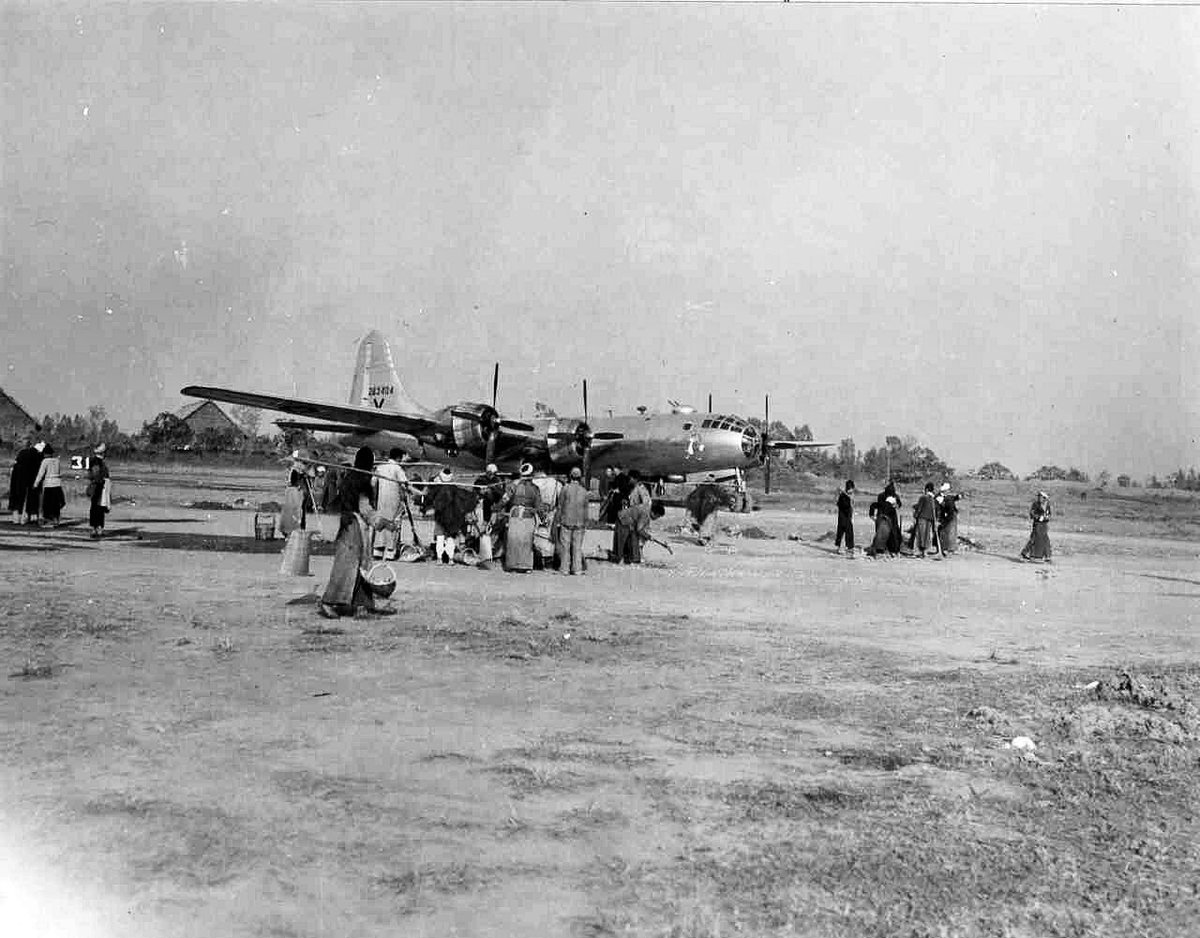
About Xinjin Airport and Xinjin Ancient Town
Xinjin Airport is in Xinjin District, Chengdu, Sichuan Province. Established as a military airfield in 1928, it has a significant aviation history and now primarily serves as a pilot training base for the Civil Aviation Flight University of China (Wikipedia; WW2DB; DBpedia).
Xinjin Ancient Town, about 40 kilometers south of Chengdu, offers preserved Sichuan architecture, lively markets, and riverside scenery. Its location makes it a day-trip destination for visitors interested in local culture and history (EastChinaTrip; Accidental Travel Writer).
History
Xinjin Airport was constructed in 1928. Its location in the fertile Sichuan Basin near Chengdu made it a strategic site for defense and transportation during periods of national turbulence (Wikipedia; WW2DB; DBpedia).
During the Second Sino-Japanese War, the airfield was upgraded to support modern aircraft and served as a defense outpost against Japanese aerial attacks. During World War II, Xinjin was used as a base for the US Army Air Forces under Operation Matterhorn. It served as a launch point for B-29 Superfortress bombers targeting Japan (WW2DB; Wikipedia).
After WWII, Xinjin transitioned to civilian use. It is now primarily a pilot training base under the Civil Aviation Flight University of China, supporting the growth of China’s civil aviation sector (Wikipedia; DBpedia).
What to See
Xinjin Airport
Xinjin Airport is not a mainstream tourist attraction, but its aviation history is documented in military history circles and academic research. It remains a site of international and domestic aviation significance (WW2DB; DBpedia).
The airport is part of Chengdu’s aviation network, supporting pilot training alongside major airports such as Chengdu Shuangliu and Chengdu Tianfu International. This network contributes to Chengdu’s role as a transportation hub in southwest China (Accidental Travel Writer).
Xinjin Ancient Town
Xinjin Ancient Town is a centuries-old settlement that once thrived as a trading hub. Its streets feature classic Sichuan architecture, including wooden buildings, tiled roofs, and ornate carvings. Temples and ancestral halls reflect the town’s cultural heritage, while festivals and folk arts preserve local traditions.
Visitors can explore:
- Historic streets Cobblestone lanes with vendors selling handicrafts, snacks, and spices.
- Temples and halls Historic religious and ancestral sites with elaborate art.
- Riverside scenery Walks and photo opportunities along the river.
- Festivals Traditional events featuring music, dance, and local cuisine.
- Teahouses Places to experience Sichuan’s tea culture.
Practical Visiting Information
Xinjin Airport
- Visiting hours The airport is an active training site and is not typically open to the public.
- Tickets There is no standard ticketing system for casual visits.
- Visits and tours Special visits or guided tours may be arranged in advance through the Civil Aviation Flight University of China. Contact the university or local tourism offices about possible arrangements. Tours may also take place during special events.
- Accessibility The airport is accessible via Chengdu’s transportation network, including China National Highway 108 and regional railways. Accessibility details are limited; inquire with the university in advance. Plan transport ahead and confirm permission to visit.
Xinjin Ancient Town
- Opening hours Daily, 8:00 AM–6:00 PM. Individual temples or museums may have different hours.
- Tickets General admission is free. Some attractions, such as temples or museums, may charge 10–30 RMB. Check local sources for current prices.
- Getting there from Chengdu The town is about 40–45 kilometers south of Chengdu.
- Train Regular services run from Chengdu Railway Stations to Xinjin Station and take 1–1.5 hours.
- Bus Intercity buses are available; check current schedules.
- Taxi or ride-hailing The drive takes approximately 45–60 minutes by car or Didi, depending on traffic.
- Language Mandarin is predominant, and English is limited. Translation apps can be helpful.
- Payments Most venues accept Alipay and WeChat Pay; carry some RMB cash.
- Facilities Public restrooms, eateries, and shops are available, though amenities can be basic.
- Accessibility Some streets are uneven or cobbled, and wheelchair access is limited.
- Accommodation Xinjin has limited hotel options; Chengdu offers a wider range, from hostels to luxury hotels.
- Dining Local restaurants serve Sichuan cuisine, known for its spicy flavors.
Tips
For Xinjin Ancient Town, March–June and September–November are recommended for mild weather. Use licensed taxis and safeguard valuables.
Emergency numbers are 110 for police, 120 for medical services, and 119 for fire services.
Nearby Places
In Xinjin District, visitors can enjoy Sichuan cuisine and views of the basin. Chengdu attractions include the Research Base of Giant Panda Breeding, also referred to as the Chengdu Giant Panda Base, Wuhou Shrine, and Jinli Ancient Street.
Frequently Asked Questions
Xinjin Airport
What are Xinjin Airport’s visiting hours?
The airport is generally closed to the public. Special visits require prior arrangement.
How can I get a ticket to visit Xinjin Airport?
There is no standard ticket. Contact the Civil Aviation Flight University of China or local tourism offices to ask about arrangements.
Is Xinjin Airport wheelchair accessible?
Accessibility details are limited. Inquire with the university in advance.
Are guided tours available?
Tours are available only by prior arrangement or during special events.
What other sites are nearby?
Consider visiting the Chengdu Giant Panda Base, Wuhou Shrine, and Jinli Ancient Street.
Xinjin Ancient Town
Is Xinjin Ancient Town suitable for a day trip?
Yes. It is suitable for a day trip from Chengdu.
Are there guided tours in English?
Some operators provide English-speaking guides; book in advance.
Is the town accessible for people with mobility issues?
Some areas may be challenging because of cobblestone streets.


