Introduction
The first thing that hits you in Chengdu is the smell of chili oil and Sichuan peppercorn at 8 a.m. While the rest of China races forward, this city of 21 million has perfected the art of doing nothing particularly well. Locals sip tea for hours in parks where retired engineers argue over mahjong tiles and ear cleaners work their trade with tiny silver instruments. That unhurried rhythm is not laziness. It is a 2,300-year-old philosophy.
Chengdu sits in the heart of Sichuan Province, historically called the Land of Abundance for its fertile plains and easy life. The pandas at the Chengdu Research Base of Giant Panda Breeding draw crowds at opening time, yet the real surprise waits elsewhere. In People's Park, old men practice sword tai chi at dawn while their wives play cards under banyan trees. The air carries incense from temples mixed with the constant sizzle of street vendors frying dan dan noodles.
Sichuan Opera performances still feature bian lian, the lightning-fast face-changing that leaves audiences gasping. But the deeper theater happens in teahouses where conversations stretch longer than the opera itself. Walk the red walls and bamboo paths of Wuhou Shrine at dusk and you understand why this city feels different. History here is not behind glass. It is lived slowly, with a cup of green tea in one hand and tomorrow's plans left deliberately vague.
The contrast defines the place. Ancient Shu bronze masks from Sanxingdui stare out with alien eyes while a 14-meter panda sculpture scales the glass facade of IFS Mall. Both belong here. Both feel inevitable. Spend enough time and you stop rushing between sights. You start understanding why Chengdu's greatest export is not pandas or hotpot but a different relationship with time itself.
Places to Visit
The Most Interesting Places in Chengdu
Chengdu Greenland Tower
The Chengdu Greenland Tower stands as an extraordinary symbol of Chengdu’s rapid urban transformation and cultural ambitions, poised to become the tallest…
Baoguang Temple
Baoguang Temple (宝光寺), nestled in the Xindu District of Chengdu, Sichuan Province, represents one of western China’s most venerable and culturally significant…
West Pearl Tower
Rising majestically to 339 meters, the West Pearl Tower stands as Chengdu’s tallest landmark and a vivid symbol of the city’s dynamic fusion of tradition and…
Sï-Shen-Tsï Methodist Church
Nestled in the vibrant Jinjiang District of Chengdu, the Sï-Shen-Tsï Methodist Church stands as a profound testament to the city’s rich religious heritage and…
Zhaojue Temple
Zhaojue Temple (昭觉寺), located in the northern part of Chengdu, Sichuan Province, is one of the region’s most historically significant and spiritually rich…
Chengdu Museum
Nestled in the vibrant heart of Chengdu, the capital of Sichuan Province, the Chengdu Museum stands as a monumental gateway to the region’s rich cultural…
Daci Temple
Nestled at the heart of Chengdu, Daci Temple (大慈寺) stands as a beacon of Buddhist heritage and cultural continuity, offering visitors a profound glimpse into…
Du Fu Thatched Cottage
Nestled in the tranquil western outskirts of Chengdu, China, the Du Fu Thatched Cottage stands as a monument of profound historical and cultural significance.
New Century Global Center
Nestled in the vibrant city of Chengdu, Sichuan Province, the New Century Global Center stands as a monumental testament to modern urban ambition and…
Shi'Erqiao Site
Situated in Chengdu, Sichuan Province, the Shi’Erqiao Site (十二桥遗址) stands as a remarkable archaeological landmark that offers an immersive window into the…
Luodai Town
Located just 18 to 20 kilometers east of Chengdu, Luodai Ancient Town is widely recognized as the premier Hakka settlement in southwest China and the world’s…
Chengdu Sports Centre
Nestled in the vibrant and rapidly evolving city of Chengdu, the Chengdu Sports Centre stands as a remarkable fusion of sporting excellence, cultural…
What Makes This City Special
Panda Encounters
Head to the Chengdu Research Base of Giant Panda Breeding before 7:30 AM. Watch 20-month-old cubs tumble down wet bamboo slides while their mothers chew stalks with the lazy precision of old men playing mahjong in People's Park.
Face-Changing Opera
At Shu Feng Ya Yun theatre the lights dim and a performer snaps his head. In one motion the red mask becomes black, then white. The transformation happens faster than your eye can register, a 300-year-old trick that still feels like sorcery.
Teahouse Life
In Pengzhen Guanyin Pavilion Old Teahouse morning light cuts through holes in the tiled roof onto men getting their ears cleaned with long metal instruments. Order jasmine tea for 12 CNY and watch the ritual that has barely changed since the Qing dynasty.
Ancient Shu Mysteries
The Sanxingdui Museum displays bronze masks with eyes that stretch 40 cm wide, cast 3000 years ago by a civilization that appeared then vanished. The new 2025 exhibition hall lets you watch archaeologists restore fresh finds in real time.
Historical Timeline
The City That Refuses to Rush
From ancient Shu capital to slow-life capital of modern China
First Footprints on the Plain
Humans settle the fertile Chengdu Plain. The soil here yields three crops a year if you simply let it. This abundance would later earn the region its eternal nickname: Land of Abundance. The pattern begins early, a place that feeds you so well you never quite learn urgency.
Jinsha Settlement Emerges
After Sanxingdui’s mysterious collapse, a new center rises at Jinsha. Ivory workshops hum and gold-foil masks catch the light. The bronze-working tradition continues, but something shifts. The city learns to hide its power behind elegance rather than display it in giant sacrificial pits.
Capital Moves to Chengdu
The Shu king relocates his court to the site of today’s city. Streets are laid in a grid that survives in distorted form even now. For the first time this place becomes a political center rather than just another rich settlement. The decision proves permanent.
Qin Conquest Reshapes Everything
Qin armies swallow the Shu kingdom. General Zhang Yi expands the walls and standardizes the city layout. What looked like defeat becomes the making of Chengdu. The conquerors needed this breadbasket too much to destroy it. They kept the name and the farmland and changed almost everything else.
Dujiangyan Tames the River
Governor Li Bing and his son build a diversion system without a dam. The Min River splits obediently at Yuzui levee. For 2,000 years the fields stay watered and the city stays dry. Most irrigation projects become obsolete. This one still functions. Think about that.
Sima Xiangru Returns Home
The poet-official Sima Xiangru comes back to Chengdu after years at the imperial court. His verses celebrate the local lifestyle with such elegance that even emperors quote them. The city claims its first literary celebrity and begins a tradition that later includes Du Fu.
Liu Bei Declares Shu Han Capital
Liu Bei makes Chengdu capital of his Shu Han kingdom during the Three Kingdoms chaos. Zhuge Liang arrives as chancellor and turns the city into an administrative and military powerhouse. The streets fill with strategists debating how to reunite China. Most of their plans fail. The city itself endures.
Zhuge Liang Governs from Chengdu
After Liu Bei’s death, Zhuge Liang runs the kingdom from his modest Chengdu headquarters. He expands agriculture using Dujiangyan, reforms taxation, and launches northern expeditions. The man works himself to death at age 54 trying to do the impossible. Locals still leave offerings at his temple.
Du Fu Arrives in Exile
The Tang poet Du Fu reaches Chengdu fleeing rebellion. He builds a thatched cottage beside the Huanhua Stream and writes some of Chinese literature’s most moving verses while watching rain fall on bamboo. The cottage becomes a pilgrimage site. The poems become immortal.
Later Shu Kingdom Proclaims Independence
Wang Jian declares Chengdu capital of his own kingdom after Tang collapse. The city enjoys relative peace while northern China burns. Hibiscus trees bloom along the walls. The ruler Meng Chang later covers those walls entirely in hibiscus, giving Chengdu its nickname Rong Cheng that it still carries today.
Paper Money Born in Chengdu
Merchants here issue the world’s first true paper currency, jiaozi, because carrying iron coins for large transactions had become ridiculous. The Song government eventually takes over production. An entire financial revolution begins because Chengdu merchants got tired of heavy pockets.
Ming Collapse Brings Devastation
War and rebellion empty Sichuan. Chengdu’s population collapses. By the early Qing, tigers roam the ruins of what was once one of China’s largest cities. The silence must have been extraordinary after centuries of constant noise.
Kangxi Orders Massive Resettlement
The Qing emperor begins forced migration from Hubei, Hunan, and Guangdong to repopulate Sichuan. Millions move. The local dialect that emerges is basically Hubei speech with Sichuan characteristics. Today’s laid-back Chengdu personality owes much to these newcomers who arrived with nothing and learned to enjoy what remained.
Ba Jin Enters the World
Future writer Ba Jin is born into a wealthy Chengdu family. The decaying Qing empire and its rigid family structures disgust him. His later novels would savage the very Confucian household system that once dominated these courtyard houses. The city produced its sharpest critic.
People’s Republic Absorbs the City
Communist forces enter Chengdu. The last major mainland city to fall. Within years the old teahouse culture faces suppression, yet somehow survives in parks where old men still play mahjong under banyan trees. Some habits prove harder to revolutionize than others.
Panda Base Established
The Chengdu Research Base of Giant Panda Breeding opens 15 kilometers north of the center. What begins as a conservation project becomes the city’s global calling card. Tourists now wake at dawn to watch these animals tumble in morning mist while locals maintain their tea-drinking pace nearby.
Wenchuan Earthquake Shakes the City
The 8.0-magnitude quake kills nearly 90,000 across Sichuan. Chengdu’s buildings sway but most hold. The city absorbs hundreds of thousands of refugees from the devastated mountain areas. In the months that follow, the famous Chengdu resilience shows itself again. Life slows down but never stops.
IFS Panda Climbs the Mall
A 25-meter panda sculpture appears to scale the glass facade of the new International Finance Square. The installation captures something essential about contemporary Chengdu: ancient symbols casually conquering modern luxury architecture. Tourists photograph it. Locals mostly shrug and continue to the teahouse.
Sanxingdui’s New Hall Opens
A gleaming new exhibition hall opens at Sanxingdui displaying recently excavated bronze trees and masks that still baffle archaeologists. The artifacts remind everyone that beneath Chengdu’s relaxed surface lies an older civilization whose purposes we still don’t fully understand. The masks stare back at us across three millennia.
Notable Figures
Du Fu
712–770 · PoetDuring the Tang dynasty, Du Fu built a simple thatched cottage on the western edge of Chengdu after fleeing war. He wrote more than 200 poems here, many describing the quiet beauty of his garden and the suffering of ordinary people. Today his cottage sits inside a park where the same bamboo still bends in the wind he once described.
Zhuge Liang
181–234 · Strategist and Prime MinisterZhuge Liang turned Chengdu into the capital of the Shu Han kingdom during the Three Kingdoms period. From his headquarters near what is now Wuhou Shrine he planned military campaigns that still fascinate historians. The red walls and incense at his memorial temple feel heavy with the weight of those calculated decisions made 1,800 years ago.
Li Bing
3rd century BC · Hydraulic EngineerLi Bing and his son designed a dam system without a single sluice gate that still controls the Min River today. The project turned the Chengdu Plain into the Land of Abundance and has operated continuously for over 2,200 years. Stand on the Fish Mouth weir at Dujiangyan and you can almost hear the ancient cheers when the first controlled waters reached the fields.
Li Yuchun
born 1984 · Singer and Super Girl winnerIn 2005 Li Yuchun stood on a Chengdu stage in baggy jeans and short hair and changed Chinese pop forever by winning Super Girl. Her androgynous style shocked conservative audiences but made her an instant idol across the country. Walk through Taikoo Li today and you still see teenage girls copying the look she first tried out in local karaoke bars.
Photo Gallery
Explore Chengdu in Pictures
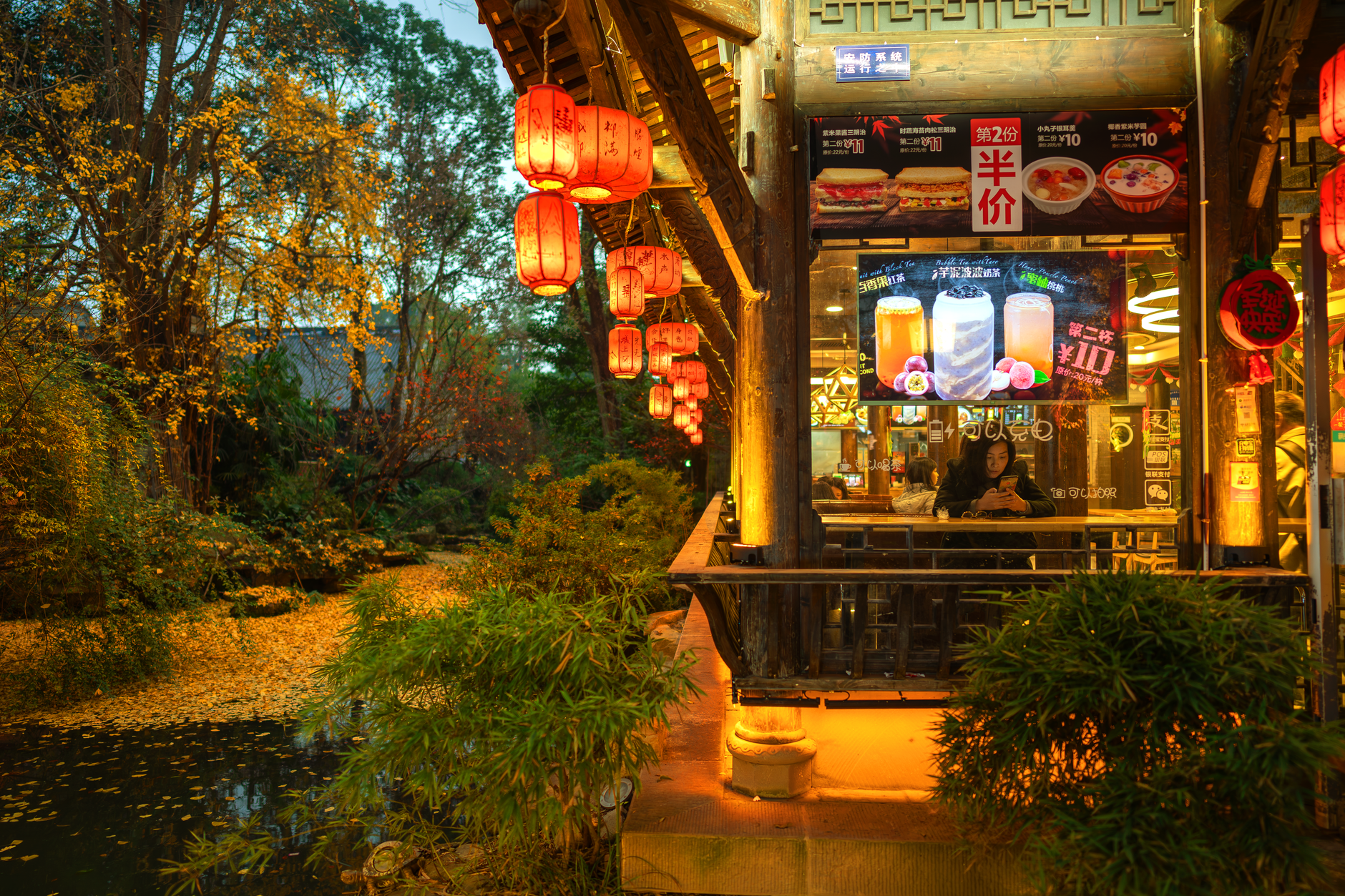
A tranquil evening at a traditional teahouse in Chengdu, China, where warm lantern light glows against a backdrop of vibrant autumn foliage.
Vincent Tan on Pexels · Pexels License
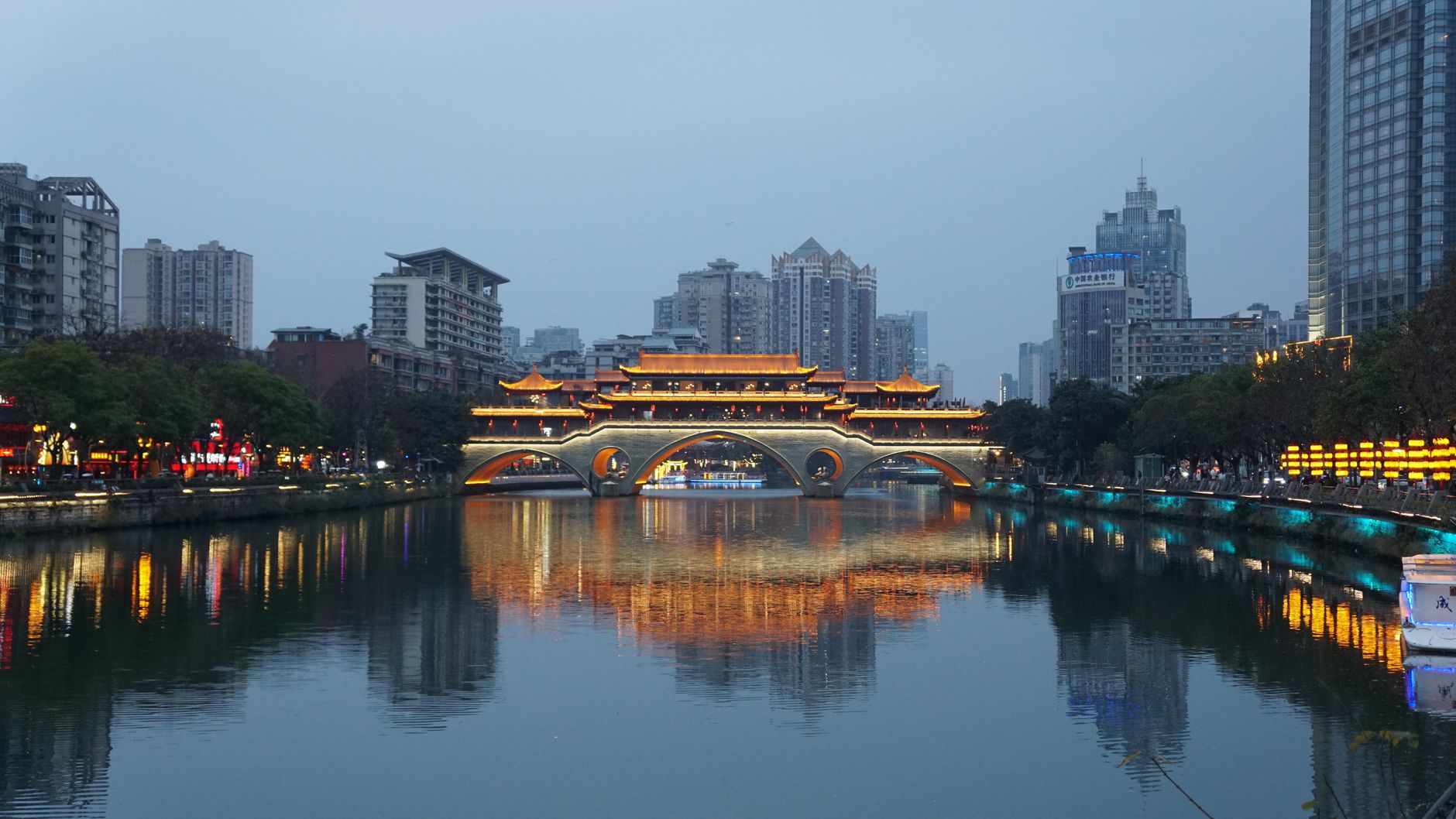
The historic Anshun Bridge glows beautifully at dusk, serving as a stunning architectural landmark along the Jin River in Chengdu, China.
Tetovált Kínai on Pexels · Pexels License
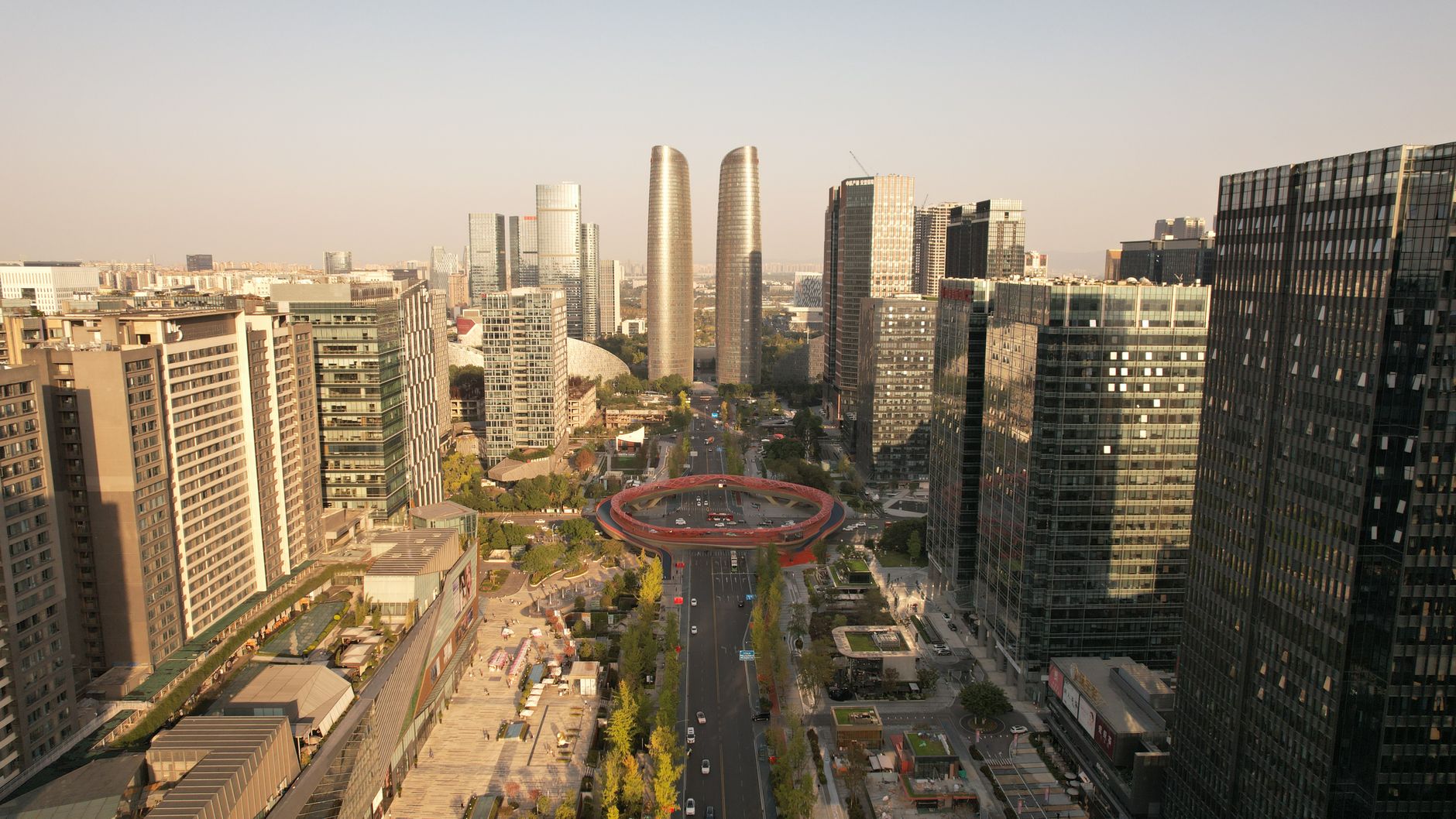
An elevated view of Chengdu's modern urban landscape, highlighted by the striking red circular pedestrian bridge at sunset.
dave chen on Pexels · Pexels License
The vibrant Chengdu skyline glows at night, showcasing a blend of modern high-rise architecture and bustling urban infrastructure.
AG ZN on Pexels · Pexels License
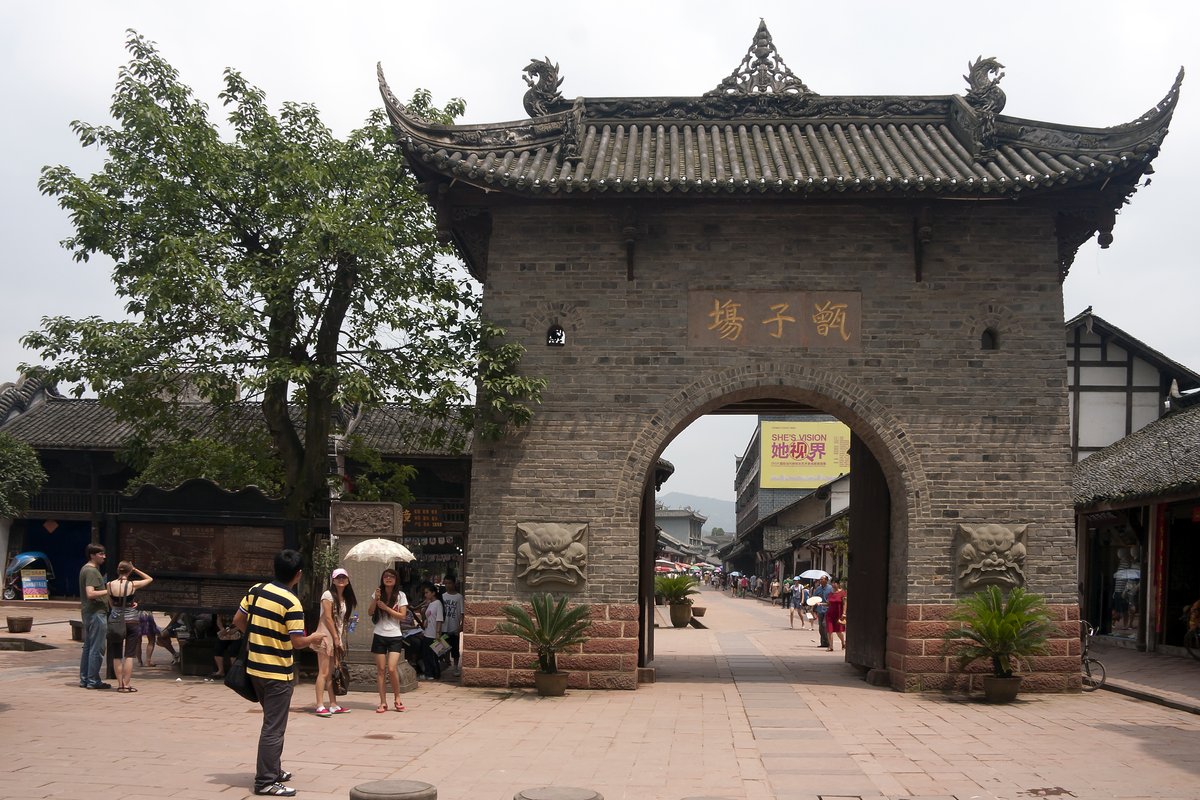
A bustling street scene in Chengdu, China, showcasing a traditional storefront adorned with colorful signage and local architectural charm.
Blackcurrant Great on Pexels · Pexels License
The historic Anshun Bridge glows beautifully at night, serving as a stunning architectural landmark along the Jin River in Chengdu, China.
Tito Zzzz on Pexels · Pexels License
A stunning aerial perspective of Chengdu, China, as the setting sun casts a warm golden glow over the dense urban landscape and high-rise architecture.
AG ZN on Pexels · Pexels License
The historic Anshun Bridge glows at dusk, casting a beautiful reflection over the Jin River in the heart of Chengdu, China.
William Liu on Pexels · Pexels License
A charming, warmly lit cafe in Chengdu, China, captures the relaxed atmosphere of local street life as patrons enjoy the company of their pets.
Kenny Foo on Pexels · Pexels License
The modern architecture of Chengdu East Railway Station frames a panoramic view of the rapidly developing city skyline in China.
mg shawn on Pexels · Pexels License
The vibrant nightlife of Chengdu's Chunxi Road, highlighted by the famous giant panda art installation and glowing luxury retail architecture.
James Wu on Pexels · Pexels License
Practical Information
Getting There
All international flights use Tianfu International Airport (TFU), 50 km southeast of downtown. Metro Line 18 reaches South Railway Station in 35–60 minutes for 10 CNY. Airport buses run 24/7 to Chunxi Road (15 CNY daytime, 25 CNY at night). Shuangliu Airport (CTU) still handles most domestic flights and connects via Metro Lines 10 and 19.
Getting Around
Chengdu Metro operates 13 lines in 2026 with tap-and-go using WeChat Pay, Alipay, or international Visa cards at gates. One-day pass costs 20 CNY, three-day 50 CNY. Public bikes via Meituan or Hello Bike apps dominate the center. Kuanzhai Alley, Taikoo Li, and Jinli are entirely pedestrian.
Climate & Best Time
Spring (March–June) and autumn (September–November) bring 18–26°C days with moderate rain. Summers hit 30°C+ and force pandas indoors after 9 AM. Winters stay above freezing but damp. Avoid Labor Day and National Week crowds. Early morning visits matter more than month for pandas.
Language & Payments
English is rare outside luxury hotels. Download Alipay before arrival and link your foreign card. Cash sees almost no use in 2026. Save your hotel name in Chinese characters for taxis and show the driver the screenshot.
Where to Eat
Don't Leave Without Trying
老船东海鲜烧烤大排档
local favoriteOrder: Grilled seafood skewers with Sichuan peppercorn and chili oil — the signature spiced preparation that defines Chengdu's late-night barbecue culture.
This is the real deal: a no-frills, high-energy local spot where Chengdu residents gather for 宵夜 (xiaoye/midnight snacks). The open-air barbecue setup and communal energy are authentically Chengdu.
Yipinxian
local favoriteOrder: Mapo Tofu and Kung Pao Chicken — classic Sichuan dishes prepared with the numbing heat of Sichuan peppercorns that define the regional palate.
Located in the heart of the Luomashi shopping district, this is where locals eat authentic Sichuan fare without the tourist markup. Expect bold flavors and zero pretension.
Bread Talk
quick biteOrder: Fresh-baked pastries and artisan breads — the morning selection rotates daily and reflects both Asian and Western influences.
Strategically positioned on Chunxi Road, Chengdu's premier shopping and dining corridor, this is the go-to spot for a quality breakfast or afternoon pastry break without the Starbucks crowd.
真锅咖啡
cafeOrder: Specialty coffee and light snacks — a refuge for serious coffee drinkers who want to escape the mainstream chains.
Tucked on the second floor of a Chunxi Road building, this independent cafe serves thoughtfully prepared coffee to a mix of locals and travelers seeking an authentic Chengdu coffee experience.
星巴克广场店
cafeOrder: Seasonal specialty drinks and signature espresso beverages — reliable quality in a prime location.
Located in Xiangsheli Plaza on People's East Road, this is the convenient choice for travelers who want a familiar coffee experience while exploring the Luomashi district.
Haolilai Sanhuaishu Shop
quick biteOrder: Fresh-baked bread and pastries with both traditional Chinese and Western influences — a reliable neighborhood bakery stop.
This local bakery chain outpost offers quality baked goods at fair prices, making it a solid choice for breakfast or a quick snack without the premium pricing of tourist-heavy areas.
Talk
cafeOrder: Coffee and light refreshments — a minimalist cafe experience in a historic Chengdu neighborhood.
Located near the iconic Red Wall area (红照壁), this small cafe captures the quieter, more introspective side of Chengdu's cafe culture away from the Chunxi Road bustle.
The St. Regis Chengdu
fine diningOrder: Contemporary international cuisine with Sichuan influences — the kitchen balances global techniques with local ingredients for a refined take on regional flavors.
The city's most established luxury dining destination, housed in a prestigious hotel on Tiandu Street. If you want an elevated dinner experience with impeccable service, this is it.
Dining Tips
- check Tipping is not expected or customary in Chengdu — service is simply part of the job.
- check Alipay and WeChat Pay are the standard payment methods; ensure your apps are linked to a payment method before arrival. Cash is accepted but increasingly less common.
- check Dinner is eaten late by Western standards — typically between 19:00 and 21:00. Late-night snacks (宵夜/xiaoye) remain available until 02:00 AM at many hot pot and barbecue spots.
- check When someone pours your tea, tap your index and middle finger on the table twice as a 'thank you' gesture.
- check Use communal chopsticks (公筷) when picking food from shared central dishes. Never stick chopsticks vertically into a bowl of rice — it resembles funeral incense.
- check Most restaurants cater to all spice levels. If heat is not your preference, ask for 'Wei La' (微辣 — micro-spicy) or order a 'Yuan Yang' (鸳鸯) pot, which provides both spicy and non-spicy broths.
- check Portions are often large and meant for sharing. If dining solo, look for 'set meals' or individual snack portions.
- check In formal dining settings, the seat facing the entrance is reserved for the host or guest of honor — wait to be seated.
Restaurant data powered by Google
Tips for Visitors
Visit Pandas Early
Arrive at the Chengdu Research Base of Giant Panda Breeding by 7:30 AM via the West Gate. Pandas are most active before 9:00 AM and retreat indoors when temperatures exceed 26°C.
Set Up Alipay First
Link your international card to Alipay before landing. Chengdu operates as a cashless city where metro, taxis, and even street vendors require QR payments or the Chengdu Metro app.
Take Metro Line 18
From Tianfu International Airport, ride Line 18 Express to South Railway Station for 10 CNY in 35–60 minutes. Far cheaper and more predictable than the 150–200 CNY taxi.
Order the Oil Dip
At hot pot restaurants like Shu Jiuxiang, mix sesame oil with garlic and scallions in your bowl. This traditional dip cools the má là heat better than any drink.
Skip Holiday Crowds
Avoid Labor Day and National Day weeks when Sichuan’s domestic crowds overwhelm every site. Book Panda Base and Sanxingdui tickets 1–3 days ahead through official WeChat mini-programs.
Photograph IFS Panda
Go to the 7th floor of IFS Mall for the clearest angle of the giant climbing panda sculpture against the skyline. Early morning light cuts the glass reflections best.
Find Real Teahouses
Skip People’s Park for Pengzhen Guanyin Pavilion Old Teahouse. Morning sunlight through the damaged roof creates the best photos while locals play mahjong without English menus.
Explore the city with a personal guide in your pocket
Your Personal Curator, in Your Pocket.
Audio guides for 1,100+ cities across 96 countries. History, stories, and local insight — offline ready.
Audiala App
Available on iOS & Android
Join 50k+ Curators
Frequently Asked
Is Chengdu worth visiting? add
Yes, if you want to understand the Sichuanese definition of the good life. The city moves at a slower pace than Shanghai or Beijing, where three-hour teahouse sessions and nightly mahjong games are normal. Pandas are the headline, but the teahouse culture and face-changing opera performances at Shufeng Yayun will stay with you longer.
How many days do I need in Chengdu? add
Four days works for most visitors. Two days cover the Panda Base, Wuhou Shrine, Kuanzhai Alley and a Sichuan Opera show. Add a full day for Sanxingdui Museum and either Leshan Giant Buddha or Mount Emei as a day trip. Five days lets you slow down and sit in People’s Park without rushing.
How do I get from Tianfu Airport to the city center? add
Take Metro Line 18 Express from the airport station to South Railway Station for 10 CNY. The journey takes 35 minutes on the express service. Airport buses to Chunxi Road cost 15 CNY and run 24 hours but take longer in traffic.
Is Chengdu safe for solo travelers? add
Violent crime against tourists is almost nonexistent. The main annoyances are unofficial guides at the Panda Base selling fake tickets. Use only official gates and apps. Women traveling alone report feeling comfortable walking at night in central areas like Taikoo Li and Jinli.
How spicy is the food in Chengdu? add
It’s not just hot, it’s má là — the Sichuan peppercorn creates a numbing sensation that builds. Start with mapo tofu or dan dan noodles at Chen Mapo Tofu rather than diving straight into hot pot. Most restaurants will adjust spice levels if you ask, though authenticity decreases.
Do I need cash in Chengdu? add
Almost none. The city runs on Alipay and WeChat Pay. International cards now work at some metro turnstiles but not everywhere. Set up digital payments before arrival or you will struggle to buy metro tickets, taxis or even a bottle of water.
Sources
- verified ChinaHighlights Chengdu Guide — Provided details on panda viewing times, teahouse culture, non-touristy spots like Pengzhen Guanyin Pavilion and Wangjiang Park.
- verified ChinaDiscovery Chengdu Transportation — Airport transfer options, metro lines, costs and best visiting seasons.
- verified UNESCO World Heritage Centre - Mount Emei and Leshan Giant Buddha — Confirmed historical dates for the Leshan Giant Buddha (8th century) and first Buddhist temple on Mount Emei (1st century).
- verified Travel China Guide - History of Chengdu — Founding dates, dynastic history, famous figures including Liu Bei, Zhuge Liang and Du Fu.
Last reviewed: