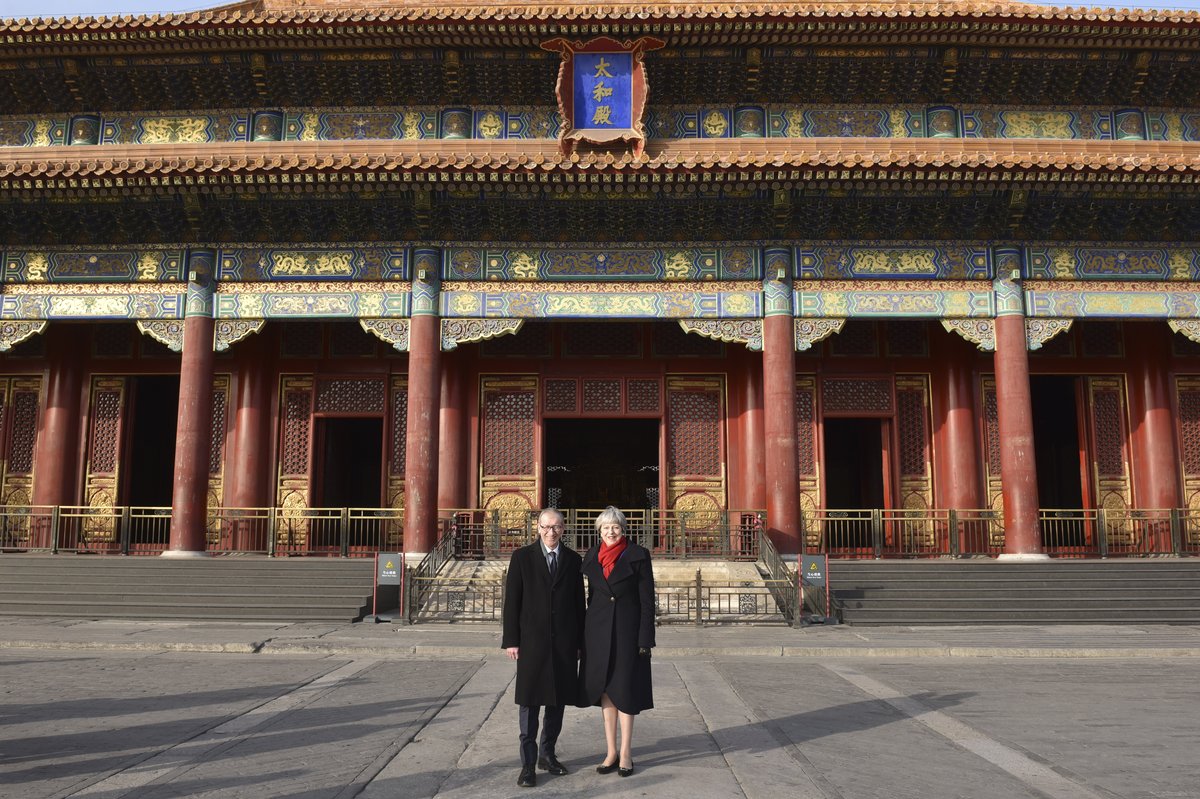
Historical Significance of West Glorious Gate
The West Glorious Gate, one of the four principal gates of the Forbidden City, functioned as a practical entrance for staff and officials. Unlike the ceremonial Meridian Gate, it underscores the complex's meticulous spatial and social hierarchy. Its design and placement exemplify the intricate symbolism and cosmological alignment central to imperial Chinese architecture.
Architectural Features & Symbolic Design
Structure and Layout
- Location Western wall of the Forbidden City, mirroring the East Glorious Gate.
- Design Red-painted wooden doors with a nine-by-nine grid (81) of golden door nails, signifying imperial supremacy.
- Roof Yellow-glazed tiles—an imperial color—crown the gatehouse, which is supported by ornate wooden brackets (dougong).
- Gatehouse Five rooms wide, three rooms deep, with upturned eaves and intricate roof ornaments to protect against evil spirits and manage rainwater.
Symbolic Elements
- Cosmological Alignment The gate’s symmetry with its eastern counterpart and alignment along the Forbidden City’s north-south axis symbolize the emperor’s role as mediator between heaven and earth.
- Decorative Details Door nails, roof ornaments, and yellow tiles all reinforce imperial authority and auspiciousness.
Defensive and Practical Aspects
- The gate is integrated into the palace’s formidable walls (up to 8 meters high and 8.62 meters thick), providing security and facilitating discreet movement and deliveries.
Visiting Hours & Ticket Information
Visiting Hours
- Open Tuesday to Sunday, 8:30 AM – 5:00 PM (last entry at 4:10 PM)
- Closed Mondays (except national holidays)
- Note West Glorious Gate is not a public entrance; it's best viewed from outside during the Forbidden City's opening hours.
Ticketing
- General Admission Access to the Forbidden City is through the Meridian Gate. No separate ticket is issued for the West Glorious Gate.
- Pricing 60 RMB (April–October); 40 RMB (November–March). Discounts available for students, seniors, and children.
- Booking All tickets must be reserved online in advance via the Palace Museum Official Website.
- Visitor Cap 80,000 daily to preserve the site.
Accessibility Details
- Wheelchair Access Main routes are paved and accessible; wheelchairs are available for rent at the main entrance.
- Restrooms Accessible facilities are located at the main gates, but not directly at the West Glorious Gate.
- Information Multilingual signage and audio guides enhance the experience for international visitors.
- Limitations Some areas retain steps and uneven surfaces due to historical preservation (China Highlights).
Transportation Options
Subway
- Nearest Stations Tiananmen West (Line 1) and Tiananmen East (Line 1); 10–15 minutes' walk from the Forbidden City’s western perimeter.
Bus
- Numerous routes stop near “Forbidden City West” and “Tiananmen West,” including lines 1, 2, 52, 59, 82, 99, 120, and 126 (China Discovery).
Taxi & Ride-Sharing
- Drop-off is available near the Forbidden City’s western side; direct vehicle access to the gate is restricted.
Bicycle & Walking
- Bike-sharing systems are available around the Forbidden City, with parking areas near main gates. The area is highly pedestrian-friendly.
Private Tours
- Some guided tours include pickup and offer special access routes, occasionally incorporating the West Glorious Gate (China Highlights).
Practical Travel Tips
- Best Time to Visit Early mornings on weekdays, especially in spring or autumn for pleasant weather and fewer crowds.
- Security Expect airport-style checks; bring your passport or ID.
- Amenities Restrooms and cafes are available near main entrances and inside the Forbidden City.
- Navigation Use Baidu Maps or Google Maps (with VPN) for routes.
- Advance Booking Reserve tickets 7–9 days ahead during peak season.
- Language Support English audio guides, signage, and some English-speaking staff are available.
Nearby Attractions
- Jingshan Park North of the Forbidden City, offers panoramic city views.
- Beihai Park West of the palace, features lakes and historic gardens.
- Tiananmen Square South, with major monuments and the National Museum of China.
- Hutongs Historic Beijing alleyways like Shichahai and Nanluoguxiang are easily accessible.
Special Events & Guided Tours
- The Forbidden City hosts exhibitions and cultural events year-round. Specialized guided tours—some with access via the West Glorious Gate—are available. Check the Palace Museum Official Website for current offerings.
Photographic Highlights
- The West Glorious Gate, with its bold colors and imperial motifs, is a prime spot for photography. Early morning and late afternoon provide optimal lighting. The surrounding moat and palace walls add to the visual appeal.
Preservation & Ongoing Research
Conservation efforts ensure the continued preservation of the West Glorious Gate. Ongoing archaeological and digital documentation projects deepen public understanding of its historical significance.
Frequently Asked Questions (FAQ)
Q: Can I enter the Forbidden City via West Glorious Gate?
A: No, it is not a public entrance. Access is typically restricted to special tours or events.
Q: Are tickets required for West Glorious Gate?
A: There are no separate tickets; general Forbidden City admission is required.
Q: Is the area accessible for visitors with disabilities?
A: Main pathways are wheelchair-friendly, but some areas have limited access.
Q: Can I take photos at West Glorious Gate?
A: Yes, photography is permitted outside the gate.
Q: What is the best way to reach the West Glorious Gate?
A: Take Subway Line 1 to Tiananmen West, or use nearby bus routes.
Summary Table: Key Information
| Feature | Details |
|---|---|
| Nearest Subway | Tiananmen West (Line 1), 10–15 min walk |
| Bus Routes | 1, 2, 52, 59, 82, 99, 120, 126 |
| Accessibility | Wheelchair-friendly routes; accessible restrooms at main gates |
| Ticketing | Online advance booking only; 80,000 visitor daily cap |
| Visiting Hours | 8:30 AM – 5:00 PM (closed Mondays, except holidays) |
| Nearby Attractions | Jingshan Park (0.5 km), Beihai Park (0.5 km), Tiananmen Square (1 km) |
| Best Visiting Seasons | April–May, September–October |
| Language Support | English audio guides, signage, some English-speaking staff |