Plan and listen to Temple Of Agriculture with Audiala.
Audio guide in your pocket, itinerary in your browser. Built for the way you actually visit.
Introduction
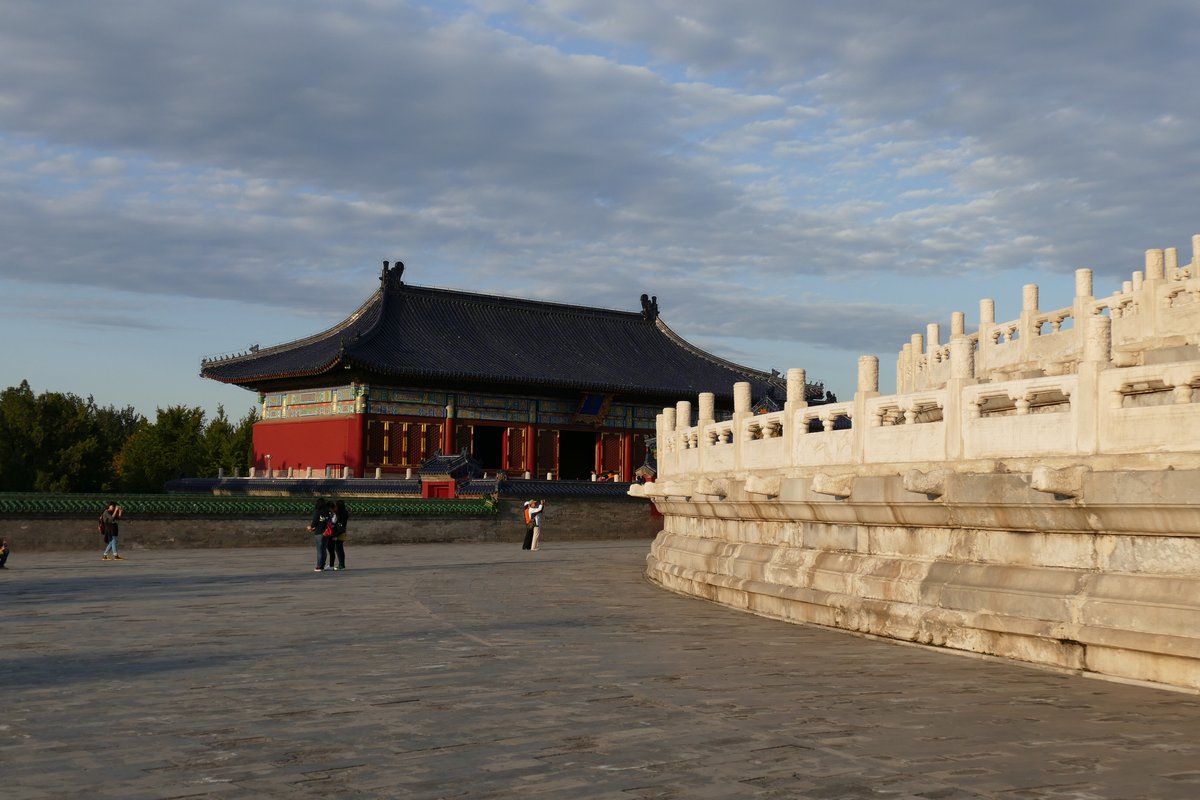
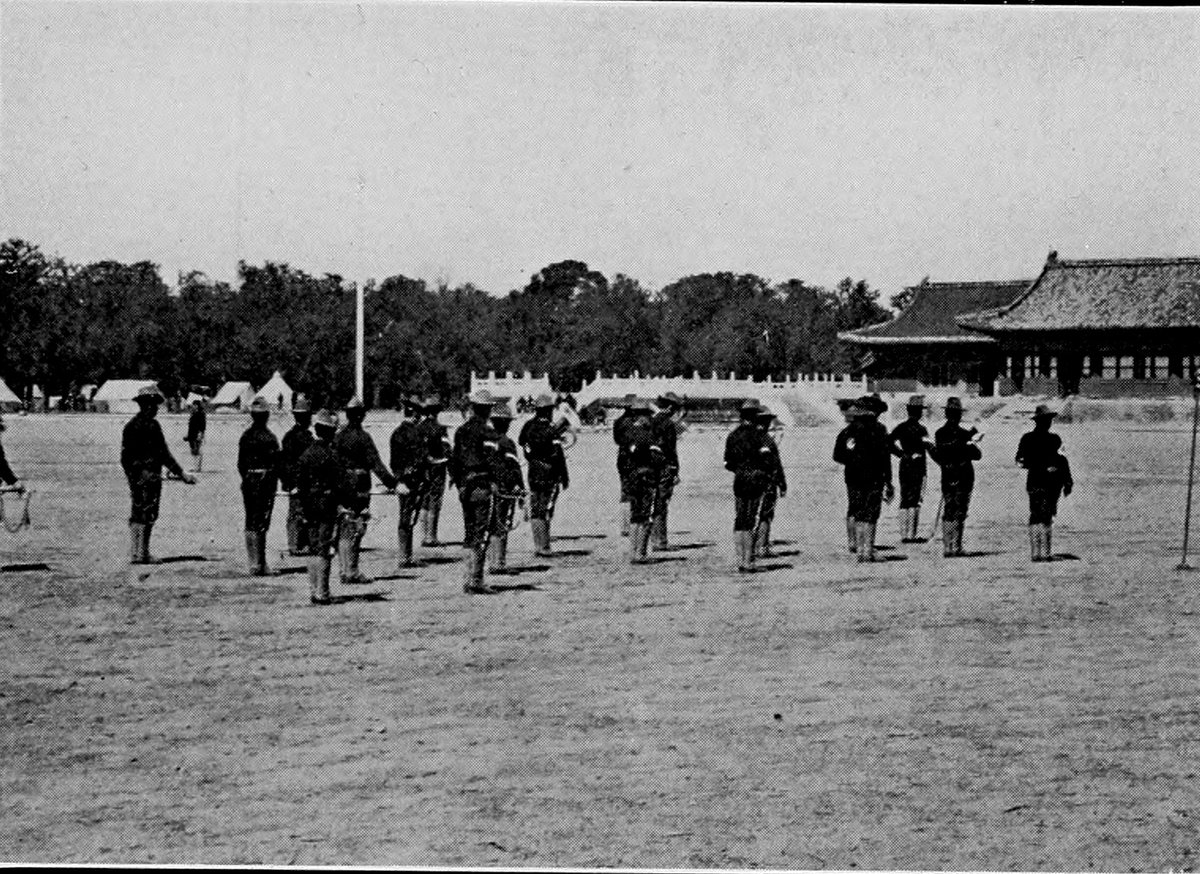
The Temple of Agriculture (Xiannongtan, 先农坛) stands as a testament to China’s imperial reverence for agriculture and ritual. Established in 1420 during the Ming Dynasty, contemporaneously with the Forbidden City and Temple of Heaven, this ceremonial complex once hosted emperors as they performed sacred rites to honor Shennong—the mythical “Divine Farmer”—and other agricultural deities. Today, it houses the Beijing Ancient Architecture Museum, offering a blend of historical, architectural, and cultural insight. Nestled in Beijing’s Xicheng District along the city’s historic Central Axis, the site’s well-preserved Ming and Qing structures, tranquil gardens, and museum exhibits create a unique destination for travelers seeking a meaningful encounter with China’s past (visitbeijing.com.cn; TravelChinaGuide).


Origins and Foundation
Commissioned in 1420 by the Yongle Emperor, the Temple of Agriculture was integral to the Ming dynasty’s vision of Beijing as a cosmic center of power and ritual. Alongside the Forbidden City and Temple of Heaven, it formed a triad of imperial sites reflecting the emperor’s intermediary role between heaven, earth, and the people. Here, emperors performed elaborate sacrifices to Shennong and other agricultural deities to guarantee abundant harvests and maintain cosmic harmony (visitbeijing.com.cn).
Dynastic Continuity
Throughout the Ming and Qing dynasties, the temple was a vital venue for imperial ceremonies, particularly the annual Tilling Ceremony, in which the emperor symbolically plowed the first furrow of spring. This ritual reinforced the belief that the emperor’s virtue and diligence determined the nation’s agricultural fortune.
Architectural Highlights
Layout and Design
Spanning roughly 860,000 square meters, the complex comprises inner and outer altars, ceremonial halls, and ancillary buildings, all organized along a north-south axis consistent with traditional Chinese geomancy (visitbeijing.com.cn). The spatial hierarchy and symmetry reflect cosmological concepts of round heaven and square earth.
Key Structures
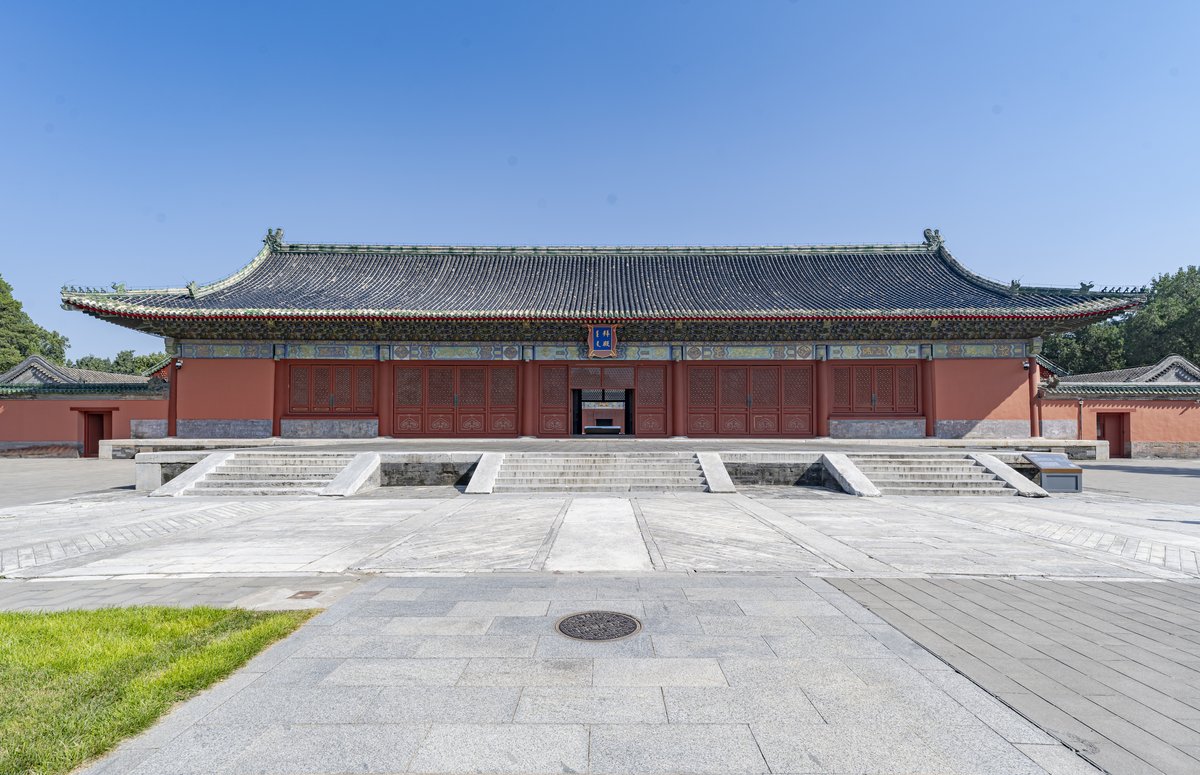
- Altar of Agriculture (Xiannong Altar): Central platform for sacrifices and the annual plowing ritual.
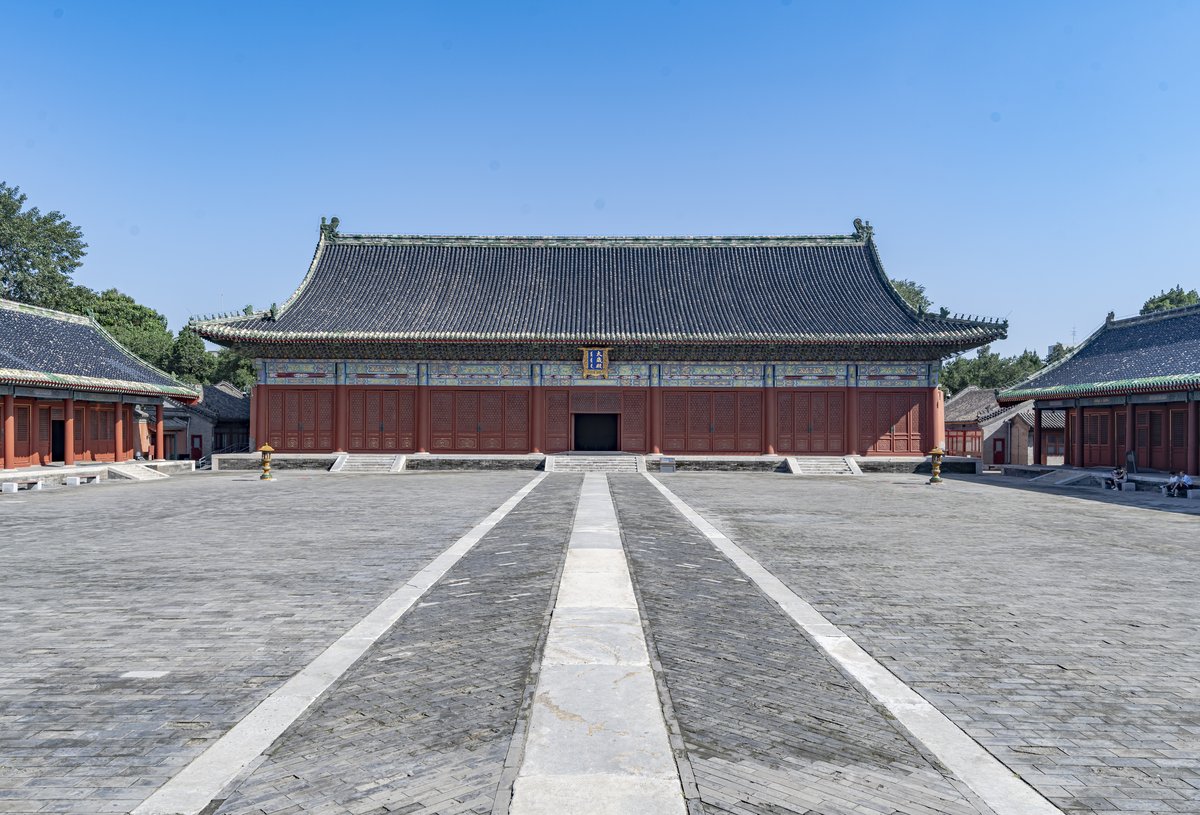
- Jupiter Hall (太岁殿, Tàisuì Diàn): The architectural centerpiece, featuring exquisite dǒugǒng (bracket sets) and intricate roof carvings (Lonely Planet).
- Divine Granary Complex: Includes the granary, milling house, and barns, symbolizing the emperor’s duty to ensure food security (Xinhua).
- Taisui Palace and Prayer Hall: Now home to museum exhibits on the evolution of Chinese architecture (TravelChinaGuide).
Artistic Details
- Glazed Tile Roofs, Colored Paintings, and Stone Carvings: Reflect Ming and Qing dynastic styles and symbolism.
- Courtyards and Gates: Facilitate ritual processions and highlight imperial hierarchy.
Restoration and Preservation
The temple has seen multiple restoration campaigns. The most recent, completed in 2023, meticulously restored sacrificial spaces, repainted original vermilion walls, and reinstalled historic bronze incense burners, preserving the site’s authenticity (visitbeijing.com.cn).
Ritual and Cultural Significance
The Temple of Agriculture’s ceremonies underscored the emperor’s responsibility for the nation’s agricultural well-being. During the Tilling Ceremony, the emperor, dressed in ceremonial robes, would plow the first field and offer grain, wine, and livestock to the gods, accompanied by ritual music and prescribed courtly roles (Wikipedia; TravelChinaGuide). These rites symbolized the state’s dependence on agriculture and the emperor’s legitimacy as the “Son of Heaven.”
The Modern Era and Museum Transformation
Following the fall of the Qing dynasty, the temple’s religious functions ceased. Recognizing its historical and architectural value, authorities repurposed the site as the Beijing Ancient Architecture Museum in 1987—China’s first museum dedicated to ancient building techniques and heritage (Travel Buddies). Exhibits now showcase the evolution of Chinese architecture, ritual implements, and models of historic structures, providing an immersive educational experience.
Visitor Information
Location and Access
- Address: 21 Dongjing Road, Xicheng District, Beijing.
- Transport:
- Subway: Line 5 to Tiantan Dongmen or Line 7 to Caishikou; both stations are within 10–15 minutes’ walk (Novo-Monde).
- Bus: Several lines serve the area.
- Taxi/Bicycle: Readily available; cycling offers a local experience.
Opening Hours
- Temple of Agriculture: Typically open from 9:00 AM to 4:30 PM; last entry at 4:00 PM. Closed Mondays for maintenance (except public holidays). Hours may vary seasonally—check the official website for updates.
- Beijing Ancient Architecture Museum: Usually open from 9:00 AM to 4:30 PM; last entry at 4:00 PM. Closed Mondays.
Ticket Prices
- Temple of Agriculture: 20–30 RMB for adults; discounts for students, seniors, and children (Visit Beijing).
- Museum: Admission varies (typically 80–90 RMB); tickets must be booked at least 24 hours in advance via messaging apps or phone. No on-site ticket sales (Travel Buddies; Beijing Government).
Accessibility
- Wheelchair-accessible paths and restrooms are available throughout the complex.
- Staff assistance can be requested.
Facilities
- Clean restrooms and a small gift shop onsite.
- Limited food options; bring water and snacks.
Practical Tips for Your Visit
- Best Times: Spring and autumn offer pleasant weather and occasional special events.
- Crowds: Far less crowded than the Forbidden City or Temple of Heaven; mornings on weekdays are especially peaceful.
- Duration: Allow 1.5–2 hours for a thorough visit.
- Photography: Allowed in most areas; avoid flash or tripods in museum galleries.
- Language: English signage is limited; translation apps are helpful.
- Payment: WeChat Pay, Alipay, cash, and credit cards are widely accepted (Ruqin Travel).
- Weather: Beijing’s climate varies; check the forecast and dress accordingly.
Nearby Attractions and Itinerary Suggestions
The Temple of Agriculture’s location makes it easy to combine with other major sites:
- Temple of Heaven: A UNESCO World Heritage Site just east, renowned for its grand architecture and gardens (Novo-Monde).
- Forbidden City: About 5 km north, the iconic imperial palace.
- Tian’anmen Square: Close by, a symbolic heart of Beijing.
- Dashilar and Qianmen: Historic shopping and dining districts.
- Yongdingmen Gate: A reconstructed city gate south of the temple (World Heritage Site).
A suggested itinerary: Begin your morning at the Temple of Agriculture, visit the Temple of Heaven, and enjoy lunch in Dashilar.
Frequently Asked Questions (FAQ)
Q: What are the Temple of Agriculture’s visiting hours?
A: Typically 9:00 AM–4:30 PM; last entry at 4:00 PM. Closed Mondays.
Q: How much are tickets?
A: Standard adult tickets are 20–30 RMB; museum entrance is higher and requires advance booking.
Q: Can I buy tickets on-site?
A: Temple entry tickets are sold at the gate; museum tickets must be reserved at least 24 hours in advance (Travel Buddies).
Q: Is the site wheelchair accessible?
A: Yes, with accessible paths and facilities.
Q: Are guided tours available?
A: Occasional tours are offered through the museum; inquire at the ticket office.
Q: What is the best time to visit?
A: Weekday mornings in spring or autumn for comfortable weather and fewer crowds.
Q: Can I combine this with other attractions?
A: Yes, its central location allows easy access to the Temple of Heaven, Forbidden City, and more.
Listen to the full story in the app
The whole Temple Of Agriculture,
told well.
Listen to sourced travel stories with local history and practical context — ready offline.
Verified, and shown.
Researched and written by the Audiala editorial team from historical records, architectural archives, and local expertise.
Built from cited sources · see the method · How we make our guides →