What Shuangjing Station is
Shuangjing Station is a subway interchange in Beijing’s Chaoyang District, connecting the city’s network with a lively neighborhood of residences, shops, and cultural attractions. It is near Beijing’s Central Business District (CBD) and provides access to both contemporary urban areas and historic sites.
The station opened with Line 10 in 2008, and Line 7 was added in 2014. Its modern facilities include bilingual signage and accessibility features, making it a useful transit hub for commuters and visitors. (MapaMetro: Beijing Subway, Wikipedia: Shuangjing Station, China Discovery: Getting Around Beijing)
History and urban development
Shuangjing (双井), meaning “Double Well,” takes its name from two historic wells, Tianshui and Kushui, dating to the Qing Dynasty. Once a peripheral neighborhood, the area’s transformation accelerated with Beijing’s modernization, particularly after the 2008 Olympics. It has since developed into a growing residential and commercial district near the CBD and East 4th Ring Road. (Wikipedia: Shuangjing Subdistrict)
Beijing’s subway began operating in 1969 and has expanded with the city’s growth. Shuangjing was introduced as an interchange to help alleviate congestion at neighboring Guomao and Jinsong stations, both key CBD stops. (The Beijinger: Subway Expansion)
The station opened on Line 10 in 2008; the addition of Line 7 in 2014 established it as an east–west transit node. (MapaMetro: Beijing Subway, Wikipedia: Line 7 (Beijing Subway))
What to see at the station
Shuangjing serves Lines 7 and 10, both with underground island platforms. The Line 10 platform is about 10 meters wide. A dedicated interchange hall and corridor, completed in 2019, help manage transfers. Full-height platform screen doors and transfer corridors are among the station’s features. (Wikipedia: Shuangjing Station)
There are five exits: A, B, F, G, and H. They are marked in English and Chinese and connect to nearby residential complexes, offices, and retail centers.
- Exit A Direct access to Viva Beijing Plaza, with shopping and dining. (GoShopBeijing)
- Exit F Ramps and elevators provide accessible access.
Practical visiting information
Hours and fares
- Station hours Approximately 5:00 AM to 11:00 PM daily, in line with Beijing Subway operating hours. (China Discovery: Getting Around Beijing)
- Fares Start at RMB 3 and are distance-based.
- Single-journey tickets Available from vending machines or counters.
- Yikatong card Offers convenient, discounted travel and is accepted on subways, buses, and at select taxis and shops. (MapaMetro: Yikatong Card)
- Mobile payments Alipay, WeChat Pay, and UnionPay QR codes are widely accepted. (Hey Roseanne)
Accessibility, security, and services
The station has elevators, ramps—especially at Exit F—tactile paving, and bilingual signage. Accessible restrooms and baby-care facilities are available. (Wikipedia: Shuangjing Station, Beijing Government)
Security screening is required at all entrances. Customer service counters provide assistance and ticketing, though staff may have limited English. Clear signage and translation apps can help international visitors.
Restrooms are located within the paid area; most have squat toilets, with some sitting toilets. Accessible facilities have handrails, and baby-changing tables are available. (Beijing Government)
Viva Beijing Plaza is directly connected via Exit A and has shops, supermarkets, restaurants, and cafés. The surrounding neighborhood also has supermarkets, international eateries, and convenience stores. (Beijing Abode)
Public Wi-Fi in the concourse is limited; local SIM cards and portable Wi-Fi are alternatives. (East China Trip)
Tips for visiting
- Peak subway hours are 7:30–9:30 AM and 5:00–7:00 PM; traveling outside these times can be more comfortable.
- Carry your passport for possible ID checks.
- Official subway apps and digital metro cards can provide real-time updates and simplify travel. (Girls Wanderlust)
- For real-time metro updates and interactive maps, the original guide recommends downloading the Audiala app.
Nearby places
- Beijing CBD A few minutes away, with offices, malls, and restaurants.
- Temple of Heaven A UNESCO World Heritage Site accessible by subway.
- 798 Art District A contemporary art hub a short ride away.
- Today Art Museum Contemporary exhibitions within walking distance.
- Plan B and Confidential Dining and nightlife venues.
- Parks and pocket greens Revitalized public spaces for recreation and community events.
Temple of Heaven
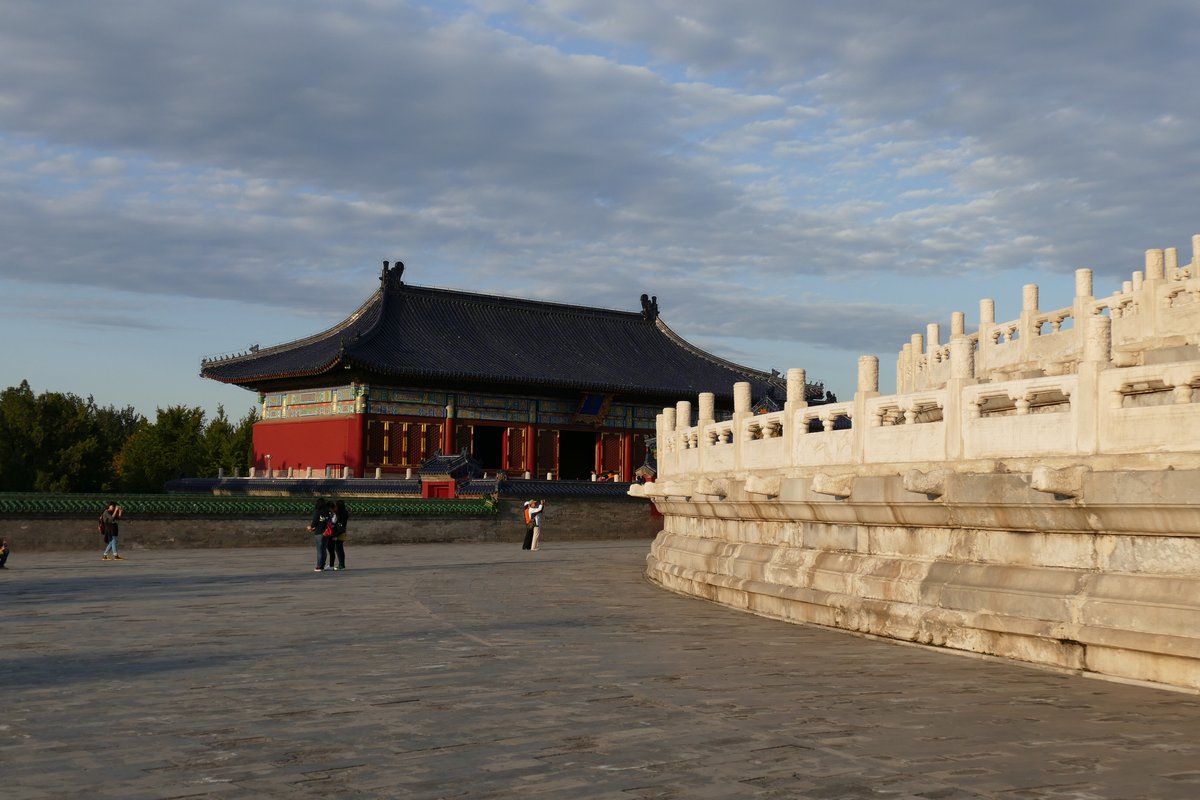
The Temple of Heaven (天坛, Tiāntán) was built in 1420 during the Ming Dynasty. Emperors held annual ceremonies there to pray for good harvests. Its circular and square design represents harmony between heaven and earth.
Main sights include:
- Hall of Prayer for Good Harvests An iconic triple-gabled building.
- Imperial Vault of Heaven Known for its Echo Wall.
- Circular Mound Altar The site of winter solstice ceremonies.
Opening hours:
- April–October 6:00 AM–10:00 PM; last entry at 9:00 PM.
- November–March 6:30 AM–9:00 PM; last entry at 8:00 PM.
Tickets: RMB 30–35 for park admission, with additional fees for the main buildings. Discounts are available for seniors, students, and children. Tickets can be purchased onsite or online; advance booking is recommended during peak seasons. (That’s Mag, The Helpful Panda)
Getting there: Take Line 5 to Tiantan Dongmen Station (East Gate). From Shuangjing, take Line 7 to Jianguomen, transfer to Line 1, then switch to Line 5 at Dongdan for Tiantan Dongmen.
Early mornings and weekdays are suggested for fewer crowds. Wear comfortable shoes for extensive walking. Guided tours can provide deeper historical insight. Wheelchair access and accessible restrooms are available.
FAQs about Shuangjing Station
What are the ticket prices?
Fares start at RMB 3 and increase with distance. Yikatong cards and digital payments are accepted.
Is Shuangjing Station accessible?
Yes. It has elevators, ramps, tactile paving, and accessible restrooms.
Are tourist services available?
Tourist information centers are nearby, particularly in the CBD. Some guided tours depart from the area.
Are there bus connections?
Multiple bus routes complement subway access.