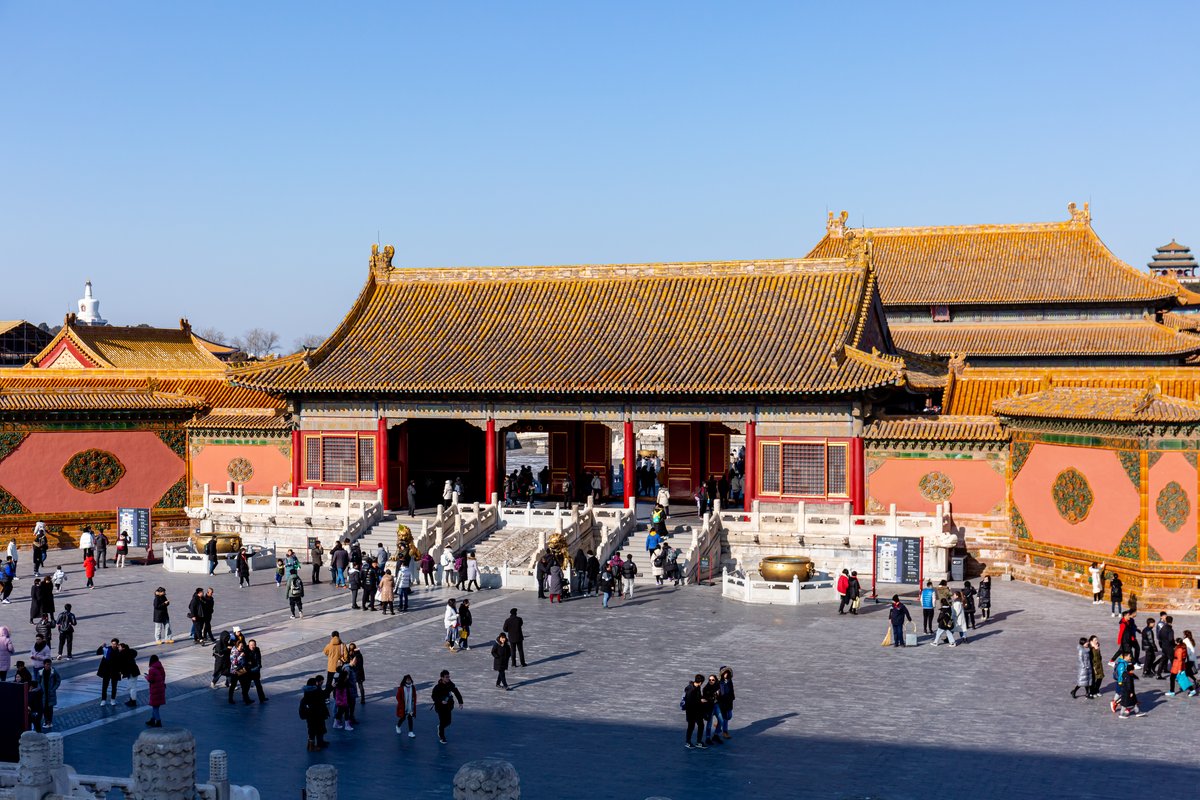
Historical Background
Origins and Early Construction
First erected in 1689 during the reign of the Kangxi Emperor, the Palace of Tranquil Longevity was envisioned as a retirement residence for abdicated emperors—a rare tradition in Chinese history. Its name, “Ningshougong,” reflects the aspiration for peace and longevity during the later years of an emperor’s life (mybeijingchina.com).
Qianlong Emperor’s Vision and Reconstruction
Significant reconstruction began in 1772 under the Qianlong Emperor, who sought to create a “miniature Forbidden City” for his retirement. The complex was designed to mirror the main palace’s grandeur, with ceremonial halls, residential quarters, and lush gardens, all structured to reflect imperial dignity and continuity of power (beijingtrip.com).
Architectural Highlights and Symbolism
The Palace of Tranquil Longevity is renowned for its harmonious blend of architecture and nature. Key features include:
- Ningshougong (Main Hall) The symbolic heart of the complex, echoing the layout and style of the Forbidden City’s main halls.
- Huangjidian (Hall of Imperial Supremacy) An audience hall with a grand double-eaved roof, emphasizing its ceremonial importance.
- Yangxing Dian (Hall of Temper Cultivation) Residential quarters designed for daily life.
- Leshoutang (Hall of Joyful Longevity) Later the residence of Empress Dowager Cixi; distinguished by its jade treasures.
- Nine-Dragon Screen A rare and vibrant glazed tile screen at the entrance, one of only three in China, serving as both a decorative and symbolic barrier (Postcards from Mimi).
The layout follows a north-south axis, with symmetrical courtyards, intricate pavilions, and the celebrated Qianlong Garden—an oasis of rockeries, water features, and ancient trees (Cathay Pacific).
Imperial Usage and Cultural Significance
Although the Qianlong Emperor never formally retired, the palace became a symbol of imperial longevity and smooth succession. Empress Dowager Cixi later used the complex as her residence, further cementing its political and cultural importance (beijingtrip.com). The architecture and decor embody Confucian ideals, imperial symbolism, and stories of power transition.
Artistic Legacy and Exhibitions
The Palace now houses the Treasure Gallery, home to over 100,000 artifacts spanning from the Jin to Qing dynasties. Highlights include:
- Monumental jade carvings, such as the Yu the Great flood-control masterpiece.
- Imperial robes, paintings, gold and silver wares, and rare calligraphy.
- The Juanqinzhai (Studio of Exhaustion from Diligent Service), renowned for exquisite marquetry, silk embroidery, and trompe l’oeil murals by Giuseppe Castiglione and Wang Youxue (Cathay Pacific).
The interiors merge traditional Chinese motifs with innovative artistic techniques, reflecting 18th-century craftsmanship at its peak (Traces of Places).
Visiting Information
Opening Hours
- April–October 8:30 AM – 5:00 PM (last entry 4:00 PM)
- November–March 8:30 AM – 4:30 PM (last entry 3:30 PM)
- Closed on Mondays (except national holidays).
Tickets and Admission
- General Admission 60 CNY (peak season), 40 CNY (off-peak).
- Treasure Gallery (within Ningshougong) Additional 10 CNY ticket (China Discovery).
- Advance Booking Highly recommended due to daily visitor limits. Purchase via the official Palace Museum website or authorized agencies.
Accessibility
- Wheelchair access is available in main halls and courtyards; some garden areas may require assistance.
- Ramps and accessible pathways are provided; contact staff for assistance if needed.
Tour Tips and Nearby Attractions
- Getting There Subway Line 1 (Tian’anmen East or West).
- Nearby Sites Nine-Dragon Screen, Six Eastern Palaces, Jingshan Park (for panoramic Forbidden City views).
- Best Seasons Spring and autumn for pleasant weather and lighter crowds; winter for a peaceful, snowy atmosphere.
Guided Tours and Special Events
- Multilingual guided tours are available and recommended for a deeper understanding.
- Special exhibitions and cultural performances are periodically hosted—check the Palace Museum website for schedules.
Photography Guidelines
- Photography is allowed in most areas (without flash or tripod); observe posted restrictions and respect artifacts.
Restoration and Conservation
Conservation Philosophy
The Palace Museum adopts a philosophy of minimal intervention, prioritizing the preservation of original materials and cultural values. Both tangible and intangible heritage are safeguarded, with a focus on sustainability for future generations (The Independent).
Techniques and Achievements
- Skilled artisans utilize traditional craftsmanship (e.g., bamboo marquetry, stone inlay, silk embroidery) alongside modern scientific analysis (X-ray diffraction, digital imaging) to restore artifacts and architecture (The Independent).
- Notable restorations include the painstaking repair of imperial textiles and murals, ensuring authenticity and structural integrity (IIC Conservation).
Training and International Collaboration
- The Palace Museum leads professional development via international symposia and courses, such as the IIC-ITCC Conservation and Restoration of Paintings course (IIC Conservation).
- Collaborations with the World Monuments Fund and support from private sponsors enable ongoing innovation and knowledge exchange.
Public Engagement
- Educational programs, exhibitions, and digital media foster public understanding of conservation.
- Visitors are encouraged to respect site rules, avoid touching artifacts, and observe barriers to support preservation efforts (China Dragon Tours; The China Journey).
Frequently Asked Questions (FAQ)
Q: What are the Palace of Tranquil Longevity visiting hours?
A: Open daily from 8:30 AM to 5:00 PM (April–October), and 8:30 AM to 4:30 PM (November–March), with last entry one hour before closing. Closed on Mondays (except national holidays).
Q: How can I purchase tickets?
A: Tickets are available online via the Palace Museum website or authorized travel agencies. Advance booking is strongly advised.
Q: Is the palace accessible for visitors with disabilities?
A: Most main halls and courtyards are accessible; some garden areas may have uneven terrain.
Q: Are guided tours available?
A: Yes, in multiple languages. Booking in advance is recommended.
Q: Can I take photographs?
A: Photography is permitted in most areas without flash or tripod. Follow posted guidelines.
Q: What other attractions are nearby?
A: The Forbidden City’s main palaces, Six Eastern Palaces, Imperial Garden, and Jingshan Park.
Summary and Visitor Tips
The Palace of Tranquil Longevity is a masterpiece of Qing dynasty architecture and artistry, offering visitors a vivid window into China’s imperial legacy. Its serene gardens, intricately decorated halls, and world-class exhibitions make it a highlight of any Beijing itinerary. To maximize your experience:
- Book tickets in advance, especially during peak seasons.
- Visit during spring or autumn for the best weather and lighter crowds.
- Engage with guided tours to deepen your understanding of the site’s history and restoration.
- Respect preservation efforts by following site etiquette and photography rules.
For up-to-date visitor information and digital guides, download the Audiala app and check the official Palace Museum website.