Plan and listen to Palace Of Earthly Tranquility with Audiala.
Audio guide in your pocket, itinerary in your browser. Built for the way you actually visit.
Introduction
Nestled at the heart of Beijing’s Forbidden City, the Palace of Earthly Tranquility (坤宁宫, Kunning Gong) stands as a vibrant emblem of imperial tradition, architectural mastery, and profound cultural symbolism. Erected during the early 15th century Ming dynasty, the palace was the official residence of the empress and an essential venue for ceremonies such as imperial weddings and religious rites. Its architecture reflects the yin-yang cosmology fundamental to imperial ideology, and its evolution over time mirrors the shifting tides of Chinese dynastic history (Vibes Times, China Highlights). For modern visitors, the palace offers an immersive connection to China’s imperial past, with its ornate roofs, vibrant interiors, and ceremonial spaces. This guide provides detailed historical context, practical visitor information, travel tips, and highlights to enhance your experience at one of Beijing’s most treasured historical sites.

Origins and Construction
The Palace of Earthly Tranquility was constructed between 1406 and 1420, under the Ming dynasty’s Yongle Emperor, as the empress’s official residence within the Inner Court. Its name embodies the concept of “earthly harmony,” complementing the Palace of Heavenly Purity and reflecting the yin-yang duality central to Chinese cosmology (Vibes Times, China Highlights).
Architectural Evolution
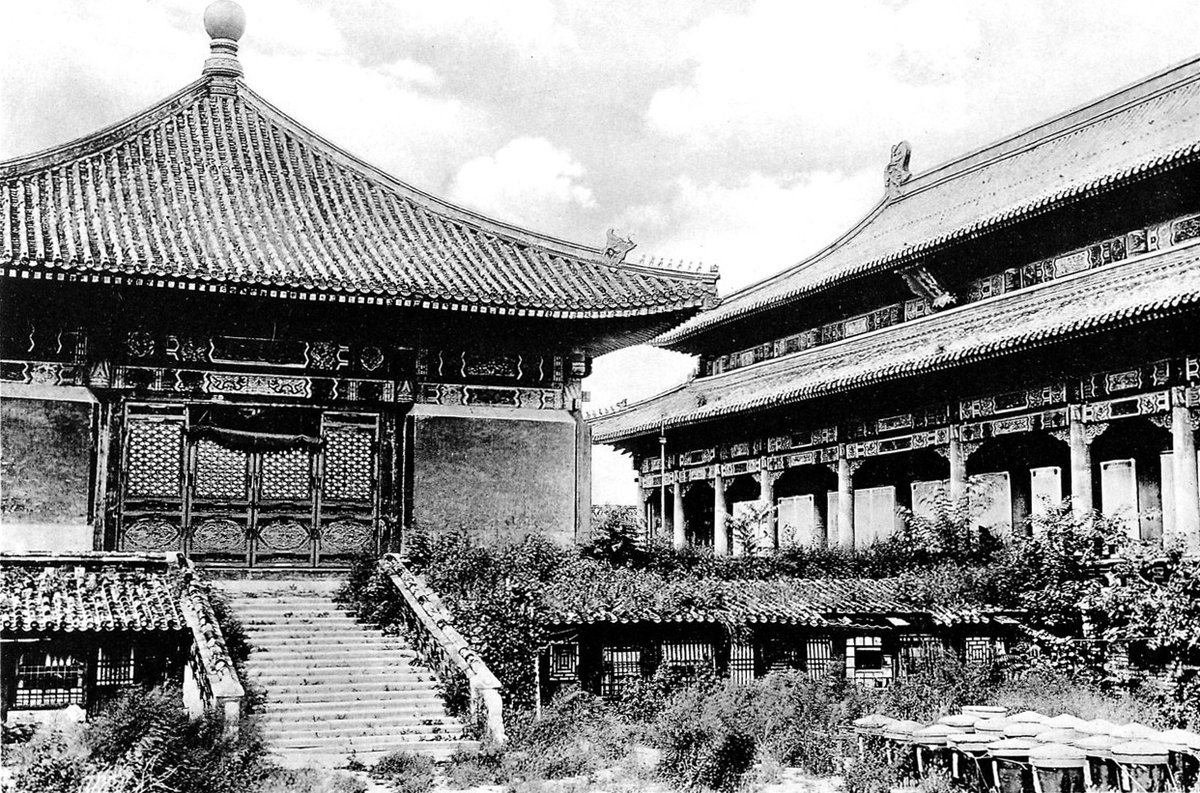
Originally, the palace was a two-story wooden structure with a double-eaved yellow glazed tile roof—a mark of imperial status. During the Qing dynasty, the palace was adapted to include Manchu shamanistic elements and ritual spaces, while retaining its ceremonial and residential functions (Monuments & Sights, East China Trip).
Preservation and Restoration
Following the Qing dynasty and the transformation of the Forbidden City into the Palace Museum, the Palace of Earthly Tranquility has undergone several significant restorations to preserve its Ming and Qing characteristics and historical artifacts (Vibes Times).
Cultural and Symbolic Significance
As the empress’s primary residence, the palace played a central role in court etiquette, governance, and imperial family affairs. It was also the venue for imperial weddings and Manchu shamanistic ceremonies during the Qing dynasty, symbolizing the unity of heaven and earth and the pivotal role of women in the imperial hierarchy (Just China Tours, Design Horizons).
Layout and Architectural Features
Spatial Hierarchy
Strategically located along the Forbidden City’s central axis, the Palace of Earthly Tranquility sits north of the Hall of Union and south of the Imperial Garden. This triad exemplifies Confucian order and the principle of cosmic balance (Wikipedia, Red Travel Book).
Exterior Architecture
- Structure: Rectangular, nine bays wide and three bays deep, with a double-eaved roof (Wikipedia).
- Roof Tiles: Unique green-glazed tiles, a rare feature in the Forbidden City that signifies ritual importance (Deep China Travel).
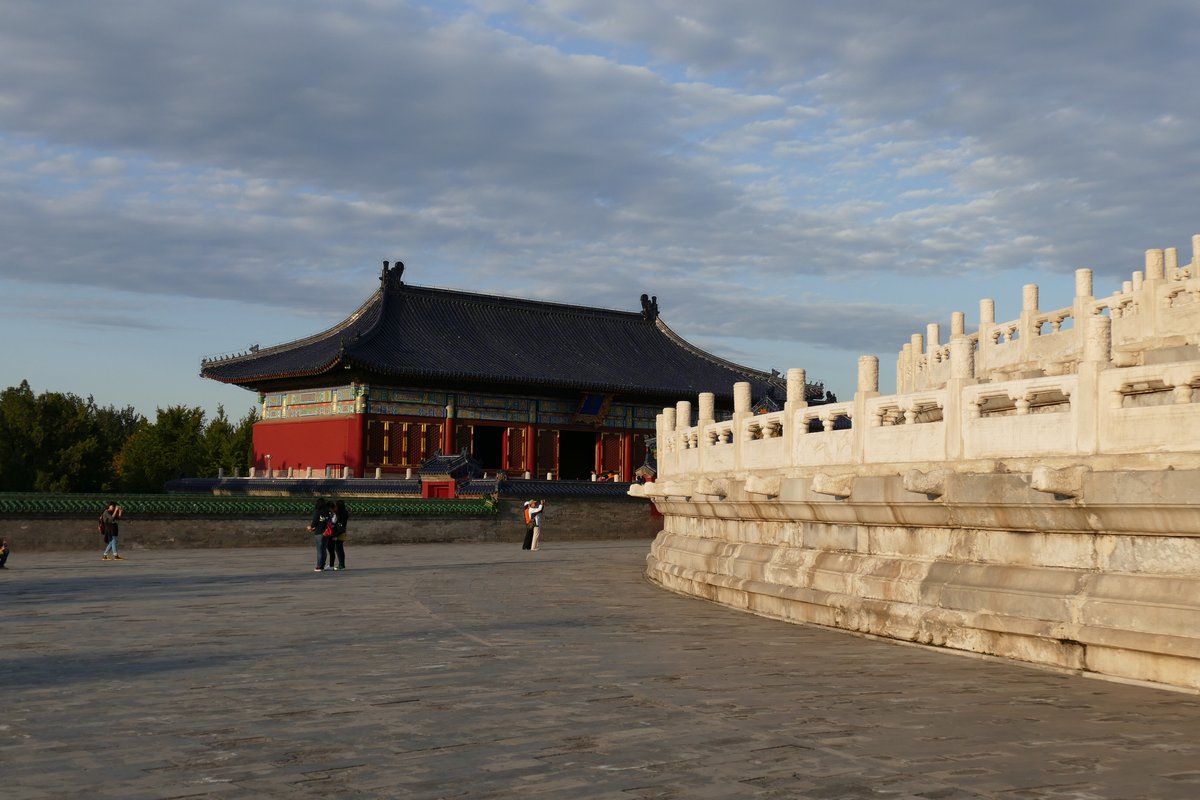
- Decorative Elements: Eaves with carved mythical animals, imperial red walls, and intricate gold-leaf details (Facts and Details).
Windows and Doors
Manchu-style double-diamond lattice windows with translucent paper panes create a soft, dignified light within (Facts and Details).
Interior Highlights
- Main Hall: Features a dragon throne, a gilded ceiling with dragon and phoenix motifs, and spaces for sacrificial ceremonies (Facts and Details).
- Bridal Chamber: The eastern wing houses the imperial bridal suite, adorned with red lacquer beds and nuptial symbols (Deep China Travel).
- Ritual Spaces: Altars and shrines for Manchu shamanistic worship, especially prominent in the Qing era (Wikipedia).
- Heated Kang: A traditional brick platform for warmth, located at the rear (Facts and Details).
- Ancillary Rooms: Spaces for eunuchs and imperial doctors, emphasizing the palace’s self-sufficiency (China Travel).
Restoration and Preservation Efforts
Key restorations occurred after fires in 1605 and 1655. Ongoing preservation ensures visitors can appreciate authentic furnishings, ceremonial objects, and the architectural splendor of both Ming and Qing dynasties (China Travel).
Visitor Information: Hours, Tickets, Accessibility
Visiting Hours
- April–October: 8:30 AM – 5:30 PM (last entry 4:30 PM)
- November–March: 8:30 AM – 4:30 PM (last entry 3:30 PM)
- Closed Mondays (except public holidays)
- Confirm seasonal variations via the Palace Museum website.
Tickets
- Entry to the Palace of Earthly Tranquility is included with Forbidden City admission.
- Ticket prices: 60 RMB (April–October), 40 RMB (November–March)
- Purchase: Online in advance is strongly recommended (TravelChinaGuide, TopChinaTravel).
Accessibility
- Main routes and walkways are wheelchair accessible, but some steps and uneven surfaces remain.
- Accessibility information and services are available at visitor centers.
Travel Tips and Guided Tours
- Footwear: Wear comfortable shoes; expect extensive walking.
- Guided Tours: Available in multiple languages; audio guides provide in-depth context (TravelChinaGuide).
- Photography: Non-flash photography allowed; commercial use requires permission.
- Security: Bag checks are mandatory; drones and sharp objects are prohibited.
- Facilities: Restrooms and water stations are scattered throughout but may be crowded.
Nearby Attractions
- Imperial Garden: North of the palace, featuring ancient trees and pavilions.
- Jingshan Park: Offers panoramic city views—best in spring for blooming peonies.
- Wangfujing Street: Accessible via public transport, ideal for post-visit dining and shopping.
Unique Features and Photographic Spots
- Green-Glazed Roofs: Distinctive and photogenic, especially against blue skies or apricot blossoms in spring (Deep China Travel).
- Gilded Ceilings: The main hall’s dragon-phoenix ceiling is a must-see.
- Imperial Wedding Suite: Preserved furnishings and textiles ideal for photography.
Language, Signage & Souvenirs
- Signage: Chinese and English, with QR codes for additional info.
- Audio Guides: Available in multiple languages.
- Gift Shops: Official souvenirs and books on palace history.
Environmental Considerations
- Weather: Hot summers, cold winters—dress appropriately.
- Air Quality: Bring a mask on high-pollution days.
Frequently Asked Questions (FAQ)
Q: What are the Palace of Earthly Tranquility visiting hours?
A: 8:30 AM–5:30 PM (April–October), 8:30 AM–4:30 PM (November–March); closed Mondays except holidays.
Q: How do I buy tickets?
A: Purchase online in advance; tickets include general Forbidden City admission.
Q: Is the palace accessible for wheelchairs?
A: Main routes are accessible, but some interior areas may have steps.
Q: Are guided tours available?
A: Yes, both in-person and audio guides are available in several languages.
Q: What makes the Palace of Earthly Tranquility unique?
A: Its role as the empress’s residence, rare green-glazed roof, and blend of Han and Manchu traditions.
Visual and Interactive Media


Explore the Palace of Earthly Tranquility Virtual Tour
Internal Links
For further reading, see our features on Forbidden City Highlights and Imperial Gardens of Beijing.
Listen to the full story in the app
The whole Palace Of Earthly Tranquility,
told well.
Listen to sourced travel stories with local history and practical context — ready offline.
Verified, and shown.
Researched and written by the Audiala editorial team from historical records, architectural archives, and local expertise.
Built from cited sources · see the method · How we make our guides →