
Origins and Historical Evolution
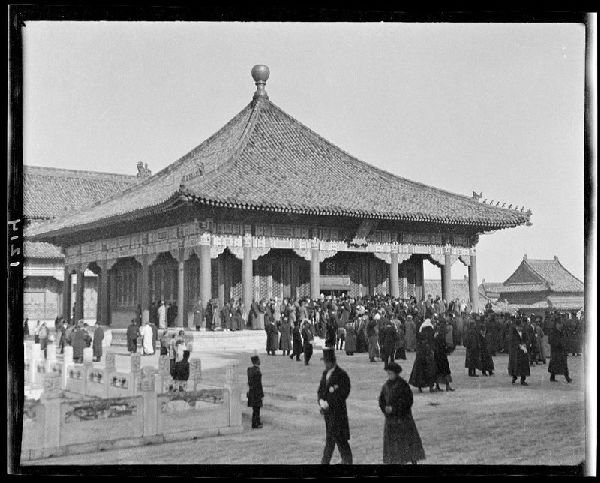
The Hall of Central Harmony was established in 1420 under the Yongle Emperor of the Ming Dynasty. Initially called ‘Huagaidian,’ it was rebuilt after a fire and renamed ‘Zhonghedian’ during the Qing Dynasty, inspired by the Confucian Doctrine of the Mean (中庸). The hall’s central location and modest size reflect its role as a transitional, contemplative space for emperors before public ceremonies (ChinaTour360; Red Travel Book).
Ceremonial Functions and Dynastic Roles
Ming Dynasty (1368–1644)
The hall functioned as an antechamber where emperors composed themselves, reviewed ritual documents, and received briefings before significant state ceremonies in the Hall of Supreme Harmony. This reinforced the importance of order, preparation, and cosmic balance in imperial rule (Red Travel Book).
Qing Dynasty (1644–1911)
Qing emperors continued these traditions, using the hall for ritual preparation before enthronements, imperial weddings, and state celebrations. It also served as a venue for private consultations and finalization of ceremonial arrangements, reinforcing the emperor’s mediating role between heaven, earth, and his subjects (ChinaTour360).
Symbolism and Philosophy
The hall’s name and central axis placement manifest Confucian ideals of moderation and harmony. Its modest scale, compared to the neighboring halls, signifies that genuine authority is rooted in restraint and balance. The imperial throne at its center represents the emperor’s cosmic mandate and political role (designhorizons.org; Red Travel Book).
The architectural design also aligns with traditional cosmological concepts—the square plan symbolizes earth, circular motifs represent heaven, and the balance between these elements illustrates the emperor’s responsibility to maintain universal equilibrium (chineselearning.com).
Architectural Features
Layout and Structure
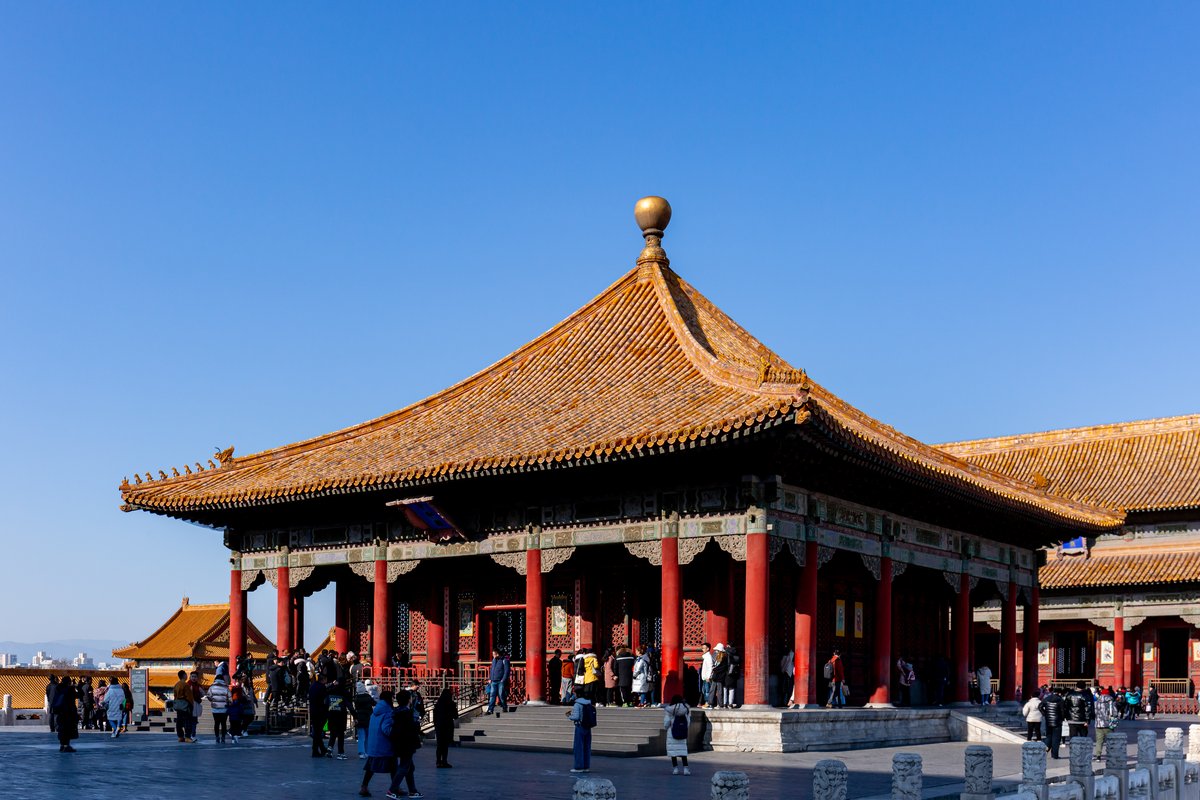
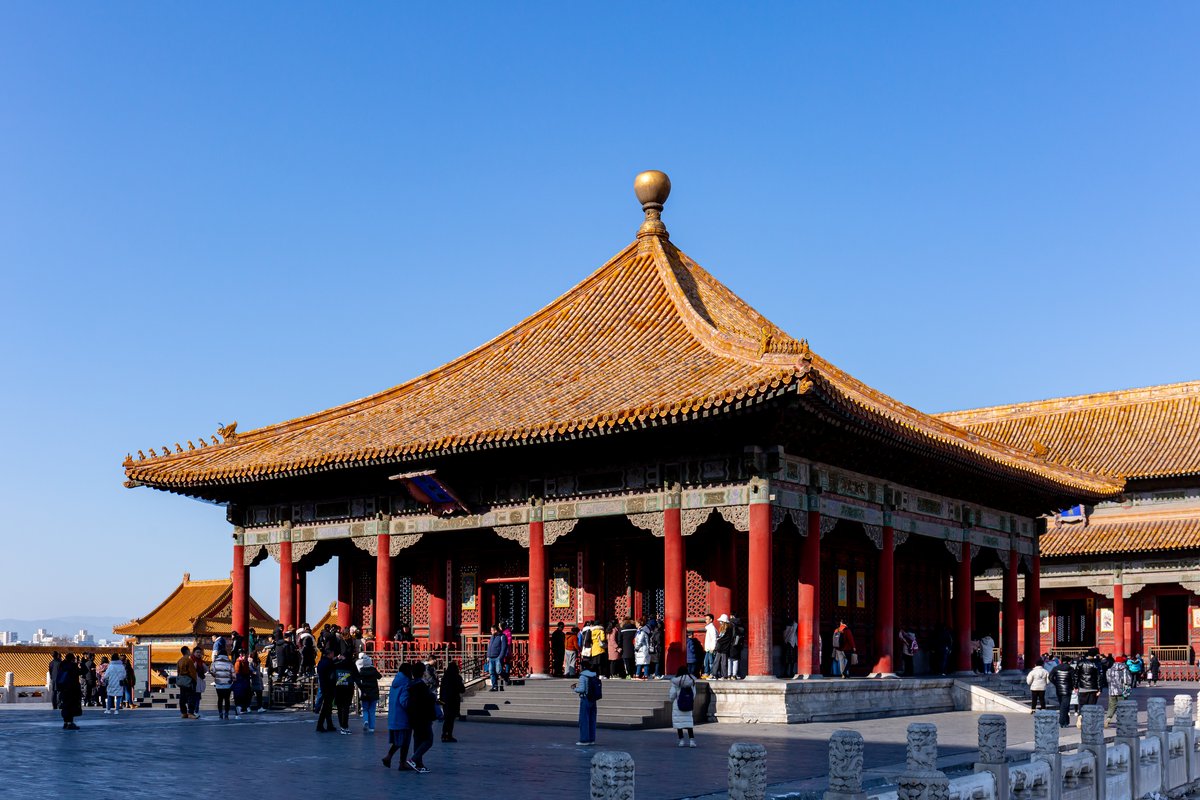
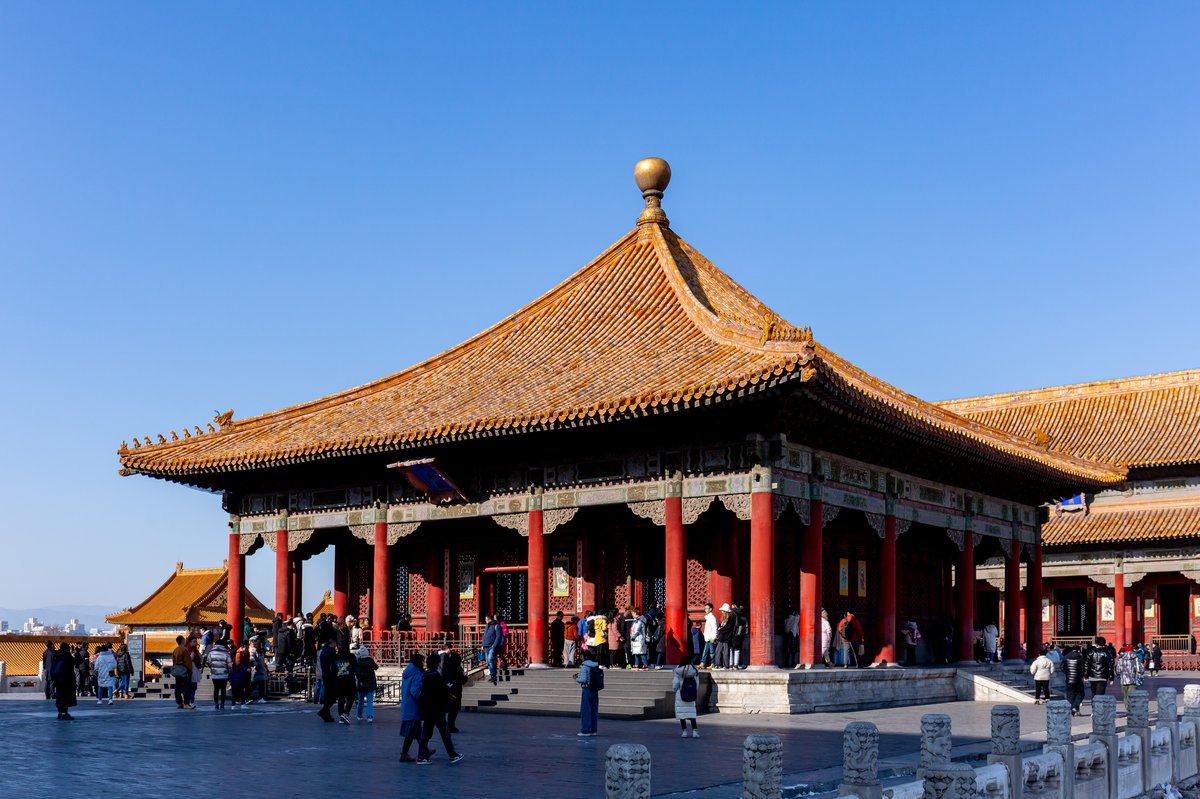
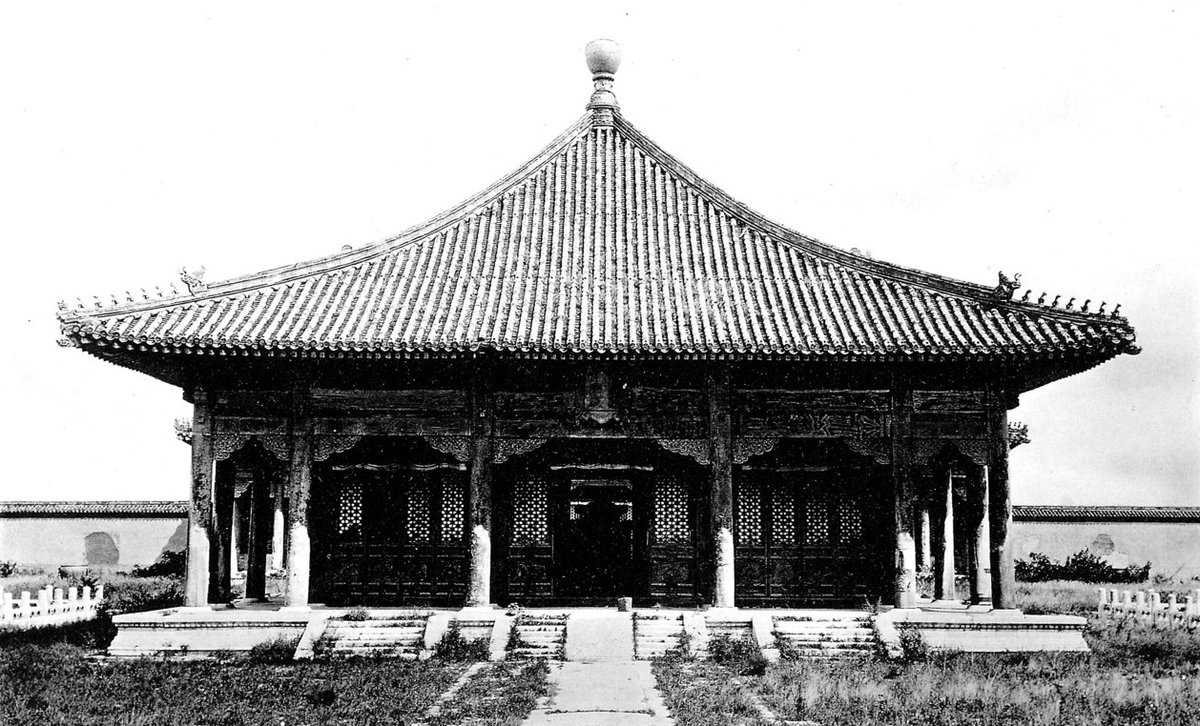
Strategically located along the Forbidden City’s north-south axis, the Hall of Central Harmony sits between the Hall of Supreme Harmony and the Hall of Preserving Harmony. The hall’s square plan (about 36 meters wide by 22 meters deep) and modest size highlight its transitional and contemplative function (chinatripedia.com; chinatour.net).
Timber Framework and Dougong Brackets
Built using traditional timber-frame techniques, the hall features impressive wooden columns and beams, with intricate dougong (bracket) systems that distribute the weight of the roof and add decorative splendor. No nails are used, ensuring both flexibility and seismic resistance (architecturelab.net).
Roof and Decoration
The single-eave hip roof is adorned with imperial yellow glazed tiles, reserved for the emperor, and crowned with a gilded finial symbolizing heaven. The number of roof ridges and decorative figures indicate the building’s rank. Inside, caisson ceilings and painted motifs of dragons and clouds reinforce the emperor’s divine mandate (historyskills.com; travelchinaguide.com).
Foundation and Platform
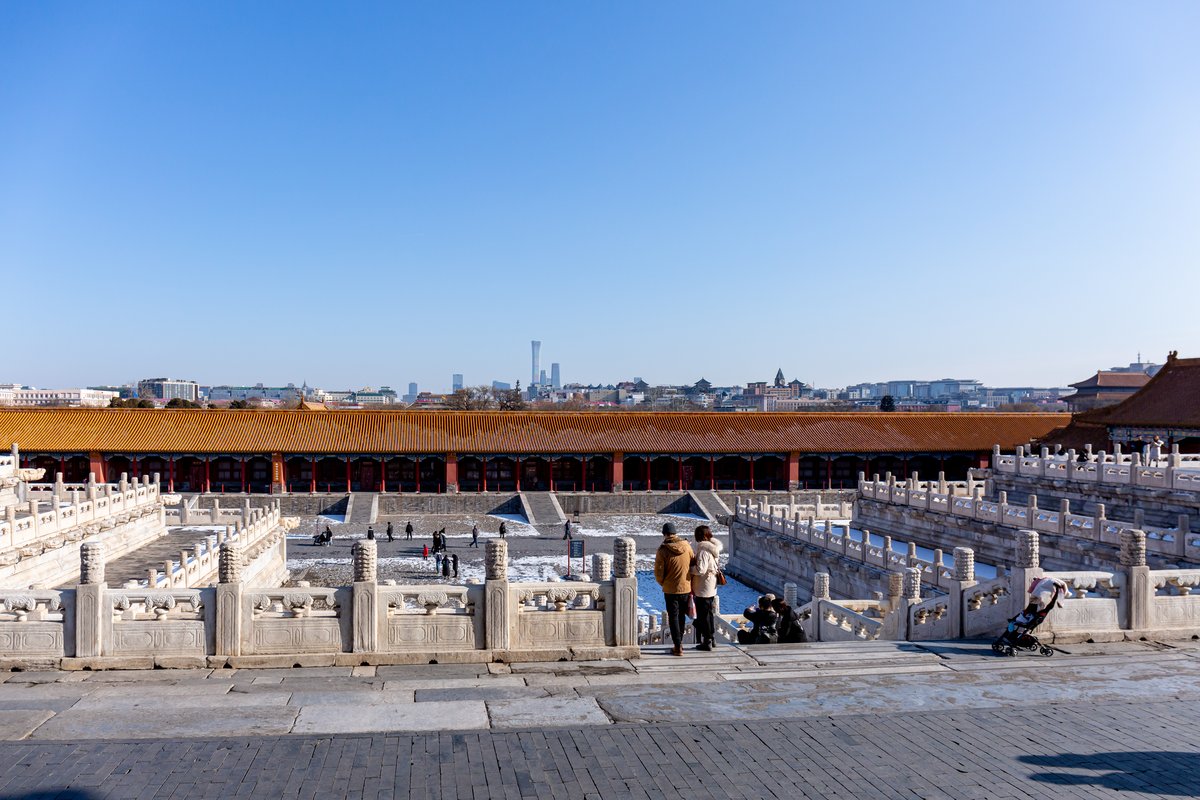
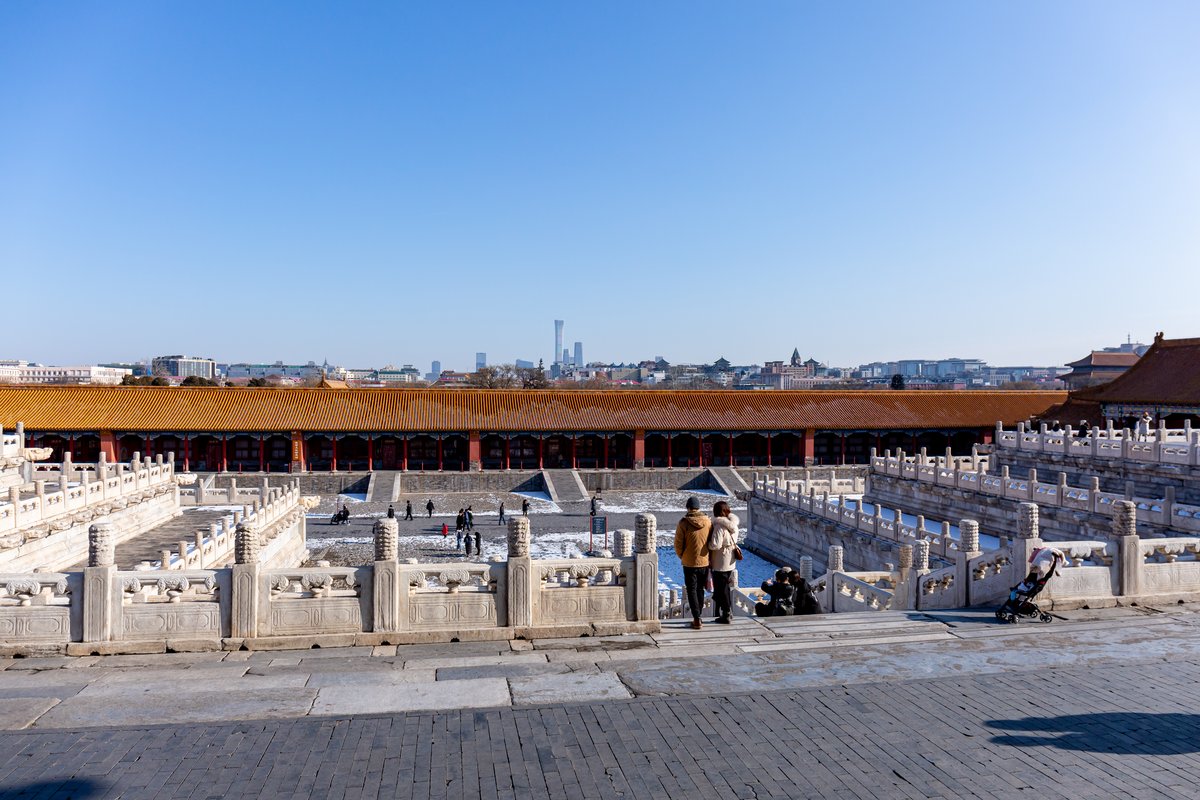
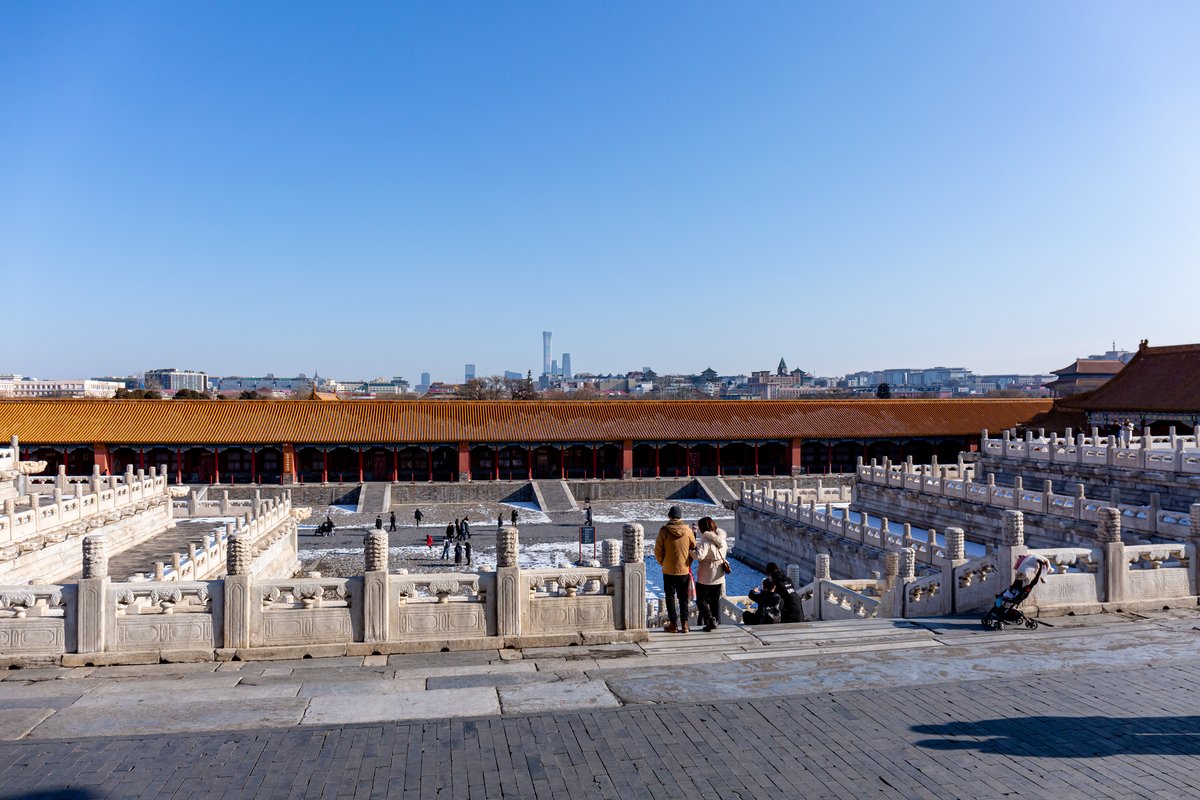
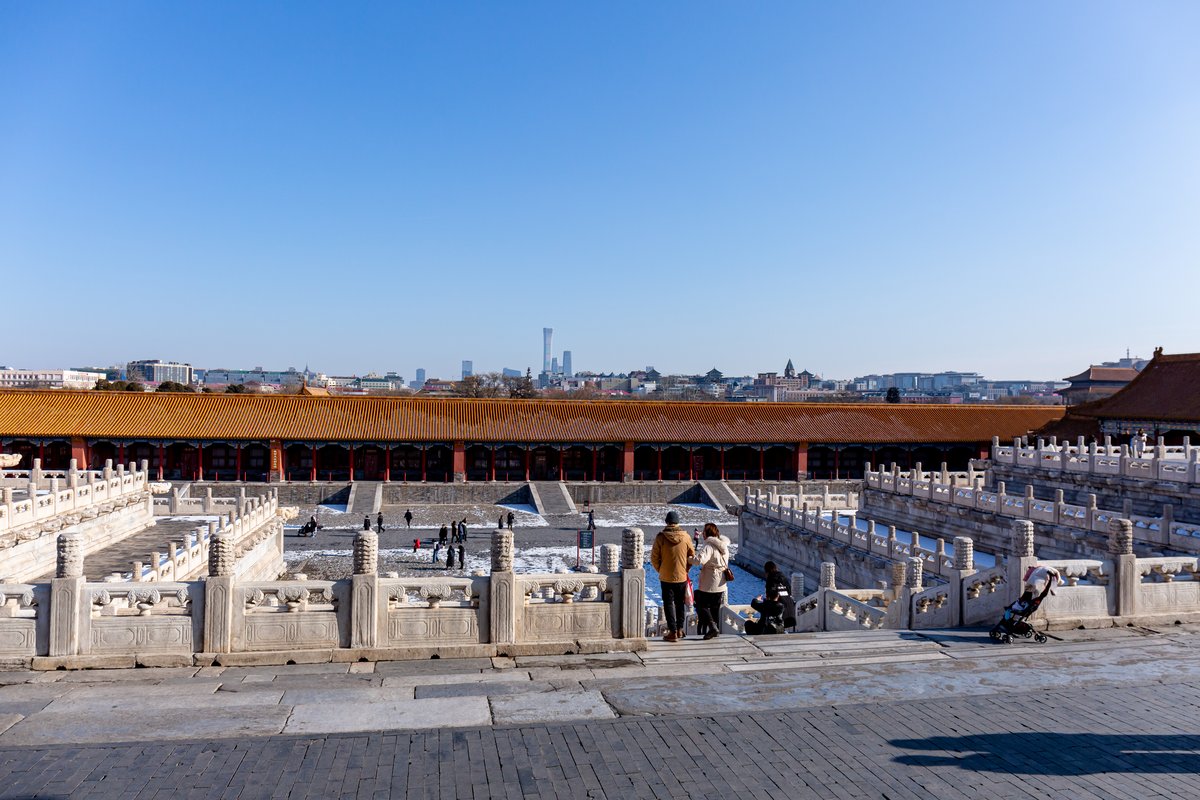
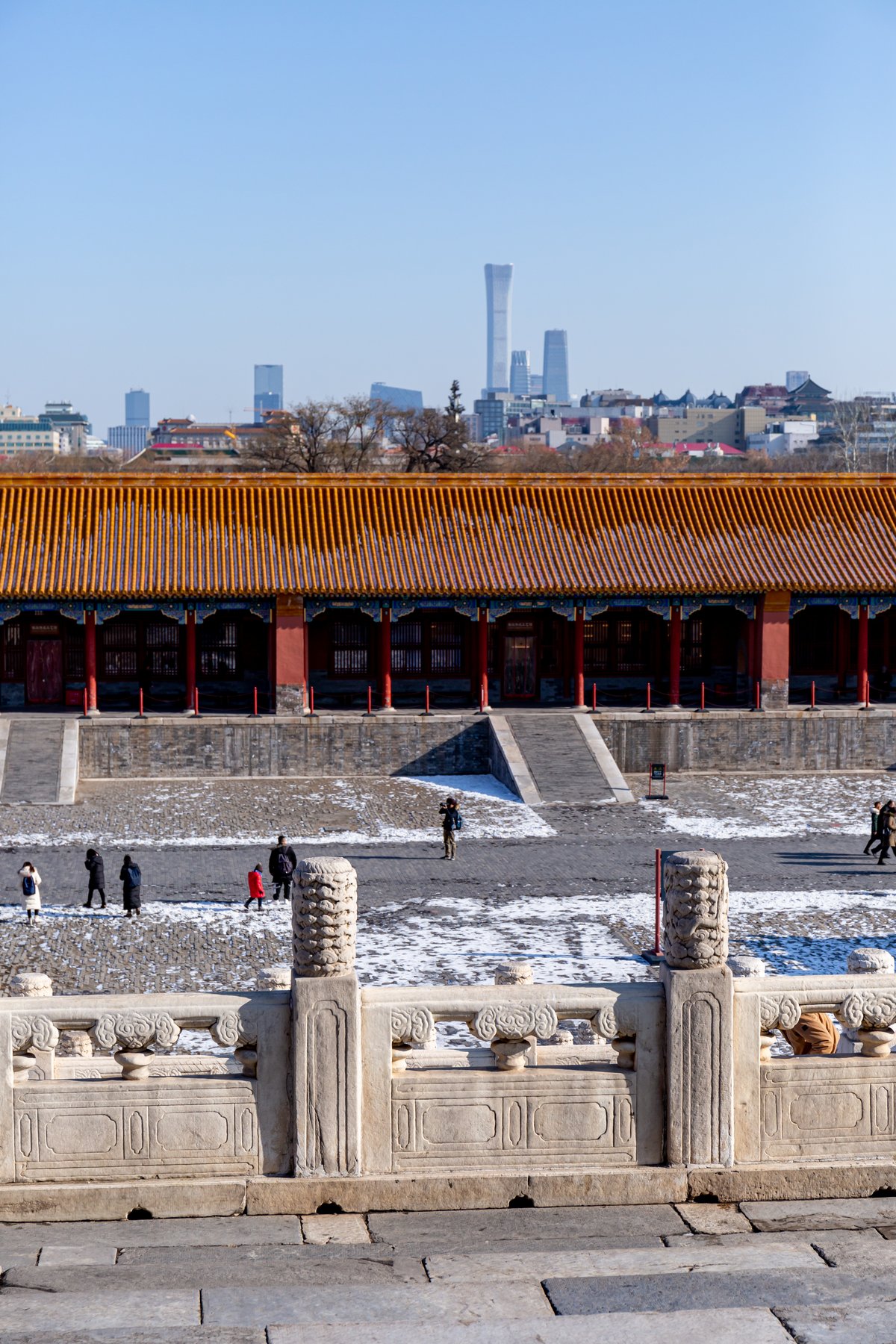
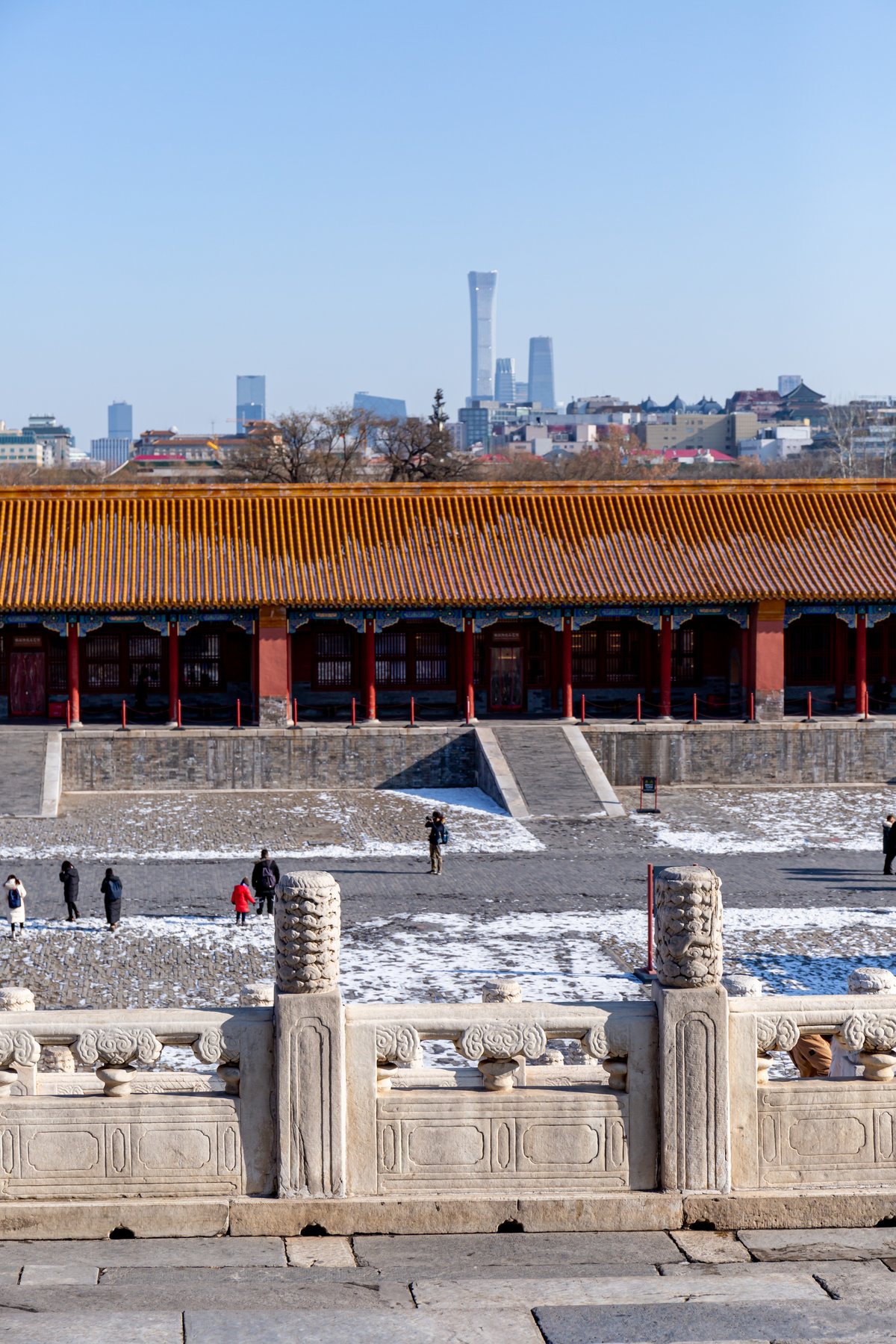
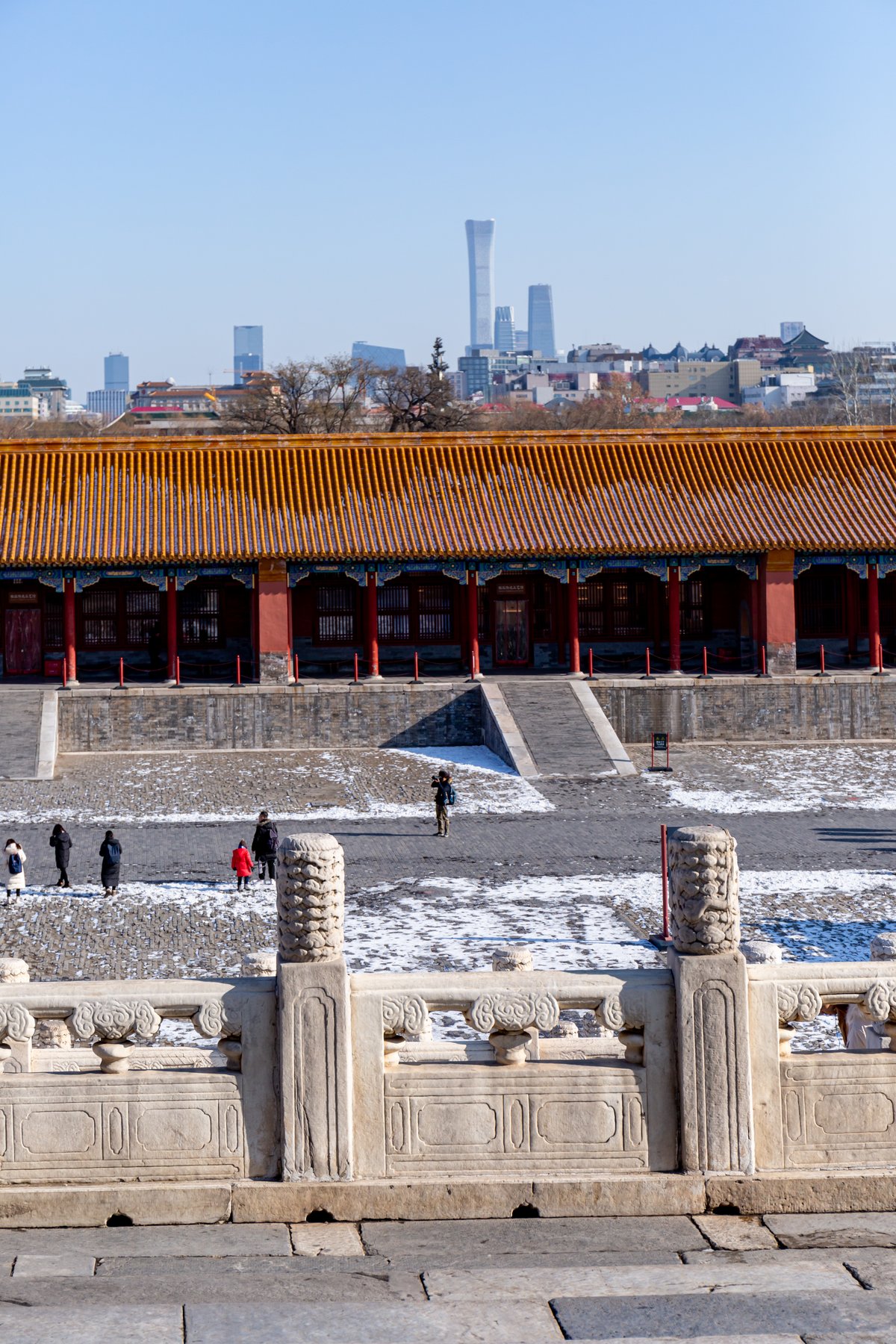
The hall stands atop a three-tiered white marble terrace with ornate balustrades and staircases. Carved dragon-head spouts form an elegant drainage system, combining utility with symbolic grandeur (chinatripedia.com).
Interior Features
The central imperial throne is flanked by ritual objects such as incense burners, gilded vessels, and sedan chairs. Windows on all sides provide ventilation and light, in accordance with feng shui principles (chinatour.net).
Preservation and Legacy
With the establishment of the Palace Museum in 1925, the Hall of Central Harmony became a treasured public heritage site. Restoration efforts continue to utilize traditional materials and techniques, preserving the hall’s authenticity and historical integrity (ChinaTour360; chinatripedia.com).
Practical Visitor Information
Visiting Hours
- April–October 8:30 AM – 5:00 PM (last entry 4:00 PM)
- November–March 8:30 AM – 4:30 PM (last entry 3:30 PM)
- Closed on Mondays (except national holidays).
- Always verify with the Palace Museum official website for current hours.
Tickets
- General admission: 60 RMB (peak season), 40 RMB (off-peak)
- Tickets include all main halls; special exhibitions may require an extra fee.
- Purchase online in advance due to daily visitor limits (Asia Odyssey Travel).
Accessibility
- Wheelchair access is provided along the central axis, with ramps and elevators available for major halls.
- Some areas have steps and uneven surfaces; advance inquiry is advised for visitors with mobility needs.
Travel Tips
- Visit early or late in the day to avoid crowds.
- Allocate 2–3 hours for the central axis and main halls.
- Wear comfortable shoes; surfaces can be slippery.
- Use guided tours or audio guides to enrich your experience (ruqintravel.com).
Nearby Attractions
- Hall of Supreme Harmony
- Hall of Preserving Harmony
- Imperial Garden
- Tiananmen Square (within walking distance)
- Jingshan Park for panoramic city views
Guided Tours and Events
- Guided tours (in-person and virtual) are widely available, providing historical context and architectural insight.
- Seasonal exhibitions and cultural events are occasionally held—check official updates.
Photography Guidelines
- Photography is generally permitted outside; interior photography may be restricted to protect artifacts.
- No flash or tripods allowed; respect barriers and other visitors.
Frequently Asked Questions (FAQ)
Q: What are the Hall of Central Harmony’s visiting hours?
A: 8:30 AM–5:00 PM (April–October), 8:30 AM–4:30 PM (November–March), with last entry one hour before closing.
Q: How much are tickets?
A: 60 RMB (peak season), 40 RMB (off-peak); purchase online in advance.
Q: Is the hall wheelchair accessible?
A: Yes, with ramps and accessible routes along the central axis; some areas require assistance.
Q: Can visitors enter the hall?
A: Interior entry is not permitted; the hall may be viewed from open doorways.
Q: Are guided tours available?
A: Yes, in multiple languages via tour operators and the Palace Museum app.
Q: Is photography allowed?
A: Exterior photography is permitted; interior photography is usually restricted.