
Visiting the Drum and Bell Towers of Beijing: History, Tickets, and More
Introduction
Did you know that the Drum Tower and Bell Tower of Beijing once served as the city's official timekeepers? These iconic structures, dating back to the Yuan Dynasty, are not just historical landmarks but also cultural treasures that offer a unique glimpse into Beijing's rich past and vibrant present.
Historical Background
Origins and Early History
The Drum Tower (Gulou) and Bell Tower (Zhonglou) of Beijing are iconic structures with a rich history dating back to the Yuan Dynasty. The Drum Tower was originally constructed in 1272 during the reign of Kublai Khan, when Beijing was known as Khanbaliq. At that time, it was called the Tower of Orderly Administration (Qizhenglou), symbolizing the elements of the universe in ancient Chinese cosmology, including metal, wood, water, fire, earth, the sun, and the moon (Wikipedia).
Ming and Qing Dynasties
In 1420, during the reign of the Ming Emperor Yongle, the Drum Tower was reconstructed to the east of its original site. This reconstruction was part of a broader effort to enhance the city's infrastructure and align it with the emperor's vision for Beijing. The Bell Tower, closely situated behind the Drum Tower, was also built during this period. Both towers were integral to the city's timekeeping system, with the Drum Tower marking the hours of the day and the Bell Tower announcing the start and end of the day (Introducing Beijing).
The Qing Dynasty saw further renovations in 1800 under Emperor Jiaqing. These renovations were significant, ensuring the towers remained functional and aesthetically pleasing. The towers continued to serve as the official timepieces of Beijing until 1924, when Western-style clocks were adopted following the Beijing Coup, which led to the expulsion of Puyi, the last emperor of the Qing Dynasty (Wikipedia).
Modern Era and Cultural Significance
In the modern era, the Drum and Bell Towers have transitioned from functional timekeeping structures to cultural and historical landmarks. In 1924, the Drum Tower was renamed the Tower of Clarifying Shame (Mingchilou) and turned into a museum displaying objects related to the Eight-Power Allied Forces' invasion of Beijing and the May 30 Massacre of 1925 (China Urban Development).
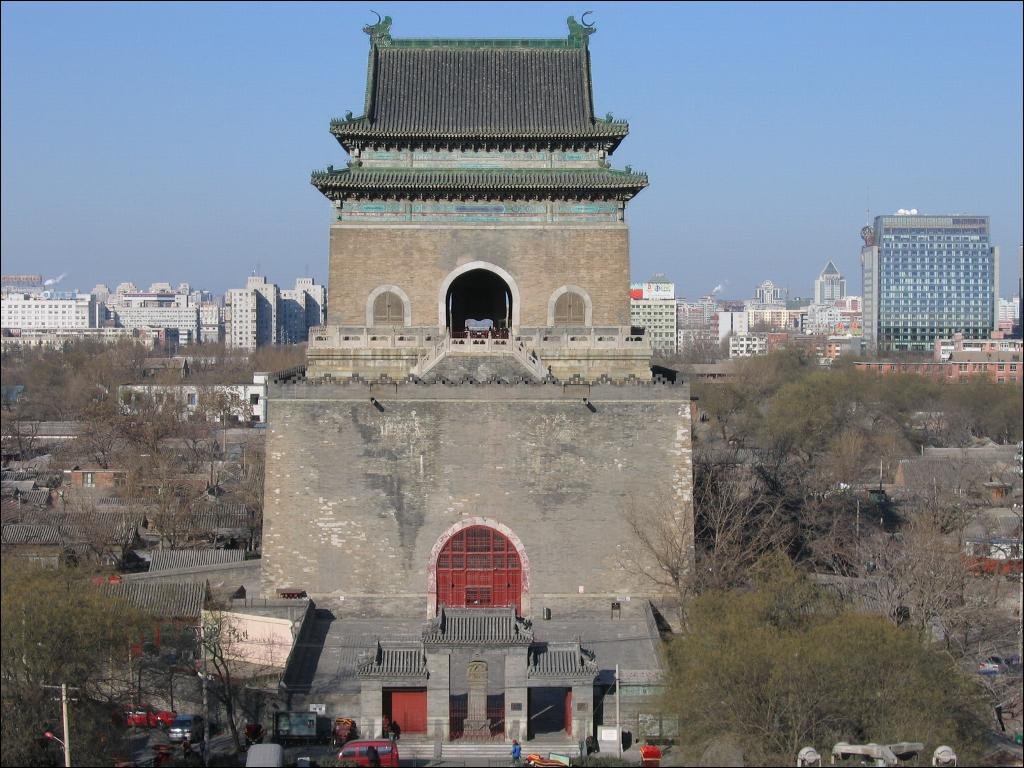
The towers were opened to tourists in the 1980s after extensive repairs. Today, they stand as symbols of Beijing's rich history and cultural heritage amidst the modern urban landscape. The Drum Tower, a two-story wooden building standing at 46.7 meters, now hosts traditional drumming performances, offering visitors a glimpse into its historical function (Wild Great Wall).
Preservation Efforts
The preservation of the Gulou area, including the Drum and Bell Towers, has been a contentious issue. The neighborhood is one of the last remaining areas comprising hutongs (narrow alleys) lined by siheyuan (traditional courtyard homes). These historic structures are under threat from redevelopment schemes aimed at creating tourist retail spaces. However, efforts by preservation groups have temporarily halted these plans, highlighting the ongoing battle between modernization and historical preservation (China Urban Development).
Cultural and Symbolic Importance
The Drum and Bell Towers are not just historical structures; they hold significant cultural and symbolic importance. In ancient China, both bells and drums were used as musical instruments and later for timekeeping. The towers were central to official timekeeping during the Yuan, Ming, and Qing dynasties, marking the rhythm of life in ancient Beijing. The bell was struck 13 times at 19:00 to indicate the start of the evening hours, and throughout the night at two-hour intervals, while the drum marked the hours of the day (My Beijing China).
Architectural Features
The Drum Tower is a colorful two-story building that originally contained one large drum and 24 smaller drums. Today, only one large drum remains, accompanied by two painted replicas. The Bell Tower, a robust stone and brick structure, stands at 47.9 meters tall and houses a massive bronze bell on its second floor. This bell, 7.02 meters high and weighing 63 tons, was capable of producing a sound that could be heard up to 20 kilometers away (Introducing Beijing).
Visitor Experience
Visitors to the Drum and Bell Towers can climb to the top of both structures to enjoy panoramic views of Beijing. The steep stairs, especially in the Bell Tower, lead to a magnificent view and a close-up look at the ancient bell. Traditional drumming performances are held at the Drum Tower, offering a taste of traditional Chinese culture. The towers are open to tourists from 9:30 AM to 5:30 PM, with ticket prices at 20 yuan for adults and half price for students. A combined ticket for both towers costs 30 yuan (Beijing Walking).
What to Expect When Visiting
When planning your visit, consider the best times to go to avoid crowds, which are typically in the early morning or late afternoon. Guided tours are available and can provide deeper insights into the history and significance of these structures. Additionally, there are various nearby attractions such as the Houhai Lakes and the Nanluoguxiang Hutong, where you can enjoy local cuisine and shopping.
Accessibility Information
While the steep stairs might pose a challenge for some visitors, both towers are equipped with modern amenities to enhance accessibility. Be sure to check with the ticket office for any special accommodations.
FAQ
What are the visiting hours for the Drum Tower? The Drum Tower is open to visitors from 9:30 AM to 5:30 PM.
How much are tickets for the Drum and Bell Towers? Tickets cost 20 yuan for adults and 10 yuan for students. A combined ticket for both towers costs 30 yuan.
Are there guided tours available? Yes, guided tours are available and can enrich your visit with detailed historical insights.
What nearby attractions can I visit? Nearby attractions include the Houhai Lakes and the Nanluoguxiang Hutong, where you can explore local culture and cuisine.
Is the Drum Tower accessible for people with disabilities? While the steep stairs may be challenging, modern amenities are available to assist visitors. Please check with the ticket office for specific accommodations.
Discover More
For more updates on Beijing's historical sites, download our mobile app Audiala, check out related posts on our website, or follow us on social media.
Summary of Key Points about Gulou and Zhonglou
The Drum and Bell Towers of Beijing are more than mere historical structures; they are enduring symbols of the city's rich cultural heritage and its evolution through the centuries. From their origins in the Yuan Dynasty as the city's official timekeepers to their modern-day status as prominent tourist attractions, these towers encapsulate the rhythm of ancient Beijing. Their architectural grandeur and cultural significance offer visitors a unique glimpse into the past, while ongoing preservation efforts ensure that their legacy endures for future generations (China Urban Development). Whether you are a history enthusiast, an architecture aficionado, or simply a curious traveler, the Drum and Bell Towers provide a compelling reason to explore Beijing's historical heart. Don't miss the traditional drumming performances at the Drum Tower and the panoramic views from the top of both towers, which offer a breathtaking perspective of the city's historic and modern landscape (My Beijing China). For more information and updates on Beijing's historical sites, consider downloading our mobile app Audiala and following us on social media.

