

Historical Background and Construction
Commissioned during the early Ming dynasty, the Forbidden City’s construction (1406–1420) was a massive state project under the Yongle Emperor. The Gate of Supreme Harmony was conceived as the principal southern gateway to the Outer Court, directly aligned with the palace’s central axis to reflect centralized power and cosmic order (Britannica). The original wooden structure has undergone multiple reconstructions due to fires and political upheavals, with its current form dating to Qing dynasty restorations.
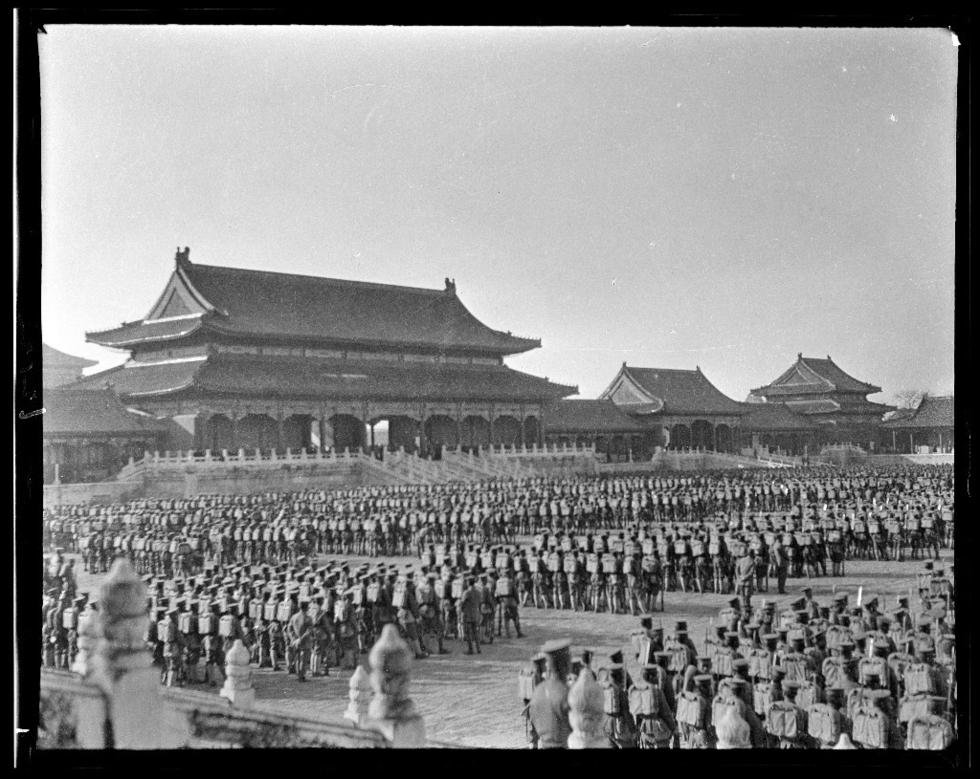
Strategically, its placement underscores its role as the ceremonial heart of imperial China. Emperors were enthroned here, major proclamations were made, and the gate marked the transition from administrative to sacred domains within the palace (Trevallog).
Architectural Features and Symbolism
Layout and Dimensions
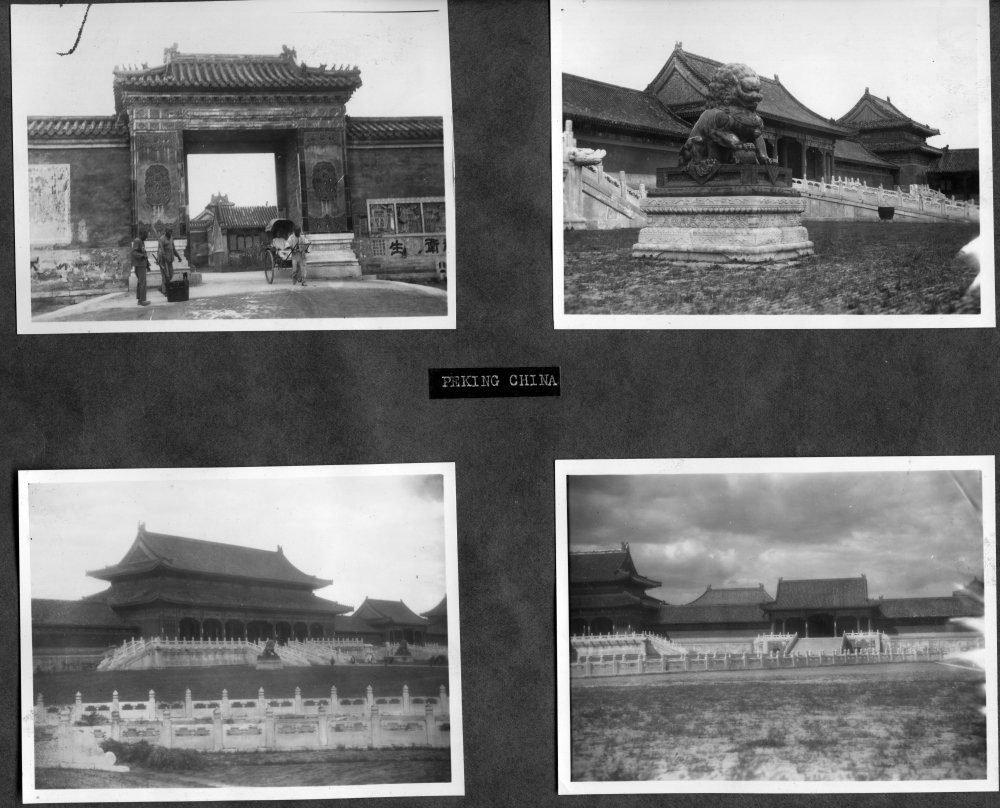
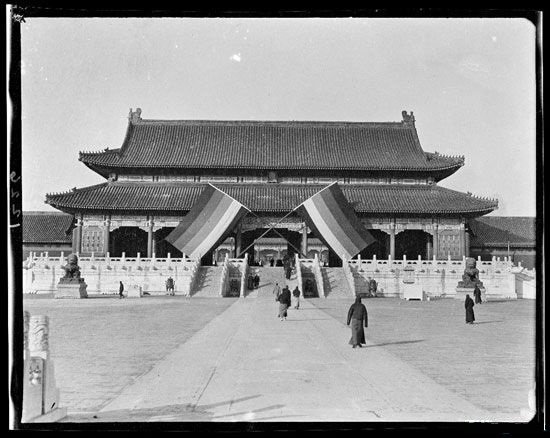
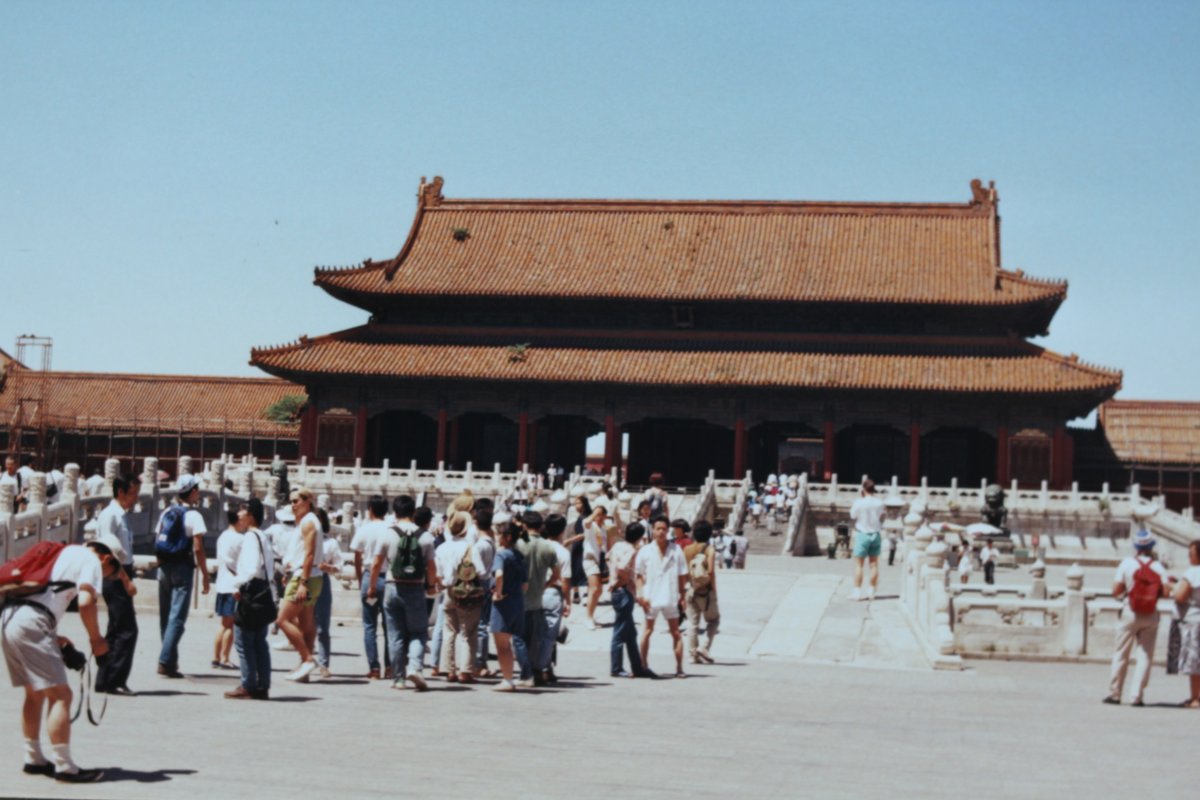
The Gate of Supreme Harmony is one of the largest buildings in the Forbidden City. It stands approximately 38 meters (125 feet) tall, with a width of about 37 meters and depth of 23 meters, rivaled only by the Hall of Supreme Harmony itself (TravelChinaGuide). The gate is flanked by auxiliary wings, creating a lion-paw-like symmetry that symbolizes imperial protection.
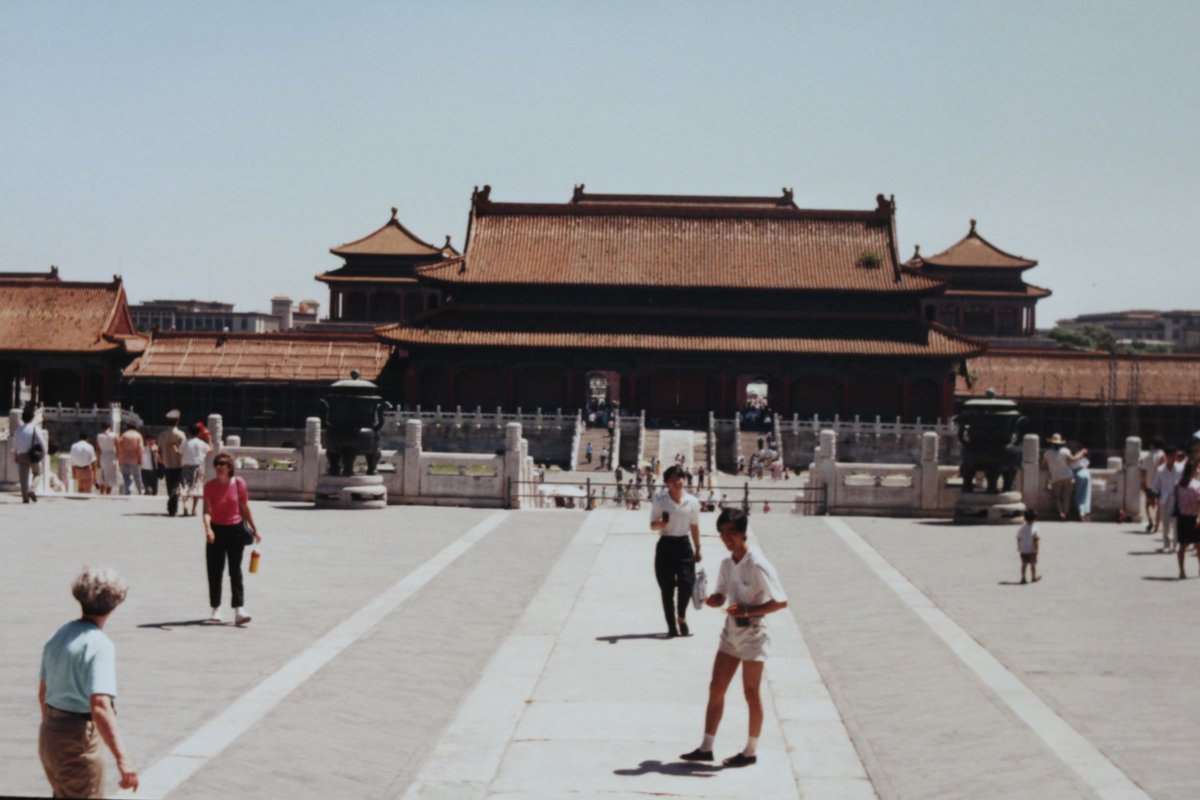
The gate’s five passageways and the vast, treeless courtyard before it were designed to impress and intimidate, fostering solemnity and anticipation for visitors approaching the heart of imperial power (Asian Studies).
Decorative Elements
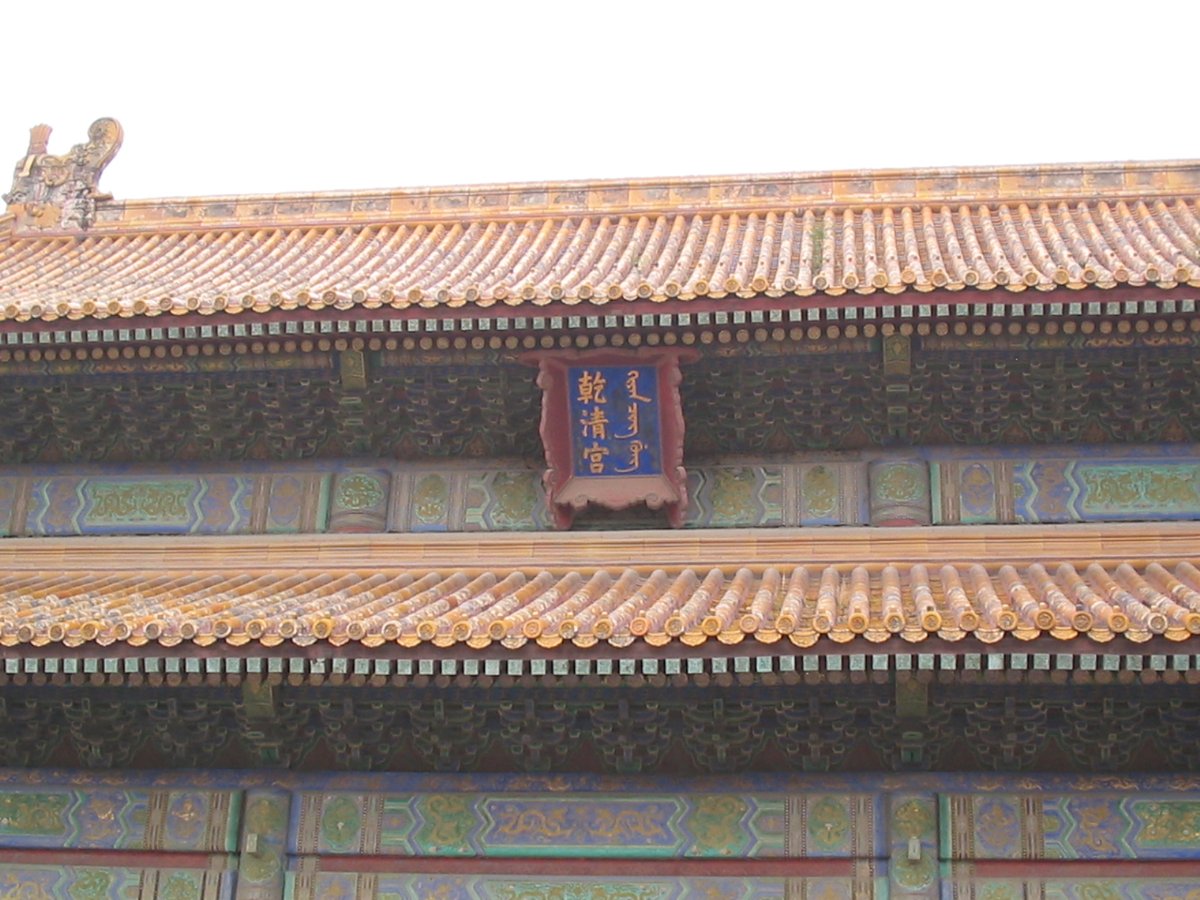
Vivid red columns and yellow-glazed roof tiles, reserved for the emperor, dominate the gate’s palette. Dragons, phoenixes, and other mythical creatures are meticulously carved into beams and balustrades to signify authority and ward off evil (Gearthhacks; Chinatripedia). The number nine recurs in the bronze door studs, reinforcing numerological themes of eternity and power.
The Golden Water River and Marble Bridges
In front of the gate, the Golden Water River flows beneath five white marble bridges, each representing a cardinal virtue. These bridges provide a ceremonial approach and are adorned with auspicious motifs (Britannica).
Ceremonial and Political Roles
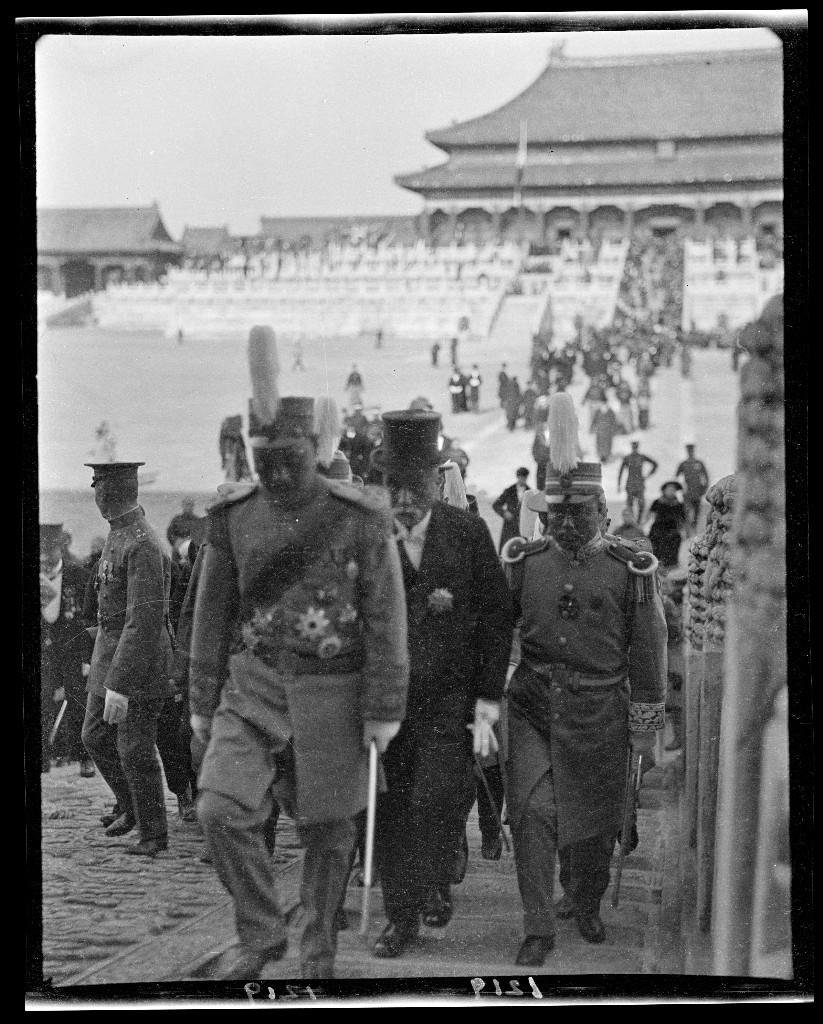
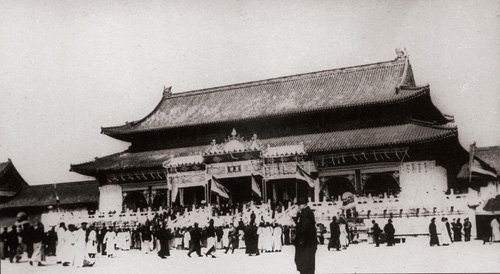
The Gate of Supreme Harmony was more than an entrance—it was a stage for imperial rituals, including enthronements, royal weddings, and proclamations. The central passage was used exclusively by the emperor, while side passages were reserved for officials according to rank, reinforcing strict court hierarchy (architecturecourses.org).
Its location between the Meridian Gate and the Hall of Supreme Harmony made it crucial for state ceremonies, and its open courtyards allowed thousands to witness imperial authority (Annees de Pèlerinage).
Cultural and Philosophical Significance
Aligned along the Forbidden City’s north-south axis, the gate embodies the emperor’s role as the mediator between heaven and earth. Its design integrates Confucian ideals of hierarchy and cosmic order, using odd numbers to represent yang (active, positive principle) and reinforcing the emperor’s centrality (Asian Studies).
Modern Preservation and Importance
As part of the Palace Museum since 1925, the Gate of Supreme Harmony has been meticulously restored and preserved, reflecting both Ming and Qing architectural styles (Britannica). Its status as a UNESCO World Heritage Site affirms its global cultural value and ensures ongoing conservation.
Visitor Information
Visiting Hours and Tickets
- Hours 8:30 AM – 5:00 PM (April–October); 8:30 AM – 4:30 PM (November–March). Last entry is one hour before closing. Check the official Palace Museum website for updates.
- Tickets 60 RMB (Apr–Oct), 40 RMB (Nov–Mar). Discounts for students/seniors. Advance online booking is strongly recommended; bring your passport (Tour Beijing; Trevallog).
Navigating the Forbidden City
Enter at the Meridian Gate, cross the Golden Water River via the marble bridges, and proceed to the Gate of Supreme Harmony. The main visitor route continues north along the central axis to the Hall of Supreme Harmony and beyond (Wikipedia).
Accessibility and Facilities
- Accessibility Wheelchair ramps and accessible paths are available, though some uneven surfaces and steps remain (Trevallog).
- Restrooms Located near main gates and along the visitor route.
- Shaded Areas The courtyards are open; bring sun/rain protection as needed.
- Souvenirs/Refreshments Found near main gates and at several spots within the Forbidden City.
Guided Tours and Special Events
Multilingual guided tours and audio guides are available, offering in-depth context on the Gate of Supreme Harmony and surrounding sites. Special events, such as cultural festivals and exhibitions, may also be held near the gate (DragonTrail China).
Photography Tips
The gate’s marble platform, bronze lions, and central axis alignment offer superb photography, especially in early morning or late afternoon light. Drone photography is prohibited.
Notable Features and Photo Highlights
- Bronze Lions Symbolize imperial power and protection.
- Five Marble Bridges Elegant approach to the gate, ideal for photos.
- Architectural Details Intricate woodwork, glazed tiles, and painted beams (Annees de Pèlerinage).
Suggested Itinerary
A standard visit follows: Meridian Gate → Inner Golden River Bridges → Gate of Supreme Harmony → Hall of Supreme Harmony → Hall of Central Harmony → Hall of Preserving Harmony, exiting at the Gate of Divine Prowess (Shenwumen) to the north. Jingshan Park nearby offers panoramic views (Trevallog).
Frequently Asked Questions (FAQ)
Q: What are the visiting hours for the Gate of Supreme Harmony?
A: 8:30 AM–5:00 PM (April–October), 8:30 AM–4:30 PM (November–March). Last entry one hour before closing.
Q: How can I book tickets?
A: Book online in advance; present your passport on arrival.
Q: Are guided tours available?
A: Yes, both audio and live guided tours are available in multiple languages.
Q: Is the gate wheelchair accessible?
A: Yes, with ramps and accessible paths, though some areas may have uneven terrain.
Q: Can I take photographs?
A: Yes, but avoid climbing on structures or disturbing others.
Additional Tips for a Memorable Visit
- Wear comfortable shoes and plan for extensive walking.
- Arrive early or late to avoid crowds.
- Check weather and dress accordingly.
- Security checks are required; avoid large bags.
- English signage and audio guides are available.
- Respect the site’s cultural significance—avoid loud behavior or touching artifacts.
Related Articles
- Top Historical Sites in Beijing: A Cultural Journey
- How to Plan Your Visit to the Forbidden City
- Exploring Beijing's Forbidden City: A Complete Guide
- Cultural Etiquette When Visiting Imperial Chinese Palaces
Summary and Final Tips
The Gate of Supreme Harmony is a living testament to China's imperial legacy, blending architectural brilliance with profound symbolism. Its role as the ceremonial heart of the Forbidden City and its surviving artistry offer an unparalleled historical and cultural experience. Prepare in advance—secure tickets online, plan your route, and consider guided tours for deeper insight. Respect site etiquette and embrace the opportunity to connect with centuries of Chinese civilization.
For a seamless visit, download the Audiala app for audio guides, interactive maps, and insider tips. Follow us on social media for travel inspiration and the latest updates on Beijing’s historical treasures.