Origins and Construction
The East Glorious Gate was completed in 1420 under the Yongle Emperor, in tandem with the Forbidden City’s inauguration (wonders-of-the-world.net; eastchinatrip.com). Serving as a counterpart to the West Glorious Gate, it reinforces the palace’s east-west axis and embodies the Ming Dynasty’s focus on geomancy and architectural symmetry.
The gate features a red fortress base atop a white marble pedestal, surmounted by a double-eaved tower with yellow glazed tiles. Notably, it has eight rows of door nails—an unusual deviation from the typical nine, the reason for which remains an object of historical speculation (wikipedia.org; travelchinaguide.com).
Historical Functions and Evolution
Ming and Early Qing Dynasties
Initially, the gate served as an administrative entrance for officials and staff, distinct from the ceremonial Meridian Gate (wonders-of-the-world.net). It facilitated access to the eastern palace quarters and managed the flow of goods and personnel across the Golden Water River (eastchinatrip.com).
Mid-Qing Dynasty
During Emperor Qianlong’s reign, the gate’s tower was adapted to store ceremonial military uniforms, reflecting the increasing prominence of military pageantry (wonders-of-the-world.net).
Late Qing and Republican Era
After the 1911 revolution, the East Glorious Gate transitioned from imperial utility to a historical monument. Stele inscriptions were updated to reflect the political changes, retaining only Chinese script after 1919 (wonders-of-the-world.net; wikipedia.org).
20th Century to Present
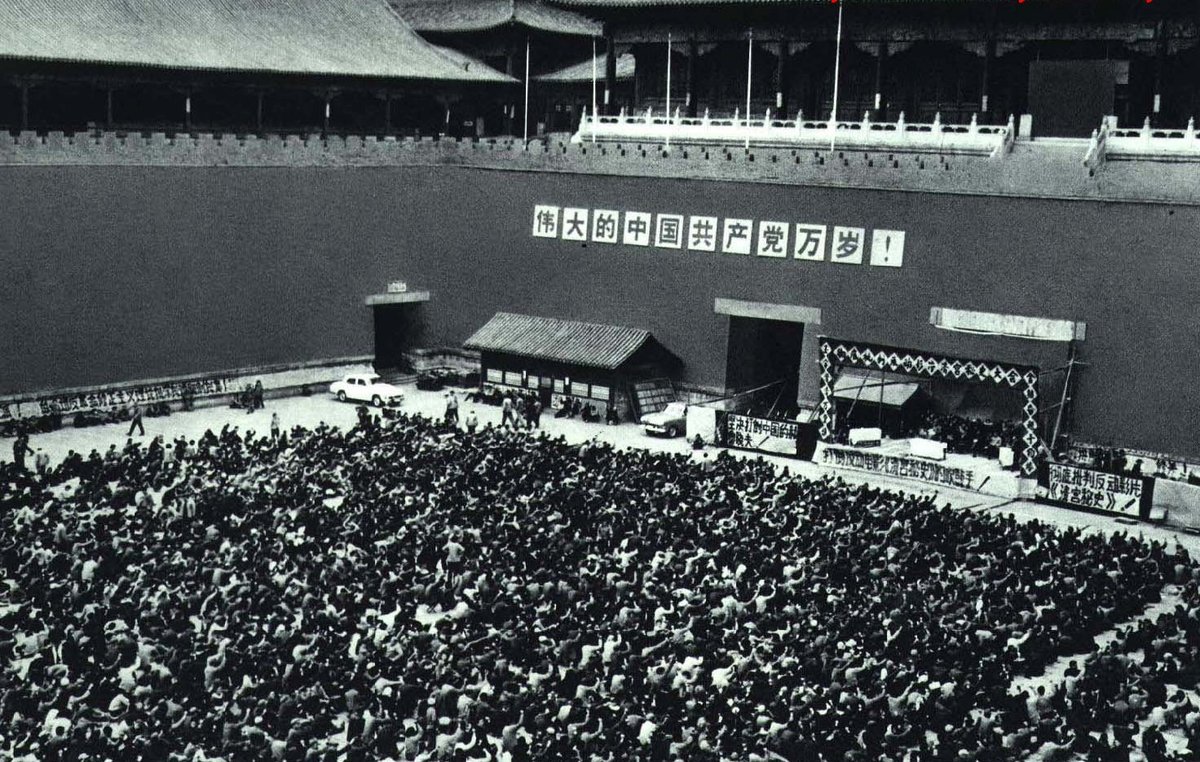
After incorporation into the Palace Museum in 1925, the gate survived the upheavals of the Cultural Revolution, thanks to protective interventions. Restoration in the early 21st century returned the gate to its historical appearance, and it was reopened to the public in 2015 (intochinatravel.com).
Architectural and Decorative Features
The East Glorious Gate is a quintessential example of Ming and Qing dynasty architecture, constructed primarily of rare Phoebe zhennan wood and set into imposing palace walls up to 10 meters high (Monomousumi). Its roof is supported by intricate wooden brackets (dougong), designed for seismic resilience (Gearthhacks).
Decorative elements include red walls and yellow glazed tiles—red for good fortune, yellow for imperial authority. The unique eight-row door nail arrangement distinguishes the gate from its peers (West China Tour). Roof ornamentation features upturned eaves and mythical animal figures, believed to ward off evil.
Symbolism and Philosophical Underpinnings
The gate’s placement along the Forbidden City’s strict north-south axis underscores the ancient Chinese worldview, where the emperor is the pivot between heaven and earth. The eastward orientation symbolizes spring and renewal (thechinajourney.com). The spatial arrangement, use of imperial colors, and number symbolism all reflect Confucian and cosmological ideals of harmony, hierarchy, and cosmic order (Gearthhacks).
Visiting Information: Hours, Tickets, and Accessibility
Hours and Admission
The Forbidden City, including the East Glorious Gate, is typically open 8:30 AM–5:00 PM (last entry 4:00 PM), closed on Mondays except public holidays. Always confirm visiting hours via the official Palace Museum website, as they may vary seasonally.
Tickets
Tickets must be purchased online in advance; on-site sales are not available (China Highlights). Prices range from 40 to 60 RMB, with discounts for seniors, students, and children. Entry through the East Glorious Gate is included with general admission.
Accessibility
Ramps and accessible routes are present at main entrances and most exhibition halls, but some areas may be challenging due to historical structures (Ruqin Travel). Audio guides are available for rent, and guided tours are recommended for those needing language or mobility assistance.
Travel and Transportation Tips
- By Subway Take Line 1 to Tiananmen East Station, then walk north to the east entrance.
- By Bus Multiple bus routes stop near the east side; check local schedules.
- Taxis/Ride-hailing Set your destination to "Donghua Men" or "East Glorious Gate of the Forbidden City." Note that parking is limited and taxi drop-off is nearby, not at the gate itself (Wild Great Wall).
- Accessibility Beijing’s subway and buses have broad accessibility features; wheelchair-accessible taxis can be booked in advance.
Visitor Experience and Practical Advice
- Arrive Early Visiting at opening time ensures fewer crowds and softer light for photography (China Highlights).
- Dress Appropriately Wear comfortable shoes and bring weather-appropriate clothing (Ruqin Travel).
- Facilities Restrooms and water are available; bring your own bottle to save on costs (Wild Great Wall).
- Dining Food inside the complex is limited and expensive. Consider nearby restaurants after your visit.
- Security Undergo standard security checks at entrances, and keep valuables secure.
- Photography Allowed outdoors, but restricted in some exhibitions; check for signage.
- Exiting For onward travel or taxis, walk a short distance from the main exits to avoid touts.
Integration with Forbidden City and Nearby Attractions
The East Glorious Gate is well-positioned for exploring the Forbidden City’s eastern halls and for continuing to nearby sites:
- Jingshan Park Just north, offers panoramic city views (China Highlights).
- Tiananmen Square To the south, central to Beijing’s civic life.
- Imperial Ancestral Temple and Zhongshan Park Both historic and scenic, adjacent to the east wall.
Combine your visit for a comprehensive cultural experience.
Conservation, Heritage Status, and Management
UNESCO and Government Protection
As part of the Central Axis, the East Glorious Gate is protected by UNESCO and stringent national regulations (China Daily; English.gov.cn). The State Administration of Cultural Heritage and Beijing Municipality enforce preservation and visitor management strategies.
Restoration and Sustainability
Regular restoration uses traditional materials and methods, supported by technology like 3D scanning for precise, minimally invasive repairs (The Beijing Center). Daily visitor quotas and digital resources help balance public access with conservation (Asia Odyssey Travel).
Disaster Preparedness
Active fire suppression, lightning protection, and emergency protocols safeguard the site against natural and human-induced hazards.
Cultural and Historical Significance
- Architectural Symbolism The gate’s form, colors, and placement reflect imperial grandeur and cosmic harmony (Let’s Travel to China).
- Ritual and Administration It served as an entrance for officials and imperial family, stage for ceremonies, and threshold between city and court.
- Central Axis Integration Its alignment reinforces Beijing’s urban and cosmological order.
- Contemporary Value The gate symbolizes China’s dedication to cultural preservation and is a focus for scholarly and public engagement.
Frequently Asked Questions (FAQ)
Q: What are the East Glorious Gate visiting hours?
A: Generally 8:30 AM–5:00 PM (last entry 4:00 PM); check official site for seasonal changes.
Q: Do I need a separate ticket for the East Glorious Gate?
A: No, general Forbidden City admission includes all accessible gates.
Q: Is the gate always open?
A: Not always; sometimes used only as exit or for special events. Confirm gate status before visiting.
Q: Is the East Glorious Gate wheelchair accessible?
A: Yes, but some areas may require assistance due to historic features (Ruqin Travel).
Q: Are audio guides and tours available?
A: Yes, rentable at main entrances; guided tours are highly recommended (China Highlights).
Related Internal Links
- [Guide to the Meridian Gate: Main Entrance of the Forbidden City]
- [Exploring Beijing's Historical Sites: A Visitor's Guide]
- [Tips for Visiting the Forbidden City]
- [Jingshan Park: Panoramic Views of Beijing]