Plan and listen to Dahui Temple with Audiala.
Audio guide in your pocket, itinerary in your browser. Built for the way you actually visit.
Introduction
Dahui Temple (大慧寺), located in Beijing's Haidian District, is a renowned Buddhist site that reflects the rich religious, cultural, and architectural heritage of Ming dynasty China. Founded in 1513 during the reign of the Zhengde Emperor, the temple was initially a grand complex patronized by powerful court eunuchs such as Zhang Xiong, symbolizing the close ties between religious devotion and political influence in 16th-century Beijing (Academia.edu). Although much of the original temple has been lost due to urban expansion and historical upheaval, the surviving Hall of Great Compassion (Dabeidian) stands as a testament to Dahui Temple’s enduring spiritual and artistic legacy.
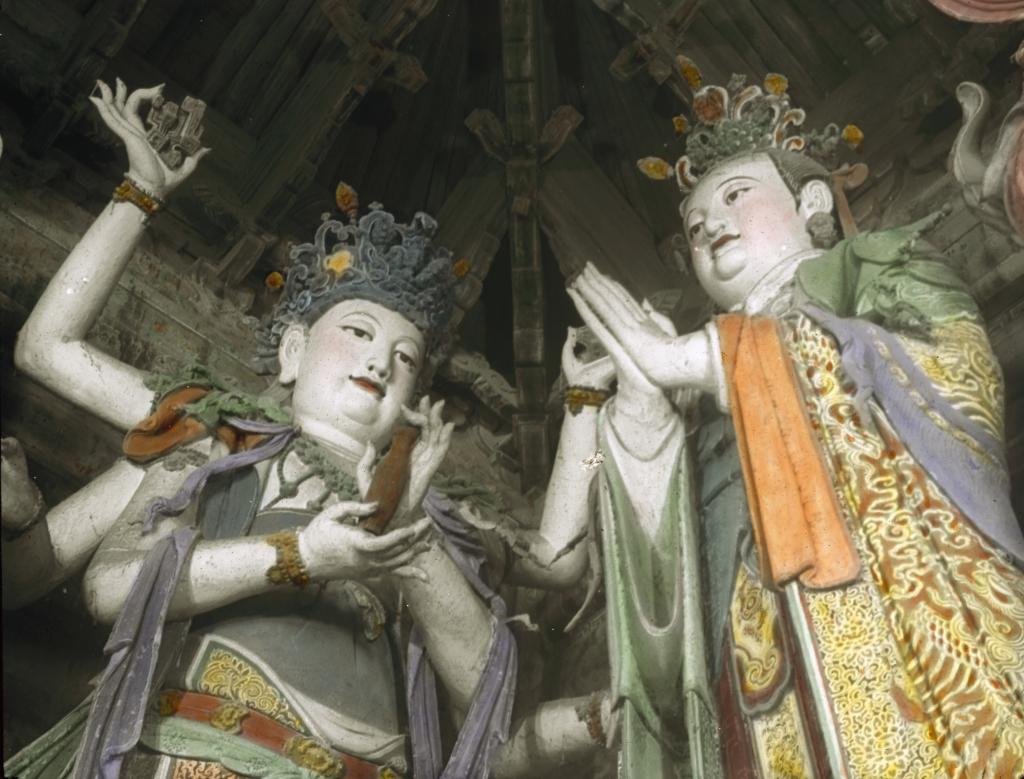
Dahui Temple is notable for its exquisite Ming dynasty murals, polychrome sculptures—particularly the striking 28 Devas of Law Protection—and visual storytelling through Buddhist iconography, including the life of Princess Miaoshan, an incarnation of Guanyin. These treasures not only showcase the artistic excellence of the period but also serve as important visual narratives reflecting Buddhist cosmology and Ming society (VisitBeijing; ChinaBeijingPrivateTour).
Currently, Dahui Temple is closed to the public to protect its fragile artwork and due to its location within Beijing’s urban landscape. Nonetheless, its reputation endures among local devotees and scholars. For those interested in Beijing's Buddhist heritage, this guide provides an in-depth exploration of Dahui Temple’s history, significance, and practical visitor information, as well as recommendations for nearby accessible sites.

History and Foundation
Dahui Temple was established in 1513 CE, during the Ming dynasty's Zhengde Emperor's reign, and closely associated with influential court eunuch Zhang Xiong. Eunuchs like Zhang Xiong, serving in the Directorate of Ceremonial, played a significant role in fostering urban Buddhism, sponsoring temples as acts of religious devotion and expressions of political power (Academia.edu).
The temple became a key center for Buddhist worship and community activities, reflecting the vibrant religious landscape of Ming Beijing.
Architecture and Surviving Structures
Originally, Dahui Temple was a sprawling complex. Today, only the Hall of Great Compassion (Dabeidian) remains, dedicated to Guanyin, the Bodhisattva of Compassion. This hall features classic Ming architecture, with an imposing wooden structure, upturned eaves, and intricate bracket (dougong) systems. Inside are rare polychrome sculptures and mid-Ming wall paintings, among the few surviving examples of large-scale Buddhist art from this era in Beijing (Academia.edu).
Artistic and Religious Significance
Dahui Temple houses remarkable mid-Ming dynasty wall paintings and sculptures, including:
- 28 Devas of Law Protection: Towering, brightly colored clay statues representing Buddhist protector deities, standing over three meters tall.
- Murals: Detailed paintings on the inner walls narrate the story of Princess Miaoshan, an incarnation of Guanyin, and visually depict the Buddhist journey to enlightenment and moral teachings.
- Central Statue of Guanyin: A focal point for ritual and meditation.
These artistic elements not only demonstrate Ming craftsmanship but also served as educational tools, visually communicating Buddhist teachings to temple visitors (VisitBeijing; ChinaBeijingPrivateTour).
Imperial Patronage and Urban Buddhist Networks
Dahui Temple benefited from imperial support throughout the Ming and Qing dynasties, which ensured its maintenance and prominence within the city’s religious landscape. It formed part of a broader network of Buddhist temples in Beijing, with court eunuchs and officials serving as patrons. This relationship between religion, politics, and urban development was distinctive of Ming urban Buddhism (Academia.edu).
Decline, Preservation, and Current Status
Over the centuries, Dahui Temple suffered decline due to urbanization, war, and shifting religious policies. The massive 16-meter bronze Buddha statue that once stood in the Great Mercy Hall was destroyed during the Japanese occupation in the 1940s (ChinaBeijingPrivateTour). Despite these losses, the surviving hall and artworks are now protected as cultural heritage. However, urban encroachment has rendered the site inaccessible to the public, with the temple complex now surrounded by residential developments (WalkingBeijing).
Visiting Dahui Temple: Practical Information
Location:
No. 15 Dahui Temple Road, Haidian District, Beijing.
Access:
Dahui Temple is currently closed to the public. The surviving hall is not open for visits, and there are no official visiting hours or ticket sales. The temple site is enclosed by residential compounds, and only the exterior can be viewed from nearby streets.
Transportation:
- Subway: Weigongcun Station (Line 4), about 1.2 km away.
- Bus: Routes 320, 332, and 601 have stops nearby.
- Taxi/Ride-hailing: Taxis and Didi are widely available.
- Private Tours: Some local operators may offer exterior viewing tours or include Dahui Temple as part of thematic heritage walks.
Accessibility:
Due to closure, accessibility information is moot. The temple’s historic architecture includes stairs and narrow pathways, which would challenge visitors with mobility issues.
Guided Tours:
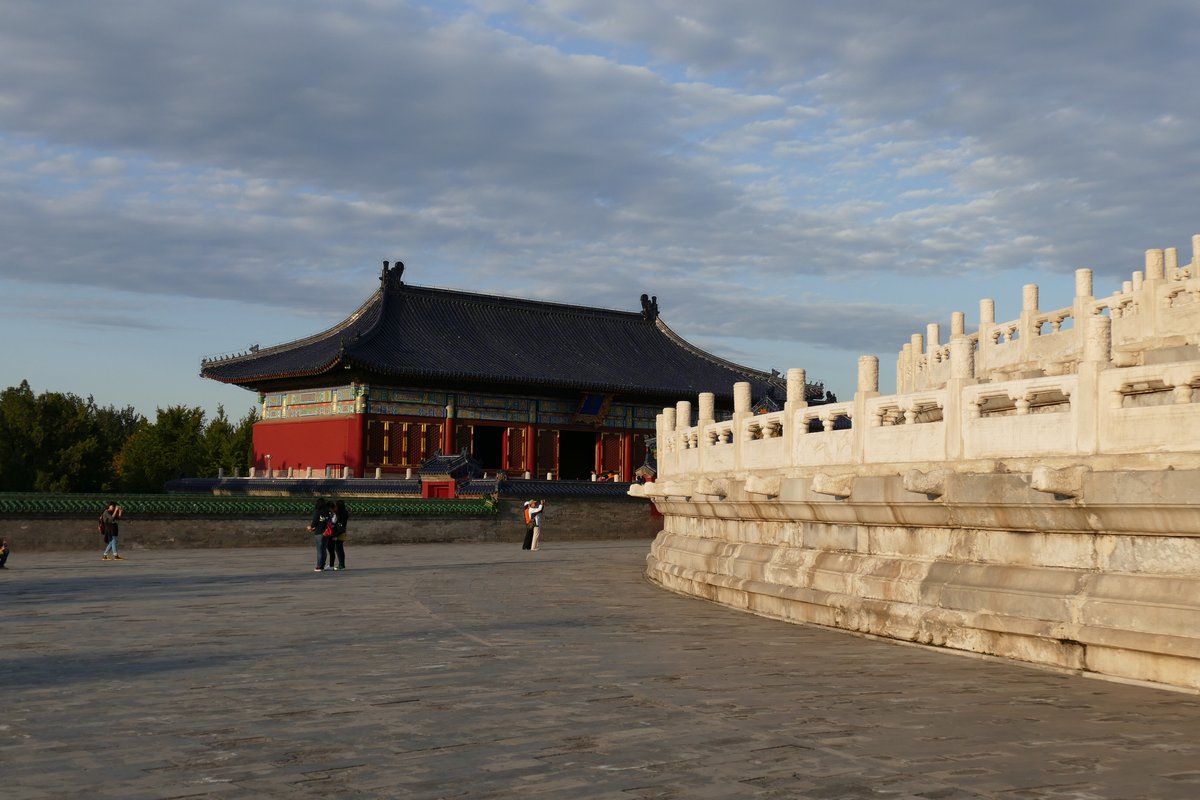
No on-site guided tours are offered. For those interested in Ming Buddhist art, consider booking a tour that includes accessible temples such as the Lama Temple or the Temple of Heaven.
Photography:
Photography is permitted outside the compound. No interior access or photography is possible due to closure.
Nearby Attractions:
- Lama Temple (Yonghegong): Renowned Tibetan Buddhist temple.
- Temple of Heaven: UNESCO World Heritage site.
- Summer Palace: Imperial gardens and palaces.
- Peking University, Yuanmingyuan (Old Summer Palace): Sites of cultural and historical interest.
Special Events and Cultural Activities
Dahui Temple occasionally features in cultural heritage events or academic tours, usually by special arrangement. During significant Buddhist festivals, rituals may be held privately by local devotees, but public access is not permitted. Keep an eye on local tourism and cultural heritage platforms for any updates.
Frequently Asked Questions (FAQ)
Q: Is Dahui Temple open to visitors?
A: No, Dahui Temple is currently closed to the public. Only the exterior can be viewed.
Q: Are there ticket fees?
A: No ticketing or admission fees are applicable due to closure.
Q: What are the best alternatives for Buddhist heritage in Beijing?
A: The Lama Temple and Temple of Heaven are open to visitors and offer rich Buddhist history and art.
Q: Is Dahui Temple accessible for people with disabilities?
A: Accessibility is not applicable as there is no public access.
Q: What is the best time to visit the area around Dahui Temple?
A: Spring and autumn are ideal for exploring Haidian District and nearby open attractions.
Listen to the full story in the app
The whole Dahui Temple,
told well.
Listen to sourced travel stories with local history and practical context — ready offline.
Verified, and shown.
Researched and written by the Audiala editorial team from historical records, architectural archives, and local expertise.
Built from cited sources · see the method · How we make our guides →